
In short: The levels of float meditation are a map of what you may experience in the float pool, from shallow to deep: Body lets go, Quiet mind, Awake sleep, Dissolving edges, Deep contentment and Stillness, with a moment of clarity at the top. Some floors have “rooms”, unusual experiences such as lucid dreams. Each float is like a ride in an elevator: some days it stops low, some days it goes high. It is a map, not a score.
Read in Vietnamese: Các tầng Thiền Nổi: bản đồ những gì bạn có thể gặp trong bể
You come out of your first float and someone asks, “So, what was it like?” Your shoulders went somewhere; time did something strange; you lack the words. This guide gives you them: a floor-by-floor map of the float tank experience, what meditation traditions call the same places, and what research says.
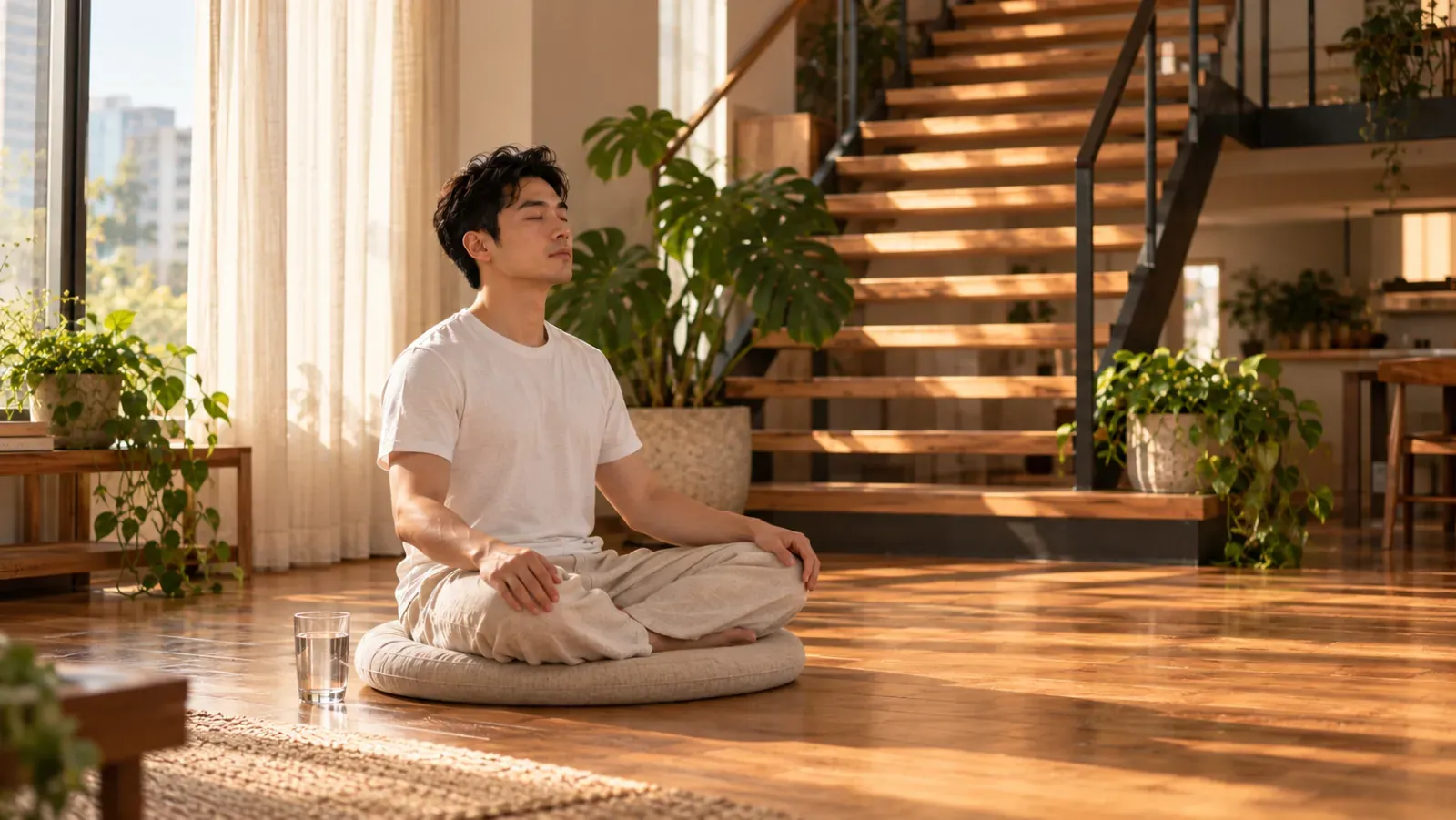
Why “levels”? The mind as a building
Meditation is thousands of years old, and for almost as long people have drawn maps of the journey inward. Buddhism speaks of eight absorptions, four of form and four formless. In The Mind Illuminated (2015), the teacher Culadasa divides the path into ten stages.
The psychologist Abraham Maslow pictured human needs as a pyramid: survival, safety, love and belonging, recognition, becoming your fullest self, and in a later version, going beyond the self. He called moments of feeling especially whole and alive “peak experiences”. Meditation helps on every level, not only at the top: rest when basic needs drain you, a pause before reacting when life feels uncertain, better listening with people you love. Wherever you stand, the way up starts there.
Now picture a tall building rising above the pyramid. Each floor is a deeper level of stillness, focus and clarity; furthest along the path is enlightenment. There are two ways up.
The stairs and the elevator
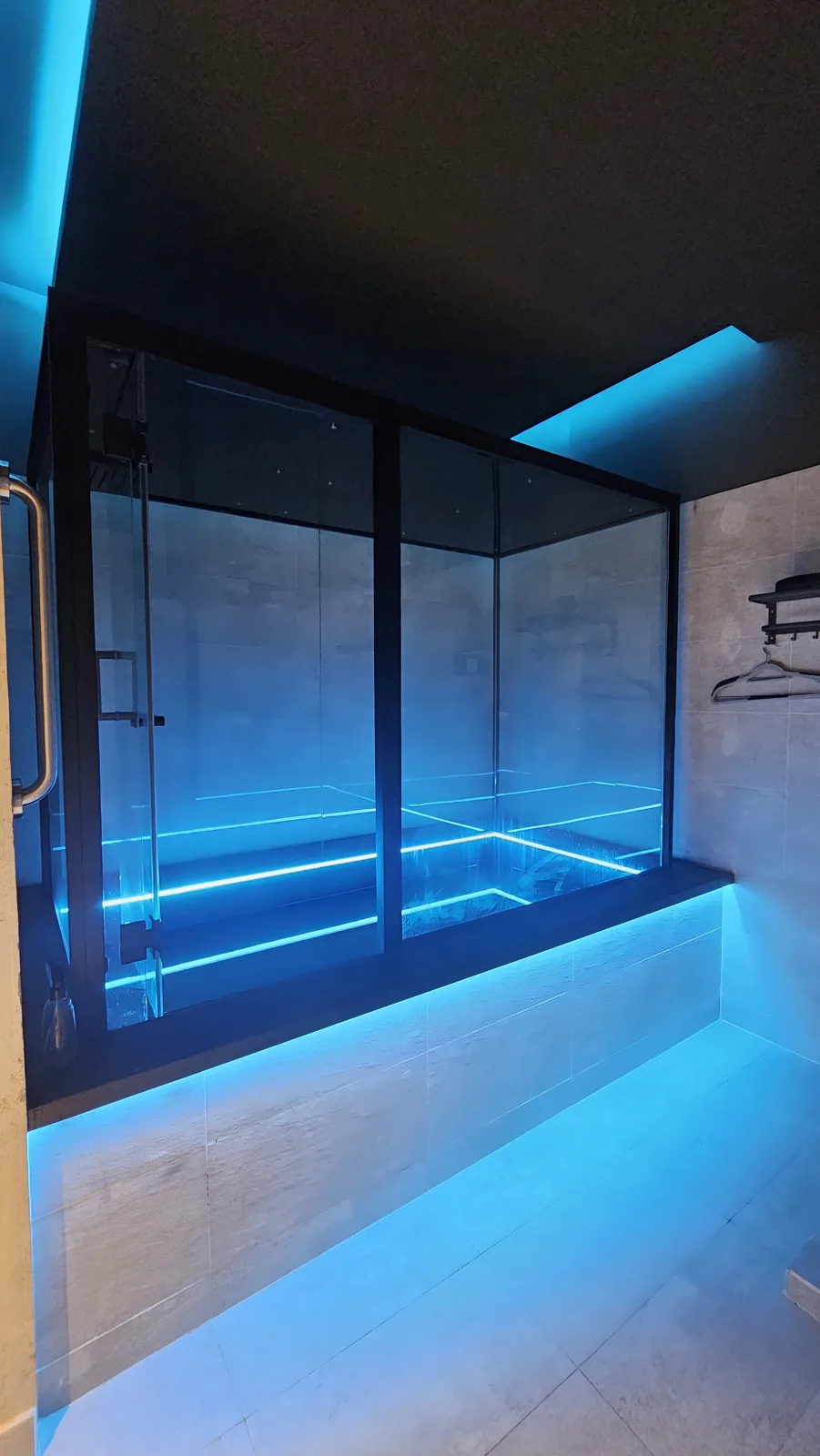
Traditional meditation is the stairs, one step at a time. Float meditation is an elevator that carries you faster through the first floors. In the float pool, about 25 cm of water with about 500 kg of dense, mineral-rich Epsom salt holds your whole body at about 33–34 °C, close to skin temperature, in a room that can be almost fully dark and quiet. Sitters often spend months working through sore legs and a tired back; in the pool, the water does that work.
But the elevator is not a shortcut to enlightenment, and it does not replace a meditation practice. The setting helps the body settle faster; how far the mind settles, nobody can promise. Some days it stops at Floor 1; some days the doors open at Floor 4. The map simply helps you name the places you visit, so they feel less strange next time.
The map at a glance
| Floor | Body, mind, time | Rooms you may find |
|---|---|---|
| Lobby | Before your first float | – |
| 1 · Body lets go | Shoulders, jaw and back soften; thoughts rise and settle like waves; time still countable | Heavy, then weightless; an old feeling rising |
| 2 · Quiet mind | Senses seem to switch off; mind empty; time neither long nor short | Turning, tilting, drifting |
| 3 · Awake sleep | Heavy as in deep sleep, yet aware; time flies | Lucid dreams; dreams within dreams; vibration along the body; a “film” behind closed eyes |
| 4 · Dissolving edges | Hands and feet melt into the water; wider, lighter; time warps | Feeling outside the body; drifting or flying; the body growing or shrinking |
| 5 · Deep contentment | Warm, tingling; happy for no reason; time no longer matters | Light behind closed eyes; joy in waves; the body moving on its own |
| 6 · Stillness | Breath barely there; nothing needed; time seems to stop | Space with no edges; “nothing”, yet aware |
| Peak · A moment of clarity | Goosebumps or tears; something suddenly clear | A dream with a message; oneness; gratitude and love rising |
Some people meet the rooms, some never do. Stepping into one does not make you “higher” than someone who simply rested deeply.
The lobby: before your first float
You can start before you reach the pool. The first lessons of our meditation hub are the lobby: a long exhale to calm the body, a body scan to notice where you hold tension, and NSDR to get used to resting deeply while staying aware.
Floor 1 · Body lets go
Little by little, the body gives way. The water lifts you, and the shoulders, jaw and back stop holding. You may feel heavy at first, as if sinking into an invisible mattress, then light as a feather.
The mind is not still yet. Thoughts come in waves: a work problem surfaces, then fades; a gap opens; another wave arrives. In early floats the waves are close together; with practice the gaps grow longer and deeper. When the waves go quiet and stay quiet until the end, that is Floor 2.
In The Mind Illuminated this is stage 1, the body coming to rest. Unlike sitting, there is no leg pain to get through: on the Natural Breath path of the Pa-Auk tradition, a sitter first works through three stages of it, from fierce to bearable. One room can open here: an old memory or feeling surfaces, then passes; it can happen on any floor. Tip: breathe out longer than you breathe in for the first few minutes, then let the breath find its own pace. More in Floor 1, Body lets go.
Floor 2 · Quiet mind
At some point you stop “doing” the float. With light, sound and body sensation turned down, the mind has little to hold on to, and the waves of thought thin out and stop. “How long has it been?” becomes oddly hard to answer.
In The Mind Illuminated, less mind-wandering suggests stages 2–3, while the senses seeming to switch off usually comes much later for sitters, at stage 8; in a float, water and darkness do part of that work. The Natural Breath path calls this point “no more pain, only tiredness”. A strange room can open here: you lie perfectly still, yet the pool seems to turn or tilt. Notice it and stay still. More in Floor 2, Quiet mind.
Floor 3 · Awake sleep
This floor is a kind of twilight. The body rests as if asleep while a light part of you still knows you are here. Images and sounds appear on their own, like pieces of an unfinished dream. Đức, our founder, described it in 2017: “When body and mind are both relaxed while you stay alert, you quickly slip into the border zone between waking and dreaming.” With few landmarks, time flies.
The Mind Illuminated places this around stage 4, where the mind lingers between waking and sleep as brainwaves slow down. There, half-dream imagery is dullness to overcome; in a float, and in lucid-dream practice, you stay there while awake. On the Natural Breath path, it is close to stages 5–6.
This floor has many doors: lucid dreams, dreams nested inside dreams, a soft vibration along the body, a “film” behind the eyelids. Đức has said of his own floats: “I have had dreams with many layers (like in Inception), with physical sensations more real than reality.” That is one person’s account, not something a float promises.

Floor 4 · Dissolving edges
You cannot tell where your hand ends and the water begins; the body map your brain uses all day fades. Space feels wider and time warps. Many floaters say this is when worry fades most clearly.
Research reaches this floor. In a 2024 trial by Hruby and colleagues, 50 healthy people tried both 60 minutes of floating and 60 minutes on a warm waterbed in a dark room. After floating, they felt more relaxed and less anxious and reported clearer altered states: body boundaries dissolving and time distorting. The dissolving of body boundaries also went together with the drop in anxiety.
The Mind Illuminated suggests stages 5–6, when the body is felt as one field rather than parts; the Natural Breath path calls stage 7 “light body”. The map has no hard walls; some people touch deep contentment from here. Rooms here can be strange: seeing yourself from elsewhere, flying through space, limbs growing or shrinking. We share these as floaters’ subjective experiences, not metaphysical claims. See also what weightless feels like.
Floor 5 · Deep contentment
The quiet takes on a quality of its own: warmth, gentle tingling, small movements you did not intend. Above all, joy appears for no outside reason. No good news, nothing solved; you are happy anyway. It may come in waves, then settle into “this is enough”.
Books may call this light jhana; The Mind Illuminated places it around stages 7–8, and the Natural Breath path calls stage 8 “rapture”. That does not mean float equals jhana; it is a reference point. Some people see light behind closed eyes in the dark room. No need to chase any of it: if it comes, know it; if it goes, let it go. A practice for this floor is loving-kindness meditation.
Floor 6 · Stillness
After the joy there is sometimes a quieter place. The breath grows so light you barely notice it. Nothing special needs to happen any more; you are not waiting for the next floor. Only when the float ends do you realise how long has passed.
The Mind Illuminated describes stages 9–10 as “tranquillity and equanimity”; the Natural Breath path calls stages 9–10 “tranquillity” and “ease”. Two rooms here, space with no edges and “nothing, yet still aware”, resemble the formless absorptions in the suttas and are not part of the TMI scale. Similar language does not mean a float replaces meditation or guarantees any state. And if no room opens, that is fine.
The peak · A moment of clarity
If you suddenly see something about yourself clearly, something you have been avoiding, or a meaningful message, you have touched the insight floor. It has many names: satori, epiphany, a moment of awakening. It can arrive from Floor 3 up, even inside a dream, sometimes with goosebumps or tears. Maslow would call it a peak experience, but it need not look grand.
You cannot train to get it, but you can learn to keep it. Write it down the moment it comes, and bring it into everyday life; without care and practice it can fade. A meditation course or a guide can help.
Why each float stops on a different floor
The person stepping into the elevator today is not the person from last week: sleep, meals and time of day all change the ride. As Đức once wrote: “Just like training the body, some days we feel strong, and some days we feel sluggish and tired.” Floor 4 one day, Floor 1 the next, is normal. Floating regularly helps you learn the way; stress studies also use a series of floats, for example 12 sessions over 7 weeks in the trial by Kjellgren and Westman (2014). See how often to float.
If you meet a strange room
Meditation teachers repeat the same advice: do not cling to unusual experiences. Just know them, and come back to the breath. A room is only a room; the stillness is the building. To come back, move a finger, open your eyes or switch on the light.
What does the research say?
| Question | Main evidence | Ōmni Evidence Scale |
|---|---|---|
| Does floating reduce stress and anxiety? | Trials pointing the same way (Kjellgren 2014, Feinstein 2018) | Strong evidence |
| Does floating bring on altered states of consciousness? | A crossover trial with 50 people (Hruby 2024) | Early evidence |
| Is dissolving body boundaries linked to less anxiety? | The same trial (Hruby 2024) | Early evidence |
| Does floating bring lucid dreams or out-of-body experiences? | Floaters’ accounts only | No good evidence yet |
Float therapy itself is still a young but very active field of research: randomised controlled trials have shown clear effects on anxiety, stress and muscle tension, and many people also report sleeping better.
Ōmni Evidence Scale: Strong evidence, for float and stress. We rate it Strong because, on top of these trials, user experience is overwhelmingly positive: in a 2025 survey of regular floaters, 92% reported relaxation and 77% less stress, echoed by thousands of reviews, Reddit threads and forums, and by athletes and public figures who float. See the Ōmni Evidence Scale.
Ōmni Evidence Scale: Early evidence, for altered states during a float and for dissolving body boundaries going together with less anxiety (one crossover trial). No good evidence yet for lucid dreams or out-of-body experiences in the float pool.
Put simply, Floors 1 to 4 have research alongside them; the higher floors and rooms come mainly from practitioners’ accounts and meditation traditions, and we keep them as subjective experience.
Where to start
A first float usually stops on Floor 1 or 2, and that can already be a very deep rest. Skip goals like seeing light; learn what it feels like to be fully held, and watch what happens when you stop pushing thoughts away. New to floating? Read what float therapy is and before your first float. Not ready yet? Start in the lobby with our guided practices, or try walking meditation, the other end of gravity.
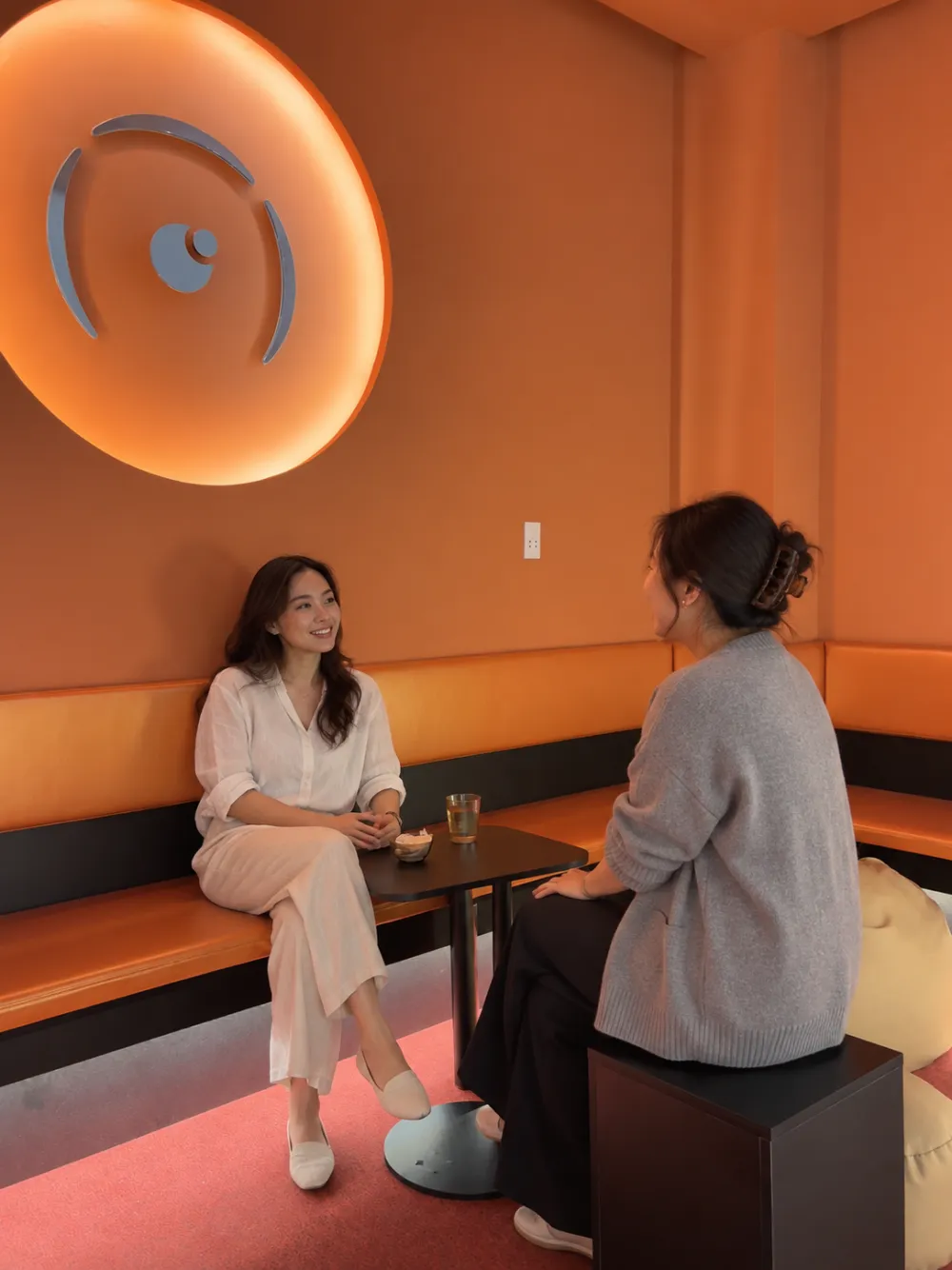
At Ōmni Space – Float Saigon, 16C Quốc Hương, Thảo Điền, each float room is private and you control the light yourself. Open 9:00–21:00 every day; the last float starts at 20:00.
Float PlanRunning on empty?Take the one-minute Float Plan quiz: tell us how you feel and what you need, and get a simple plan for your first session.Make my Float PlanFrequently asked questions
What are the levels of float meditation?
A map of what you may experience in the float pool, from Body lets go to Stillness, with a moment of clarity at the top, plus “rooms” of unusual experience such as lucid dreams.
What level do you usually reach in a first float?
Usually Floor 1: the body lets go, and thoughts rise and fall like waves before settling. Nobody can promise which floor a session will reach.
Is a float better if you reach a higher floor?
No. It is a map, not a score. A float that stays on Floor 1 can still be a deeply restful session.
Can you have lucid dreams in a float tank?
Some floaters describe them, but there are no scientific trials on lucid dreaming in the float pool yet. We share it as a reported experience, not a promise.
What should I do if something strange happens during a float?
Notice it, then come back to the breath. To come out of it, move a finger, open your eyes or switch on the light. You are always in control.
Written by the team at Ōmni Space – Float Saigon in Thảo Điền, based on the floor map by Float Vietnam and the floats of our founder, Đức Nguyễn (quotes translated from Vietnamese). General information, not medical advice; checked on 5 November 2026.
Sources
- Hruby H, Schmidt S, Feinstein JS, Wittmann M (2024). Induction of altered states of consciousness during Floatation-REST is associated with the dissolution of body boundaries and the distortion of subjective time. Scientific Reports 14: 9316.
- Kjellgren A, Westman J (2014). Beneficial effects of treatment with sensory isolation in flotation-tank as a preventive health-care intervention: a randomized controlled pilot trial. BMC Complementary and Alternative Medicine 14: 417.
- Feinstein JS, Khalsa SS, Yeh H, et al. (2018). The elicitation of relaxation and interoceptive awareness using floatation therapy in individuals with high anxiety sensitivity. Biological Psychiatry: Cognitive Neuroscience and Neuroimaging 3(6): 555–562.
- Float Vietnam (2017). Tác dụng của Float và trạng thái Thiền Nổi (the effects of floating and the states of float meditation, by our founder; in Vietnamese).
- Culadasa (John Yates), Immergut M, Graves J (2015). The Mind Illuminated: A Complete Meditation Guide Integrating Buddhist Wisdom and Brain Science.