
In short: NSDR (non-sleep deep rest) is a guided way to rest deeply while staying awake: you lie still for 10–20 minutes, slow your breath and scan your body. Yoga nidra is its older, yogic form. Research rates it Promising for stress and early for sleep. Float therapy offers a similar deep rest, with the water doing most of the work.
It is 2 p.m. in Saigon. Lunch was heavy, the air outside is thick and hot, and your next call starts in half an hour. Or you landed this morning, your body thinks it is midnight, and a nap now would wreck tonight. Or it is 11 p.m. and your mind is still answering emails. This guide gives you a 10-minute reset for exactly these moments: a script you can use today, what the research really says, and how it compares with a meditation app and a float in Thảo Điền.
What is NSDR, and what is yoga nidra?
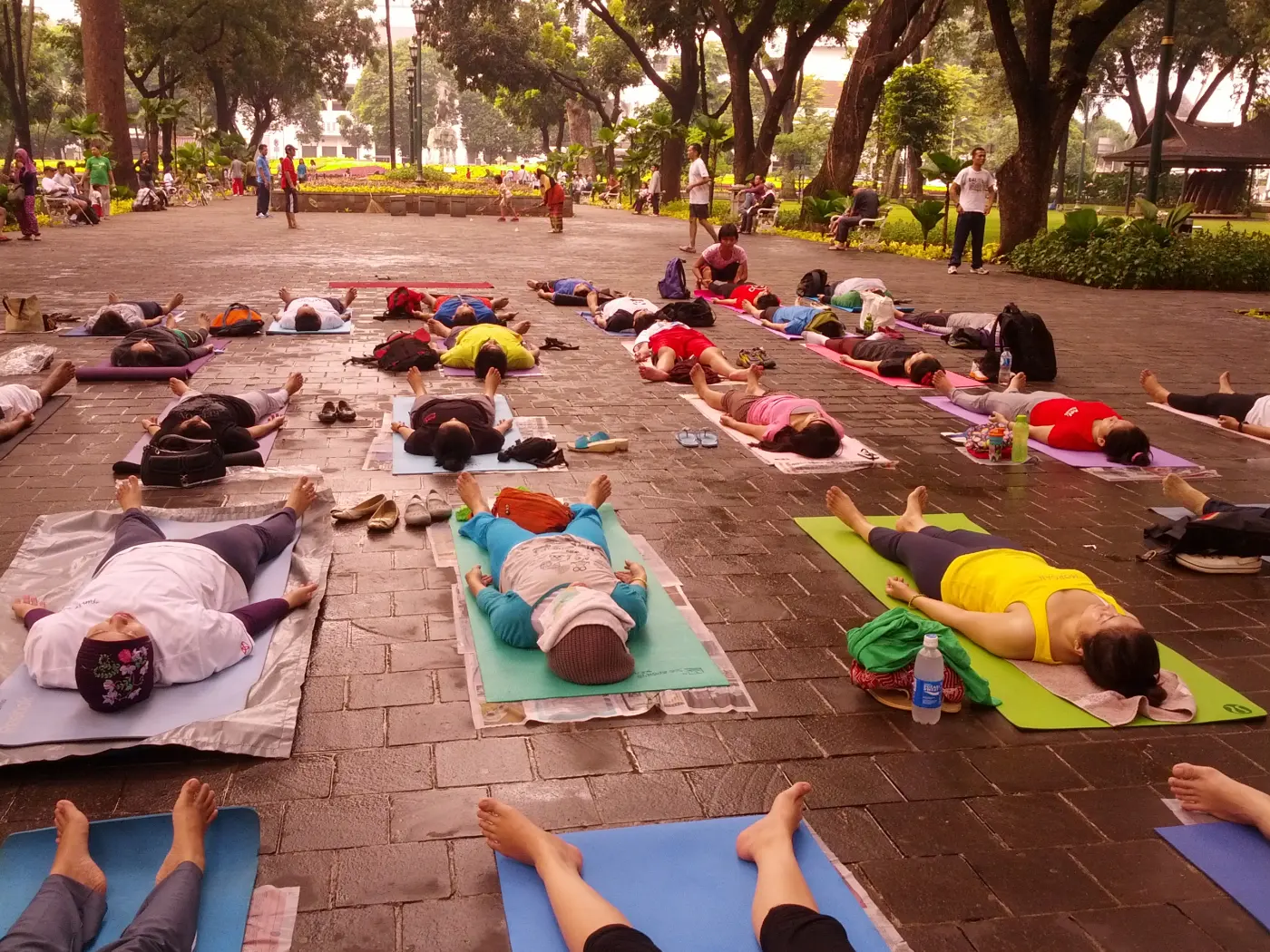
NSDR stands for non-sleep deep rest. You are not trying to fall asleep. You lie down, follow a voice, and let body and mind settle as deeply as before sleep, while staying aware. Yoga nidra (Sanskrit for “yogic sleep”) is the classic version, with a fixed order: settle, set an intention, scan the body, notice the breath, return. NSDR is the wider umbrella, which also includes the body scan.
- The old roots. Modern yoga nidra is linked to Swami Satyananda Saraswati, who founded the Bihar School of Yoga in Munger, India, in the 1960s and published the book Yoga Nidra in 1976. A 2022 review calls it a simplified form of an older tantric relaxation technique.
- The new name. Andrew Huberman, a neuroscientist at Stanford University School of Medicine, coined “non-sleep deep rest” as a plain, non-spiritual label. Since his podcast began in 2021, NSDR has spread fast among founders and athletes. The name is new; the method is a gift from the yoga tradition.
| What you do | Time | Good for | |
|---|---|---|---|
| NSDR | Slow breathing and a body scan, lying or reclined, no effort to sleep | 10–20 min | A midday recharge |
| Yoga nidra | Intention, body scan, breath and imagery, lying on your back | 20–45 min | People who like a clear structure |
| Power nap | Actual sleep | 10–30 min | When you are short of sleep and have a bed |
| Seated meditation | Hold attention on the breath, sitting upright | 5–30 min | Training focus |
When NSDR helps most in Saigon
- The after-lunch slump. Ten minutes in a cool room, without a long nap’s grogginess (see our Saigon heat guide).
- Jet lag day. Rest deeply without sleeping the afternoon away; pair it with daylight and our jet lag guide.
- Before something that matters. A pitch, an exam, a hard talk: one session 20–30 minutes before helps you arrive calmer.
- A racing mind at night. The same script helps in bed; if nights stay hard for weeks, see our insomnia plan.
A 10-minute NSDR script you can use today
Read it slowly, ask a friend to read it, or record it on your phone. You need a flat place to lie down and your phone on silent.
- 0:00–1:00 · Settle: lie on your back, arms by your sides, eyes closed.
- 1:00–2:30 · Long exhales: breathe in for 4 counts, out for 6.
- 2:30–6:00 · Body scan: head to toe, one part at a time.
- 6:00–7:30 · Heavy and warm: feel the whole body at once.
- 7:30–8:30 · Intention (sankalpa): one short sentence, said silently three times.
- 8:30–10:00 · Return: move your fingers, roll to one side, sit up slowly.
Lie on your back, arms by your sides, palms up. Close your eyes if that feels good. The next ten minutes are yours. There is nothing to do. [pause 5 seconds]
Notice the sounds around you: the hum of the air conditioner, a motorbike far off. Let them be there, like rain outside a window. [pause 10 seconds]
Breathe in through your nose, counting to four. Breathe out for longer, counting to six, as if cooling a cup of hot tea. Once more. [pause 10 seconds] With every exhale, your shoulders sink a little lower.
Now rest your attention on each part of the body. The top of your head. Your forehead. Your eyelids, growing heavy. Your jaw, teeth slightly apart. [pause 5 seconds] Your neck. Right shoulder, right arm, right hand, each finger. Left shoulder, left arm, left hand, each finger. [pause 5 seconds] Your chest, rising and falling. Your belly, soft. Your whole back, held by the floor. Your hips. Right leg, down to the toes. Left leg, down to the toes. [pause 10 seconds]
Now feel the whole body at once. Maybe it feels heavy, sinking into the mat. Maybe your palms feel warm. Whatever you feel is fine. [pause 20 seconds] If thoughts come, let them drift past like clouds. You are just lying here, breathing, resting. [pause 30 seconds]
Silently say one short sentence you want to carry into your day, such as “I am calm enough for what comes next” or “I am allowed to rest”. Say it slowly, three times. [pause 15 seconds]
Time to come back. Take a slightly deeper breath. Move your fingers and toes. [pause 5 seconds] Roll onto one side, stay for a few breaths, then sit up slowly and open your eyes. You just gave yourself ten minutes of deep rest.
Tips: at the office, recline in your chair. Fell asleep? Your body needed it. A wandering mind is normal: coming back is the practice. Once a day is a good rhythm.
What the research says about NSDR and yoga nidra
Very few studies use the name “NSDR”. Most research is on yoga nidra and guided relaxation in general.
Stress and anxiety. A 2008 meta-analysis of 27 studies found a medium effect of relaxation training, including meditation, on anxiety. A 2025 review of 73 yoga nidra studies (5,201 people) found clear drops in stress, anxiety and low mood, though the authors warn many studies were weak, so the true effect is probably smaller. A large German online trial (2025) found smaller but real gains from two months of daily recordings.
Short sessions count. In another German study, 341 people who used an 11-minute yoga nidra recording for 30 days reported less stress, better sleep quality and more well-being than 430 people on a waiting list. The effects were small, and they still held six weeks later.
Sleep. In an Indian trial, 41 people with chronic insomnia did either CBT-I (the standard first treatment for insomnia) or yoga nidra. Both groups slept better; the yoga nidra group also gained more deep sleep and lower cortisol, the stress hormone.
The “65% dopamine” claim. It comes from a 2002 Danish brain-scan (PET) study of eight experienced yoga teachers, which estimated a 65% rise in dopamine release during yoga nidra, alongside more theta activity, the slow brainwaves at the edge of sleep. Fascinating, but one study of eight people.
Ōmni Evidence Scale: Promising, for NSDR and yoga nidra and stress or anxiety. Many studies and a 2025 review point the same way, but many trials are small or weak, and effects in the best online trials are small.
Ōmni Evidence Scale: Early evidence, for yoga nidra and sleep, and for the dopamine boost. One small insomnia trial and one brain-scan study of eight people.
Ōmni Evidence Scale: No good evidence yet, for NSDR as a way to make up for lost sleep. No trial has tested it; if you are short of sleep, you need sleep.

NSDR vs float therapy vs meditation apps
| NSDR / yoga nidra | Float therapy | Meditation apps | |
|---|---|---|---|
| What it is | Lying still with a guided body scan | Floating in warm, dense salt water in a dark, quiet private room | Guided meditations on your phone |
| Time | 10–20 min, anywhere | 60–90 min, plus about 30 min for a short guide and showers | 5–20 min, anywhere |
| Cost | Free | From 1,500,000 VND for 60 minutes | Free content, or a subscription |
| Who does the work | You create the calm conditions | The water, darkness and quiet do most of it | You, with a voice and reminders |
| Best for | A daily reset, jet lag days, before a big moment | A deep reset when stress has built up and the mind will not let go | Building a daily habit |
| Ōmni Evidence Scale | Promising (stress); Early (sleep) | Strong evidence (stress and relaxation) | Promising (small short-term benefits) |
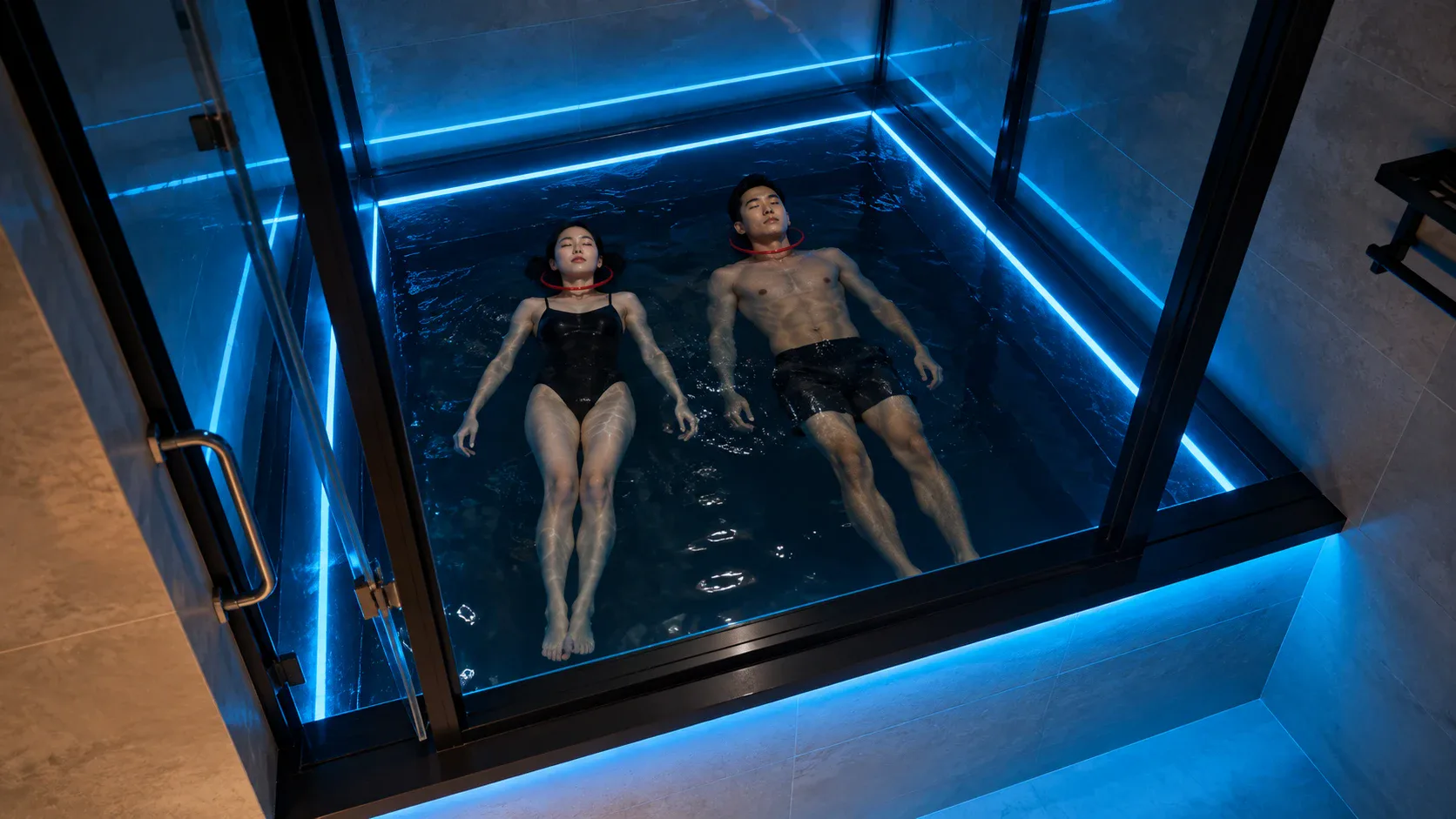
Can a float give you NSDR-style deep rest more easily? Yes, it can likely support it. NSDR asks you to build the conditions yourself; a float room hands them to you. About 500 kg of dense, mineral-rich Epsom salt in about 25 cm of water holds you up, so no muscle has to hold your body. The room can be fully dark and quiet, and the water sits at about 33–34 °C, close to skin temperature, so the “heavy and warm” stage arrives almost by itself. No study has compared the two head to head, but many guests tell us their mind slows down faster in the water than on a mat.
In a Swedish randomised trial, 65 working adults who floated 12 times in seven weeks reported less stress and anxiety and better sleep than a waiting group. In a 2018 US study, 50 people with anxiety or stress-related conditions felt clearly less anxious after a single one-hour float (a promising result, though that study had no comparison group). Float therapy is a young but very active research field: randomised controlled trials have shown clear effects on anxiety, stress, muscle tension and sleep, and new clinical studies are still under way.
Ōmni Evidence Scale: Strong evidence, for float and stress. We rate it Strong because, on top of these trials, user experience is overwhelmingly positive: in a 2025 survey of regular floaters, 92% reported relaxation and 77% less stress, echoed by thousands of reviews, Reddit threads and forums, and by athletes and public figures who float. See how we rate evidence on the Ōmni Evidence Scale.
The best of both: use the 10-minute script for the first minutes of your float, then let the water do the rest. At home, NSDR keeps you steady between floats; see how often should you float.
Try it at Ōmni in Thảo Điền
Ōmni’s suggestion, from the research and our guests’ experience, not a study prescription: NSDR at home most days, and a float when you want the deepest version of that rest, after a long week, a long flight or restless nights.
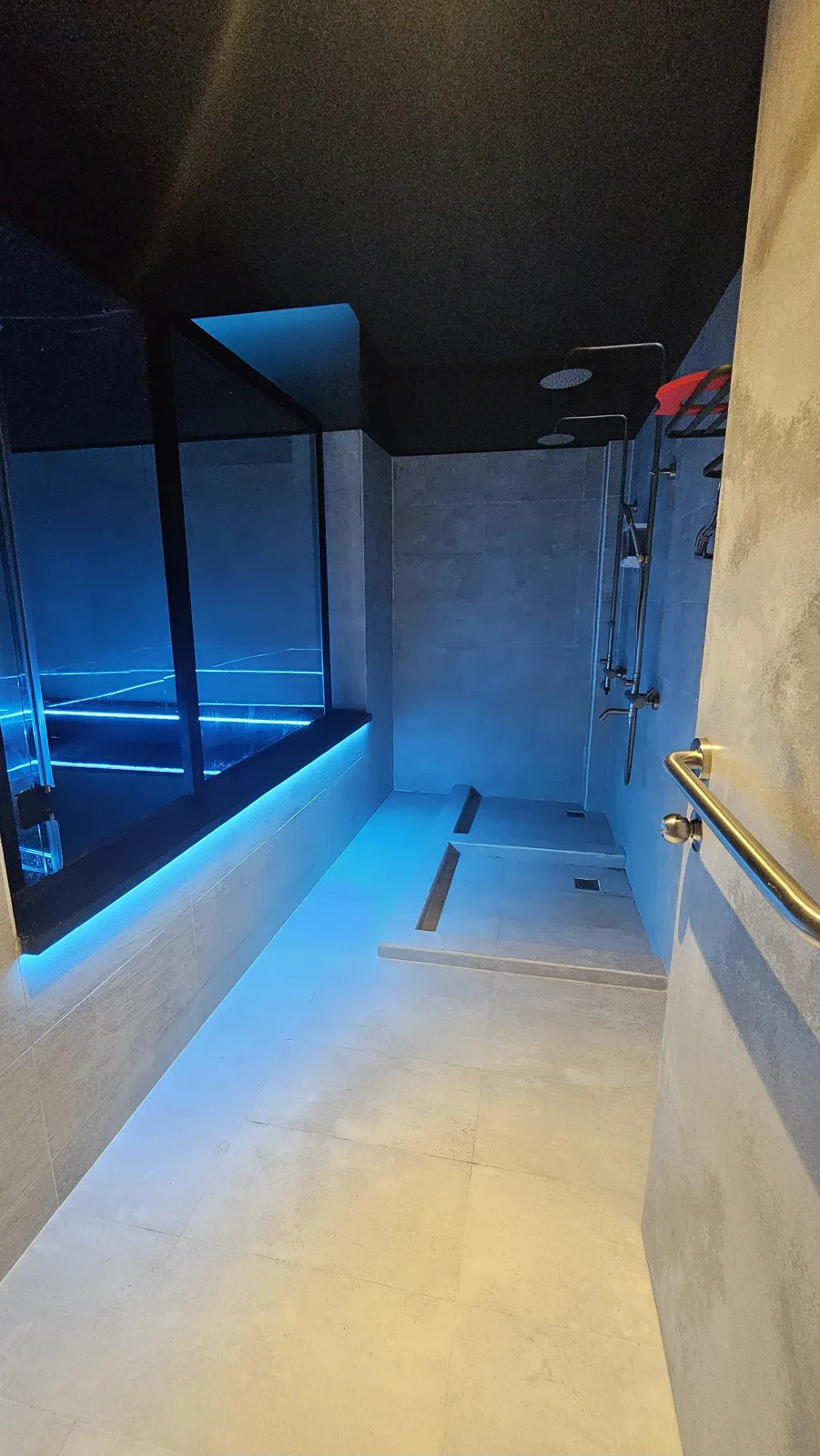
- Where and when: Ōmni Space – Float Saigon, 16C Quốc Hương, Thảo Điền. Open 9:00–21:00 every day; the last float starts at 20:00.
- Prices: a single 60-minute float is 1,500,000 VND; the couple room is 2,200,000 VND per room for 60 minutes. Everything else is on the price page.
- In the room: you adjust the lights yourself, every guest gets earplugs, and a Halo neck pillow is there for a tense neck. Allow about 30 extra minutes for a short guide and showers.
- Booking: on the booking site. Visiting Saigon? See our visitors page. New to floating? Read what float therapy is and before your first float.
Safety notes
- Gentle for most people. A 2020 review found that a minority of people feel uneasy during or after meditation practices, most often anxious. If that happens, open your eyes and stop.
- Trauma or PTSD. Deep body focus can feel unsettling after trauma: keep your eyes open, shorten the session, stay with the breath, or practise with a therapist.
- Not a replacement for care. NSDR does not replace treatment for insomnia, depression or anxiety, but it can support it alongside your doctor’s plan. Do not change or stop medication on your own.
- Never while driving or doing anything that needs your attention.
- For floating: every guest fills in a health questionnaire, fully and honestly, at every visit.
If you feel overwhelmed or unsafe, call 115 for emergency help in Vietnam. For anxiety that has lasted a while, see our guide to float therapy and anxiety.
FAQ
What is NSDR?
NSDR (non-sleep deep rest) is a guided practice where you lie still for 10–20 minutes, slow your breath and scan your body, resting deeply while staying awake. Neuroscientist Andrew Huberman coined the name.
Is NSDR the same as yoga nidra?
They feel almost the same. Yoga nidra is a specific sequence from the yoga tradition, with an intention and imagery; NSDR is the wider, non-spiritual name for practices like it.
Can NSDR replace a nap or lost sleep?
It can refresh you when you cannot or should not nap, for example on a jet lag day. There is no evidence that it makes up for sleep you have lost.
Does NSDR really boost dopamine by 65%?
That figure comes from one 2002 brain-scan study of eight experienced yoga teachers. It is interesting, but it is early evidence, not a proven effect.
Can I do NSDR during a float?
Yes. A float room gives you what NSDR needs: a still, supported body, darkness, quiet and warm water close to skin temperature. Use the 10-minute script at the start, then let the water take over.
Written by the team at Ōmni Space – Float Saigon in Thảo Điền. General information, not medical advice; checked on 22 October 2026.
Sources
- Huberman Lab. Non-Sleep Deep Rest (NSDR).
- Pandi-Perumal SR et al. (2022). The origin and clinical relevance of yoga nidra. Sleep and Vigilance 6(1): 61–84.
- Manzoni GM, Pagnini F, Castelnuovo G, Molinari E (2008). Relaxation training for anxiety: a ten-years systematic review with meta-analysis. BMC Psychiatry 8: 41.
- Ghai S, Odyniec P, Ghai I (2025). Effects of yoga nidra on stress, anxiety, and depression: a systematic review and meta-analysis. Annals of the New York Academy of Sciences 1556(1): e70149.
- Moszeik EN, Rohleder N, Renner KH (2025). The effects of an online yoga nidra meditation on subjective well-being and diurnal salivary cortisol: a randomised controlled trial. Stress and Health 41(3): e70049.
- Moszeik EN, von Oertzen T, Renner KH (2022). Effectiveness of a short yoga nidra meditation on stress, sleep, and well-being in a large and diverse sample. Current Psychology 41(8): 5272–5286.
- Datta K, Tripathi M, Verma M, Masiwal D, Mallick HN (2021). Yoga nidra practice shows improvement in sleep in patients with chronic insomnia: a randomized controlled trial. National Medical Journal of India 34(3): 143–150.
- Kjaer TW et al. (2002). Increased dopamine tone during meditation-induced change of consciousness. Cognitive Brain Research 13(2): 255–259.
- Linardon J, Messer M, Goldberg SB, Fuller-Tyszkiewicz M (2024). The efficacy of mindfulness apps on symptoms of depression and anxiety: an updated meta-analysis of randomized controlled trials. Clinical Psychology Review 107: 102370.
- Kjellgren A, Westman J (2014). Beneficial effects of treatment with sensory isolation in flotation-tank as a preventive health-care intervention: a randomized controlled pilot trial. BMC Complementary and Alternative Medicine 14: 417.
- Feinstein JS et al. (2018). Examining the short-term anxiolytic and antidepressant effect of Floatation-REST. PLoS One 13(2): e0190292.
- Hilpert K, Chis Ster I (2025). Experiences and perceptions of regular floatation-REST users: results from an online survey. Journal of Clinical Images and Medical Case Reports 6(5): 3600.
- Farias M, Maraldi E, Wallenkampf KC, Lucchetti G (2020). Adverse events in meditation practices and meditation-based therapies: a systematic review. Acta Psychiatrica Scandinavica 142(5): 374–393.
Leave a Reply