
In short: Watsu, short for “water shiatsu”, is a form of bodywork where a practitioner cradles you in chest-deep water at about 35 °C, slowly stretching, rocking and massaging you as you float. It was created in 1980 by Harold Dull at Harbin Hot Springs in northern California. A 2020 systematic review found encouraging effects on pain, movement and mood, but the evidence came from a small number of low- to moderate-quality trials, so we rate it Early evidence. Float therapy takes the other route to letting water hold you: no one touches you, the water is only about 25 cm deep but dense with Epsom salt, and the room can be dark and silent. One is a dance for two; the other, a solo pause. We run a float centre, so we are not neutral, and we will be clear about that as we go.
Part of the Ōmni Recovery Library · Recovery by Water
Maybe you have seen a video of it: one person lying back in a warm pool, eyes closed, body swaying like seaweed, while someone else gently turns and guides them through the water. It looks somewhere between massage, slow dance and being rocked to sleep as a child. If you have wondered what Watsu actually is, whether the research supports it, and how it compares with floating in a float room, this article walks through all three questions, so you can decide which kind of time in water feels more like what you need.
Ōmni Evidence Scale: Early evidence, for Watsu (a 2020 meta-analysis leaning positive, but based on very few, mostly small trials). Promising, for exercise in warm water for knee and hip osteoarthritis. Strong evidence, for float and stress. See how we rate evidence on the Ōmni Evidence Scale.
What is Watsu?
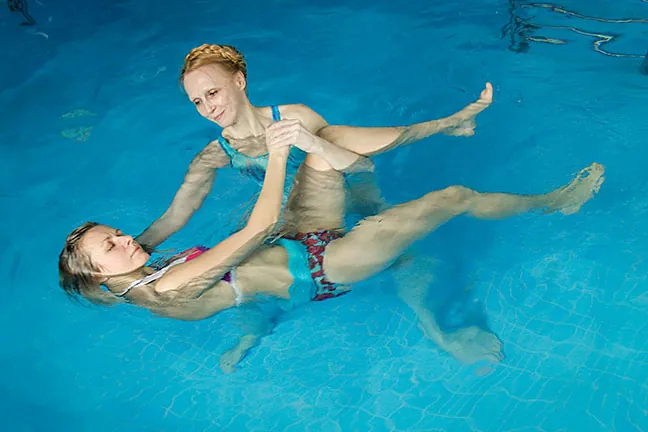
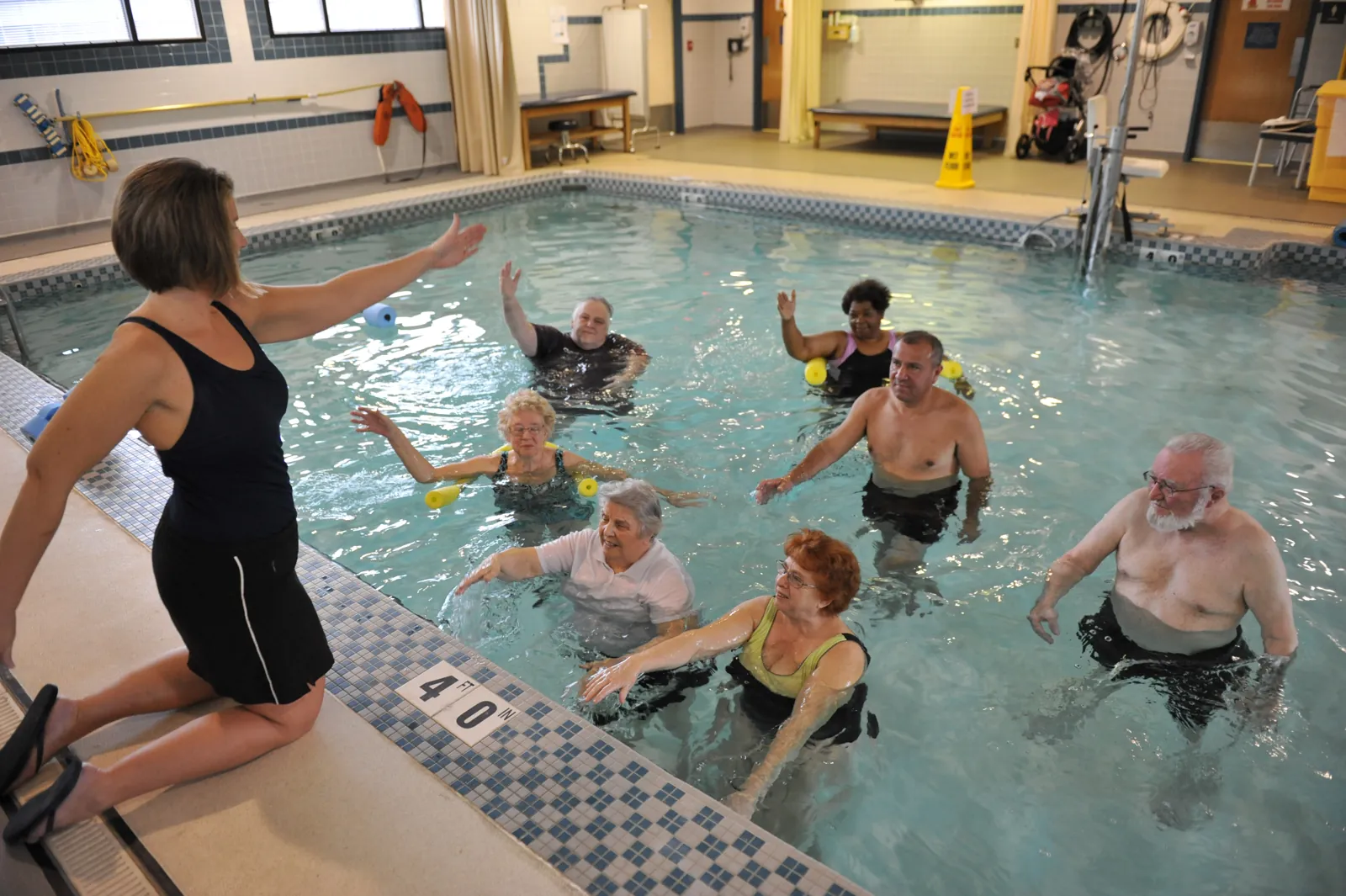
In a Watsu session, you lie back in a warm pool while a practitioner stands beside you, supporting your head and body. They guide you through the water in slow, wave-like patterns, adding stretches, gentle twists, joint movements and pressure along points on the body. Your job is mostly to let go. Time can feel different too: in one study cited in the review below, sessions lasted about 36 minutes, yet most participants thought they had been in the water for an hour or more.
Researchers describe Watsu as passive hydrotherapy in chest-deep, thermoneutral water at about 35 °C (studies used 32–39 °C), combining stretching of the body’s connective tissue, joint mobilisation, massage and shiatsu. “Thermoneutral” simply means the water is warm enough that your body has very little work to do to stay comfortable, which may be part of why settling into the experience can feel so effortless.
Born in a Californian hot spring
Watsu has a surprisingly specific birthplace. In 1980, Harold Dull was teaching Zen Shiatsu at Harbin Hot Springs, a retreat in the hills of Lake County, northern California. He began bringing shiatsu stretches into the warm pool, working with people as they floated, and discovered that supporting someone in water created possibilities that touch on a table did not. From there, Watsu spread into spas and rehabilitation clinics around the world. When Dull died in 2019, Harbin noted that the registry he founded listed more than 20,000 teachers and students from 90 countries.

From shiatsu on a mat to shiatsu in water
Shiatsu is a Japanese form of bodywork built around pressure from the thumbs, palms and elbows, usually performed on a mat on the floor. Watsu keeps the same spirit of slow, attentive touch, but changes the setting completely. In water, your body carries only a fraction of its usual weight, giving the practitioner room to guide your spine, hips and shoulders through movements that would be much more awkward on a mat.

What science says about Watsu
The clearest summary we found is a 2020 systematic review and meta-analysis in PLOS ONE, led by Agnes Schitter at the University of Bern’s Institute of Complementary Medicine in Switzerland. It brought together 27 studies of any design across a strikingly broad range of people: pregnant women, people with fibromyalgia, stroke, cerebral palsy, Parkinson’s disease, ankylosing spondylitis and juvenile arthritis, premature babies, and healthy volunteers.
- The results lean positive. Pooled effects favoured Watsu for pain, physical function and mental symptoms such as stress and mood, with moderate effect sizes.
- But the evidence base is narrow. Only five randomised controlled trials were assessed, and each pooled result rested on just one to three of them. The authors rated the quality of evidence as low to moderate at best and called for higher-quality trials.
- Side effects were barely studied. Only six studies reported on them; one reported a swollen knee after a first session.
- There was a conflict of interest, openly declared. The lead author had chaired the Swiss Aquatic Bodyworkers’ Association until 2016. That does not make the review wrong, but it is useful context, and one reason we would want to see more independent trials before rating the evidence any higher.
Watsu also belongs to a larger and better-studied world: exercise and therapy in warm water. A 2016 Cochrane review of 13 trials with 1,190 people found that aquatic exercise for knee and hip osteoarthritis brings small, short-term but clinically relevant improvements in pain, disability and quality of life, about 5 points on a 100-point scale. That is active exercise, not passive bodywork, so it is not evidence for Watsu itself. But it does support a broader idea: warm water can be a gentle place for stiff, painful bodies to move. Interestingly, the Watsu review itself points to float research when discussing the deep relaxation and altered sense of time people report.
Ōmni Evidence Scale: Early evidence, for Watsu: a handful of small trials and one meta-analysis with a declared conflict of interest. Promising, for aquatic exercise in knee and hip osteoarthritis, backed by a Cochrane review.
Watsu and float: two ways to let water hold you
Both practices begin with the same quiet idea: when water carries your weight, your muscles no longer have to work so hard to hold you up. From there, they move in almost opposite directions. Watsu adds another person, movement and touch. A float strips almost everything away.
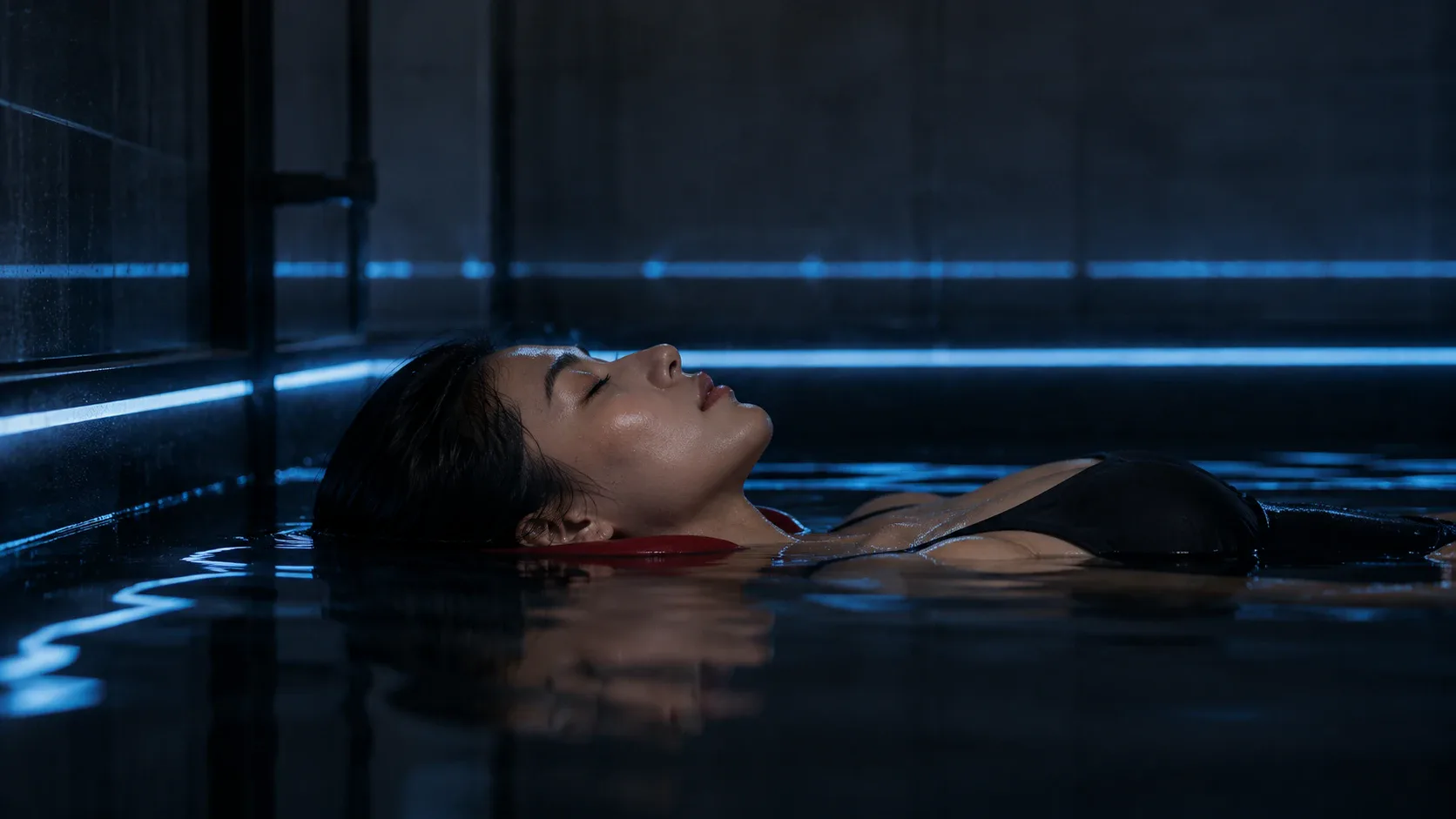
In a float room at Ōmni, about 500 kg of dense, mineral-rich Epsom salt is dissolved in about 25 cm of water, warmed to 33–34 °C, close to skin temperature. The salt water supports you without effort as you lie face up, and nobody moves you. You can switch off the lights, let the sound fade away, and stay there for 60 or 90 minutes.
| Watsu | Float | |
|---|---|---|
| Who is in the water | You and a trained practitioner | Just you (or you and your partner in a couple room) |
| Water | Plain warm water, chest-deep, about 35 °C | About 25 cm of Epsom salt water, 33–34 °C |
| What keeps you up | The practitioner and small floats | The density of the salt water |
| Touch and movement | Constant: stretching, rocking, massage | None: stillness |
| Light and sound | Usually a lit pool, often with music | Dark and quiet, if you choose |
| Feels like | Being rocked, a slow dance | Weightless rest, a mind turning inward |
| Evidence | Early evidence | Strong evidence, for stress |
Float research goes back further. A 2005 meta-analysis of 27 flotation studies found positive effects on stress-related body measures and wellbeing, and in a Swedish randomised pilot trial, 65 working adults who floated 12 times over seven weeks reported less stress and anxiety and better sleep than a waiting group.
Ōmni Evidence Scale: Strong evidence, for float and stress. We rate it Strong because, alongside these trials, user experience is overwhelmingly positive: in a 2025 survey of regular floaters, 92% reported relaxation and 77% less stress, echoed by thousands of reviews, Reddit threads and forums, and by athletes and public figures who float.
Which one suits you?
If you enjoy being looked after, like massage and are curious about feeling your body move in ways that are difficult on land, Watsu may be a beautiful experience, provided you can find a trained practitioner and a warm pool. It is built around trust: you let another person support and guide your body for an hour, and for many people that human element is exactly the appeal.
If what you are craving is space — no one needing anything from you, no touch, no conversation — then a float is the solitary version. For many floaters, that stillness is the whole point: nobody to respond to, nothing to perform, nowhere else to be. And, of course, some people enjoy both for entirely different moods.
What we think at Ōmni (and, yes, what we sell)
We sell floats, so keep that in mind. We do not offer Watsu, and we think it deserves respect as a skilled, hands-on practice with an interesting, if still thin, body of research. What we offer is the other way of being held by water. Ōmni Space in Thảo Điền comes from the team behind Float Vietnam, the country’s pioneer float centre since 2017. Each float room is private, with its own shower. A single float costs 1,500,000 VND for 60 minutes or 2,000,000 VND for 90 minutes; the couple room, one large square pool for two, adds 700,000 VND for the second person, which is the closest we come to sharing the water. New to it? Start with what float therapy is, or read how runners and gym-goers use floats for recovery.
Ōmni Space – Float Saigon is at 16C Quốc Hương, Thảo Điền. We are open 9:00–21:00 daily; the last float starts at 20:00, and walk-ins are welcome until 18:00.
Float PlanRunning on empty?Take the one-minute Float Plan quiz: tell us how you feel and what you need, and get a simple plan for your first session.Make my Float PlanFAQ
What is Watsu?
Watsu, or water shiatsu, is bodywork performed in warm, chest-deep water at about 35 °C. A practitioner supports you as you float, guiding you through slow stretches, rocking and massage. Harold Dull created it in 1980 at Harbin Hot Springs in California.
Does Watsu have scientific evidence?
Early evidence. A 2020 meta-analysis found encouraging effects on pain, movement and mood, but it relied on only a few small trials of low to moderate quality, and its lead author had ties to a Watsu association. Exercise in warm water has stronger support for knee and hip osteoarthritis.
What is the difference between Watsu and float therapy?
Watsu uses plain warm water and a practitioner who supports and moves you. A float uses about 25 cm of dense Epsom salt water that supports you by itself, with no touch, often in darkness and silence, for 60 or 90 minutes.
Do I need to be able to swim for Watsu or a float?
Not for a float: the water is only about 25 cm deep, and the salt keeps you supported at the surface. In Watsu, the practitioner supports you throughout the session, although the pool itself is chest-deep.
Does Ōmni Space offer Watsu?
No. We offer private float rooms in Thảo Điền, from 1,500,000 VND for 60 minutes. Our team is happy to walk you through the experience when you visit.
Written by the team at Ōmni Space – Float Saigon in Thảo Điền, Vietnam’s pioneer float centre since 2017. We sell floats, not Watsu. General information, not medical advice; sources checked on 30 October 2026.
Sources
- Schitter AM, Fleckenstein J, Frei P, Taeymans J, Kurpiers N, Radlinger L (2020). Applications, indications, and effects of passive hydrotherapy WATSU (WaterShiatsu): a systematic review and meta-analysis. PLOS ONE 15(3): e0229705.
- Harbin Hot Springs (18 September 2019). Honoring Harold Dull and his gift of Watsu.
- Bartels EM, Juhl CB, Christensen R, et al. (2016). Aquatic exercise for the treatment of knee and hip osteoarthritis. Cochrane Database of Systematic Reviews 3: CD005523.
- van Dierendonck D, te Nijenhuis J (2005). Flotation restricted environmental stimulation therapy (REST) as a stress-management tool: a meta-analysis. Psychology & Health 20(3): 405–412.
- Kjellgren A, Westman J (2014). Beneficial effects of treatment with sensory isolation in flotation-tank as a preventive health-care intervention: a randomized controlled pilot trial. BMC Complementary and Alternative Medicine 14: 417.
Leave a Reply