
In short: Start with three floats close together, then float one to three times a month. That is what most regular floaters do, and they feel the effects for one to four days. In Saigon (Ho Chi Minh City), float more often during stressful stretches, less when life is calm. A 90-minute session is a good default.
After the first float, the next question is almost always: how often should I come back? This guide was written by the team at Ōmni Space – Float Saigon in Thảo Điền for people in Saigon and Ho Chi Minh City who have tried floating and want a long-term rhythm that fits their goal and their budget. We draw on research and on surveys of regular floaters, and we say clearly where a rhythm is our own suggestion. It is general information, not medical advice. Details were checked on 12 October 2026.
First the first three, then the long run
Our short article on why three float sessions matter explains that the first float is often spent learning to let go, the second goes deeper, and by the third most people relax straight away. So we suggest three floats within two to three weeks.
This article picks up after that. The best data on long-term rhythm comes from a 2025 online survey of 83 regular floaters, mostly in the UK (Hilpert and Chis Ster):
- How often they actually float: most float one to three times a month.
- How often they would like to: about 70% said they would like to float one to seven times a week.
- How long: 65.1% usually float for 30–60 minutes, and 28.9% for 61–90 minutes.
- How long it lasts: most said the effects lasted one to four days.
- What they get: 91.6% reported relaxation and 77.1% less stress.
These are keen floaters, not a random sample, but “one to three times a month” is a realistic picture of floating as a habit.
How often the studies floated
No study has tested the ideal long-term frequency; a 2025 review of 63 float studies (Lashgari and colleagues) says the best protocols still need research. What we have is the schedules researchers chose:
- One float can already help. Feinstein and colleagues (2018) gave 50 people with anxiety and stress-related disorders a single float of up to an hour. State anxiety (how anxious you feel right now) fell sharply, with a very large effect. There was no control group.
- Twelve floats over seven weeks for stress. Kjellgren and Westman (2014) randomised 65 fairly healthy adults to a 12-session float programme over seven weeks or a waiting list. Stress, anxiety and depression fell and sleep improved, in the float group only.
- Twelve floats for generalised anxiety. Jonsson and Kjellgren (2016) randomised 50 people with generalised anxiety disorder (long-lasting worry about many things) to 12 floats or a waiting list. About 37% of floaters reached full remission, and most gains held six months later.
- Twelve versus 33. Bood and colleagues (2007) gave 37 patients with stress-related muscle pain either 12 or 33 floats. Most measures improved after 12; 33 added little. The authors suggested adding other approaches after 12 rather than simply floating more.
- Athletes after training. Driller and Argus (2016) gave 60 elite athletes from nine sports one float of about 45 minutes after training. Fifteen of 16 mood measures improved and muscle soreness fell. Those who dozed off during the float showed small extra benefits on some moods. It was a pilot with no control group.
In short: one float gives a lift, about 12 floats over seven weeks is the most-studied dose, and more is not automatically better. Float therapy is a young but very active research field: randomised controlled trials have shown clear effects on anxiety, stress, muscle tension and sleep, and new studies are still under way. For a wider overview, see our sister site’s summary of float research.
Ōmni Evidence Scale: Strong evidence. For stress and relaxation, several trials point the same way. We rate it Strong because, on top of these trials, user experience is overwhelmingly positive: in a 2025 survey of regular floaters, 92% reported relaxation and 77% less stress, echoed by thousands of reviews, Reddit threads and forums, and by athletes and public figures who float. See how we rate evidence on the Ōmni Evidence Scale.
A rhythm for your goal in Saigon (Ho Chi Minh City)
These rhythms are our suggestions, built from the studies above and years of watching guests, not prescriptions from the research. Start each with three floats close together.
| If your goal is… | Our suggested rhythm | Why |
|---|---|---|
| Stress or everyday anxiety | Every one to three weeks; weekly in hard periods | Trials used 12 floats over about seven weeks; one float already lowers anxiety. See our anxiety guide. |
| Burnout | About two a week for six to seven weeks, then every one to three weeks | Copies the Swedish 12-float workplace trial. See our 7-week burnout plan. |
| Sleep | Every one to two weeks, in the evening | Floaters often report better sleep, but sleep research is small (Early evidence). See our insomnia plan. |
| Training recovery | After hard sessions, long runs or races; often weekly in a heavy block | One float improved mood and soreness in elite athletes, but studies are small (Early evidence). |
| Meditation or creativity | Every two to four weeks, 90–120 minutes | Longer sessions leave more quiet time once the body has settled. Creativity research is limited. |
| Curiosity or an occasional reset | Once a month or once a season | Effects usually last one to four days, so a float before a big week or after a busy one works well. |
| Travellers and jet lag | One float in your first days, timed to your body clock | No study has tested floating for jet lag; it is simply a calm place to rest. See our jet lag guide. |
60, 90 or 120 minutes?
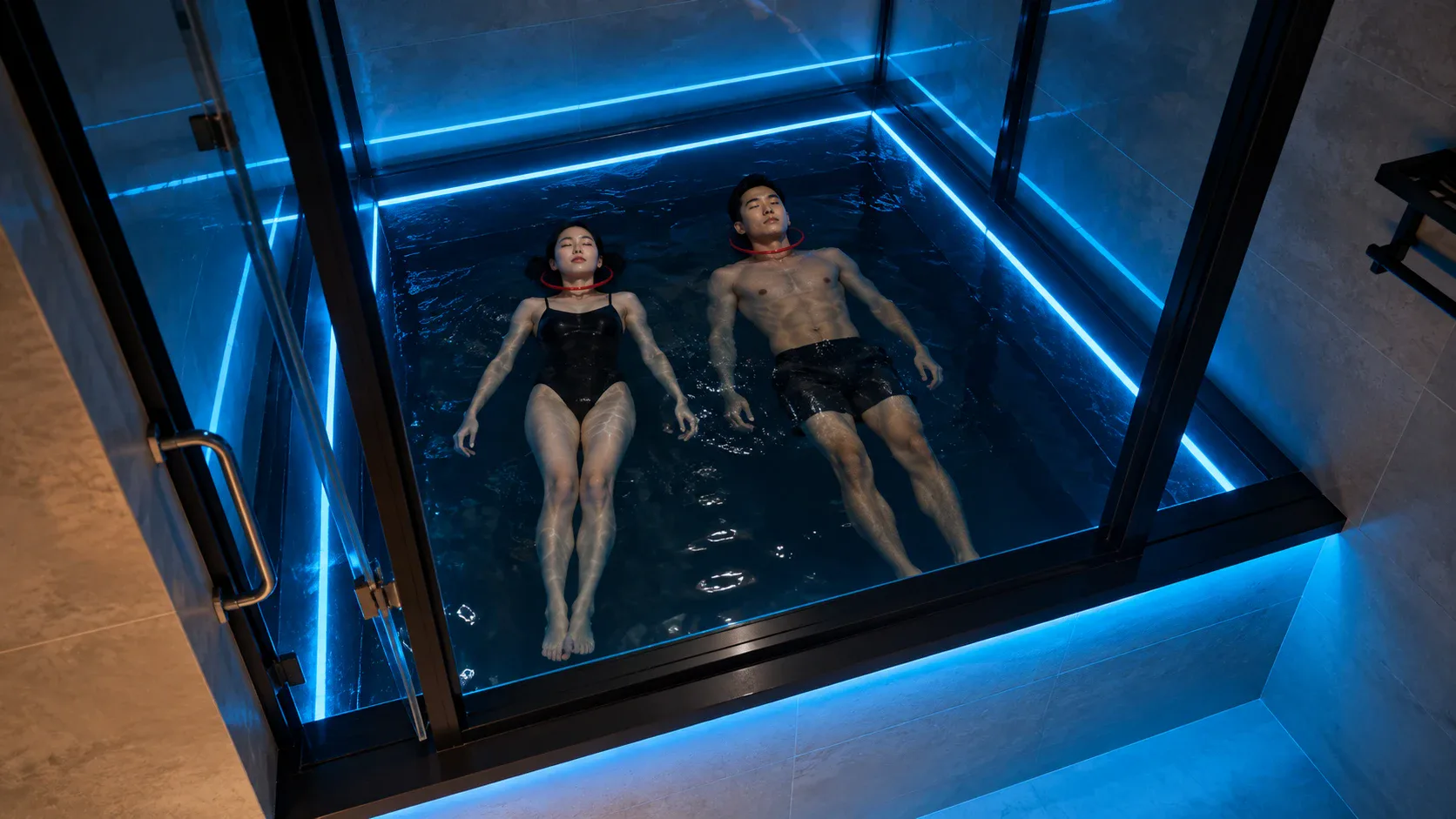
- 60 minutes (1,500,000 VND): good for a quick reset, a lunch break or a busy week. If you take a while to settle, the deep part is short.
- 90 minutes (2,000,000 VND): our default. Time to settle, then rest deeply; every package uses it. One 2018 anxiety study also used 90-minute floats.
- 120 minutes (2,500,000 VND): for experienced floaters, meditators and anyone who wants long, timeless quiet.
For your first floats, choose 60 or 90 minutes. Most surveyed regulars float 30–90 minutes, so longer is not required.
What each rhythm costs
Honest numbers for a Single Room, per 90-minute float:
| Option | Price | Per float | Valid | Fits a rhythm of… |
|---|---|---|---|---|
| Single float, 90 minutes | 2,000,000 VND | 2,000,000 VND | – | Once a month or less |
| Introduction Package, 3 × 90 min (sauna included, not shareable) | 3,000,000 VND | 1,000,000 VND | 3 months | Your first three floats |
| Renew membership, 5 × 90 min (with a Bring a Friend voucher) | 4,500,000 VND | 900,000 VND | 3 months | About every two to three weeks |
| Sustain membership, 9 × 90 min (with a Bring a Friend voucher) | 8,000,000 VND | about 889,000 VND | 6 months | About every three weeks (1.5 a month) |
| Shareable packs: 10 / 20 / 50 / 100 sessions | 18 / 34 / 80 / 150 million VND | 1.8 / 1.7 / 1.6 / 1.5 million VND | 6 / 12 / 18 / 24 months | Families, couples and teams |
- Once a month: no membership fits neatly, because Renew asks for five floats in three months and Sustain nine in six. Paying per visit, twelve 90-minute floats cost 24,000,000 VND a year (or 18,000,000 VND at 60 minutes). If you can float every three weeks instead, two Sustain memberships give 18 floats a year for 16,000,000 VND: more floats for less.
- Every two to three weeks: Renew (five floats in three months) or Sustain (nine in six months) brings each float under 900,000 VND.
- A focused start, then weekly: the Introduction Package can be combined with a membership. Introduction Package plus Sustain gives 12 floats for 11,000,000 VND, about 917,000 VND each, the dose used in the trials.
- Two people, each once a month: a 20-session shareable pack (34,000,000 VND, valid 12 months) covers ten months for both of you, at 1,700,000 VND per session.
- Floating together: the Couple Room costs 2,200,000 VND for 60 minutes for any two people, so 1,100,000 VND each.
Gift cards can be used for every service.
Signs you could float less, or more
Your body is a better guide than any table. After each float, note how you feel, how you slept and how long the calm lasted.
- You could float less often if the calm lasts well beyond four days and you sleep well. Every three to four weeks may be plenty.
- You could float more often if the effect fades within a day or two, a deadline or exam is coming, you are training hard, or tension creeps back into your neck and jaw.
- Change the length first. If 60 minutes feels short, try 90 before adding visits.
- Do not force it. A rhythm you enjoy is one you will keep.
Stacking with sauna and cold plunge
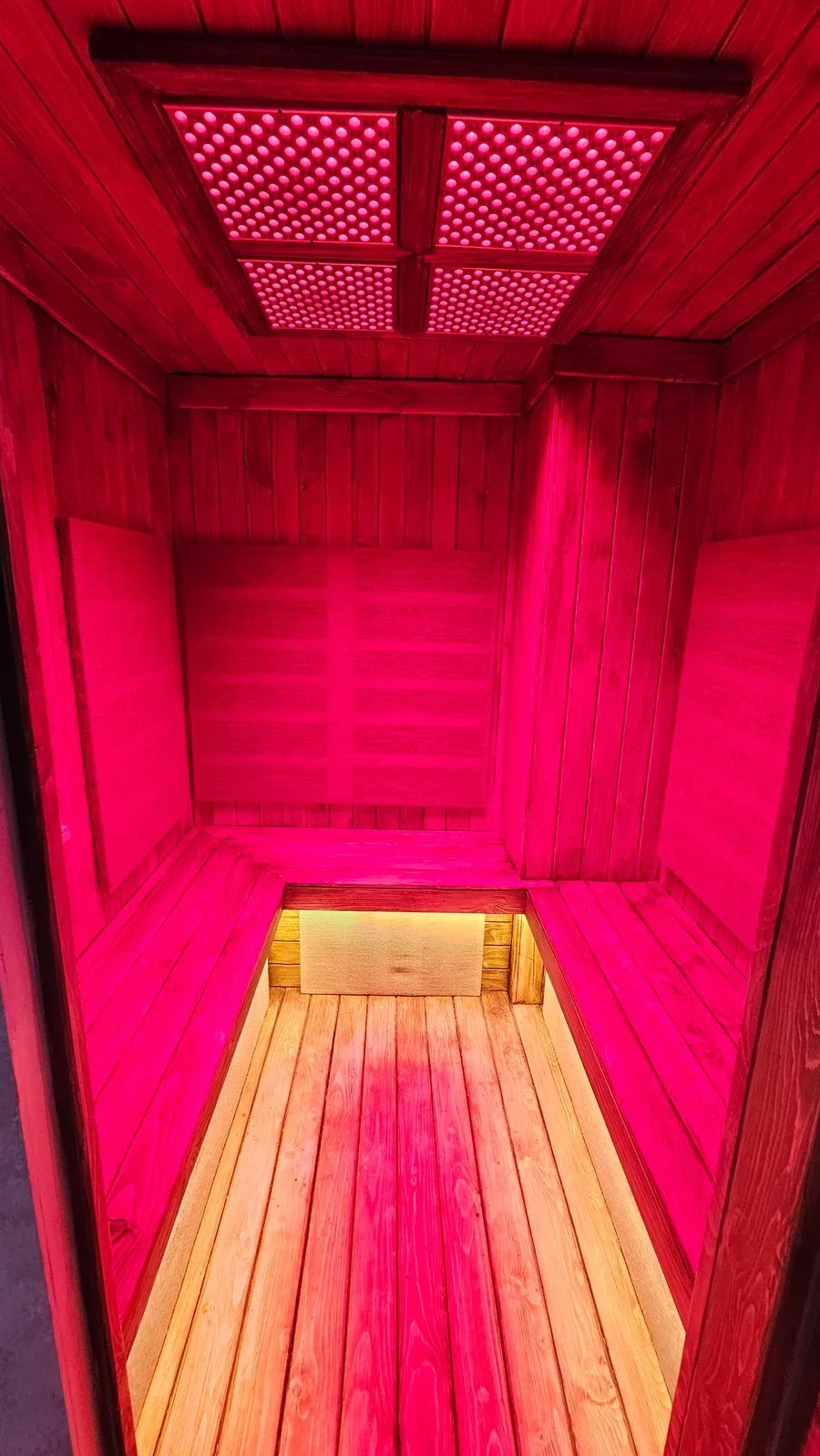
The infrared and red-light sauna (45 minutes, 45–55°C) and the cold plunge (30 minutes, 11–15°C) each cost +200,000 VND when added to a float, against 450,000 VND alone. Try the sauna before a float when your muscles are tight. Read more about the infrared sauna and the cold plunge.
Safety
- Floating is not a treatment. It can sit alongside therapy, medication or physiotherapy, but it does not replace them. Keep taking any medicine you have been prescribed.
- If stress, low mood or poor sleep stop you working or sleeping for weeks, please see a doctor or licensed psychologist. In an emergency in Vietnam, call 115.
- Pregnancy: ask your doctor first, and tell us when you book.
- Health questionnaire: fill it in before every visit and mention any new condition.
Where to try it in Saigon
Our centre is at 16C Quốc Hương, Thảo Điền, open 9:00–21:00 every day. Single Room floats cost 1,500,000 VND for 60 minutes, 2,000,000 VND for 90 minutes and 2,500,000 VND for 120 minutes. See all options on our services page, and if it is your first time, read before your first float.
FAQ
How often should I float?
Start with three floats close together, then one to three times a month, which is what most regular floaters do. Float more often in stressful periods. Most people feel the effects for one to four days.
Can I float every day?
Studies did not test daily floating. Programmes used about 12 floats over seven weeks, and 33 added little over 12. Weekly is plenty for most goals.
How long do the effects of a float last?
In a 2025 survey of 83 regular floaters, most said the effects lasted one to four days.
Is 60 minutes enough?
Yes for a quick reset; most surveyed regulars float 30–90 minutes. We suggest 90 as a default, to leave time to settle.
What is the cheapest way to float regularly in Ho Chi Minh City?
The Sustain membership, 9 × 90 minutes for 8,000,000 VND, about 889,000 VND per float, valid six months. It suits someone who floats about every three weeks.
Should athletes float before or after a race?
Most people float after hard training or races, to help mood and soreness. The best-known athlete study used one float of about 45 minutes after training. Treat it as an extra, not a replacement for sleep and good food.
Sources
- Hilpert K, Chis Ster I (2025). Experiences and perceptions of regular floatation-REST users: results from an online survey. Journal of Clinical Images and Medical Case Reports 6(5): 3600.
- Lashgari E, Chen E, Gregory J, Maoz U (2025). A systematic review of flotation-restricted environmental stimulation therapy (REST). BMC Complementary Medicine and Therapies 25: 230.
- Feinstein JS et al. (2018). Examining the short-term anxiolytic and antidepressant effect of Floatation-REST. PLOS ONE 13(2): e0190292.
- Feinstein JS et al. (2018). The elicitation of relaxation and interoceptive awareness using floatation therapy in individuals with high anxiety sensitivity. Biological Psychiatry: Cognitive Neuroscience and Neuroimaging 3(6): 555–562.
- Kjellgren A, Westman J (2014). Beneficial effects of treatment with sensory isolation in flotation-tank as a preventive health-care intervention: a randomized controlled pilot trial. BMC Complementary and Alternative Medicine 14: 417.
- Jonsson K, Kjellgren A (2016). Promising effects of treatment with flotation-REST as an intervention for generalized anxiety disorder: a randomized controlled pilot trial. BMC Complementary and Alternative Medicine 16: 108.
- Bood SA, Sundequist U, Kjellgren A, Nordström G, Norlander T (2007). Effects of flotation REST on stress related muscle pain: are 33 flotation sessions more effective than 12 sessions? Social Behavior and Personality 35(2): 143–156.
- Driller MW, Argus CK (2016). Flotation restricted environmental stimulation therapy and napping on mood state and muscle soreness in elite athletes: a novel recovery strategy? Performance Enhancement & Health 5(2): 60–65.
Leave a Reply