
In short: A body scan meditation moves your attention slowly through the body, from the toes to the top of the head, noticing what you feel without trying to change it. It grew out of Buddhist mindfulness of the body and opens the 8-week MBSR course. Research rates MBSR Promising for stress; the body scan on its own is still early evidence. A float room is one of the easiest places to feel the body clearly.
Read in Vietnamese: Thiền quét cơ thể (body scan) là gì? Bài 10 phút để lắng nghe cơ thể
You spent the day at a laptop in an over-cooled office, rode home through hot, loud traffic, and now you are lying in bed with your shoulders still halfway up to your ears. Or you have just landed in Saigon and your body feels heavy in places you cannot name. Or a meeting is coming and your stomach is tight before your mind has noticed why. This guide gives you a 10-minute body scan you can do tonight, what the research really says about it, and how it compares with NSDR and a float in Thảo Điền.
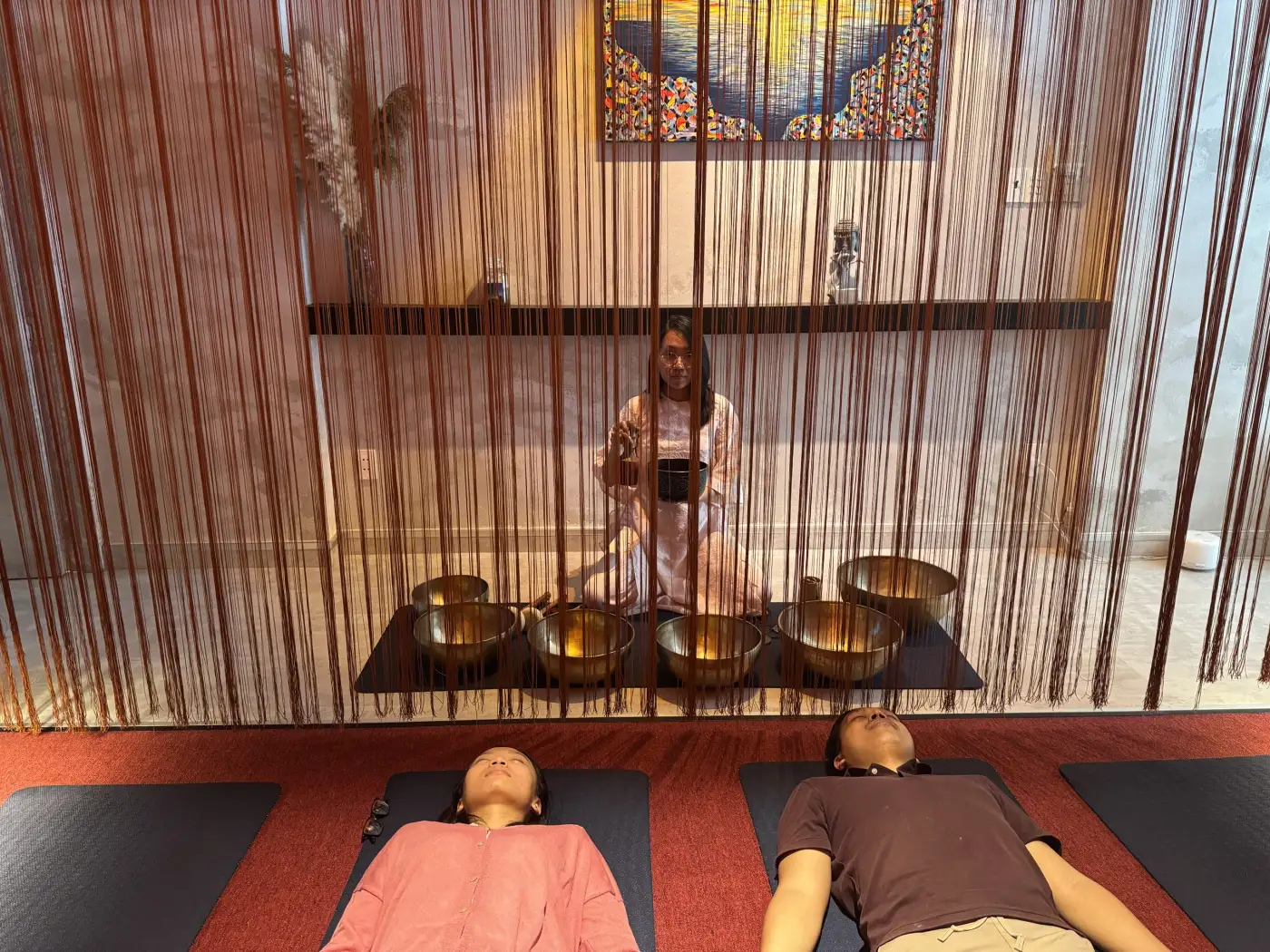
What is a body scan meditation?
Your body sends up small signals all day: a tired shoulder, a tight belly, cool hands. A busy mind skips past them. A body scan is ten minutes of listening: you lie or sit still and move your attention through the body, one area at a time, noticing warmth, coolness, tingling, tension, or almost nothing at all. You are not trying to fix anything, only to know what is there.
The skill behind it is interoception, the sense of what is happening inside your body. A 2015 review by Norman Farb and colleagues suggests that contemplative practice may help people read these signals more calmly, with less alarm.
It is not progressive muscle relaxation (Edmund Jacobson, 1929), where you tense and release each muscle group. That method and NSDR aim to relax the body; a body scan only asks you to notice it, and relaxation often follows on its own.
Where the body scan comes from
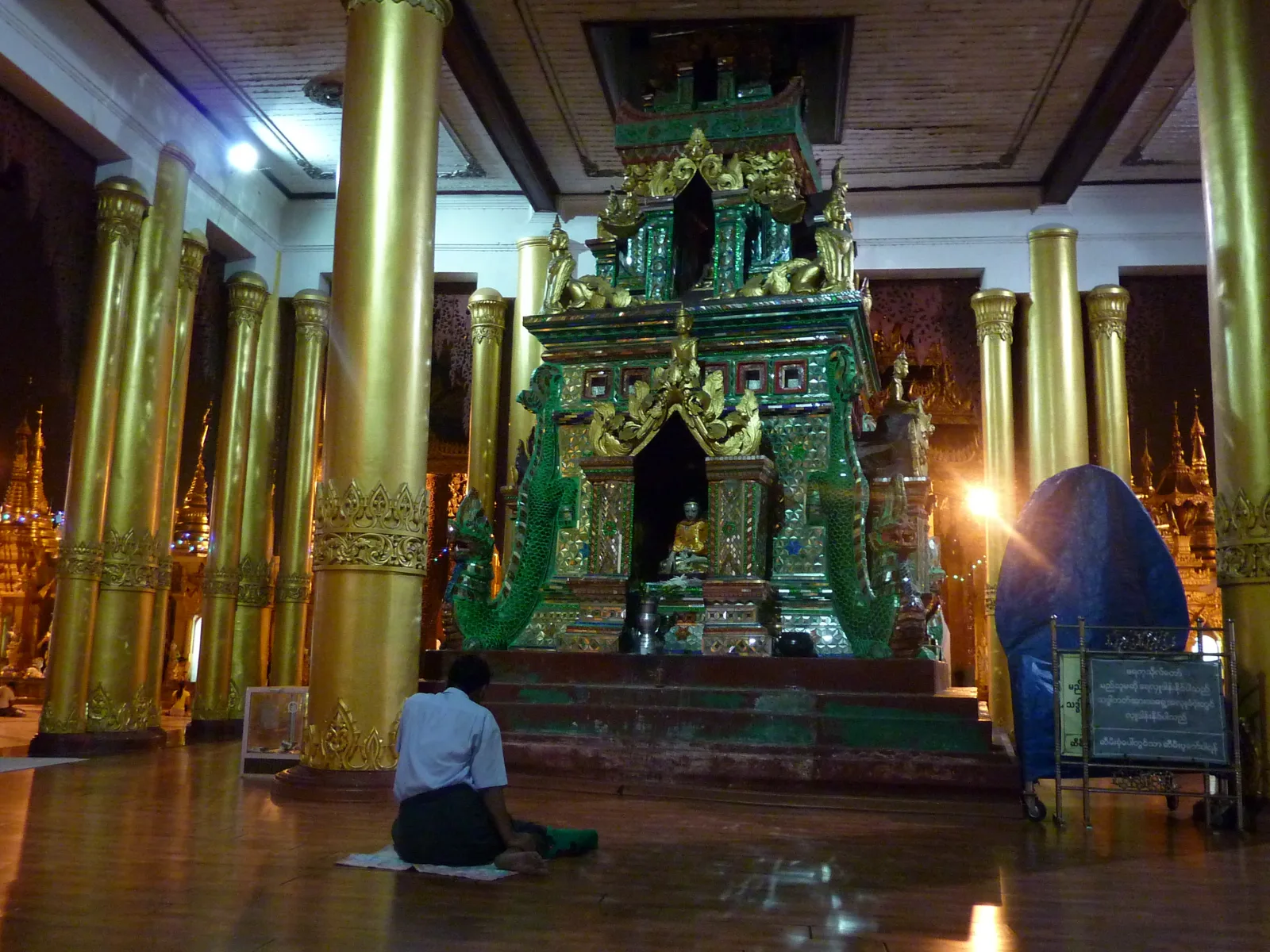
- Buddhist roots. The Satipaṭṭhāna Sutta (Majjhima Nikāya 10), the classic Buddhist text on mindfulness, begins with mindfulness of the body: knowing that you are breathing, sitting or lying down, and reviewing the body from the soles of the feet up and from the top of the head down. According to the scholar-monk Bhikkhu Anālayo (2020), the full sweep of attention through the body, as taught today, developed much later in Burmese insight (vipassanā) meditation, through the teacher U Ba Khin and his best-known student, S. N. Goenka: attention moves from head to feet and from feet to head.
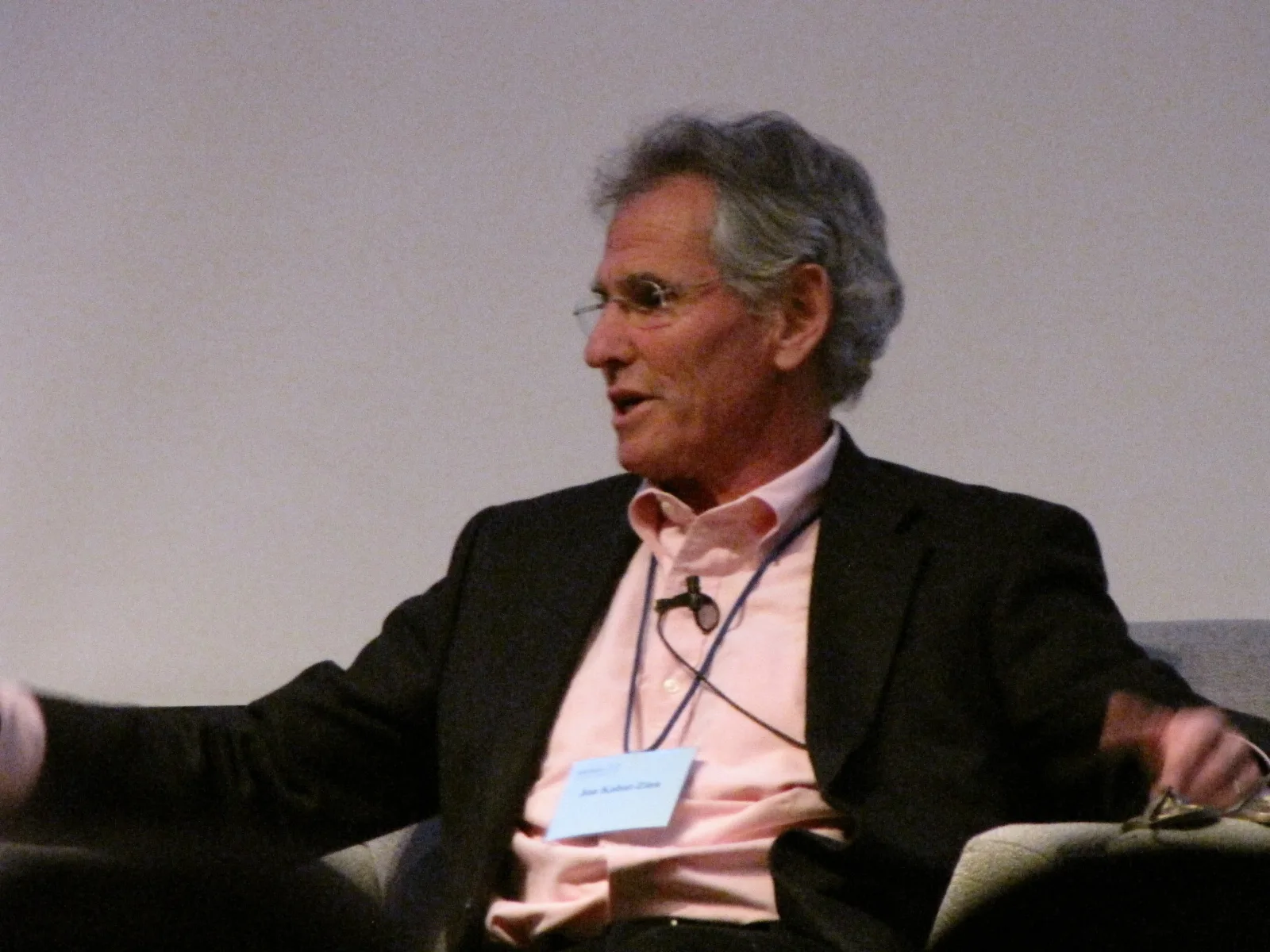
- Into the hospital. Jon Kabat-Zinn trained in 1973 with Robert Hover, a teacher in U Ba Khin’s tradition. In 1979 he opened the Stress Reduction Clinic at the University of Massachusetts Medical Center and created MBSR (mindfulness-based stress reduction), an 8-week course with no religious framing. The body scan is its first formal home practice, usually done lying on your back; Dreeben and colleagues (2013) call it the groundwork for every practice that follows.
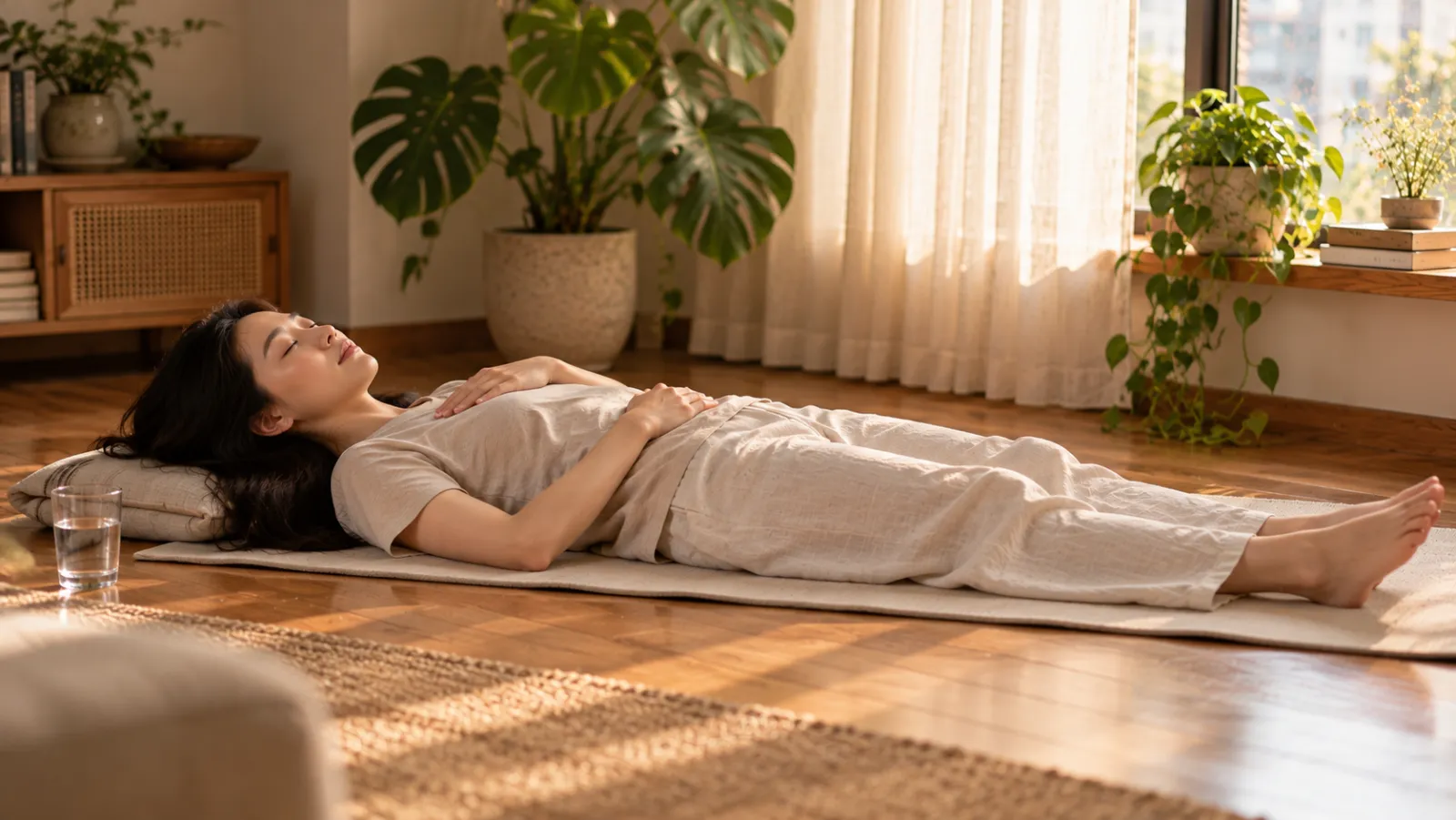
When a body scan helps most in Saigon
- After a long day at the laptop. The scan shows you where the day sits; if it is your neck and back most days, see back and neck pain from desk work.
- In bed, before sleep. Attention shifts from thinking to feeling. If nights stay restless for weeks, read our insomnia plan.
- When anxiety lives in your body. A racing heart or tight chest often comes before the worried thought; noticing it calmly is the practice. See also float therapy and anxiety.
- After a flight or a hard workout. A scan tells you what needs rest today; see our jet lag guide.
A 10-minute guided body scan you can do tonight
Press play to follow Đức’s voice (about 10 minutes), or read the script below slowly at your own pace. You need a mat or a bed, and your phone on silent.
- 0:00–1:00 · Settle: lie or sit, three slow breaths.
- 1:00–3:00 · Legs: feet, calves, knees.
- 3:00–5:00 · Middle: thighs, hips, belly, lower back.
- 5:00–7:00 · Upper body: chest, upper back, shoulders, arms.
- 7:00–8:30 · Head: neck, face, top of the head.
- 8:30–10:00 · Whole body: everything at once, then come back.
Lie on your back on a mat or your bed, arms resting by your sides. If lying down is not possible, sit in a chair, back upright but not stiff. Close your eyes, or let your gaze rest softly on one spot. [pause 5 seconds]
Take a slow breath in, and a long breath out. Two more. With each out-breath, let your body settle a little deeper into the floor. [pause 15 seconds]
For the next ten minutes, we will visit the body one part at a time. There is nothing to fix and nothing to change. Just notice what is here. [pause 5 seconds]
Bring your attention down to your feet. Your toes, the soles of your feet, your heels. Maybe they feel warm, or cool, or tingly. Maybe you feel almost nothing. Whatever you notice is fine. [pause 30 seconds]
Slowly move up to your ankles, your calves, your knees. Notice where the legs feel heavy and where they feel light. [pause 40 seconds]
Now your thighs, and your hips, held by the floor beneath you. [pause 25 seconds]
Come to your belly. Feel it rise gently as you breathe in, and fall as you breathe out. Let the breath move on its own. [pause 25 seconds]
Your lower back. If there is a spot that feels tired or tight, try breathing out towards it, as if sending it a little warmth. Then let it be. [pause 30 seconds]
Move up to your chest. Feel it lift and lower with each breath. Maybe you can feel your heartbeat, maybe not. Both are fine. [pause 25 seconds]
Your upper back and your shoulders, where a long day at the laptop often settles. Just notice them. [pause 25 seconds]
Follow both arms down: your elbows, your wrists, your palms, all ten fingertips. Is there tingling here? Warmth? [pause 30 seconds]
Now your neck, and then your face. Your jaw, your lips, your cheeks, the small muscles around your eyes, your forehead. If something is frowning, simply notice it. [pause 30 seconds]
Finally, the very top of your head. Rest your attention here for a moment. [pause 15 seconds]
If your mind has wandered, that is completely normal. When you notice, come back to the last part of the body you remember. [pause 5 seconds]
Now widen your attention to the whole body at once, from the top of your head down to your heels, like a map slowly lighting up. The whole body, breathing. [pause 45 seconds]
Get ready to come back. Take a slightly deeper breath. Gently move your fingers and toes. [pause 10 seconds]
When you are ready, open your eyes, roll onto one side and sit up slowly. Thank you for taking ten minutes to listen to your body.
- A painful or tight spot? Notice it, breathe out towards it, move on.
- Getting sleepy? Sit up or open your eyes. At bedtime, falling asleep is fine.
- A part that feels like nothing? Note “quiet here” and keep going.
- Which direction? Either works. MBSR usually goes from the toes up; the U Ba Khin tradition goes both ways.
- Short on time? Try the 10-minute guided long exhale in our breathwork guide first, or the 10-minute NSDR (yoga nidra) reset when you want deep rest rather than awareness. For the full set of lessons, visit our full Vietnamese meditation hub.
What the research says about body scan meditation
Mindfulness has been studied in hundreds of scientific papers, but most test full programmes such as MBSR, not the body scan alone.
Inside MBSR. A 2015 meta-analysis of 29 studies with 2,668 healthy adults found that MBSR, which combines the body scan with sitting meditation and gentle yoga, moderately reduced stress, anxiety and low mood and improved quality of life.
On its own. A 2022 meta-analysis of 14 randomised trials of the body scan alone found a small rise in mindfulness compared with doing nothing. The trials were of low quality, and the authors concluded that a body scan by itself is not enough to improve health outcomes: see it as one building block, alongside breathing, sleep and movement.
Chronic pain. In one trial, 55 people with chronic pain listened to either a 10-minute body scan or a 10-minute reading about natural history. In the clinic, the body scan group felt their pain was less distressing and less likely to get in the way of their social life; their pain intensity did not change, and at home the two groups did not differ.
Sleep. No trial has yet tested a body scan alone for sleep. In a US trial of 49 older adults with poor sleep, a 6-week mindfulness course improved sleep quality more than sleep-hygiene classes. Promising for mindfulness in general; still early for the body scan itself.
Ōmni Evidence Scale: Promising, for MBSR (with the body scan as its first practice) and stress in healthy adults. A meta-analysis of 29 studies shows moderate effects, but many of the studies only compared people before and after the course.
Ōmni Evidence Scale: Early evidence, for the body scan on its own: a small rise in mindfulness, less distress from chronic pain right after one session, and help with sleep. Few, small or low-quality trials.
Ōmni Evidence Scale: No good evidence yet, for the body scan alone as a way to improve health. The 2022 meta-analysis found no clear effect on health outcomes; use it as part of a wider routine.
Body scan vs NSDR vs float therapy
| Body scan | NSDR / yoga nidra | Float therapy | |
|---|---|---|---|
| What you do | Notice each part of the body as it is | Follow a voice and let the body grow heavy and warm | Float in warm, dense salt water in a dark, quiet private room |
| The goal | Awareness, without judging | Deep rest | Deep rest, with the body fully held |
| Time | 10–45 min, anywhere | 10–30 min, anywhere | 60–90 min, plus about 30 min for a short guide and showers |
| Cost | Free | Free | From 1,500,000 VND for 60 minutes |
| Best for | People who “live in their head” and want to know their body | Short on sleep, needing a recharge | A deep reset when stress has built up in body and mind |
| Ōmni Evidence Scale | Promising (MBSR, stress); Early (on its own) | Promising (stress); Early (sleep) | Strong evidence (stress and relaxation) |
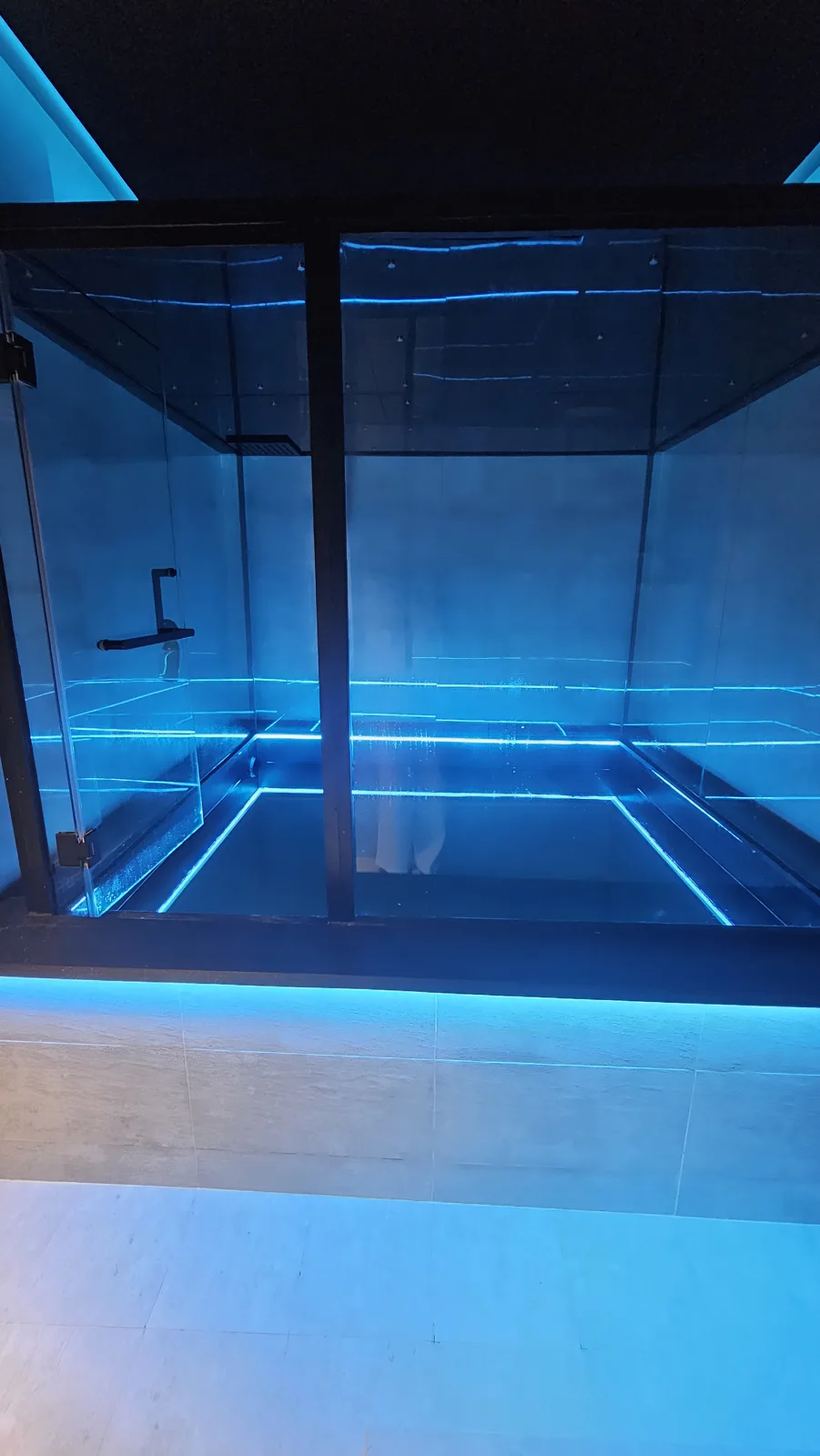
Does a body scan go deeper in a float? Yes, it can likely support it. On a mat, the floor presses on your heels, hips and shoulder blades, and the room is full of light and sound. In a float room, about 500 kg of dense, mineral-rich Epsom salt in about 25 cm of water holds the whole body up, with no pressure points. The water sits at about 33–34 °C, close to skin temperature, and the room can be fully dark and quiet. With little coming in from outside, the signals from inside, your heartbeat, your breath, a tired shoulder, stand out. In a randomised crossover study of 31 people with high anxiety sensitivity, a 90-minute float clearly increased their awareness of heartbeat and breathing, and lowered anxiety and muscle tension, compared with a control session.
For the body, the clearest finding comes from a 2021 German trial of 99 people with chronic pain: pain dropped right after each float, and people felt more relaxed and less anxious. To be honest, that relief did not last to weeks 12–24, so regular floats matter if you want to keep it.
In a Swedish randomised trial, 65 working adults who floated 12 times in seven weeks reported less stress and anxiety and better sleep than a waiting group. In a 2018 US study, 50 people with anxiety or stress-related conditions felt clearly less anxious after a single one-hour float (a promising result, though that study had no comparison group). Float therapy is a young but very active research field: randomised controlled trials have shown clear effects on anxiety, stress, muscle tension and sleep, and new clinical studies are still under way.
Ōmni Evidence Scale: Strong evidence, for float and stress. We rate it Strong because, on top of these trials, user experience is overwhelmingly positive: in a 2025 survey of regular floaters, 92% reported relaxation and 77% less stress, echoed by thousands of reviews, Reddit threads and forums, and by athletes and public figures who float. See how we rate evidence on the Ōmni Evidence Scale.
The best of both: start your float with the 10-minute body scan above, follow with a few long exhales, then let go into deep rest. At home, a daily scan keeps you in touch with your body between floats; see how often should you float.
Try it at Ōmni in Thảo Điền
Ōmni’s suggestion, from the research and our guests’ experience, not a study prescription: a body scan at home most evenings, and a float when you want to feel your body clearly and rest deeply, after a long week or a long flight.
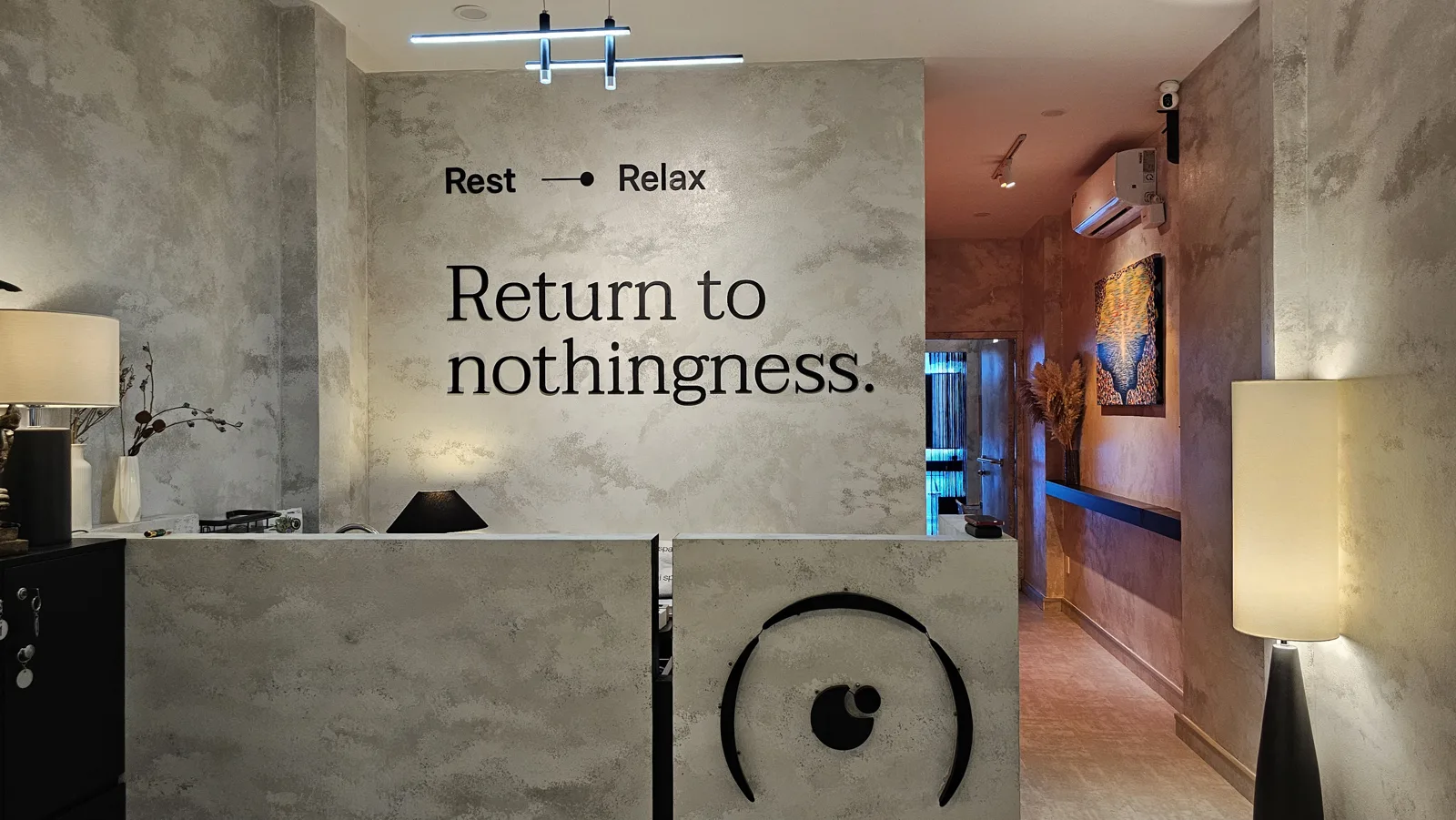
- Where and when: Ōmni Space – Float Saigon, 16C Quốc Hương, Thảo Điền. Open 9:00–21:00 every day; the last float starts at 20:00.
- Prices: a single 60-minute float is 1,500,000 VND; the couple room is 2,200,000 VND per room for 60 minutes. Everything else is on the price page.
- In the room: you adjust the lights yourself, every guest gets earplugs, and a Halo neck pillow is there for a tense neck. Allow about 30 extra minutes for a short guide and showers.
- Booking: on the booking site. Visiting Saigon? See our visitors page. New to floating? Read what float therapy is and before your first float.
Safety notes
- Gentle for most people. The body scan is safe for most people. A 2020 review found that a minority of people feel uneasy during or after meditation practices, most often anxious. If that happens, open your eyes and stop.
- Trauma or PTSD. Close attention to the body can feel unsettling after trauma. Keep your eyes open, shorten the session, scan only your hands and feet, or practise with a therapist.
- Chronic pain. Noticing the pain is enough; don’t push into it. If pain grows, stop, and follow your doctor’s advice.
- Not a replacement for care. A body scan does not replace treatment for pain, anxiety, depression or insomnia, but it can support it alongside your doctor’s plan. Do not change or stop medication on your own.
- For floating: every guest fills in a health questionnaire, fully and honestly, at every visit.
If you feel overwhelmed or unsafe, call 115 for emergency help in Vietnam.
Float PlanRunning on empty?Take the one-minute Float Plan quiz: tell us how you feel and what you need, and get a simple plan for your first session.Make my Float PlanFAQ
What is a body scan meditation?
It is a mindfulness practice where you move your attention through the body, one area at a time, and notice whatever you feel without trying to change it. It is the first practice of the 8-week MBSR course.
How is a body scan different from NSDR?
NSDR guides you into deep rest, letting the body grow heavy and warm. A body scan trains awareness: you only notice sensations as they are. Many NSDR scripts include a short body scan.
Can a body scan help me sleep?
Many people find it a good way to wind down, because you are already lying down and attention moves from thinking to feeling. Mindfulness courses have improved sleep quality in a small trial; the body scan alone has not been tested for sleep yet.
Can a body scan help with anxiety?
It can support it. MBSR, which starts with the body scan, moderately reduced stress and anxiety in healthy adults. If a scan makes you more anxious, open your eyes, shorten it or focus only on your hands and feet.
Can I do a body scan during a float?
Yes. With the body fully supported in a dark, quiet room, signals like your heartbeat and breath become very clear, which makes a scan a natural way to begin a float.
Written by the team at Ōmni Space – Float Saigon in Thảo Điền. General information, not medical advice; checked on 24 October 2026.
Sources
- Satipaṭṭhāna Sutta: Mindfulness Meditation (Majjhima Nikāya 10), translated by Bhikkhu Sujato. SuttaCentral.
- Anālayo B (2020). Buddhist antecedents to the body scan meditation. Mindfulness 11(1): 194–202.
- Dreeben SJ, Mamberg MH, Salmon P (2013). The MBSR body scan in clinical practice. Mindfulness 4(4): 394–401.
- Farb N et al. (2015). Interoception, contemplative practice, and health. Frontiers in Psychology 6: 763.
- Khoury B, Sharma M, Rush SE, Fournier C (2015). Mindfulness-based stress reduction for healthy individuals: a meta-analysis. Journal of Psychosomatic Research 78(6): 519–528.
- Gan R, Zhang L, Chen S (2022). The effects of body scan meditation: a systematic review and meta-analysis. Applied Psychology: Health and Well-Being 14(3): 1062–1080.
- Ussher M et al. (2014). Immediate effects of a brief mindfulness-based body scan on patients with chronic pain. Journal of Behavioral Medicine 37(1): 127–134.
- Black DS, O’Reilly GA, Olmstead R, Breen EC, Irwin MR (2015). Mindfulness meditation and improvement in sleep quality and daytime impairment among older adults with sleep disturbances: a randomized clinical trial. JAMA Internal Medicine 175(4): 494–501.
- Feinstein JS et al. (2018). The elicitation of relaxation and interoceptive awareness using floatation therapy in individuals with high anxiety sensitivity. Biological Psychiatry: Cognitive Neuroscience and Neuroimaging 3(6): 555–562.
- Loose LF, Manuel J, Karst M, Schmidt LK, Beissner F (2021). Flotation restricted environmental stimulation therapy for chronic pain: a randomized clinical trial. JAMA Network Open 4(5): e219627.
- Kjellgren A, Westman J (2014). Beneficial effects of treatment with sensory isolation in flotation-tank as a preventive health-care intervention: a randomized controlled pilot trial. BMC Complementary and Alternative Medicine 14: 417.
- Feinstein JS et al. (2018). Examining the short-term anxiolytic and antidepressant effect of Floatation-REST. PLoS One 13(2): e0190292.
- Hilpert K, Chis Ster I (2025). Experiences and perceptions of regular floatation-REST users: results from an online survey. Journal of Clinical Images and Medical Case Reports 6(5): 3600.
- Farias M, Maraldi E, Wallenkampf KC, Lucchetti G (2020). Adverse events in meditation practices and meditation-based therapies: a systematic review. Acta Psychiatrica Scandinavica 142(5): 374–393.
Leave a Reply