
In short: Breathwork means changing how you breathe on purpose to change how you feel. Slow breathing at about six breaths a minute has the best research, and a 2023 meta-analysis found breathwork lowers stress a little. Exhale-focused sighing shows early promise. Fast Wim Hof-style breathing can cause fainting: never do it in water or while driving.
This guide was written by the team at Ōmni Space in Thảo Điền. We opened Vietnam’s first float centre (Float Vietnam, Hanoi, 2017), and we ask of every wellness trend: what does it do for the nervous system, and how strong is the evidence? Here are the main breathwork techniques, how to do them, what the studies found, and how to stay safe. This is general information, not medical advice.
What is breathwork?
Breathing runs on autopilot, but unlike your heartbeat, you can take the controls. Breathwork means deliberately changing the speed, depth or rhythm of your breath, or adding pauses, to shift body and mood.
The idea is old: yoga’s pranayama and many Buddhist traditions put the breath at the centre of practice. What is new is the branding and the research.
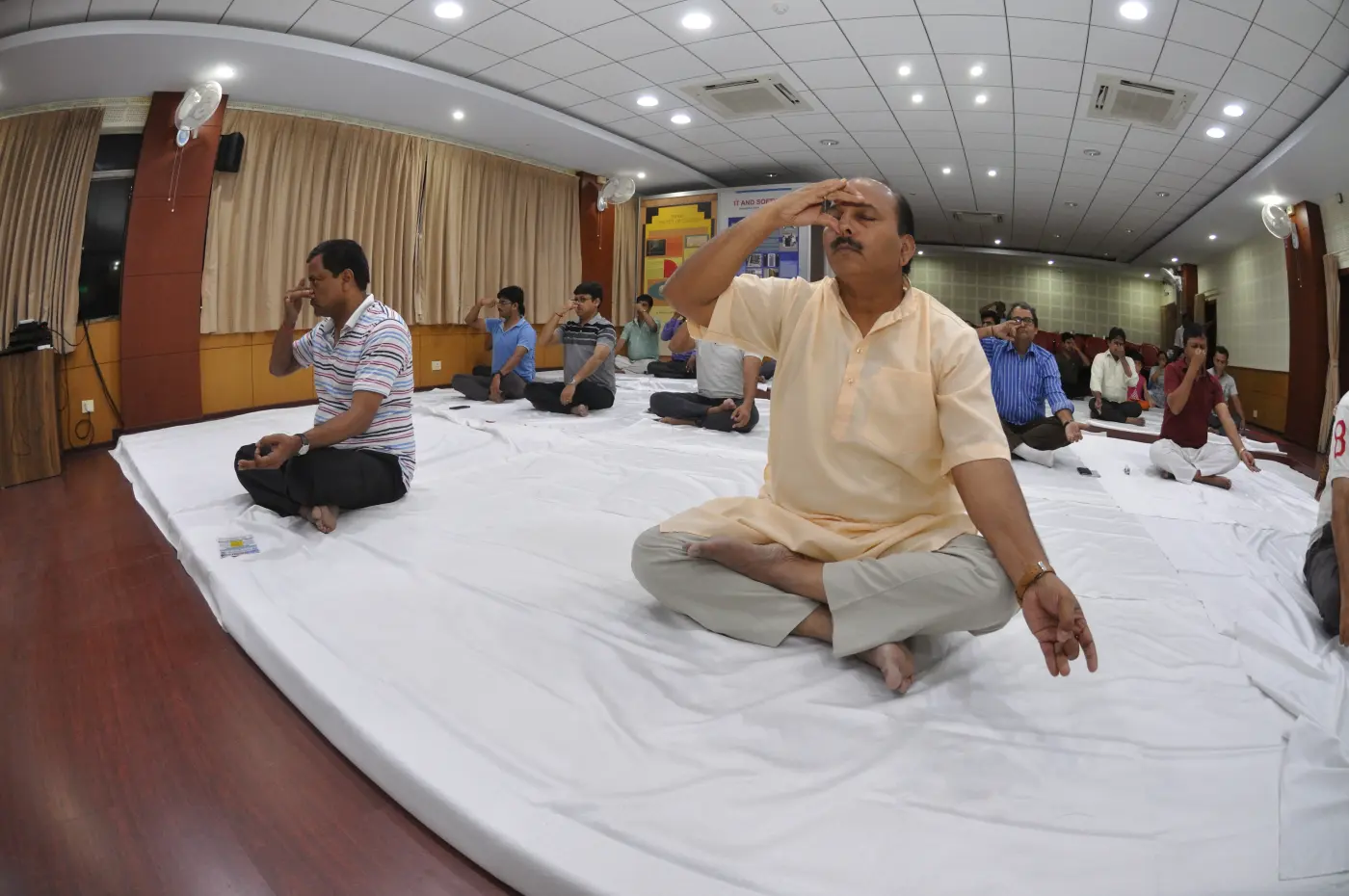
There are two broad families. Calming techniques slow the breath and usually stretch the exhale: the physiological sigh, box, coherent and 4-7-8 breathing. Activating techniques speed up and deepen the breath, often with breath holds, like Wim Hof-style breathing. They do different things and carry very different risks.
The nervous-system lens: vagus nerve, CO2 and HRV, explained simply
Your autonomic nervous system has an accelerator (the sympathetic side, which readies you to act) and a brake (the parasympathetic side, which supports rest and recovery). Breathing is one of the few levers into it you can pull on purpose.
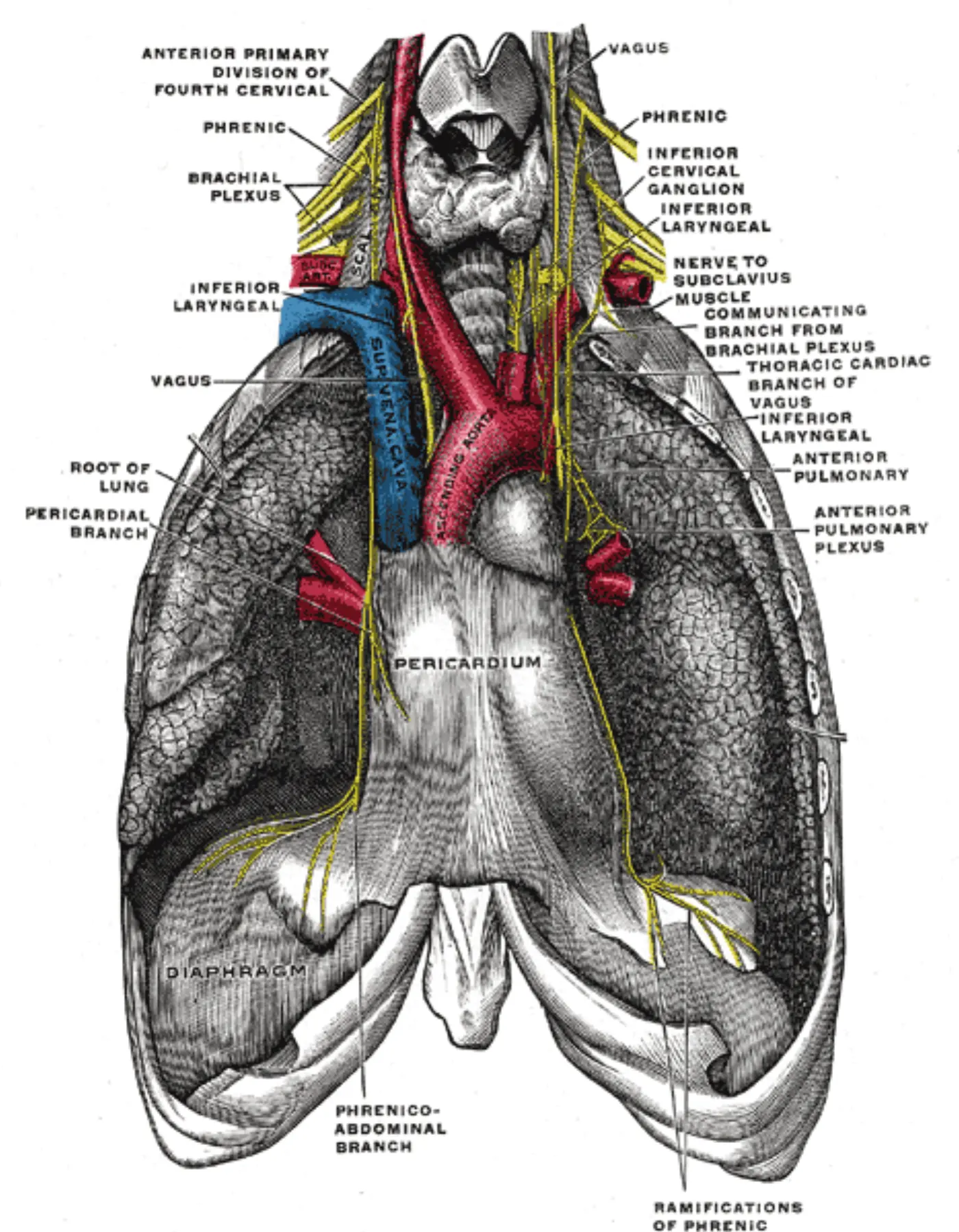
The vagus nerve is the main cable of the “brake”. It runs from the brainstem to the heart, lungs and gut. When you breathe in, your heart rate rises slightly; when you breathe out, it falls a little, largely thanks to the vagus nerve. That is one reason calming techniques make the exhale longer.
CO2 is what makes you want to breathe. The urge to breathe comes mostly from carbon dioxide building up in your blood, not from oxygen running low. Fast, hard breathing blows off CO2, which is why it can leave you light-headed and tingly, and why you can then hold your breath much longer. “CO2 tolerance” means how comfortable you are with that rising urge. Breath-hold tests that score it are popular, but we found no good evidence that the scores reflect your health.
HRV (heart rate variability) is the small variation in time between heartbeats. A healthy heart is not a metronome: more variation at rest is generally linked to a flexible nervous system. Many smartwatches report it now. It is a useful signal, not a goal in itself.
The big picture: a 2022 meta-analysis (Laborde and colleagues, 223 studies) found slow breathing raised vagus-related HRV during practice, right after a session and after weeks of training. A 2018 review of 15 studies (Zaccaro and colleagues) linked breathing under 10 breaths a minute to more relaxation and less anxiety in healthy people. And a 2023 meta-analysis of 12 randomised trials with 785 adults (Fincham and colleagues) found breathwork lowered stress by a small-to-medium amount, with similar effects on anxiety and low mood. Most trials had a moderate risk of bias, and the authors warned against hype running ahead of evidence.
Five breathing techniques, step by step
Practise sitting or lying down, on dry land, breathing through the nose unless told otherwise. If light-headed, stop.
1. The physiological sigh (cyclic sighing)
You sigh on your own every few minutes, and a 2010 study (Vlemincx and colleagues) suggested a sigh “resets” a breathing pattern that has become irregular. Cyclic sighing turns it into an exercise.
- Breathe in fully through your nose.
- Without breathing out, take a second, shorter sip of air through your nose to top up your lungs.
- Breathe out slowly through your mouth until your lungs feel empty. Make the exhale clearly longer than the two inhales together.
- Repeat for about five minutes, or do just one to three sighs when you need a quick reset.
In a remote Stanford trial (Balban and colleagues, 2023, Cell Reports Medicine), 108 people, mostly students, did five minutes a day of cyclic sighing, box breathing, cyclic hyperventilation or mindfulness meditation for a month. Cyclic sighing was the only group that clearly beat meditation, on positive mood and on slowing resting breathing. But anxiety fell similarly in every group, HRV did not change, and nobody checked how closely people followed the instructions.
Ōmni Evidence Scale: Early evidence. One well-designed but small, remote trial in mostly young students; the result needs repeating by other teams.
2. Box breathing
Box breathing gives each part of the breath the same length, like the four sides of a square.
- Breathe in through your nose for a count of four.
- Hold for four.
- Breathe out for four.
- Hold with empty lungs for four.
- Repeat for a few minutes. If four feels hard, use three; if it feels easy, try five or six.
Easy to remember, and counting occupies a busy mind. Direct evidence is thin: the Stanford box group had only 21 people and did not stand out from meditation.
Ōmni Evidence Scale: Early evidence. It is a slow-breathing pattern, which has broad support, but box breathing itself has been tested in very few people.
3. Coherent (resonance) breathing: about six breaths a minute
The simplest technique, and the best studied: about six breaths a minute, no holds.
- Breathe in gently through your nose for about five seconds.
- Breathe out gently for about five seconds. Let the belly move more than the chest.
- Keep the breath soft and quiet, not forced. A timer or a breathing app can keep the pace.
- Start with five minutes. Many people find it easier lying down.
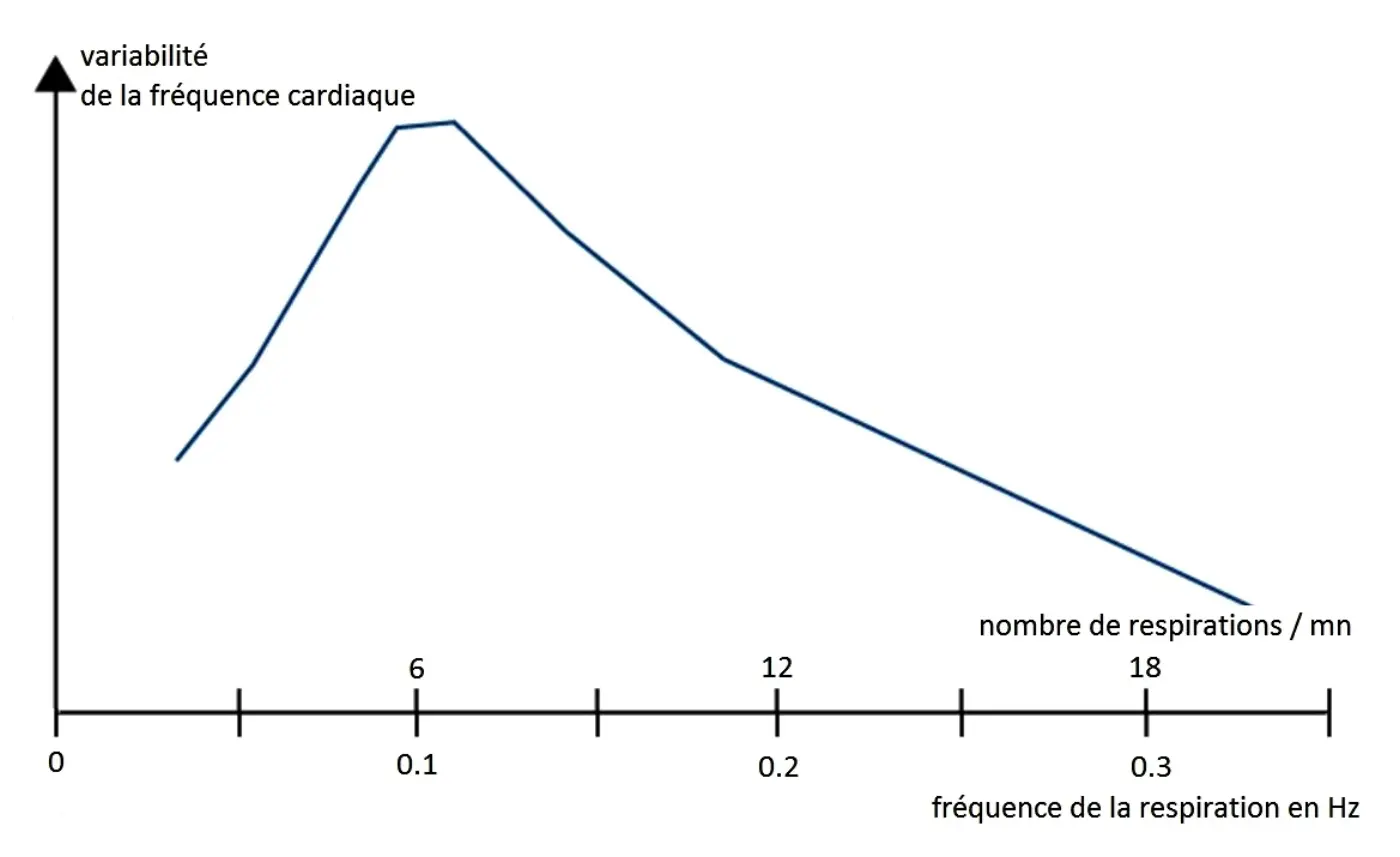
Why six? Lehrer and Gevirtz (2014) explain that at about six breaths a minute, your breath lines up with the baroreflex, the system that steadies blood pressure, and heart rate swings in large, smooth waves: the resonance frequency. The average is closer to 5.5 and varies by person (taller people and men tend to be slower). You do not need your exact number; slow and comfortable is the point.
Ōmni Evidence Scale: Promising. A meta-analysis of 223 studies shows slow breathing reliably raises vagus-related HRV, and breathwork trials show small drops in stress; long-term health effects are less clear.
4. 4-7-8 breathing
A popular wind-down routine, often shared as a way to fall asleep.
- Breathe in quietly through your nose for a count of four.
- Hold your breath for a count of seven.
- Breathe out through your mouth for a count of eight.
- Do four to six rounds, then return to normal breathing. Shorten the counts if the hold feels uncomfortable.
We found one small study. Vierra and colleagues (2022) had 43 healthy young adults in Thailand do three sets of six cycles. Right afterwards, heart rate and systolic blood pressure dropped, and some HRV measures shifted towards “rest”. It measured only the immediate effect and did not test sleep.
Ōmni Evidence Scale: Early evidence. One small study showed short-term calming changes in heart rate and blood pressure; there is no good trial yet on sleep.
5. Wim Hof-style breathing (cyclic hyperventilation with breath holds)
The activating end of breathwork, part of the Wim Hof Method with cold exposure and mindset. Only ever do it sitting or lying on a sofa or floor.
- Take about 30 deep breaths in a row: breathe in fully into the belly, then let the air go without force.
- After the last exhale, hold your breath with empty lungs until you feel the urge to breathe.
- Take one big breath in and hold it for about 15 seconds, then let go.
- That is one round. The method suggests three to four rounds.
Tingling and light-headedness come from blowing off CO2. That is also why the holds feel easy, and why this style can cause sudden fainting. In the best-known study (Kox and colleagues, 2014, PNAS), 12 healthy men trained in breathing, cold and meditation together; after an injected bacterial toxin they had more adrenaline, more anti-inflammatory signals and milder flu-like symptoms than 12 untrained men. A 2024 review (Almahayni and Hammond) found only eight trials: anti-inflammatory findings looked promising, exercise results were mixed. Read more in our ice bath and Wim Hof guide.
Ōmni Evidence Scale: Early evidence. Few, small trials, mostly in healthy young men, often testing breathing, cold and meditation as one bundle; long-term benefits are unproven.
| Technique | Pace and pattern | Main effect people seek | Ōmni Evidence Scale |
|---|---|---|---|
| Physiological sigh | Double inhale, long exhale | Quick calm, better mood | Early evidence |
| Box breathing | Equal in, hold, out, hold | Focus under pressure | Early evidence |
| Coherent breathing | About 6 breaths a minute, no holds | Calm, higher HRV | Promising |
| 4-7-8 | In 4, hold 7, out 8 | Winding down | Early evidence |
| Wim Hof-style | 30 deep breaths, then holds | Energy, alertness | Early evidence |
How we rate methods is explained on our Ōmni Evidence Scale page.
Safety: who should be careful, and where never to do it
Gentle slow breathing is low-risk for most people. Fast breathing and breath holds are a different story.
- Never do fast breathing or breath holds in or near water. Pools, sea, bath, shower, float pool, cold plunge. Lifesaving groups warn that over-breathing before a hold can cause a blackout underwater with no warning.
- Never while driving or riding a motorbike, or anywhere a faint could hurt you. The Wim Hof Method’s own safety page says so too.
- Pregnancy and epilepsy: the Wim Hof Method says not to practise its method if you are pregnant or have a condition such as epilepsy.
- Heart, blood pressure or other medical conditions: speak to your doctor before starting intense breathwork.
- Dizziness, tingling or numbness mean you are over-breathing. Stop, sit, and breathe normally. If you faint, you have gone too far.
- Breathwork is not a treatment for anxiety disorders, insomnia or high blood pressure. If you are struggling, see a doctor.
A 2023 review (Fincham and colleagues) notes that fast, deep breathwork can cause very strong changes in experience and in the nervous system, so a qualified teacher and a safe setting matter.
Breathwork and float: before and inside the pool
Floating and slow breathing share a goal: giving the “brake” some room. Here is how we suggest combining them.
- Before you float: sit somewhere quiet and do five minutes of coherent breathing or a few sighs. A simple way to arrive after a hectic ride across the city.
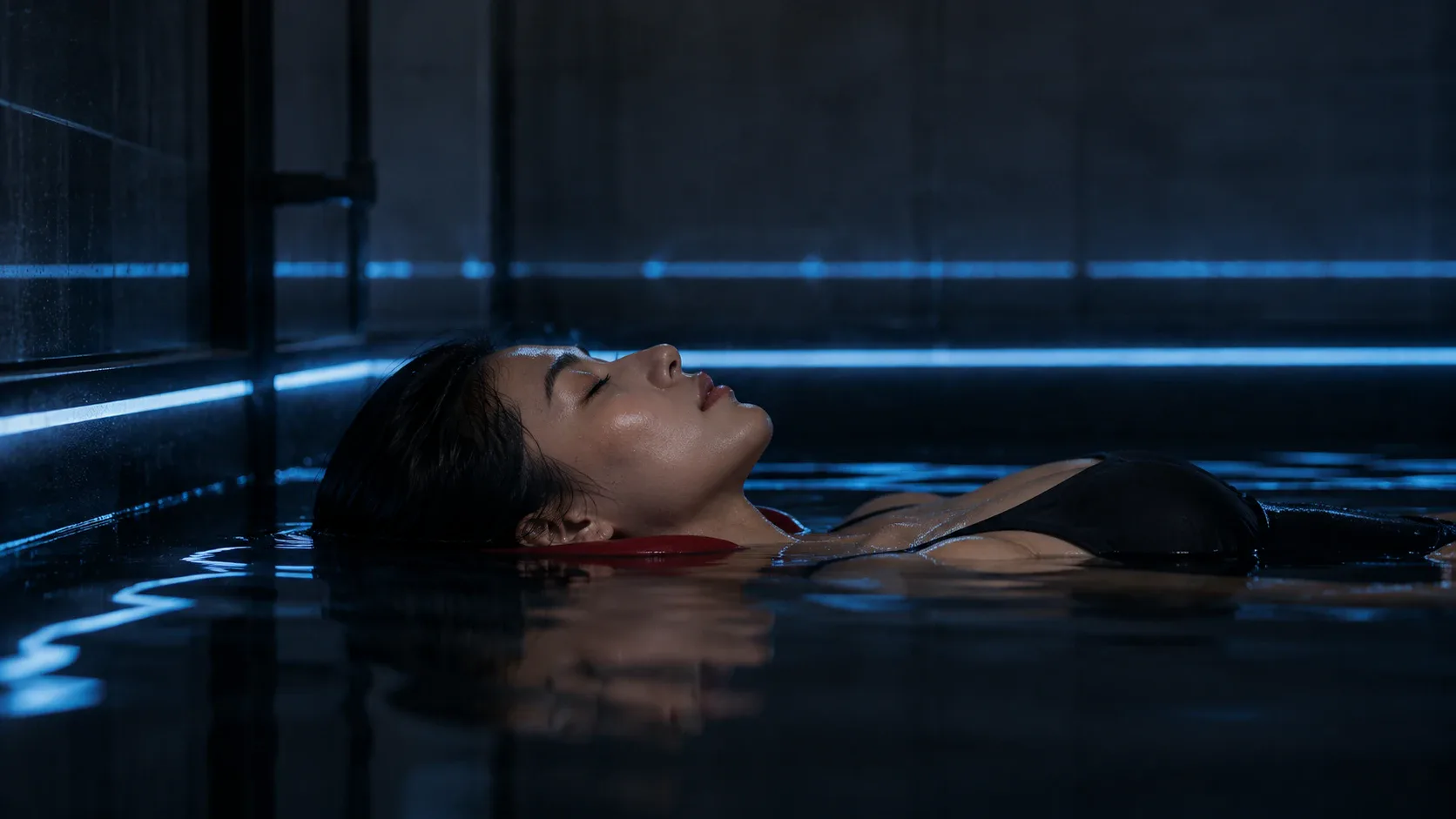
- Inside the float: let your breath settle on its own. If your mind races, gently make the exhale a little longer than the inhale.
- Never in the pool: no fast breathing, Wim Hof rounds or breath holds. The water is shallow and very salty, but fainting in water is never safe.
On evidence: float alone is rated Promising for stress, and slow breathing Promising for HRV. We found no study testing them together, so we cannot say the pairing beats either alone. If you like numbers, an HRV app or EEG headband can show how you respond; our meditation devices guide explains what they measure. Read what float therapy is and how to prepare for your first float.
Where to try it in Saigon
In our research we did not find regular, public breathwork-only studios in Ho Chi Minh City. Most guided breath practice happens in meditation centres and monasteries, as part of a wider practice. These places are on our Saigon wellness map; check schedules before you go.
- The Art of Living Vietnam (Bình Thạnh): teaches the SKY (Sudarshan Kriya) breathing programme, meditation and yoga courses.
- Thiền Viện Vạn Hạnh (Phú Nhuận): public guided meditation on Sunday mornings from 7:00.
- Tu viện Khánh An (District 12): known for its “Sống Tỉnh Thức” mindfulness retreats.
- Thiền Viện Tuệ Quang (Thủ Đức): Trúc Lâm Zen; a weekly Sunday meditation class and holiday retreats.
- Dhamma Vutthi Vipassana Center (Củ Chi): 10-day silent residential courses in the S.N. Goenka tradition.
- Chùa Hoằng Pháp (Hóc Môn): public retreats, including one-day retreats and a summer retreat for young people.

To pair slow breathing with warm salt water, floats at Ōmni Space in Thảo Điền start from 1,500,000 VND for 60 minutes, open 9:00–21:00 daily. See all services.
FAQ
Which breathing technique is best for stress?
Slow breathing at about six breaths a minute has the most research. Cyclic sighing did best for mood in one Stanford trial. Pick the one you will actually do daily.
Is Wim Hof breathing safe?
It can cause sudden fainting, so only do it sitting or lying on dry land, never in water or while driving. The official method says not to practise if you are pregnant or have epilepsy, and to see a doctor first if you have heart problems.
Does breathwork stimulate the vagus nerve?
Slow breathing raises vagus-related heart rate variability, according to a meta-analysis of 223 studies. That signals more “rest” activity, not a proven health effect.
Can I do breathing exercises in a float pool or ice bath?
Slow, gentle breathing is fine. Fast breathing and breath holds are not: they can cause a blackout, dangerous in any water.
What does CO2 tolerance mean?
How comfortable you are with the rising urge to breathe, driven mainly by carbon dioxide. Breath-hold scores are popular, but there is no good evidence they measure health.
Sources
- Balban MY et al. Brief structured respiration practices enhance mood and reduce physiological arousal. Cell Reports Medicine, 2023.
- Fincham GW et al. Effect of breathwork on stress and mental health: a meta-analysis of randomised-controlled trials. Scientific Reports, 2023.
- Zaccaro A et al. How breath-control can change your life: a systematic review on psycho-physiological correlates of slow breathing. Frontiers in Human Neuroscience, 2018.
- Laborde S et al. Effects of voluntary slow breathing on heart rate and heart rate variability: a systematic review and a meta-analysis. Neuroscience & Biobehavioral Reviews, 2022.
- Lehrer PM, Gevirtz R. Heart rate variability biofeedback: how and why does it work? Frontiers in Psychology, 2014.
- Vlemincx E et al. Respiratory variability preceding and following sighs: a resetter hypothesis. Biological Psychology, 2010.
- Vierra J et al. Effects of sleep deprivation and 4-7-8 breathing control on heart rate variability, blood pressure, blood glucose, and endothelial function in healthy young adults. Physiological Reports, 2022.
- Kox M et al. Voluntary activation of the sympathetic nervous system and attenuation of the innate immune response in humans. PNAS, 2014.
- Almahayni O, Hammond L. Does the Wim Hof Method have a beneficial impact on physiological and psychological outcomes in healthy and non-healthy participants? A systematic review. PLoS ONE, 2024.
- Fincham GW et al. High ventilation breathwork practices: an overview of their effects, mechanisms, and considerations for clinical applications. Neuroscience & Biobehavioral Reviews, 2023.
- Wim Hof Method. Safety warnings.
- Wim Hof Method. Breathing exercises.
- Royal Life Saving Society UK. Shallow water blackout, hyperventilation and breath-holding.
- Royal Life Saving Australia. Hypoxic blackout.
Leave a Reply