
In short: Meditation devices come in three kinds: headbands that measure your brain and give feedback (Muse), light-and-sound machines that flash through closed eyes (Lucia, DAVID, roXiva, Kasina, NeuroVIZR, Sana), and devices that use touch, sound or other signals (Apollo, Elemind, Hapbee). Most of the evidence is early. Flashing-light devices carry a real seizure risk for some people.
This guide was written by the team at Ōmni Space – Float Saigon in Thảo Điền. We opened Vietnam’s first float centre in 2017, and we get asked about these gadgets often. We are not selling any of them. We looked at each device through one question: what does it do to the nervous system, and how strong is the evidence? Prices are the makers’ listed prices in US dollars as of October 2026. They change with promotions and region.
Three kinds of device
The word “neurotech” covers very different things. It helps to sort them by what they actually do to you.
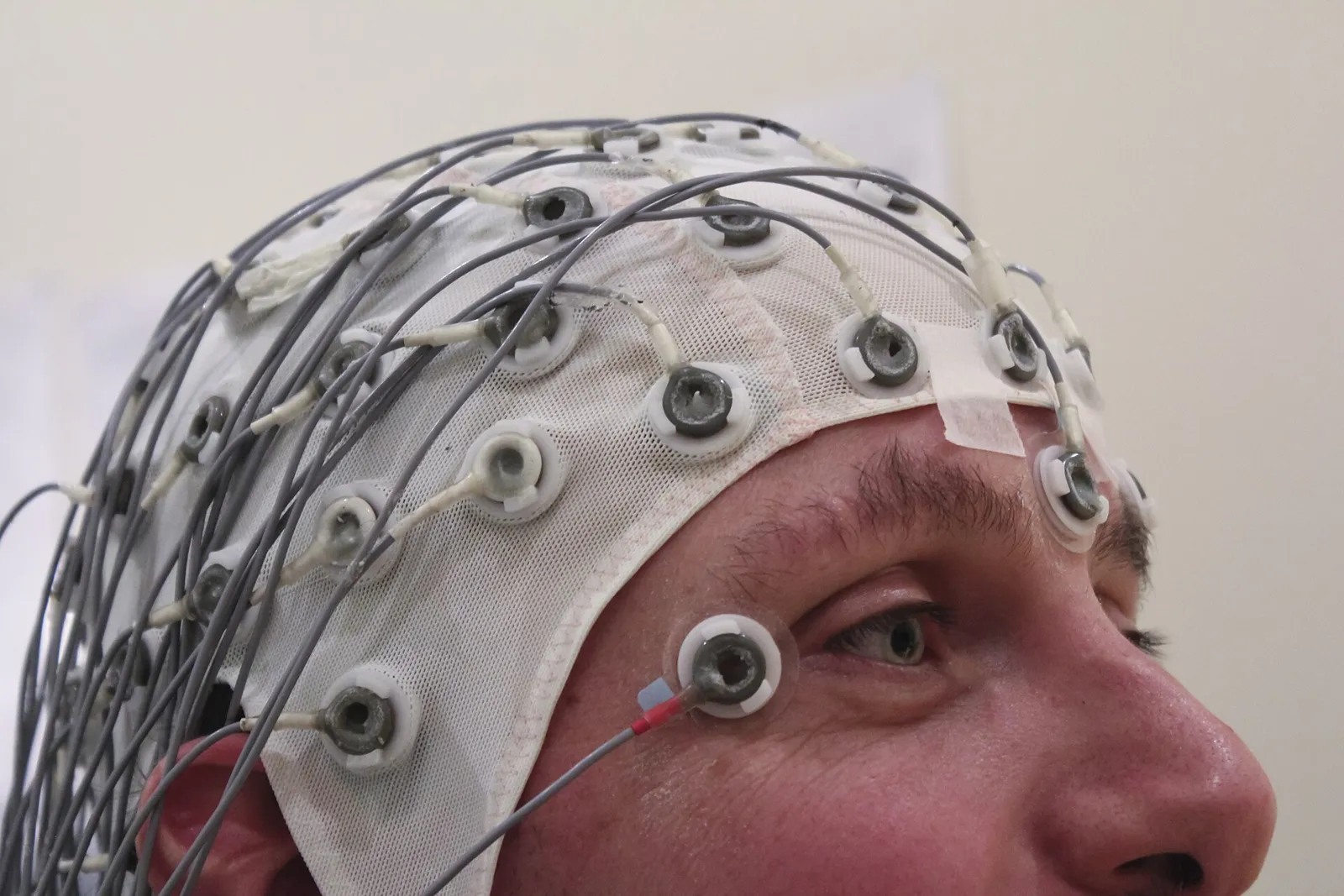
- Measure and give feedback. The device reads your brain activity and turns it into sound, so you can notice when your mind wanders. It does not push anything into your brain. Example: Muse.
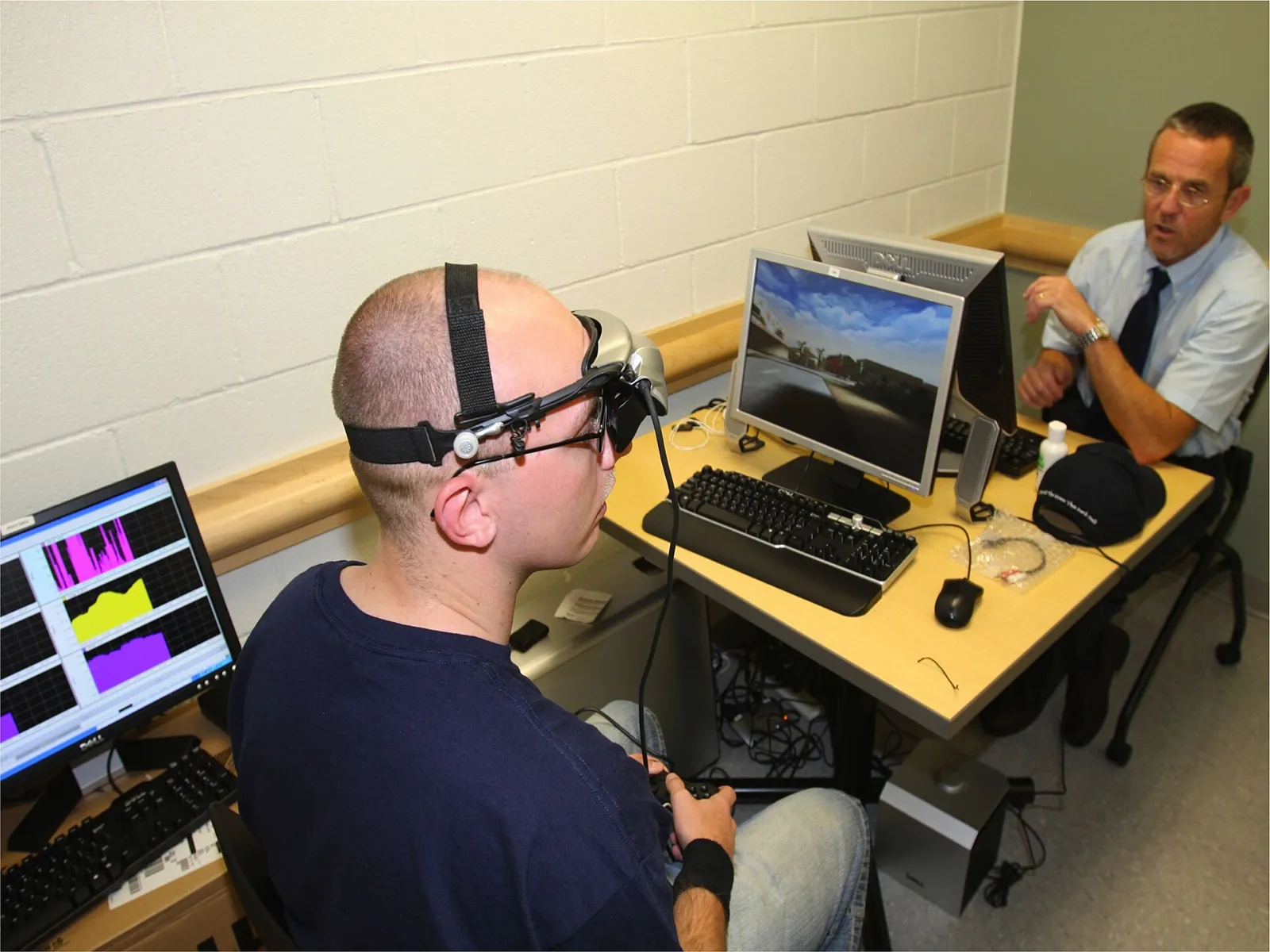
- Light-and-sound stimulation. The device flashes light through your closed eyelids, often with pulsing sound. Examples: Lucia N°03, DAVID Delight Pro, Kasina, roXiva, NeuroVIZR, Sana and the Dreamachine.
- Non-light stimulation. The device uses gentle vibration, sound timed to your brainwaves, or radio-frequency signals. Examples: Apollo, Elemind and Hapbee. Somadome sits near this group: it uses coloured light, not strobe light, plus sound and guided meditation.
Audio-visual entrainment, explained simply
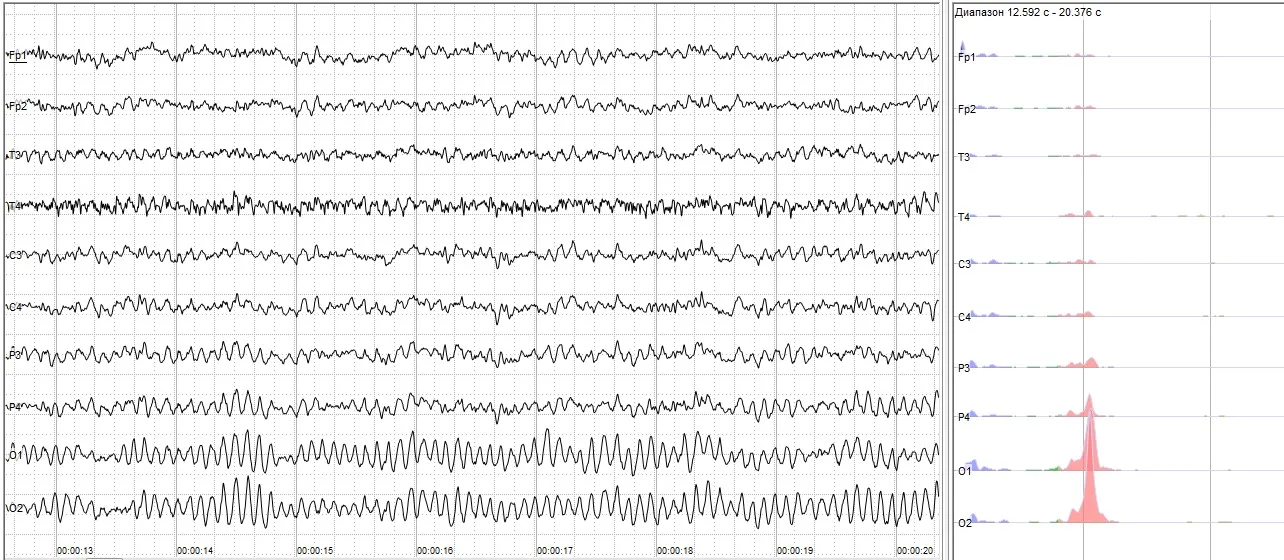
Many devices in the second group use audio-visual entrainment, or AVE. You close your eyes. A light flickers at a steady rate, for example around 10 times a second. A sound often pulses at the same rate. The idea is that your brain’s own electrical rhythm will drift toward that beat, a bit like falling into step with music. Makers then choose slower or faster rates to aim for calm, focus or sleepiness.
With the eyes closed, the flicker can also produce vivid colours and patterns. Nothing is on the screen. Your visual system makes them. The theory of “brainwave entrainment” is still debated, and feeling different in a session is not the same as proof of a lasting effect.
Group 1: devices that measure and give feedback
Muse 2 (InteraXon, Canada) is a headband with EEG sensors. It turns your brain activity into sound while you meditate, so you can hear when your attention drifts and when it settles. This is called neurofeedback. Muse S Athena adds fNIRS, which tracks blood flow and oxygen in the front of the brain, plus heart and movement sensors and sleep features. The maker’s pages do not describe either one as a medical device.
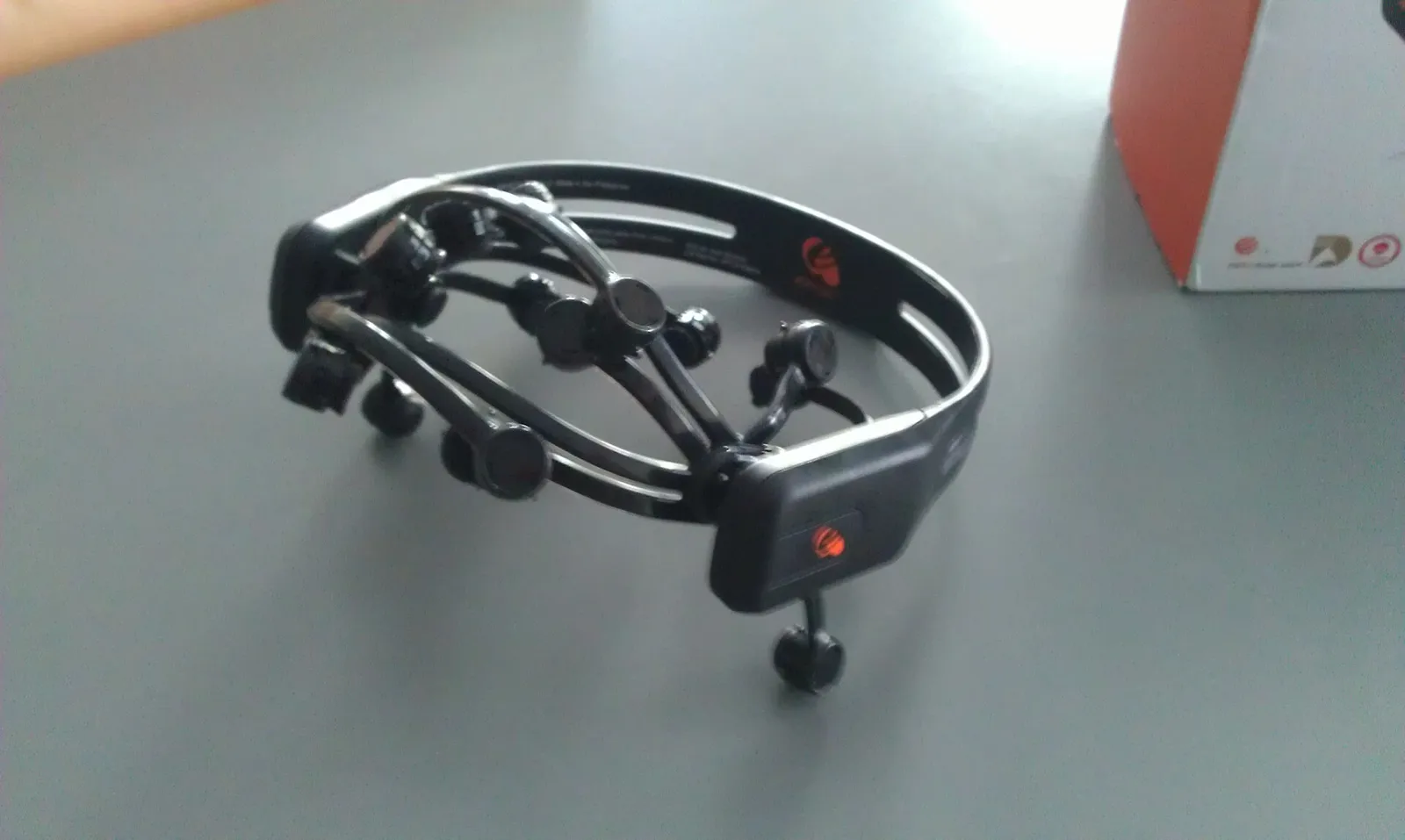
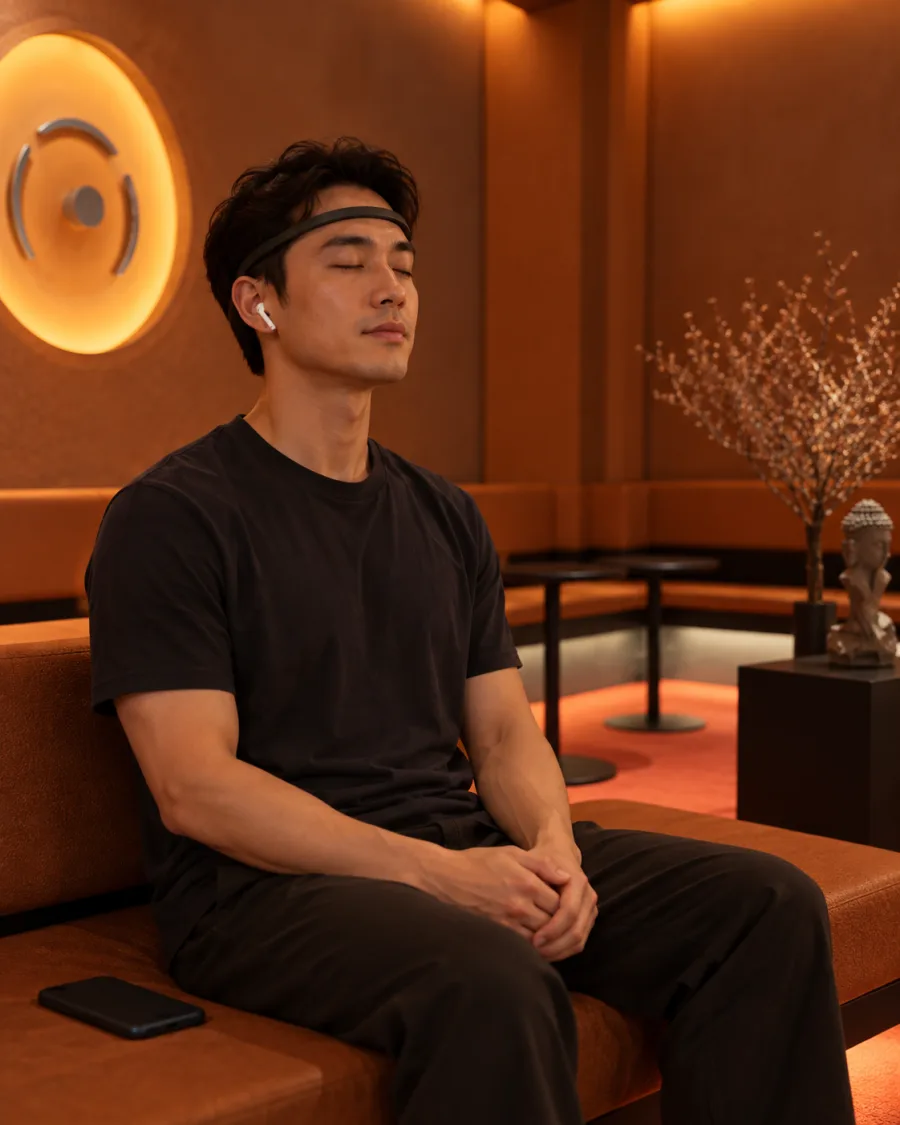
It is a mirror for your attention, but you still do the meditating. There is no flashing light, so the seizure risk from flicker does not apply.
Try it at Ōmni: we keep a Muse 2 at Ōmni Space, and guests can wear it for a few minutes before and after a float. It is a simple way to see, in your own data, how settled your mind feels before and after an hour of stillness.
Ōmni Evidence Scale: Early evidence. The sensors do measure real signals, but we found no strong independent proof that meditating with feedback beats meditating without it.
Group 2: light-and-sound stimulation
Lucia N°03 was developed in Innsbruck, Austria, by Dr. Engelbert Winkler and Dr. Dirk Proeckl, with the first version in 2009. A bright steady lamp sits in the centre, surrounded by strobing LEDs. You lie with eyes closed while a trained “Light Attendant” runs the session. People describe a dreamy state between waking and sleep. Reports are mostly personal stories, not peer-reviewed trials.
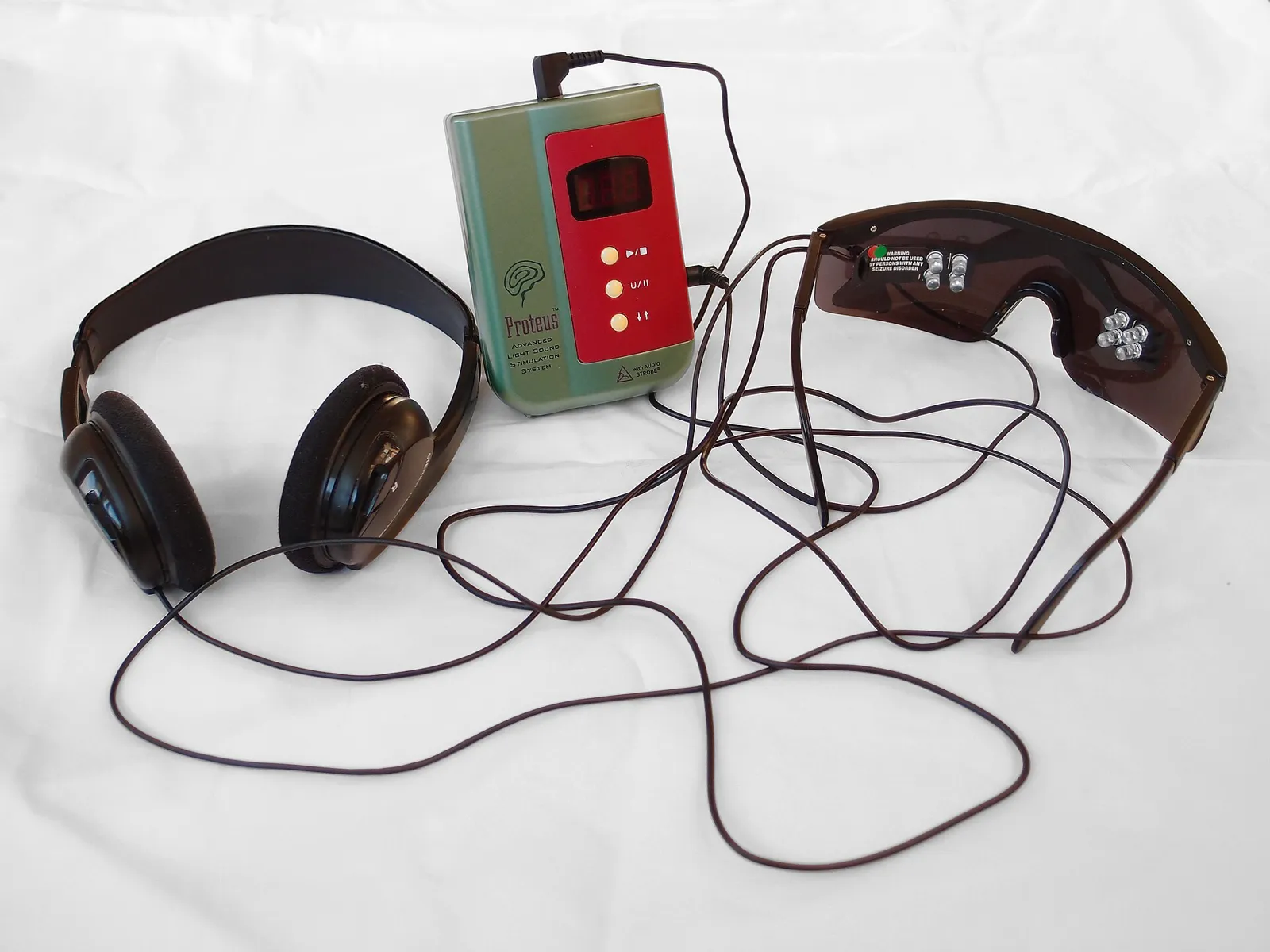
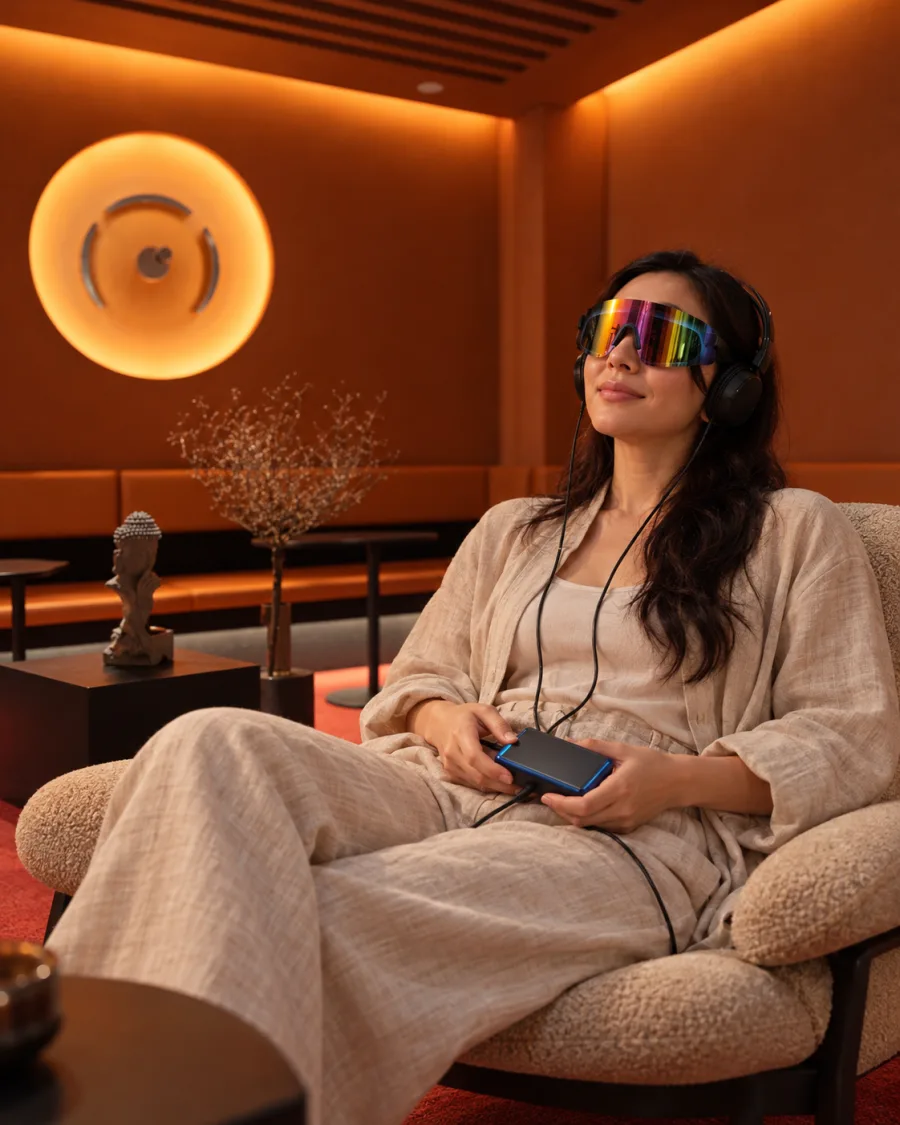
DAVID Delight Pro by Mind Alive (Canada) uses light-pulse glasses and sound, with an optional mild electrical current to the head (called CES). A 2025 review in Brain Sciences looked at this kind of stimulation and found mixed results, not enough to confirm benefit. This is the device family we use at Ōmni: our Brainwaves Neuro Align sessions run on a DAVID Delight device by Mind Alive.
Kasina (MindPlace, USA) pairs coloured LED glasses with sound. roXiva RX1 is a large strobe lamp with warm and cool white LEDs and more than 170 sessions. The maker says plainly that it is not a medical device. NeuroVIZR is a light-and-sound headset with sessions of about 11 minutes. We found no independent studies on any of these three.
Sana (Sana Health, USA) is a mask with headphones that sends light pulses through closed eyelids along with sound. It is the exception in this group: it has a sham-controlled randomised trial in fibromyalgia. One insurer’s document mentions an FDA authorisation for nerve pain, but we could not confirm this in the FDA database.
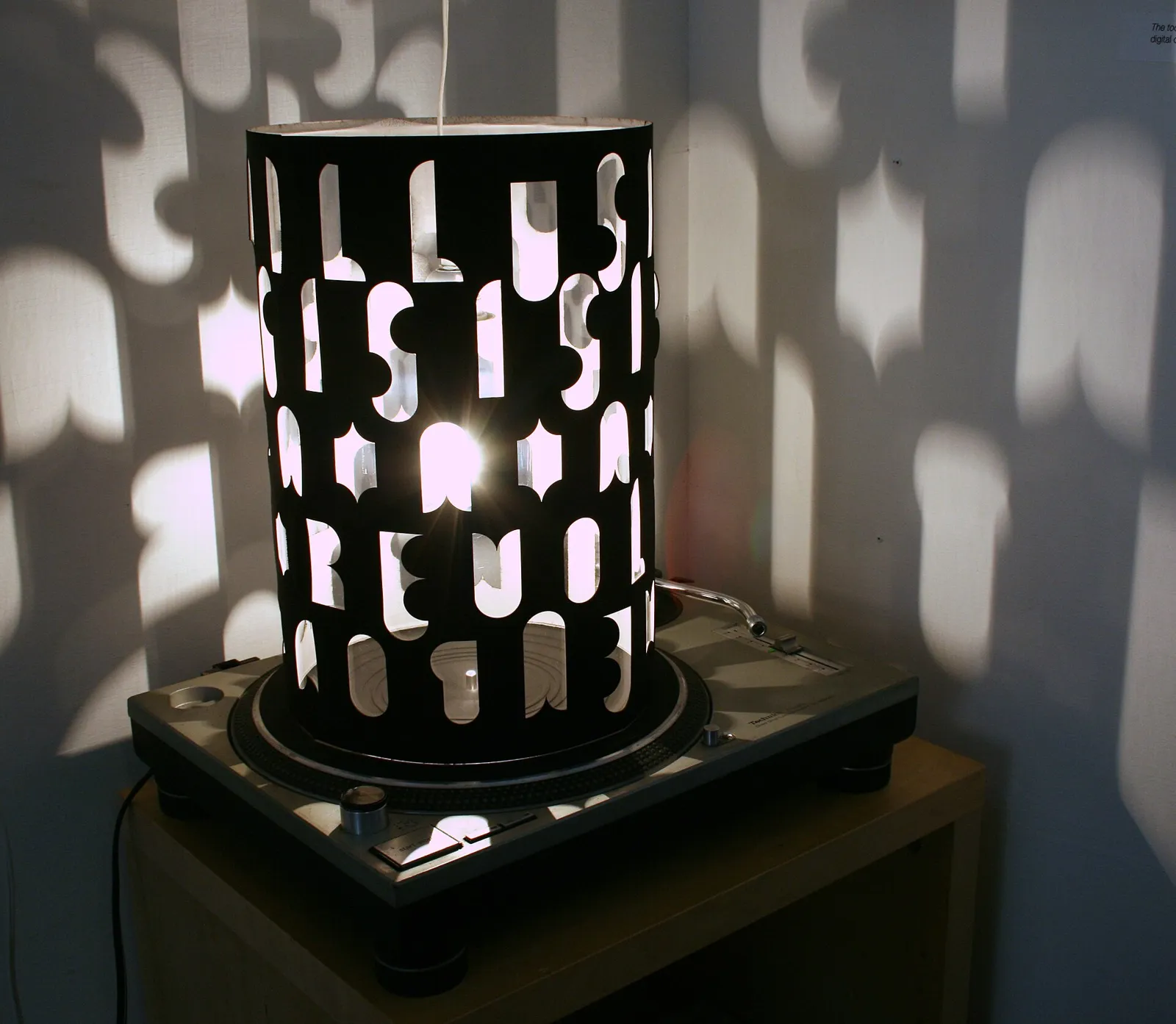
The Dreamachine is the ancestor of them all. In 1960, artist Brion Gysin and Ian Sommerville cut slits in a paper cylinder, set it on a record turntable around a light bulb, and sat before it with eyes closed. The flicker was about 8–13 times a second. In 2022 a new Dreamachine, with scientist Anil Seth at the University of Sussex, turned the idea into a group experience tied to a large public study of how people perceive. It is research and art, not therapy.
Ōmni Evidence Scale: Early evidence. Most benefits rest on small or maker-run studies and personal reports; Sana is the one device with a sham-controlled clinical trial.
Group 3: stimulation without light
Apollo Neuro is worn on the wrist or ankle and gives gentle vibrations meant to calm the body’s stress response. A few small trials (22 and 31 people) reported better heart rate variability, but most of the data comes from the company.
Elemind (USA, working with MIT’s McGovern Institute) is a headband that reads your brainwaves and plays sound through bone conduction, timed to the phase of those waves, to help you fall asleep. In the company’s own trial, 76% of people fell asleep faster than with a sham. No independent group has repeated this yet.
Ōmni Evidence Scale: Early evidence. Apollo and Elemind have small or company-run studies with positive signals that still need independent repeats.
Hapbee says it uses ultra-low radio-frequency energy to “mimic” the feeling of things like caffeine or melatonin. We found no independent research. A German tech outlet, netzwelt, concluded its effect could not be confirmed. The maker advises against use under 18, in pregnancy, or with implanted devices.
Ōmni Evidence Scale: No good evidence yet. We found no independent study showing Hapbee does what it claims.
Somadome is a dome-shaped pod with coloured LED light, binaural beats and a 20-minute guided meditation. The maker also claims “EMF-blocking” tiles, which we could not verify. It is not a strobe device. Evidence is low.
Full comparison table
| Device | Mechanism | Evidence | Price (USD, as listed, as of Oct 2026) | Flicker risk | In Vietnam? |
|---|---|---|---|---|---|
| Muse 2 | EEG headband, sound feedback | Early evidence | $249.99 | None (no flashing light) | No official distributor found; you can try one at Ōmni Space |
| Muse S Athena | EEG + fNIRS + heart sensor, sleep features | Early evidence | $474.99 | None | Not confirmed |
| Lucia N°03 | Bright lamp + strobing LEDs, run by a trained attendant | Early evidence (mostly personal reports) | No official price; sessions abroad about $50–105 | High | None found in Vietnam, Singapore or Bangkok |
| DAVID Delight Pro (Mind Alive) | Light glasses + sound, optional mild current (CES) | Early evidence (2025 review: mixed results) | $560 | Yes | Retail sale not confirmed; a DAVID Delight is used for Neuro Align sessions at Ōmni |
| Kasina (MindPlace) | Coloured LED glasses + sound | Early evidence (no device-specific studies) | $449 bundle; $399 basic | Yes | Not confirmed |
| roXiva RX1 | Large strobe lamp + sound, 170+ sessions | Early evidence; maker says not a medical device | $5,500 | Yes | Ships worldwide; none found in Vietnam |
| NeuroVIZR | Light-pattern headset + sound, ~11-min sessions | Early evidence (no independent studies found) | $299 / $599 / $869 (three models) | Yes | Not confirmed |
| Sana | Mask: light pulses through closed eyes + sound | Early evidence, growing (sham-controlled trial in fibromyalgia) | Not published | Yes | No |
| Dreamachine | Spinning slotted cylinder around a bulb (1960); group flicker experience (2022) | Art and research, not therapy | Not sold | Yes | No |
| Apollo Neuro | Gentle vibration on wrist or ankle | Early evidence (small trials, mostly company data) | $448 incl. 1-year membership | None | Not confirmed |
| Elemind | EEG headband + sound timed to brainwaves | Early evidence (company trial) | $399 (reviews list $349) | None (sound only) | No; ships to the US and Canada only |
| Hapbee | Ultra-low radio-frequency signals | No good evidence yet | Neckband $319; Sleep Pad $279; plus membership | None | No |
| Somadome | Pod: coloured LEDs + binaural beats + guided meditation | Early evidence at best (low) | Pod price unclear (sources say $14,500 or $35,000); sessions about $25–45 | Low (coloured light, not strobe) | None found |
Safety: flashing light and photosensitive epilepsy
This is the most important section. Any device that flickers light can trigger a seizure in people with photosensitive epilepsy. Closing your eyes does not remove the risk, because light passes through the eyelids.
- The Epilepsy Society (UK) says flashing between 3 and 30 times a second is the usual trigger range. Some people are sensitive up to 60 times a second.
- The highest risk is around 16–25 flashes a second, according to the Epilepsy Society.
- A 2005 review for the Epilepsy Foundation of America named 15–25 flashes a second as the most provoking range, and put photosensitive epilepsy at up to about 1 in 4,000 people.
Operators of similar devices screen people before a session. For example, one roXiva event in London did not admit people with a history of epilepsy or seizures, people taking SSRI or SNRI antidepressants, or pregnant women. Lucia sessions are not offered to people with epilepsy, a history of light-triggered seizures, or psychosis. This is good practice, not a legal rule in Vietnam. At Ōmni, every guest fills in a short health questionnaire before a Neuro Align session: by email before the visit, and again on site.
Please skip flashing-light sessions, or talk to your doctor first, if any of these apply:
- You or a close family member has epilepsy or has had a seizure.
- You are pregnant.
- You take SSRI or SNRI medication.
- You have a psychotic disorder.
- Bright or flickering light gives you migraines or discomfort.
If you feel unwell during a session, open your eyes, look away from the light and stop. Devices in groups 1 and 3 do not flash, so this specific risk does not apply to them.
Should you buy one, or try one first?
For most people, try first.
- Price. These devices cost from about $250 to over $5,000, and some add a membership fee.
- Fit. Light-and-sound sessions feel very different from person to person. Some love the colours. Others find them restless.
- Access. We found almost no official sellers in Vietnam. A hand-carried device may come without local warranty or support.
- Safety. A first session with someone watching is safer than alone at home, especially with flicker.
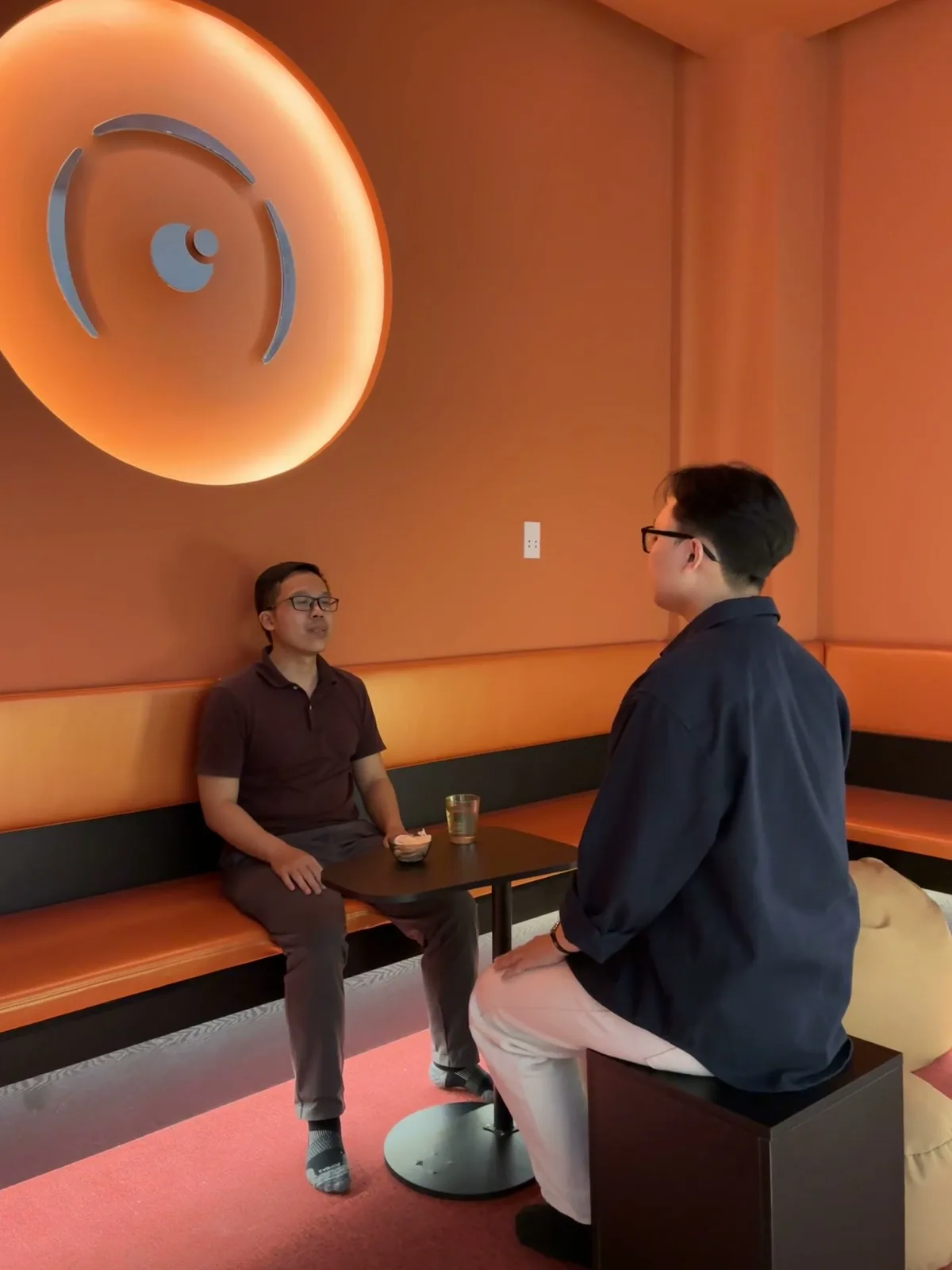
At Ōmni, our Brainwaves Neuro Align is a 30-minute light-and-sound session on a DAVID Delight device by Mind Alive, which you can try before deciding whether this kind of experience suits you. It is 450,000 VND on its own, or +200,000 VND with a float. Like the other devices in group 2, it uses flickering light, so the safety list above applies. Every guest fills in a short health questionnaire first, by email before the visit and again on site.
Ōmni Evidence Scale: Early evidence. Light-and-sound sessions are often described as relaxing, but strong independent trials are still missing, and we do not make medical claims for it.
And a fair reminder: you do not need a device to meditate. A quiet room, a timer and your breath cost nothing. A float session goes the other way from flicker: it removes light and sound almost completely.
Where to try it in Saigon
As of October 2026, we could not find any public place in Vietnam offering Lucia, roXiva, Somadome or Dreamachine sessions. Lucia was not found in Singapore or Bangkok either. Personal devices like Muse, Kasina or NeuroVIZR may be available hand-carried, but we could not confirm an official distributor. Elemind ships only to the US and Canada.
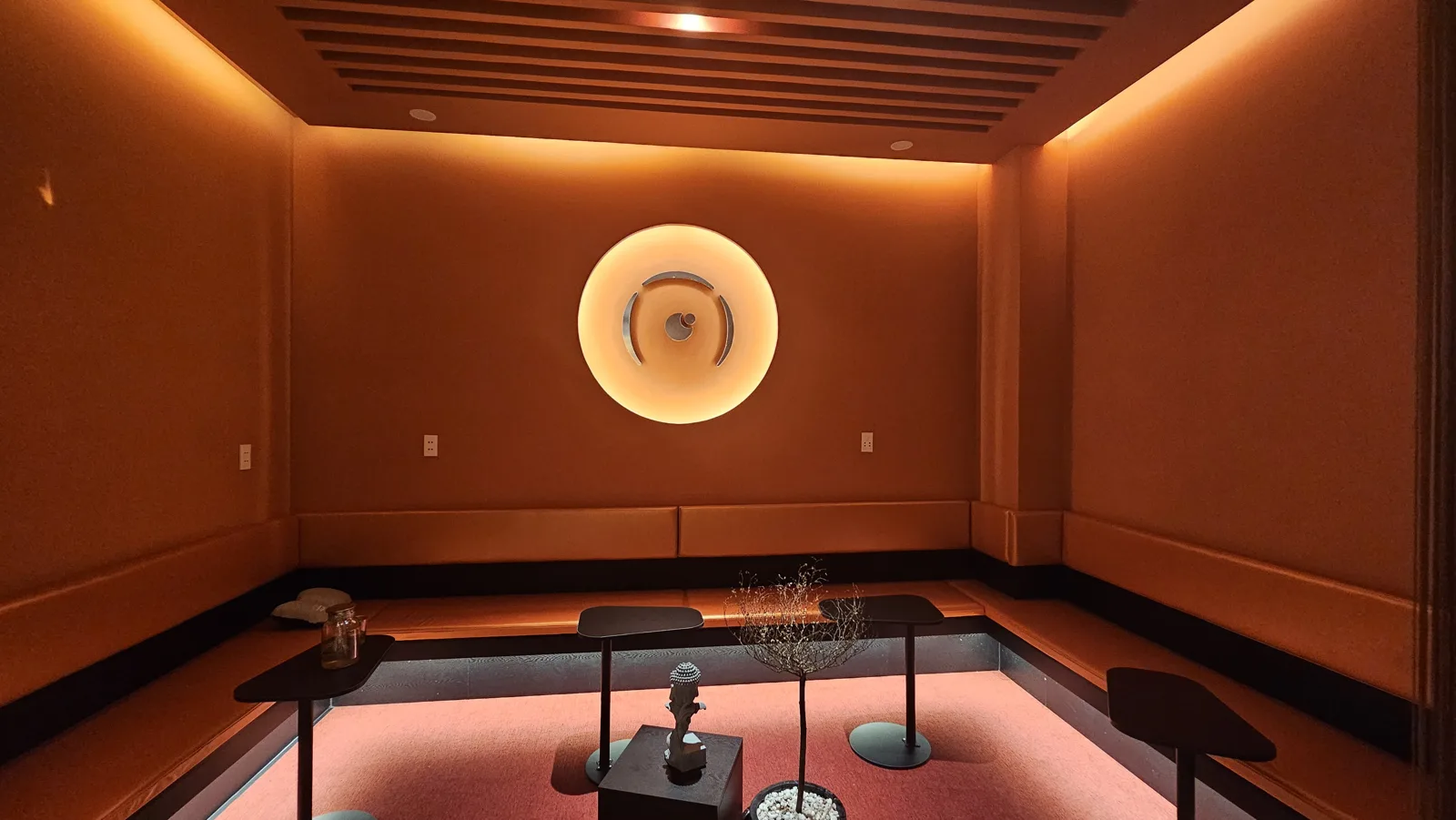
If you want to try a light-and-sound session in Saigon, Brainwaves Neuro Align is available at Ōmni, 16C Quốc Hương, Thảo Điền, open 9:00–21:00 daily. See all options on our services page. If you are curious about sound without light, our guide to sound healing in Saigon covers singing bowls and handpans. If sleep is your main goal, read our insomnia and float plan.
FAQ
Do meditation devices actually work?
Some show early, promising signals, but most of the evidence is small, run by the makers, or based on personal stories. Sana has a sham-controlled trial. Hapbee has no good independent evidence. None replace the practice of meditation itself.
Which meditation device is the safest?
Devices without flashing light carry no flicker-related seizure risk. That includes Muse (feedback only), Apollo (vibration) and Elemind (sound only). Always follow each maker’s own warnings.
Can I use a light-and-sound device if I have epilepsy?
No, not without your doctor’s clear approval. Flashing between 3 and 30 times a second is the usual trigger range for photosensitive epilepsy, and light passes through closed eyelids.
Can I buy these devices in Vietnam?
We found no official Vietnamese distributor for any of them as of October 2026. Some may be sold hand-carried. Elemind ships only to the US and Canada.
What is audio-visual entrainment?
It is light and sound pulsed at a steady rate while your eyes are closed. The idea is that your brain’s rhythm drifts toward that beat. The theory is still debated.
Sources
- Muse 2 – InteraXon
- Muse S Athena – InteraXon
- light attendance GmbH – WKO Tirol
- Lucia light – MIND Foundation
- Lucia LED feature – Vice
- Light travel – goop
- DAVID Delight Pro – Mind Alive
- Rahmani et al. 2025, Brain Sciences review – BOA Unimib
- Audio-visual entrainment – Wikipedia
- Kasina – MindPlace
- roXiva and roXiva ordering
- roXiva event screening – Dandelion
- NeuroVIZR
- Sana fibromyalgia trial NCT04568798 – ClinicalTrials.gov
- Medical policy 3.03.07 – Premera
- Apollo Neuro
- Apollo Neuro review – Wareable
- Elemind
- Elemind headband – Sleep Review
- Hapbee
- Hapbee – netzwelt
- Somadome – Hello!
- Somadome – Spa Business
- Dreamachine – Centre Pompidou
- Dreamachine – designboom
- Dreamachine and the Perception Census – University of Sussex
- Dreamachine FAQs
- Photosensitive epilepsy – Epilepsy Society
- Photosensitive epilepsy factsheet (April 2025) – Epilepsy Society
- Photic- and pattern-induced seizures: a review for the Epilepsy Foundation of America – Aston University
Leave a Reply