
In short: An ice bath is a short, deliberate dip in cold water. It sharply raises alertness hormones and can ease muscle soreness, but plunging right after strength training may blunt muscle growth. Beginners at 11–15°C should start with 30–60 seconds, never plunge alone, and never do Wim Hof-style breathing in or near water.
This guide was written by the team at Ōmni Space in Thảo Điền. We opened Vietnam’s first float centre (Float Vietnam, Hanoi, 2017), and we now run a cold plunge and an infrared sauna next to our float rooms. This guide covers what the cold actually does to your nervous system, what the research does and does not show, and how to start safely.
What cold water does to your body
The first seconds in cold water are loud. You gasp, your breathing speeds up, your heart rate climbs and your blood pressure rises. This is the cold shock response: your sympathetic, “alert” nervous system switching on at once.
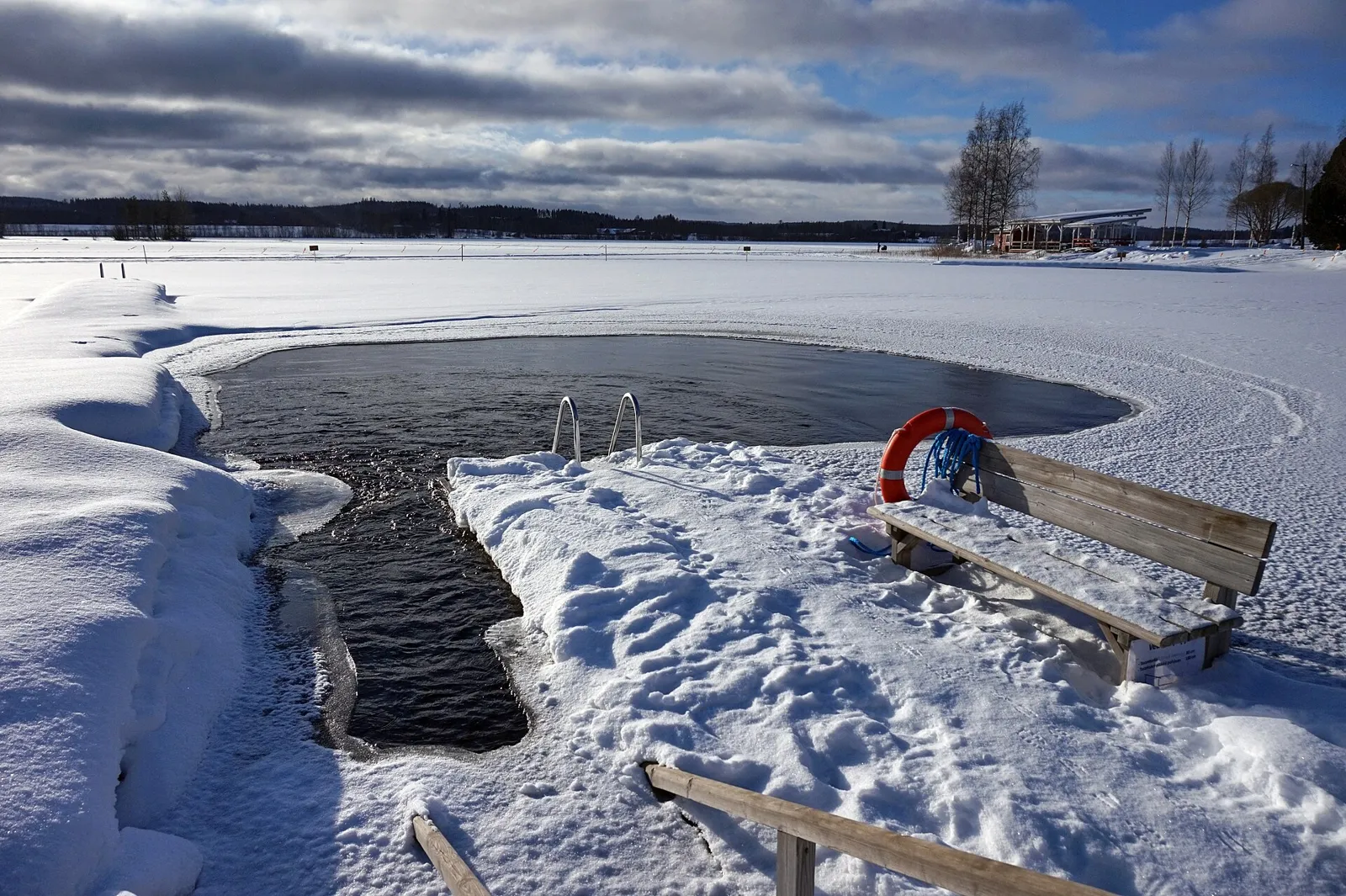
The most quoted study on what happens next is Šrámek and colleagues (2000). Young men sat in water up to the neck for one hour at 32°C, 20°C and 14°C. At 14°C, blood noradrenaline rose by about 530% and dopamine by about 250%. Metabolism rose by 350%. Adrenaline did not change, and cortisol tended to fall. In warm water at 32°C, the opposite happened: heart rate dropped by 15% and blood pressure fell.
Noradrenaline is linked to focus and alertness, and dopamine to motivation and reward. That is why so many people describe feeling clear and awake after a plunge. But keep the study design in mind. It was a small group of young men, sitting in cold water for a full hour. A two-minute dip is a very different dose, and the study did not measure mood. Claims that one plunge gives you “hours of dopamine” go further than the data.
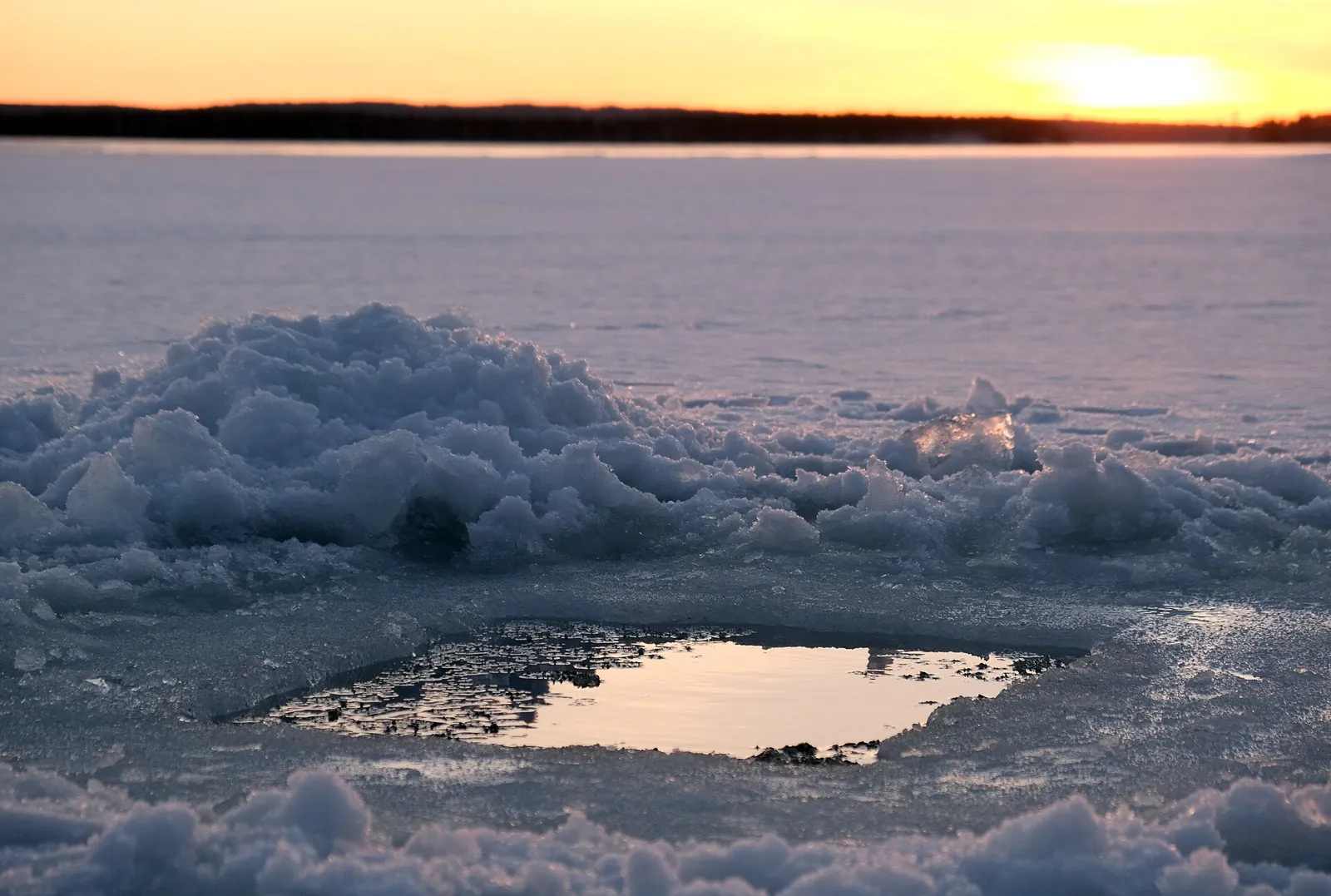
A second study looks at people who use cold regularly. Søberg and colleagues (2021) compared Danish winter swimmers, who dipped in 1–9°C sea water two to three times a week, with men who did not. The researchers expected the swimmers to have more brown fat. Instead, they found the swimmers regulated temperature better: when cold, they produced more heat than the control group. The study was small (16 young men) and only took one snapshot in time. Its often-quoted “11 minutes of cold per week” describes what this group happened to do. It was never tested as a recommended dose.
Ōmni Evidence Scale: Early evidence. Cold water clearly raises noradrenaline and dopamine, but the key study used one hour at 14°C in a few young men, so effects on mood from a short plunge are not yet well tested.
Recovery or muscle growth: when to plunge for your goal
For sore muscles, the research is fairly encouraging. A 2023 meta-analysis in Sports Medicine (Moore and colleagues, 28 studies) found that cold-water immersion reduced muscle soreness better than other recovery methods, and was similar for explosive power and flexibility. Another 2023 review of 44 randomised trials (Batista and colleagues) found cold water helped soreness both right away and, in most cases, in the days after. Exact temperature and time rarely changed the result much.
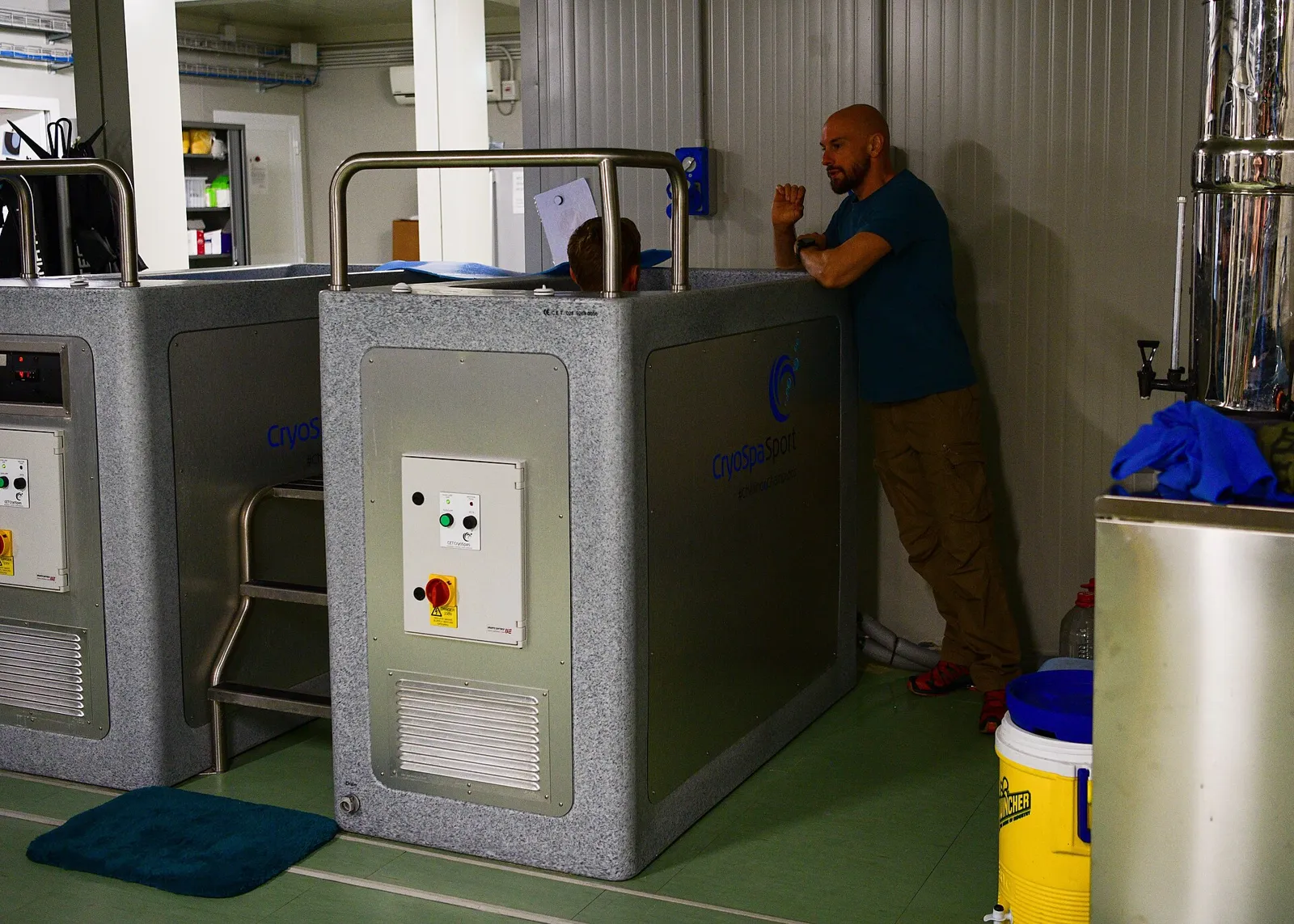
There is an important catch for anyone lifting weights to build muscle. In Roberts and colleagues (2015), 21 men did strength training for 12 weeks. One group sat in cold water for 10 minutes after every session. The other did active recovery. The cold group gained less strength and less muscle. The cold seems to quiet some of the signals that tell muscle to grow.
| Your main goal | When the research suggests plunging |
|---|---|
| Less soreness between games, races or hard sessions | After the session is reasonable. This is where most of the recovery evidence sits. |
| Building muscle and strength | Keep the plunge away from right after lifting. Use it at another time of day or on rest days. |
| Feeling alert and clear-headed | Earlier in the day. Cold is a strong stimulant, so you may prefer to keep it away from bedtime. |
| Unwinding and better rest | Pair a short plunge with something calming afterwards, such as a float or quiet time. |
Ōmni Evidence Scale: Promising. Several meta-analyses show cold water reduces muscle soreness, but many trials are small, and regular plunging right after strength training may reduce muscle gains.
How cold, how long: a beginner protocol at 11–15°C
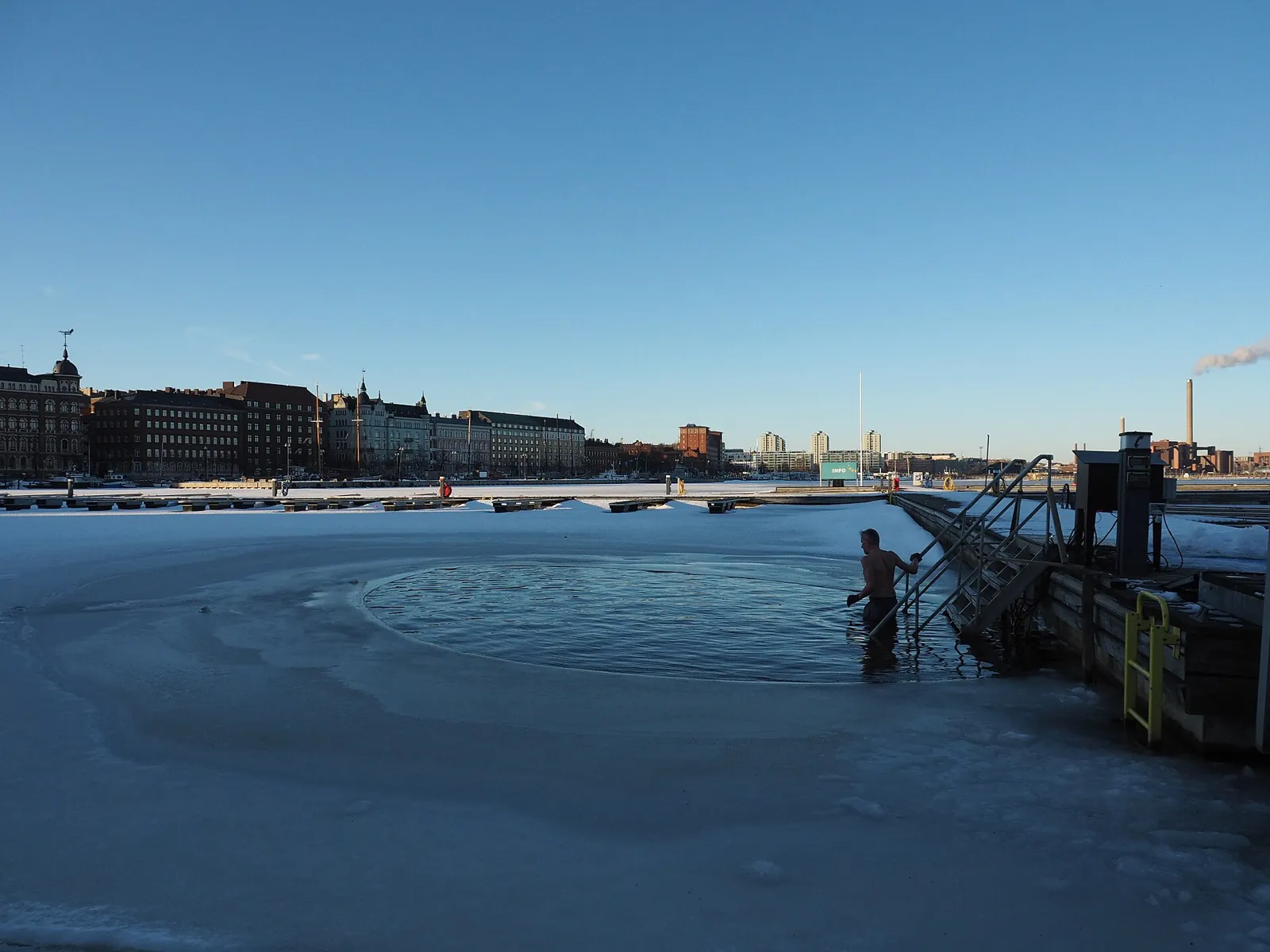
You do not need near-freezing water. Many guides describe 10–15°C as a common range for cold plunges, and 11–15°C is plenty for a first time in a warm city like Saigon. Colder is not automatically better: the recovery reviews found temperature rarely changed the outcome.
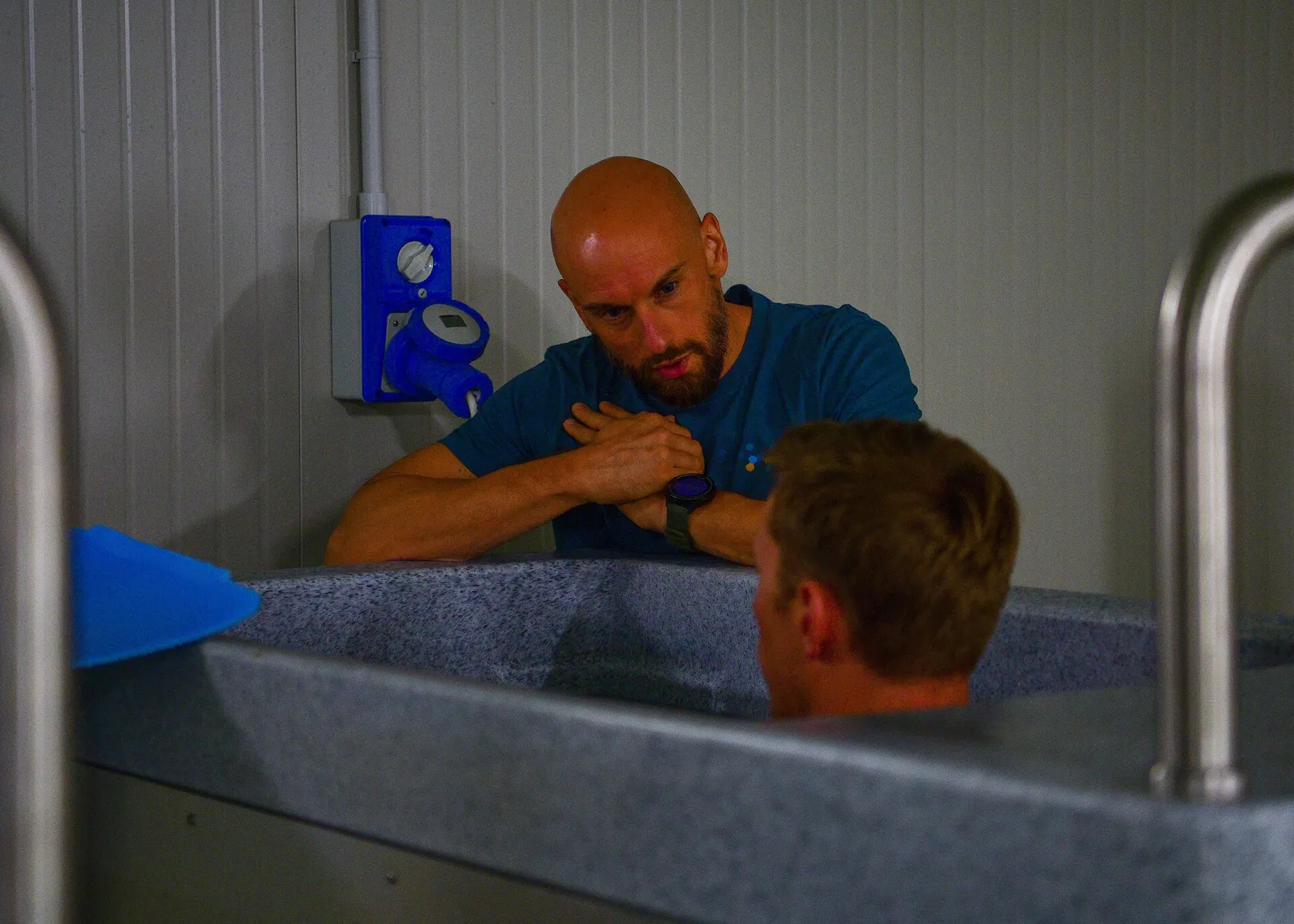
- First sessions: 30 seconds to 1 minute. That is a complete, worthwhile plunge.
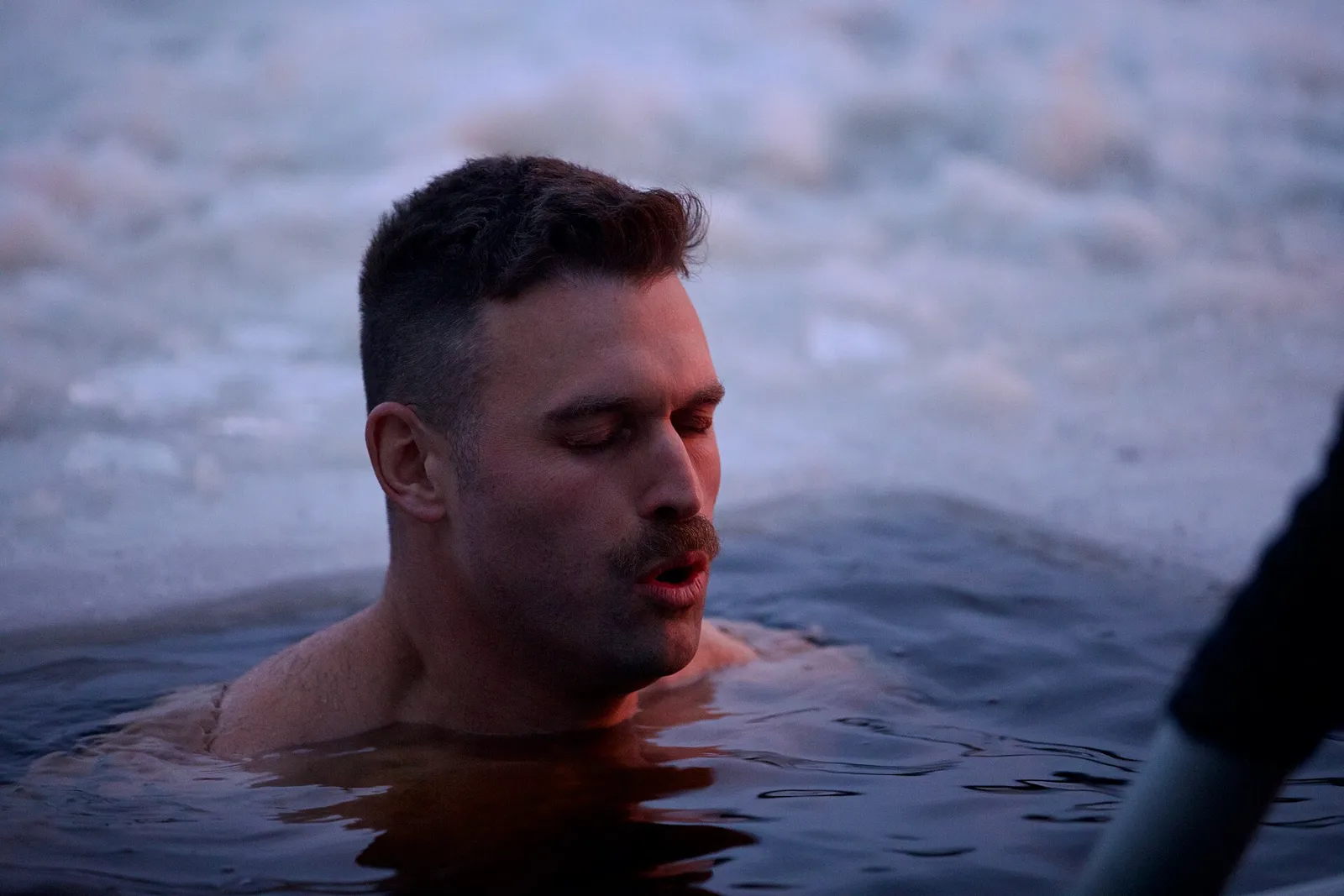
- Go in slowly. Sit on the edge, then lower yourself in stages. Keep your face out of the water.
- Breathe out long and slow through the first 30 seconds. The gasp passes. Calm breathing is the skill you are learning.
- Build gradually. Add time across sessions, not within one. A review by Barwood, Tipton and colleagues (2024) found the cold shock response becomes smaller after around four immersions.
- Get out before you shiver hard or feel numb, dizzy or confused.
- Rewarm gently. Dry off, put on warm clothes and move a little.
- Never plunge alone.
If you want more detail on our own setup, see our cold plunge page.
The Wim Hof Method: what it is and what we know
Wim Hof is a Dutch athlete known for feats in extreme cold. His method is built on three pillars: breathing, cold exposure and mindset (older materials say “commitment”). The breathing part involves rounds of deep, fast breaths followed by holding the breath on an exhale.
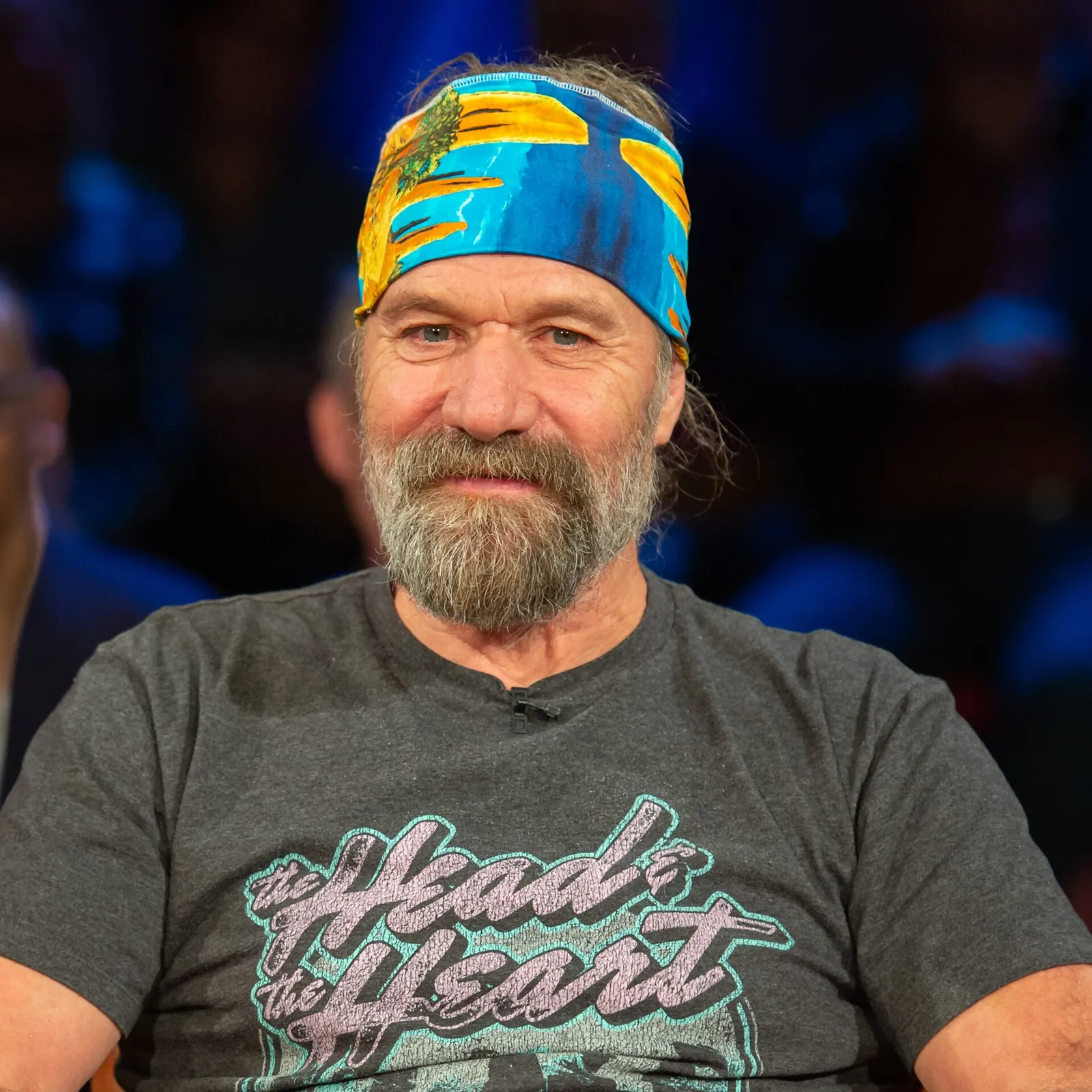
The best-known study is Kox and colleagues (2014), published in PNAS by a team at Radboud University Medical Center in the Netherlands. Twelve healthy men trained for 10 days in meditation, the breathing technique and ice-water immersion. Twelve others did not train. Both groups were then given a small dose of a bacterial toxin that briefly causes flu-like symptoms. The trained group had a large rise in adrenaline, more of an anti-inflammatory signal (IL-10), lower levels of inflammatory signals, and milder symptoms.
That result is genuinely interesting. It suggests people can learn to influence parts of the nervous system once thought to be automatic. But be honest about its limits. It involved 24 healthy young men. The training mixed three practices, so we cannot say which one mattered. It measured a short-term response in a lab, not long-term health. It does not show that the method “boosts immunity” or treats any illness.
Ōmni Evidence Scale: Early evidence. One small, well-run study shows trained men could shift their stress and inflammatory response, but the method was tested as a bundle and long-term benefits are unproven.
Safety: the part that matters most
Never do Wim Hof-style breathing or breath holds in or near water. This includes the plunge, a pool, the shower and a float tank. Fast breathing blows off carbon dioxide, which is what normally tells you to breathe. You can then hold your breath long enough to black out with no warning. Lifesaving bodies such as the Royal Life Saving Society UK say plainly that you should not hyperventilate before holding your breath in water. The official Wim Hof Method site itself says never to practise in water, in the shower or while driving. Outside magazine has reported on deaths and a lawsuit linked to this kind of breathing in water.
If you enjoy breathwork, do it seated or lying on a mat, on dry land, and finish it completely before you go near the water.
Cold water also puts real stress on the heart. Researchers Shattock and Tipton (2012) proposed that when the cold shock response (which speeds the heart) and the diving reflex (which slows it) fire together, they can trigger abnormal heart rhythms in people at risk. It is still a hypothesis, but it is a good reason for care.
- Talk to your doctor first if you have heart disease, high blood pressure, an irregular heartbeat, or if you are pregnant.
- Breathwork workshops commonly exclude people who are pregnant or have epilepsy.
- Do not plunge if you feel unwell, dizzy or feverish.
- Never put your face under cold water or hold your breath in it.
- Always have someone nearby.
Where to try it in Saigon
Saigon’s cold scene has grown quickly since 2025. Kenh14 has written about young Saigonese swapping nights out for ice baths after pickleball and running. Here are places we found in our research, listed neutrally. Details come from their own websites and public listings, so please check hours, prices and temperatures with each venue before you go.
- Cá Hồi Sauna & Ice Bath Social Club (Nguyễn Văn Hưởng, Thảo Điền): a social sauna with a lemongrass steam room, several cold pools, guided Aufguss sessions and a weekend Run & Dip Club.
- Primal (Nguyễn Duy Hiệu, Thảo Điền): a gym with a recovery area, including a hot stone sauna, an ice barrel held at around 10°C and a warm magnesium bath.
- Dii Sauna & Icebath (Hoàng Sa): a Finnish-style sauna at around 85°C and an ice bath at around 5°C.
- Reborn Fitness & Health: a calisthenics studio with an ice bath at around 10°C.
- Body Expert Systems: a wellness centre offering ice bath and breathwork within a membership.
- Ōmni Space (16C Quốc Hương, Thảo Điền): a cold plunge at 11–15°C (30-minute session) and an infrared sauna at 45–55°C, in a private room for up to 4 people. Each costs 450,000 VND on its own, or 200,000 VND extra with a float. Sauna and cold plunge together are 900,000 VND. Open 9:00–21:00 daily. The 30-minute session is free-form: you dip and rest at your own pace, with as many short dips as you like. At 11–15°C the water is cool rather than icy, so it is gentle enough that people rarely overdo it, and beginners can keep each dip to 30–60 seconds. See services.
Outside the city, Epic Reset in Hội An offers outdoor sauna, cold plunge and breathwork. In our research we did not find a certified Wim Hof Method instructor based in Saigon. If you want formal instruction, check the official instructor directory on wimhofmethod.com.
How float and sauna pair with cold
Hot and cold often go together. In Søberg’s study, seven of the eight winter swimmers also used a sauna, and one of the senior authors suggested the combination might raise energy use. That is an idea, not a finding. For recovery, a 2013 meta-analysis (Bieuzen and colleagues) found alternating hot and cold was better than doing nothing, but not better than cold water alone. If you are curious about heat, read our guide to infrared and Finnish sauna or the infrared sauna page.
Through a nervous system lens, cold and float sit at opposite ends. Cold is a strong “switch on”. Floating removes light, sound and gravity, and gives the body the chance to settle. Recall that in Šrámek’s study, water close to skin temperature lowered heart rate and blood pressure. We are not aware of studies on the plunge-then-float sequence itself, so treat this as a practical suggestion, not a proven protocol. One simple option is a short plunge first, then a float to come down slowly. If floating is new to you, start with what float therapy is and how to prepare for your first float.
FAQ
How long should a beginner stay in an ice bath?
Start with 30 seconds to 1 minute at around 11–15°C. Add time slowly over several sessions. The cold shock response tends to get smaller after about four immersions, so it really does get easier.
Does an ice bath after the gym stop muscle growth?
It can reduce it. In a 12-week study, men who sat in cold water for 10 minutes after every strength session gained less muscle and strength than those who did active recovery. If muscle growth is your goal, plunge at a different time from your lifting.
Does an ice bath really raise dopamine?
In one study, an hour in 14°C water raised dopamine by about 250% and noradrenaline by about 530%. A short plunge is a much smaller dose, and mood was not measured, so the effect of a quick dip is likely smaller and less certain.
Can I do Wim Hof breathing in the ice bath?
No. Fast breathing followed by breath holds can cause a sudden blackout without warning. Do breathwork on dry land, seated or lying down, and finish before getting in the water.
Who should avoid ice baths?
Anyone with heart disease, high blood pressure or an irregular heartbeat, and anyone who is pregnant, should speak with a doctor first. Avoid plunging when unwell, and never plunge alone.
Is colder water better?
Not necessarily. Recovery reviews found that temperature and time rarely changed the results. Water at 11–15°C is cold enough for most people, especially when starting out.
Sources
- Šrámek P et al. Human physiological responses to immersion into water of different temperatures. Eur J Appl Physiol, 2000.
- Søberg S et al. Altered brown fat thermoregulation and enhanced cold-induced thermogenesis in young, healthy, winter-swimming men. Cell Reports Medicine, 2021.
- University of Copenhagen. Winter-swimming Scandinavian men can teach us how the body adapts to extreme heat and cold, 2021.
- Moore et al. Meta-analysis of cold-water immersion versus other recovery methods (28 studies). Sports Medicine, 2023.
- Batista et al. Cold-water immersion and muscle soreness: meta-analysis of 44 randomised trials, 2023.
- Roberts LA et al. Post-exercise cold water immersion attenuates acute anabolic signalling and long-term adaptations in muscle to strength training. J Physiol, 2015.
- Barwood MJ, Tipton MJ et al. Habituation of the cold shock response: a systematic review and meta-analysis, 2024.
- Shattock MJ, Tipton MJ. “Autonomic conflict”: a different way to die during cold water immersion? J Physiol, 2012.
- Kox M et al. Voluntary activation of the sympathetic nervous system and attenuation of the innate immune response in humans. PNAS, 2014.
- Wim Hof Method. Breathing exercises and safety guidance.
- Royal Life Saving Society UK. Shallow water blackout, hyperventilation and breath-holding.
- Royal Life Saving Australia. Hypoxic blackout.
- Outside. Reporting on Wim Hof Method deaths and a California lawsuit.
- Bieuzen F et al. Contrast water therapy and exercise-induced muscle damage: a systematic review and meta-analysis. PLoS ONE, 2013.
- Kenh14. “Cool kid” Sài Gòn đổi rượu lấy bồn ngâm đá, 2026.
Leave a Reply