
In short: Jet lag means your body clock is still on home time. Vietnam is UTC+7 all year. From Europe your clock must move 5–7 hours earlier, the harder direction; from the US the 11–15 hour jump is easier to treat as a shift later. Timed daylight helps most. Melatonin helps many flyers; ask a doctor or pharmacist first.
This guide was written by the team at Ōmni Space, a float and recovery centre in Thảo Điền. We often meet guests in the fog of jet lag, from travellers and new expats to Việt kiều home for Tết. Here is what the research says, a 72-hour plan built around Saigon’s strong sun, and an honest look at where float, sauna and cold plunge fit.
What jet lag is: your body clock, explained simply
Deep in your brain, just above the point where the two optic nerves cross, sits a tiny cluster of nerve cells called the suprachiasmatic nucleus (SCN). This master clock tells the body when to feel sleepy, hungry and alert, and its strongest reset signal is light reaching the eyes. Darkness switches on melatonin, the hormone that says “night”; strong light switches it off.
Fly across several time zones and the clock in your head stays behind. For a few days your body expects night in the middle of a Saigon afternoon. Symptoms include poor sleep, daytime sleepiness, foggy thinking and stomach upsets (CDC). The clock moves only about 1 hour per day after flying east and about 1.5 hours per day after flying west. Because its natural cycle runs slightly over 24 hours, shifting later is easier than earlier.
Time difference: Vietnam vs home (with daylight saving)
Vietnam stays on UTC+7 all year, so the gap shifts by an hour when your home country changes its clocks. Tết falls in January or February, during European and US winter time.
| From | Winter (standard) time | Summer (daylight saving) time | What your body faces |
|---|---|---|---|
| US West Coast (Los Angeles, San Francisco) | UTC−8: Vietnam 15 h ahead | UTC−7 (2nd Sun of March to 1st Sun of November): 14 h ahead | Big jump; plan it as a shift later |
| US East Coast (New York) | UTC−5: 12 h ahead | UTC−4 (same dates): 11 h ahead | Big jump; plan it as a shift later |
| United Kingdom | UTC+0: 7 h ahead | UTC+1 (last Sun of March to last Sun of October): 6 h ahead | Flying east; clock must move earlier |
| France, Germany | UTC+1: 6 h ahead | UTC+2 (same EU dates): 5 h ahead | Flying east; clock must move earlier |
| Australia (Sydney, Melbourne) | UTC+10: Vietnam 3 h behind | UTC+11 (1st Sun of October to 1st Sun of April): 4 h behind | Flying west; mild |
| South Korea, Japan | UTC+9, no daylight saving: 2 h behind | — | Mild |
| China, Taiwan, Perth | UTC+8, no daylight saving: 1 h behind | — | Minimal |
From Europe you fly east and lose 5–7 hours, so you must sleep and wake earlier than your body wants. This is the harder direction.
From the US the clock jumps 11–15 hours, almost half a day. A 2018 review suggests treating any flight across more than eight time zones as westward, because drifting later is easier. At about 1.5 hours a day, full adjustment can take a week or more; three days will get you functioning, not finished.
From Korea, Japan, China or Perth the 1–2 hour gap usually means travel tiredness, not true jet lag.
The 72-hour reset plan for Saigon
Give your clock light and darkness at the right times. “Right” depends on your body’s low point, about 2–4 hours before your usual wake-up time at home. Light after that low point pulls the clock earlier; light before it pushes the clock later.
- From Europe (pull earlier). If you usually wake at 7:00 in Paris, your low point is about 3:00–5:00 Paris time: 8:00–10:00 in Saigon during European summer time, 9:00–11:00 in winter. On day 1, keep the early morning dim (indoors, or sunglasses) and get daylight from late morning into the afternoon. On days 2 and 3, start about an hour earlier each day.
- From the US (push later). If you usually wake at 7:00 in Los Angeles, your low point is about 3:00–5:00 LA time, or 17:00–19:00 in Saigon during US daylight time. Saigon afternoon light falls before it and pushes your clock later. Get daylight through the afternoon and, as the CDC advises after westward travel, avoid bright light very early in the morning. These are rules of thumb; a jet lag calculator or travel-medicine clinic can personalise them.
About the Saigon sun. The city is about 10 degrees north of the equator, so the sun is strong all year and midday is fierce. Daylight in the shade is still far brighter than indoor light, so skip direct sun: use shade, a hat, sunscreen and water.

Ōmni Evidence Scale: Promising. The science of how light shifts the body clock is solid and underpins CDC advice, but few trials have tested light plans in real travellers.
| Day | Light and dark | Food, caffeine, naps, movement |
|---|---|---|
| Day 0 (arrival) | Stay up until about 21:00–22:00 local time; if you land at night, keep lights dim and sleep. | Light local meal; water, not alcohol; naps of 20–30 minutes at most. |
| Day 1 | Europe: dim early morning, daylight late morning to afternoon. US: afternoon daylight. Dim lights before bed. | Local meal times; caffeine only before early afternoon; a walk in your light window. |
| Day 2 | Europe: start daylight about an hour earlier. US: keep afternoon light. | Stop caffeine about 6 hours before bed. Light exercise, not at midday. |
| Day 3 | Europe: daylight from mid-morning. US: afternoon daylight. | Same routine; broken sleep means slow progress, not failure. |
Meals, caffeine, naps and exercise
Meals. Eat modest meals at local times from day 0, even if you are not hungry. A bowl of phở for breakfast is a fine clock signal.
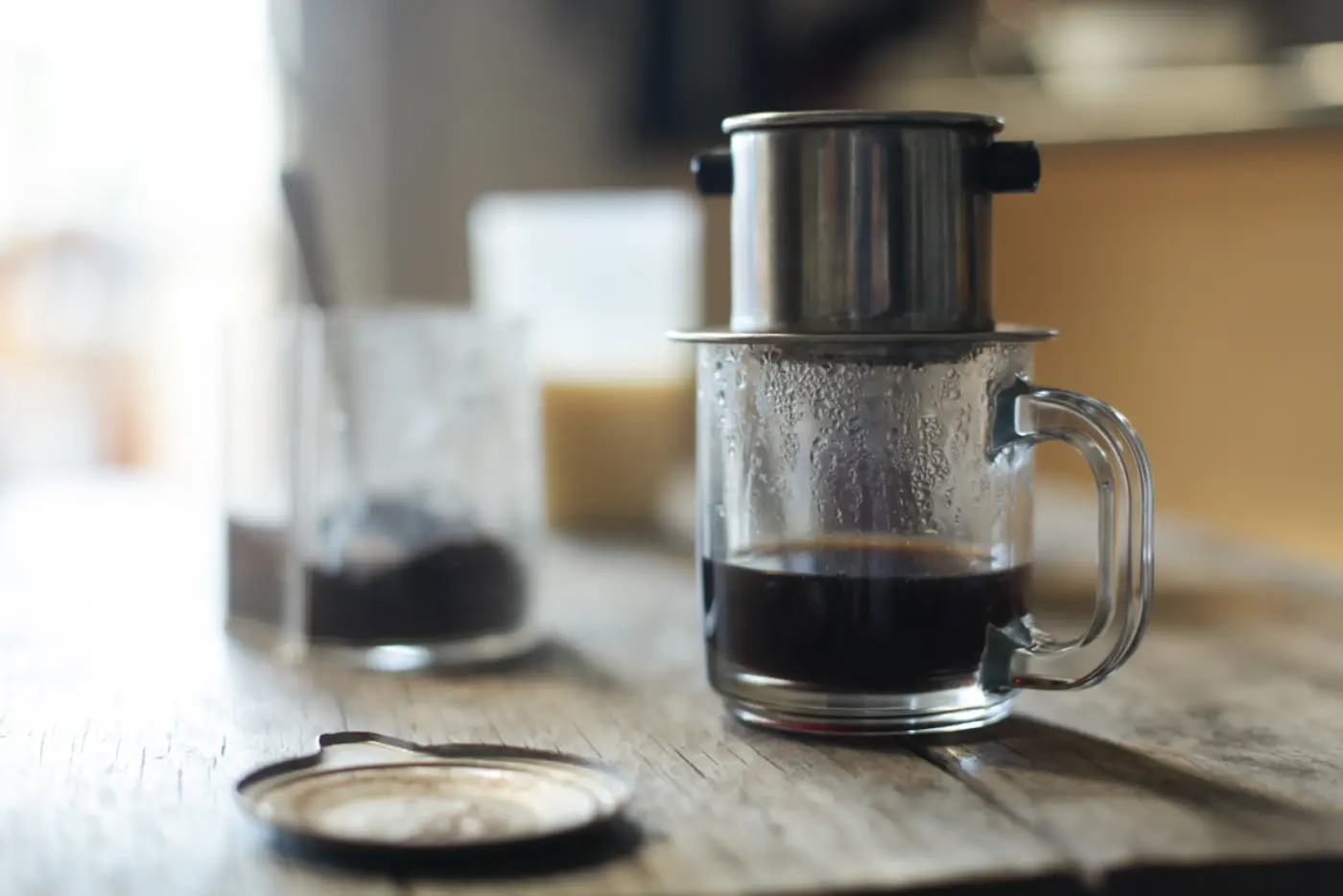
Caffeine. It fights daytime sleepiness, and Vietnamese drip coffee can be strong. The CDC notes a half-life of about 5 hours and suggests stopping about 6 hours before bedtime.
Naps and exercise. A 20–30 minute nap lifts alertness; longer naps hurt night sleep. A walk or swim in your light window gives two clock signals at once.
Alcohol. It fragments sleep and dehydrates you, so go easy on the flight and in the first days.
Ōmni Evidence Scale: Early evidence. These are sensible habits recommended by the CDC and clinical reviews, but they have rarely been tested on their own for jet lag.
Melatonin: what the Cochrane review found
A 2002 Cochrane review by Andrew Herxheimer and Keith Petrie pooled ten trials. Eight found that melatonin taken close to bedtime at the destination reduced jet lag in people crossing five or more time zones. The benefit was smaller for westward flights, and the wrong timing can cause daytime sleepiness. Most trials were small.
The review flagged possible harm for people with epilepsy or taking warfarin, and advised avoiding it in children. In the US it is a supplement the FDA does not regulate, so the dose may differ from the label; rules differ by country. We give no doses here: talk to a doctor or pharmacist first, especially if you are pregnant, take other medicines or have a health condition.
Ōmni Evidence Scale: Promising. A Cochrane meta-analysis found clear benefits, but the trials were small and the evidence is old.
Where float, sauna, cold plunge and light-and-sound fit
None of these treats jet lag, and none has been tested for it. They offer a calm hour that may help you unwind. We rate each one on the Ōmni Evidence Scale.
Float. You lie in skin-temperature Epsom-salt water in a dark, silent room, and that darkness counts as dark time for your clock. From Europe, an evening float fits the “dim evenings” rule; from the US, a morning float avoids early light. This is logic, not a tested protocol. Read what float therapy is and floating and sleep.
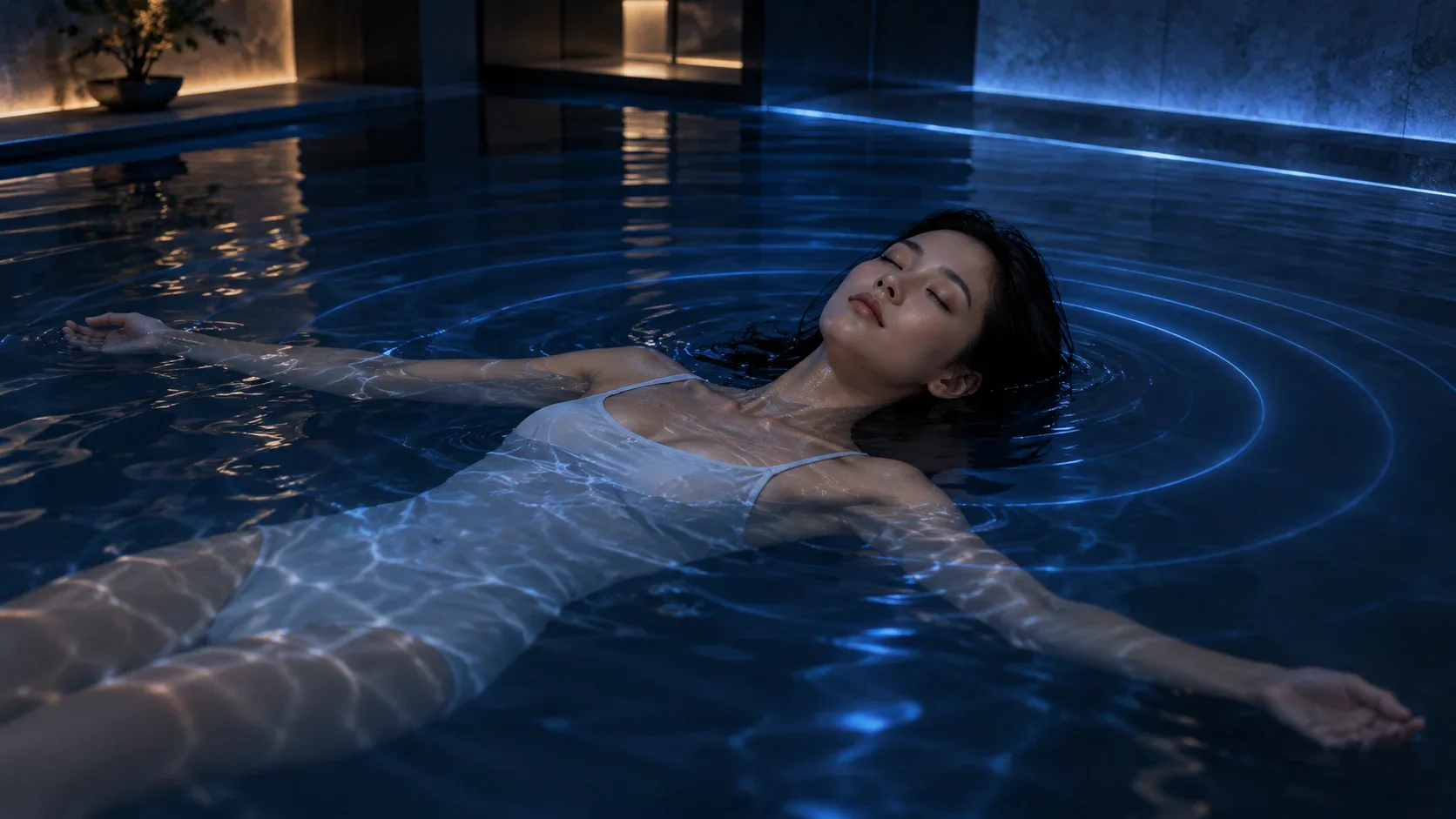
Ōmni Evidence Scale: No good evidence yet. No study has tested floating for jet lag; float for stress and anxiety is rated Promising.
Infrared sauna. A review of 17 studies found a warm bath or shower (40–42.5°C water) 1–2 hours before bed helped people fall asleep faster. A sauna is not a bath, but evening warmth can be a pleasant wind-down. Our infrared and red-light sauna runs at 45–55°C. See the sauna guide.
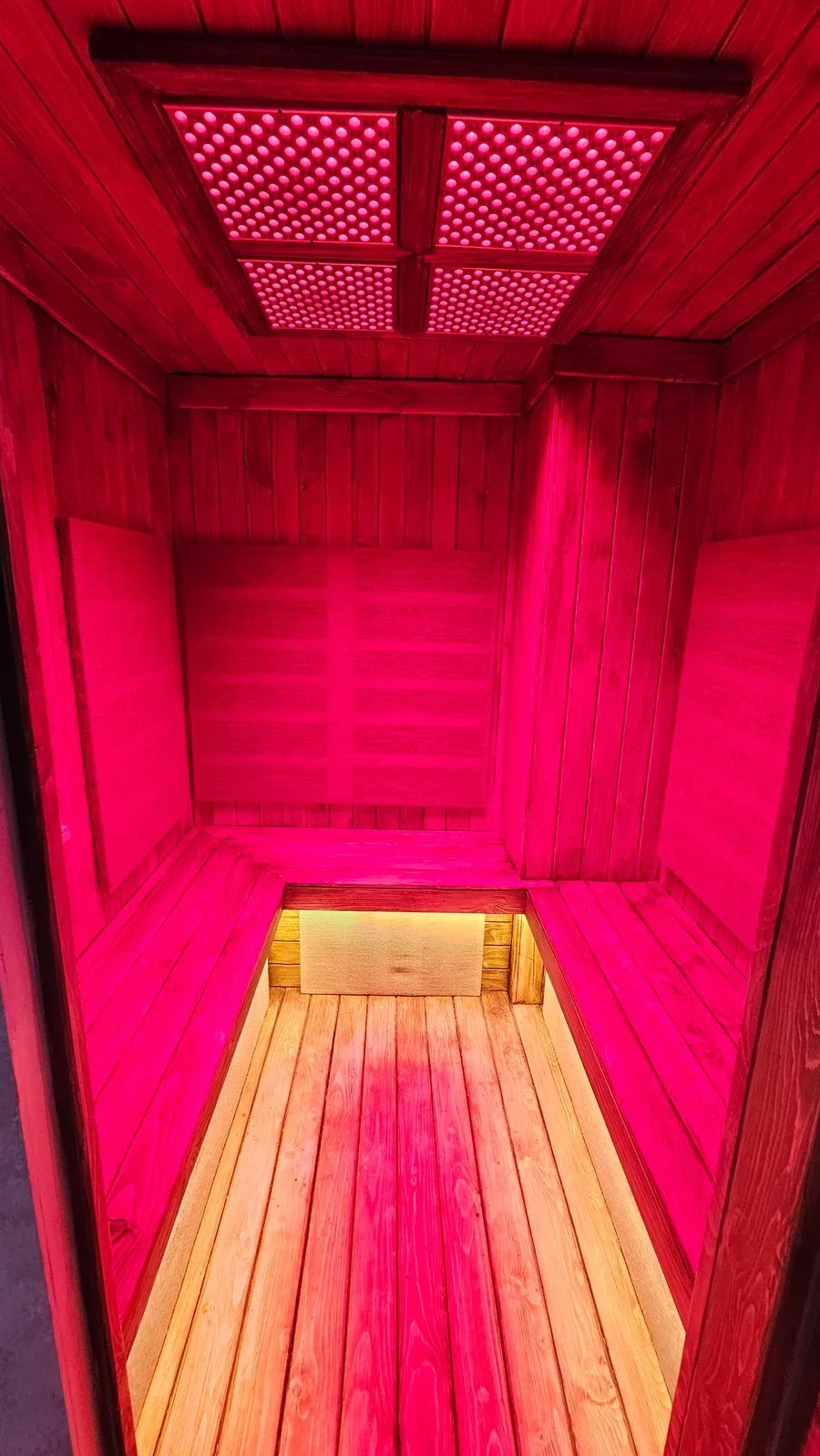
Ōmni Evidence Scale: No good evidence yet. Not tested for jet lag; infrared sauna in general is rated Early evidence.
Cold plunge. Cold water makes most people wide awake, so use it earlier in the day, never right before bed. See the ice bath guide.
Ōmni Evidence Scale: No good evidence yet. Not tested for jet lag.
Light-and-sound relaxation. Brainwaves Neuro Align is a 30-minute rest with gentle light and sound through glasses and headphones. It is not daylight and is not designed to reset your body clock; it is simply a way to switch off.
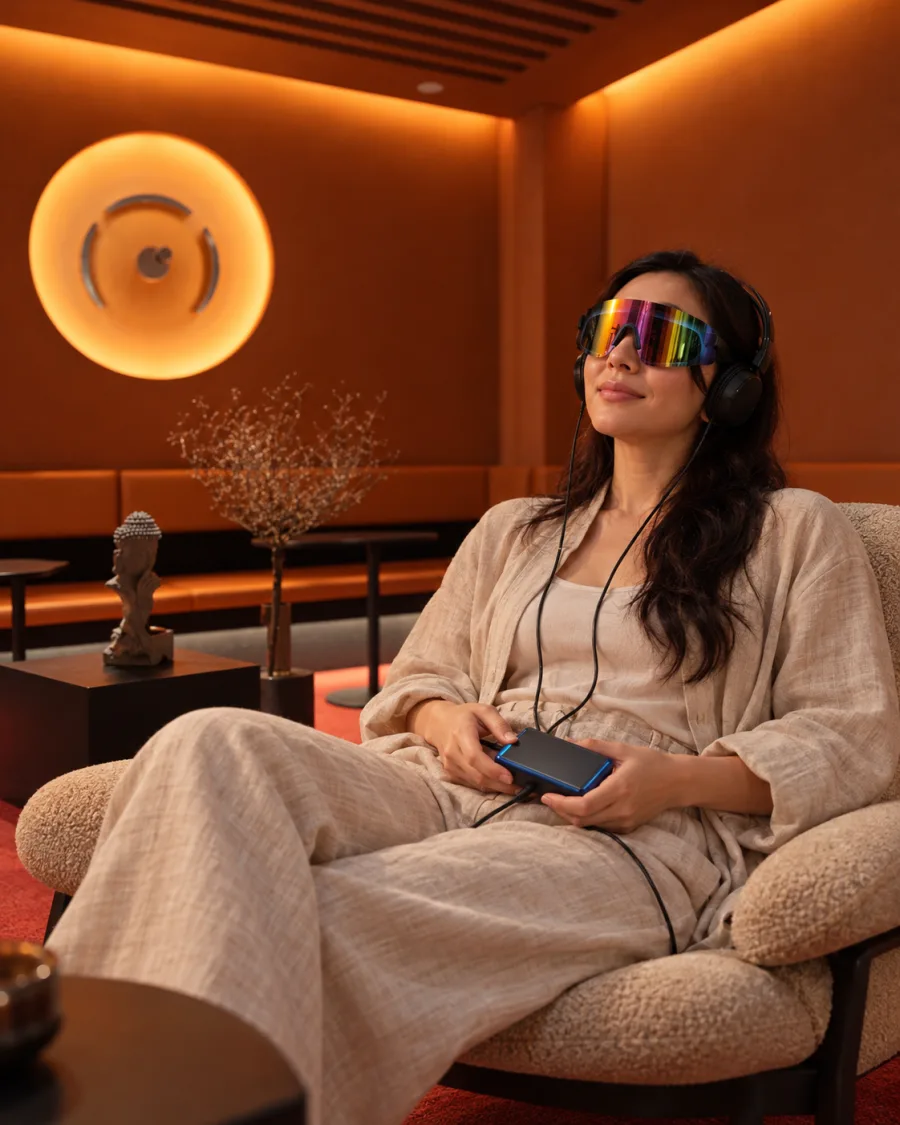
Ōmni Evidence Scale: No good evidence yet. Not tested for jet lag; as a relaxation session it is rated Early evidence.
Safety after a long flight
- Skip heat and cold on arrival day if you feel dehydrated, dizzy or exhausted, or have been drinking.
- Ask a doctor first about sauna or cold plunge if you are pregnant or have a heart or blood pressure condition. Never plunge alone.
- Flashing light: with epilepsy or light sensitivity, check with your doctor before a light-and-sound session and tell the team.
- Drink water. The CDC notes dehydration can worsen physical jet lag symptoms.
- Blood clots: the CDC says the risk on long flights is small but rises with flight length and risk factors such as pregnancy, recent surgery, cancer, past clots, obesity or age over 40. Walking and calf exercises are reasonable; an aisle seat may help. A 2018 review notes sleeping pills can keep you still for longer.
- See a doctor for chest pain, breathlessness or a painful swollen leg after flying, or if poor sleep lasts weeks (see our insomnia guide).
Where to try it in Saigon
Free daylight. In Thảo Điền, try the public riverside path at the end of Làng Báo Chí, or the riverbank by the new boat pier near Chợ Thảo Điền. More in our Thảo Điền guide.
Heat, cold and quiet. Thảo Điền also has sauna and ice bath clubs such as Cá Hồi Sauna & Ice Bath Social Club and Primal. The Saigon wellness map lists more across the city.
Ōmni Space is at 16C Quốc Hương, Thảo Điền, open 9:00–21:00 daily, last session at 20:00 (directions). Floats start at 1,500,000 VND for 60 minutes. Infrared sauna (45 min), cold plunge (30 min) and Neuro Align (30 min) are 450,000 VND per person each alone, or +200,000 VND per person each added to a float. Bringing bags from the airport? Ōmni can keep up to 4 suitcases while you float. See all services and before your first float.
FAQ
How long does jet lag last after flying to Vietnam?
At the CDC’s rough rate of 1–1.5 hours a day, expect several days from Europe and a week or more from the US.
Is jet lag worse flying from the US or from Europe to Vietnam?
The US shift is bigger, so it often lasts longer; the Europe trip is the harder direction, because the clock must move earlier.
Should I take melatonin for jet lag in Vietnam?
A Cochrane review found it reduced jet lag for many people crossing five or more time zones when taken near local bedtime. It is not right for everyone and rules differ by country, so ask a doctor or pharmacist first.
Is morning sun in Saigon good for jet lag?
From Europe, very early light can push your clock the wrong way at first, so favour late-morning and afternoon light. From the US, afternoon light helps most.
Can float therapy or a sauna cure jet lag?
No. Neither has been tested for jet lag. They can help you wind down, but light timing and sleep habits do the real work.
Sources
- Riedy SM, Williams SG. Jet Lag Disorder. CDC Yellow Book 2026.
- Herxheimer A, Petrie KJ (2002). Melatonin for the prevention and treatment of jet lag. Cochrane Database of Systematic Reviews.
- Herxheimer A (2008). Jet lag. BMJ Clinical Evidence.
- Ambesh P et al. (2018). Jet lag: Heuristics and therapeutics. Journal of Family Medicine and Primary Care.
- Golombek DA, Rosenstein RE (2010). Physiology of circadian entrainment. Physiological Reviews.
- Haghayegh S et al. (2019). Before-bedtime passive body heating by warm shower or bath to improve sleep: a systematic review and meta-analysis. Sleep Medicine Reviews.
- Reyes NL, Abe K. Deep Vein Thrombosis and Pulmonary Embolism. CDC Yellow Book 2026.
Leave a Reply