
In short: Chiropractic and float therapy do different jobs. Spinal manipulation is a quick, hands-on thrust with modest evidence for low back pain; a float is an hour of weightless rest with good evidence for stress and short-term muscle tension. In Ho Chi Minh City (Saigon) the two combine well: adjustment first, float later.
A hand on the spine, a quick push, a loud “crack”, and a smile from the person on the table. “Bone cracking” clips (also sold as ASMR chiropractic) pull in millions of views. This guide was written by the team at Ōmni Space – Float Saigon in Thảo Điền for office workers, runners, gym-goers and expats in Saigon and Ho Chi Minh City who want an honest comparison and a simple way to use both. It is general information, not medical advice, checked on 16 October 2026.
What is that “crack”, really?
It is not a bone popping back into place. Your spinal joints, like your knuckles, sit in a capsule of slippery joint fluid. When the joint surfaces are pulled apart quickly, the pressure drops and a gas-filled cavity forms in that fluid. In a 2015 study, Canadian researchers filmed finger joints inside an MRI scanner as they cracked: the sound came at the moment the cavity appeared, and the cavity was still visible afterwards. Scientists still debate the fine details, but the sound tells you that a joint moved, not that something was fixed.
So the useful question is not “does it crack?” but “what does my back need right now: to be adjusted, or to be allowed to let go?”
Two approaches, two philosophies
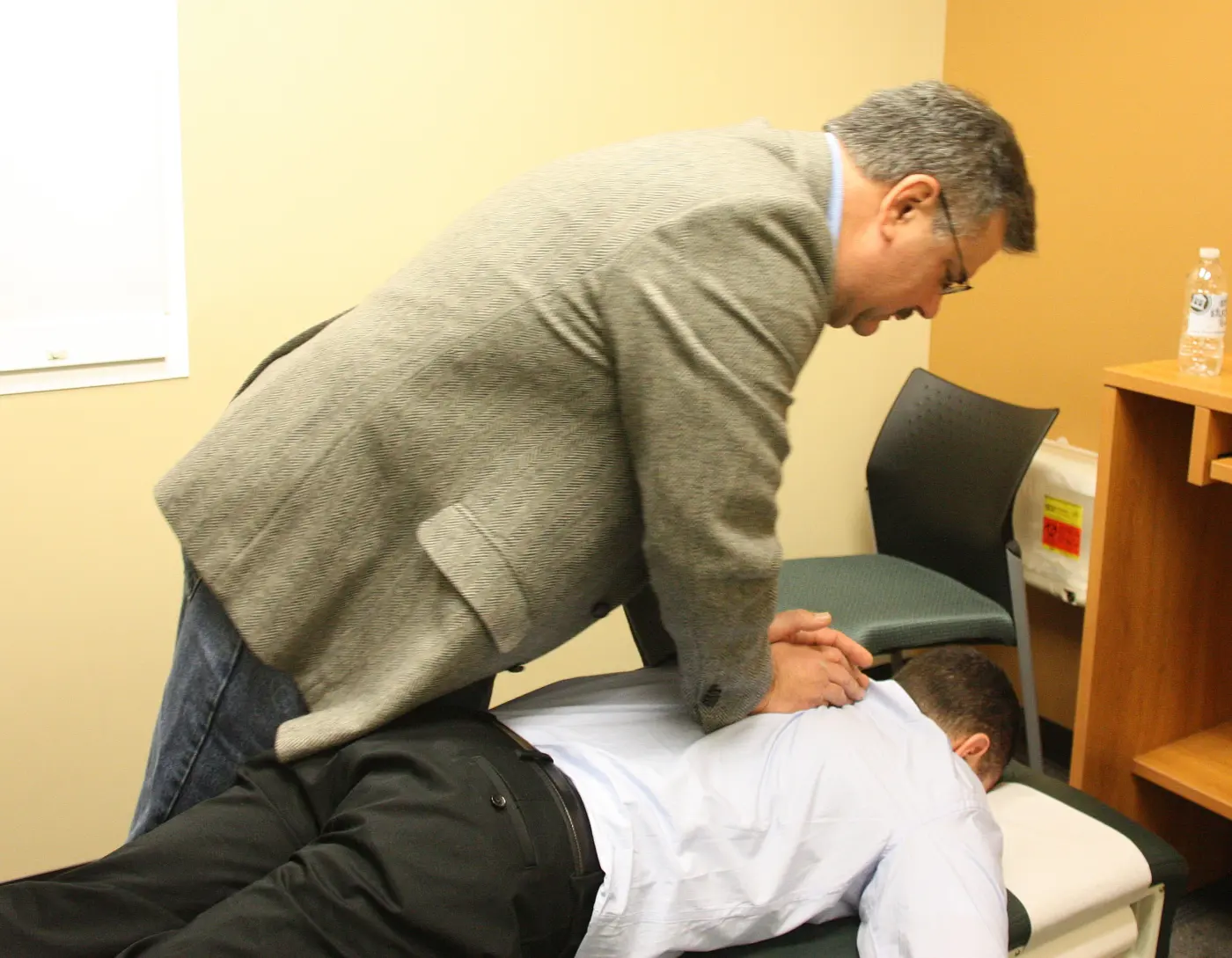
- Chiropractic spinal manipulation. A trained practitioner uses their hands to move a spinal joint with a high-velocity, low-amplitude thrust (often shortened to HVLA: a quick, short push). A visit may also include an examination, softer mobilisation or exercise advice. The focus is mechanical: how the joints move.
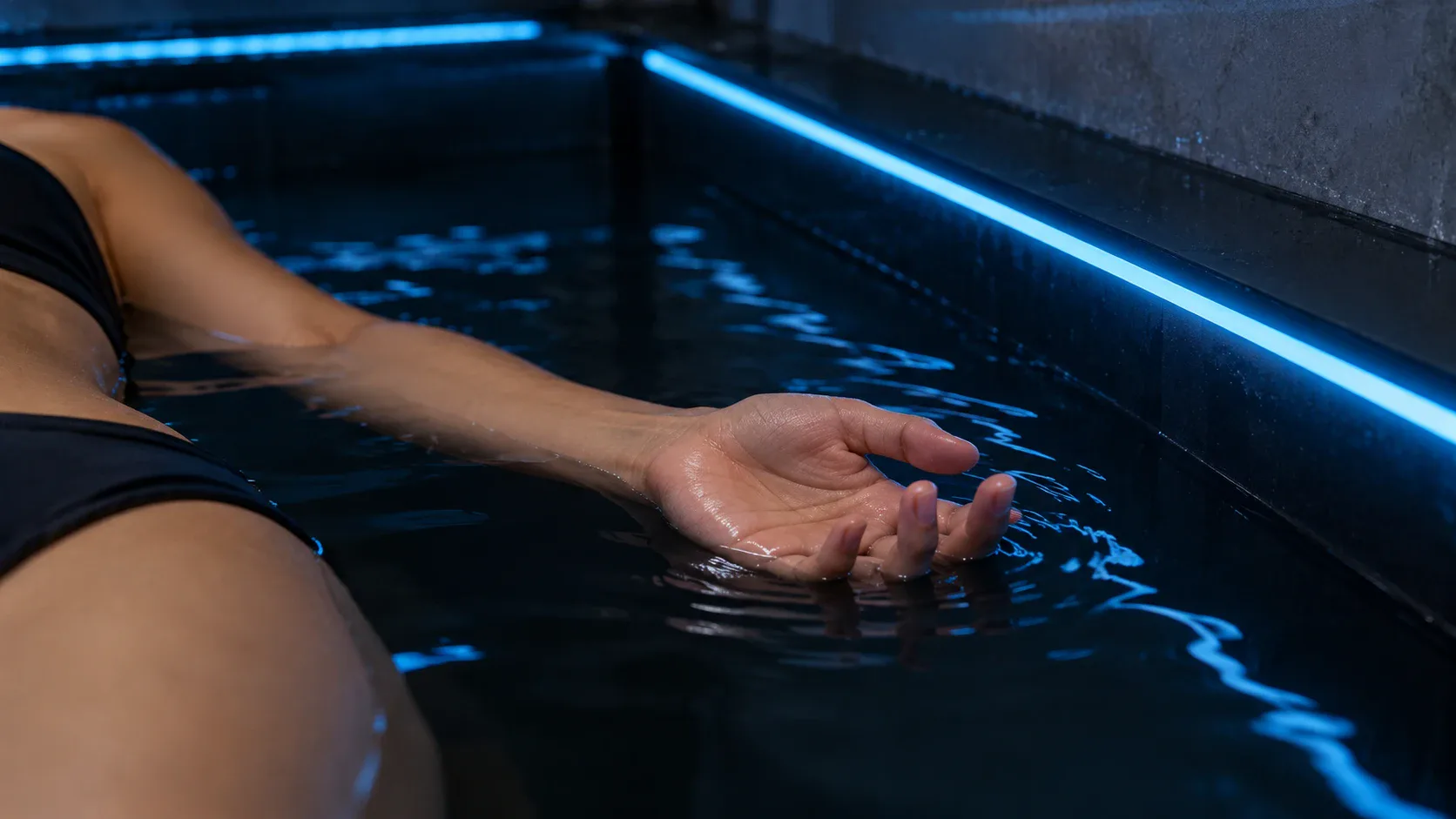
- Float therapy. You lie on your back in about 25 cm of water with around 500 kg of mineral-rich Epsom salt dissolved in it, warmed to 33–34 °C, close to skin temperature. The salt holds you up without effort. Nobody touches you. For 60 minutes or more, the spine no longer carries the weight of your head and body, and the room can be fully dark and quiet. The focus is the nervous system: helping the body switch off its guard.
Side by side: float therapy vs chiropractic
| Chiropractic manipulation | Float therapy | |
|---|---|---|
| How it works | Hands-on thrust to move a joint | Floating effortlessly on warm water dense with Epsom mineral salt (rich in magnesium): the spine relaxes on its own while the muscles let go, a 2-in-1 release for the body |
| How it feels | Firm pressure, a quick push, often a “crack” | Slow, quiet, floating; no touch |
| Session length | Short; the thrust takes seconds | 60 minutes or more, plus about 30 minutes for a short guide and showers |
| Who delivers it | A trained, licensed practitioner | You, in a private room; staff prepare it and guide you |
| Evidence | Low back pain: similar to other recommended treatments. Neck: weaker | Stress: strong. Muscle tension and short-term pain: promising. Long-term chronic pain: early |
| Risks, who should avoid | Soreness is common; serious neck problems are rare. Extra caution with blood thinners, fragile bones or nerve conditions | Very little force on joints. Check first after recent surgery, with open wounds, skin conditions, uncontrolled epilepsy or pregnancy |
| Mind and sleep | Not its main aim | Main aim: deep relaxation; many people sleep better |
| How often | As your practitioner advises | Three sessions close together, then every 2–4 weeks |
| Cost | Varies by clinic | 1,500,000 VND for a single 60-minute float; see the price page |
What the evidence says, honestly, on both sides
Spinal manipulation and low back pain. This is the best-studied use. A 2019 BMJ meta-analysis (a study that pools many trials) of 47 trials and 9,211 adults with chronic low back pain found that manipulation relieved pain about as well as other recommended treatments, such as exercise, with a small extra gain in daily function. A 2026 Cochrane review of 76 trials found the same picture, with low certainty because the trials vary so much. Guidelines reflect this. The American College of Physicians lists spinal manipulation among first options, alongside heat, massage, exercise and others. The UK’s NICE says to consider manual therapy only as part of a package that includes exercise.
Neck pain. The evidence is thinner. A Cochrane review of 51 trials found that a single neck manipulation eased pain right away but not in the following weeks; several sessions worked about as well as gentler mobilisation.
Ōmni Evidence Scale: Promising, for spinal manipulation and low back pain. Many trials show it works about as well as other recommended treatments, but effects are small and certainty is low to moderate.
Float therapy and muscle pain. In Swedish trials, 9 to 12 floats eased the worst stress-related muscle pain, and 12 sessions were as good as 33. The largest trial, from Germany in 2021 with 99 people, found something worth remembering: pain and tension dropped clearly right after every float. You walk out with a lighter back that same day, with no need to wait weeks. That relief had not lasted to week 12 or 24, so floating regularly, when your body asks for it, is how you keep it. We cover these studies in detail in our guide to back and neck pain from desk work.
Float therapy is a young but very active research field: randomised controlled trials have shown clear effects on anxiety, stress, muscle tension and sleep, and new clinical studies are still under way.
Ōmni Evidence Scale: Promising, for float and stress-related muscle tension and short-term pain relief. Small trials saw pain ease soon after floating, but groups were small.
Ōmni Evidence Scale: Early evidence, for float and long-term relief of chronic pain. The best-controlled trial found no lasting difference at 12 or 24 weeks.
Ōmni Evidence Scale: Strong evidence, for float and stress. Randomised trials show stress and anxiety falling after floating, and user experience is overwhelmingly positive. See how we rate evidence on the Ōmni Evidence Scale.

Safety: the biggest difference
Manipulation. Mild reactions are common. In a Dutch study of 529 people treated for neck pain, 56% reported a reaction after one of their first three visits, mostly soreness or a short rise in pain, and few were severe. Serious problems are rare. The one most discussed is a tear in a neck artery (cervical artery dissection), which can lead to a stroke. The American Heart Association says studies show an association with neck manipulation in younger adults, but it is unclear whether manipulation causes it or whether people with an early, painful tear go looking for help. A large Canadian study found the same pattern after visits to family doctors. Either way, the advice is the same:
- choose a qualified practitioner, and ask about their training and registration;
- tell them about blood thinners, bleeding or stroke risk, fragile bones or nerve problems (the NHS lists these as reasons for caution);
- do not let friends or untrained people “crack” your neck, and do not force it yourself;
- a sudden severe headache or neck pain, dizziness, trouble speaking or seeing after neck treatment is an emergency: call 115.
Float. There is almost no force on your joints: you lie down, the water lifts you, and you move only as much as you want. Ask your doctor first after recent surgery, with open wounds, skin conditions or uncontrolled epilepsy. If you are pregnant, tell us when you book, and check with your doctor if you have any concerns. Fill in the health questionnaire fully at every visit.
Before either one, see a doctor if you have:
- numbness, tingling or weakness in your arms or legs;
- pain after a fall, accident or injury;
- fever, or feeling shivery and unwell;
- weight loss you cannot explain;
- changes in your bladder or bowels, or numbness around your genitals or bottom (this is an emergency: call 115 in Vietnam);
- pain that is worse at night;
- pain that is not getting better after about six weeks.
How to combine them in Saigon and Ho Chi Minh City
One works on how joints move, the other on how much the muscles are holding on. These are our practical suggestions, not trial results.
- Back feels “locked” or out of line: see your chiropractor first. Float a few hours later or the next day, so the muscles around the spine can relax into the new range and the light feeling lasts longer.
- Back tight from stress, long sitting or heavy training: a float can be the first step. A lot of back tension travels with stress, and an hour without gravity or messages is a gentle place to start.
- A simple rhythm: chiropractic visits as your practitioner advises, plus a float every 2–4 weeks; see how often should you float. If you are under treatment for a back or neck problem, ask your practitioner first.
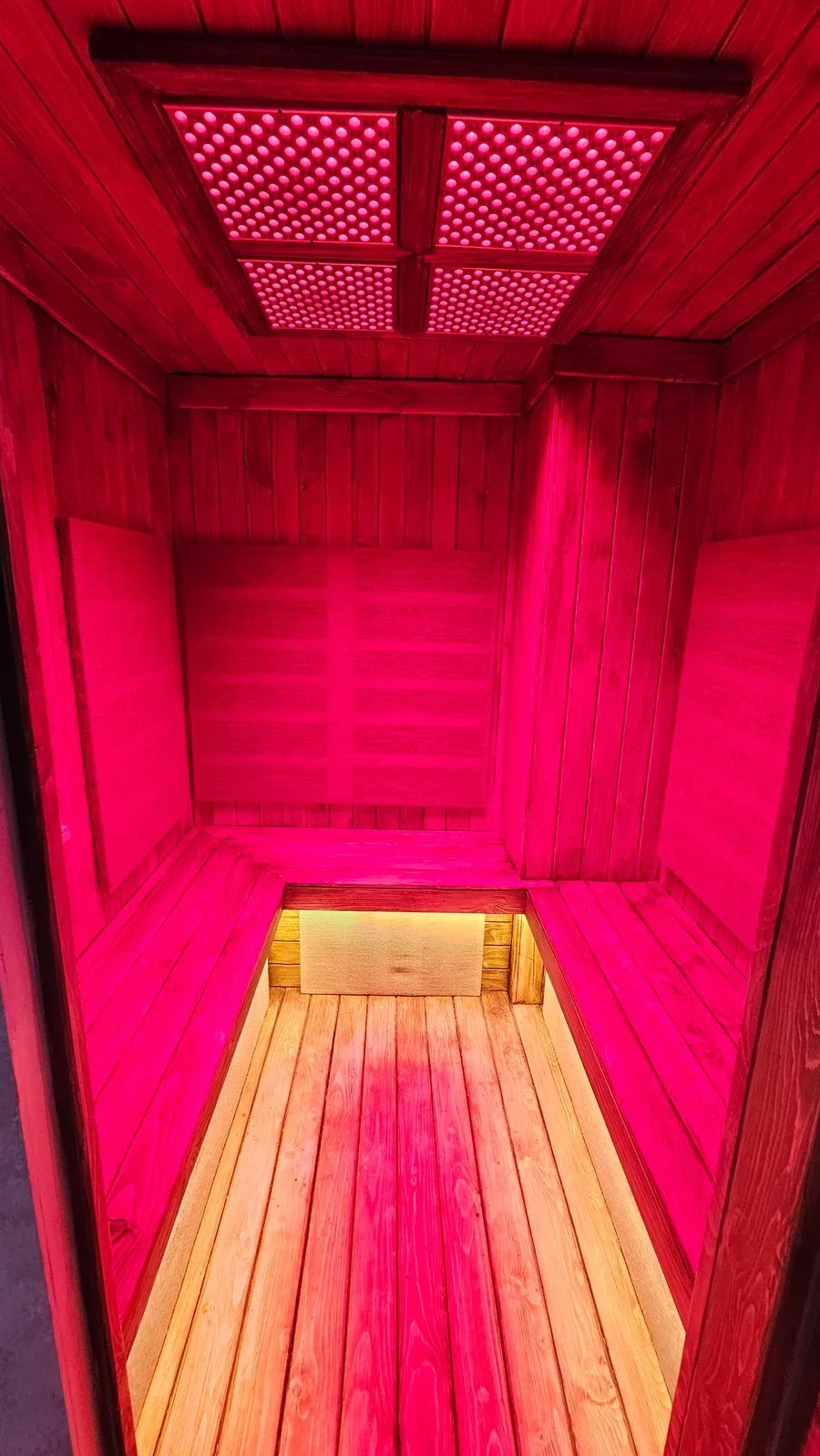
- Very tight? Warm up in the infrared sauna before the float. See contrast therapy.
Which one, when? Three short scenarios
- The office worker with a stiff neck. Screens, deadlines, shoulders like stone, no injury. Start with movement and a float to bring the stress level down; if one spot still feels stuck, a qualified practitioner can check it. Read our desk back and neck pain guide.
- The runner after a race. Legs heavy, lower back tight, nothing “out of place”. A float in the days after the race lets the body rest without load. If an old back issue flares, see your chiropractor or physio first and float the next day. See float therapy for runners and gym recovery.
- The person who watched the cracking clips and feels uneasy. You do not have to be cracked to care for your back. A float has no thrust and no sound. If you are curious about chiropractic, ask questions first and say no to anything that feels wrong.
Where to try it in Saigon
Ōmni Space – Float Saigon is at 16C Quốc Hương, Thảo Điền, open 9:00–21:00 every day. A Halo neck pillow is available if your neck needs time to let go. New to floating? Read what float therapy is and before your first float. For chiropractic, choose a qualified practitioner you trust; we do not recommend specific clinics.

FAQ
Can float therapy replace chiropractic?
Not exactly; they do different things. A float helps muscles and the nervous system let go, while manipulation moves a joint. If your back feels stuck, a practitioner can assess it; if it is mostly tension and stress, a float may be enough to start.
Can I float right after a chiropractic adjustment?
Many people float a few hours later or the next day. There is no force on your joints in the water, but if you feel sore or unwell after treatment, rest first and ask your practitioner.
I have a herniated disc. Can I float?
Absolutely. Floating takes the pressure off every vertebra and every muscle, so it can help support people with herniated discs, from mild to severe.
Does cracking make joints loose or cause arthritis?
For knuckles, studies found no link with arthritis; one older study saw more hand swelling and weaker grip in habitual crackers. There is no good evidence that cracking makes joints loose. Avoid forcing your own neck, though.
How soon will I notice a difference?
After a float, many people feel lighter and calmer straight away; trials measured pain relief right after sessions. Manipulation trials usually measured results after about a month. Give either approach a few sessions before you judge it.
Sources
- Kawchuk GN et al. (2015). Real-time visualization of joint cavitation. PLoS One 10(4): e0119470.
- Rubinstein SM et al. (2019). Benefits and harms of spinal manipulative therapy for the treatment of chronic low back pain: systematic review and meta-analysis of randomised controlled trials. BMJ 364: l689.
- de Zoete A et al. (2026). Spinal manipulative therapy for adults with chronic low back pain. Cochrane Database of Systematic Reviews CD008112.
- Qaseem A et al. (2017). Noninvasive treatments for acute, subacute, and chronic low back pain: a clinical practice guideline from the American College of Physicians. Annals of Internal Medicine 166(7): 514–530.
- NICE (NG59). Low back pain and sciatica in over 16s: assessment and management. Recommendation 1.2.7.
- Gross A et al. (2015). Manipulation and mobilisation for neck pain contrasted against an inactive control or another active treatment. Cochrane Database of Systematic Reviews CD004249.
- Rubinstein SM et al. (2007). The benefits outweigh the risks for patients undergoing chiropractic care for neck pain: a prospective, multicenter, cohort study. Journal of Manipulative and Physiological Therapeutics 30(6): 408–418.
- Swait G, Finch R (2017). What are the risks of manual treatment of the spine? A scoping review for clinicians. Chiropractic & Manual Therapies 25: 37.
- Biller J et al. (2014). Cervical arterial dissections and association with cervical manipulative therapy: a statement for healthcare professionals from the American Heart Association/American Stroke Association. Stroke 45(10): 3155–3174.
- Cassidy JD et al. (2008). Risk of vertebrobasilar stroke and chiropractic care: results of a population-based case-control and case-crossover study. Spine 33(4 Suppl): S176–S183.
- NHS. Chiropractic.
- NHS. Back pain.
- healthdirect (Australian Government). Back pain.
- Kjellgren A, Sundequist U, Norlander T, Archer T (2001). Effects of flotation-REST on muscle tension pain. Pain Research and Management 6(4): 181–189.
- Bood SÅ et al. (2007). Effects of flotation REST on stress related muscle pain: are 33 flotation sessions more effective than 12 sessions? Social Behavior and Personality 35(2): 143–156.
- Kjellgren A, Westman J (2014). Beneficial effects of treatment with sensory isolation in flotation-tank as a preventive health-care intervention: a randomized controlled pilot trial. BMC Complementary and Alternative Medicine 14: 417.
- Loose LF, Manuel J, Karst M, Schmidt LK, Beissner F (2021). Flotation restricted environmental stimulation therapy for chronic pain: a randomized clinical trial. JAMA Network Open 4(5): e219627.
- deWeber K, Olszewski M, Ortolano R (2011). Knuckle cracking and hand osteoarthritis. Journal of the American Board of Family Medicine 24(2): 169–174.
- Castellanos J, Axelrod D (1990). Effect of habitual knuckle cracking on hand function. Annals of the Rheumatic Diseases 49(5): 308–309.
Leave a Reply