
In short: In the hills around Sa Pa, Red Dao families gather armfuls of forest leaves, roots and stems, boil them into a dark, fragrant brew, then pour it into wooden tubs made from pơ mu, a scented mountain cypress. A single bath can contain anywhere from about 10 to 120 kinds of plant. The tradition began as care for women after childbirth and for newborns, and today it has become one of the best-loved experiences for visitors to villages such as Tả Phìn. We found no clinical trials of the bath itself, so the specific formula sits at “No good evidence yet”. The warm soak is a different story: regular hot baths and a warm bath before bed both have promising studies behind them. Ōmni does not offer herbal baths; we run a float centre, so we are not neutral, and we will be clear about that as we go.
Read in Vietnamese: Tắm lá thuốc người Dao đỏ (Float Vietnam)
Part of the Ōmni Recovery Library · Recovery by Water
You have spent the day trekking through Sa Pa’s rice terraces. Your legs feel heavy, the mountain air has turned cold, and then someone offers you a wooden tub filled with steaming, reddish-brown water scented with forest leaves, cinnamon and lemongrass. This is the Red Dao herbal bath, and it may be one of the most memorable ways to end a day in northern Vietnam. Here, we look at what goes into the tub, where the tradition comes from, what science can and cannot tell us about it, and how to enjoy the experience well.
Ōmni Evidence Scale: No good evidence yet, for the Red Dao herbal formula itself (no clinical trials found). Promising, for regular warm baths and heart health (one large observational study) and for a warm bath before bed and sleep (a meta-analysis of small studies). See how we rate evidence on the Ōmni Evidence Scale.
Who are the Red Dao?
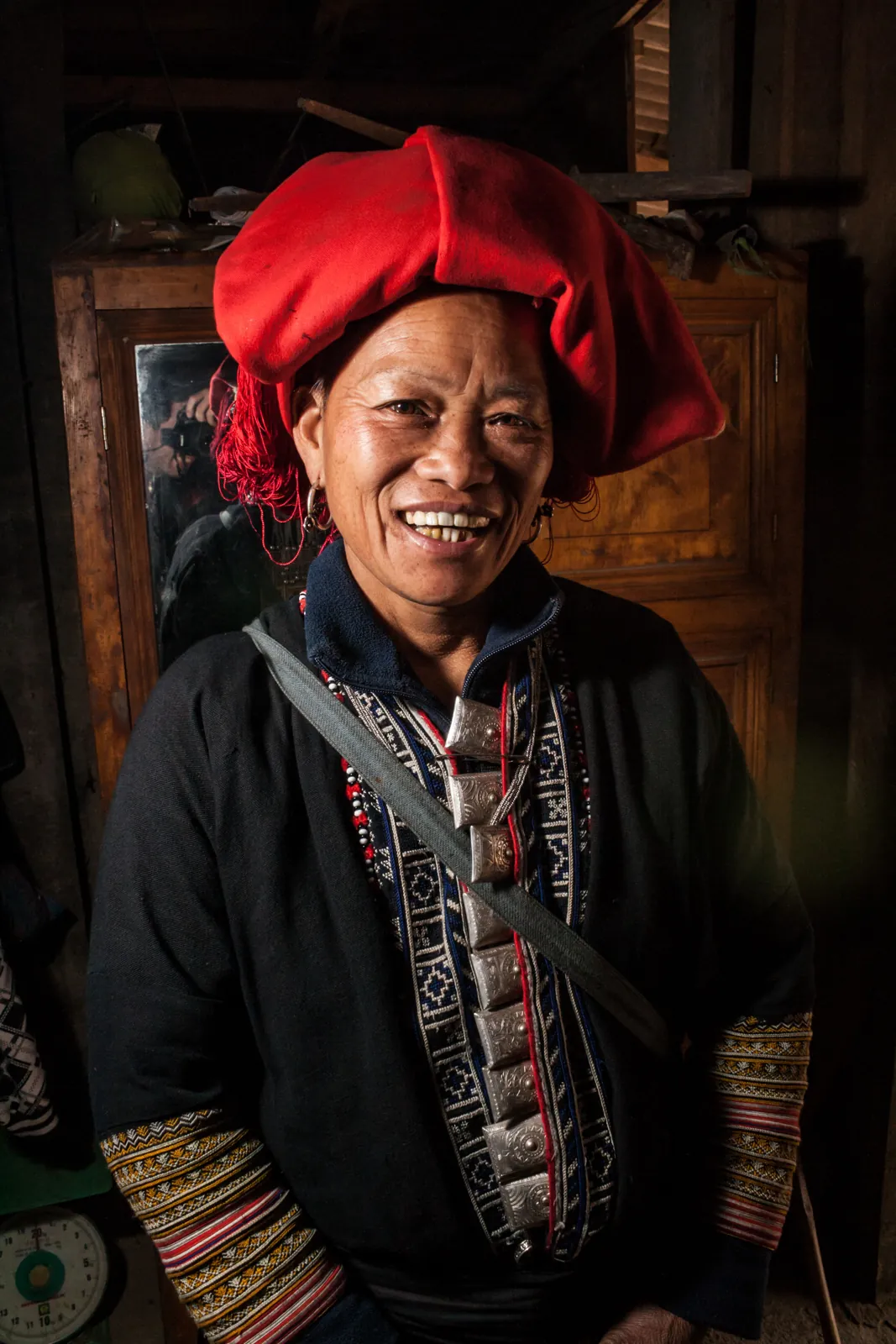
The Dao (also written Yao or Zao) are one of Vietnam’s ethnic groups, living mainly across the mountainous north. The Red Dao, Dao Đỏ, take their name from the vivid red headscarves worn by the women, often finished with tassels and silver. Around Sa Pa in Lào Cai province, many Red Dao families live in villages such as Tả Phìn, about 10 to 12 kilometres from the town, as well as nearby hamlets such as Tả Chải.
What goes into a Red Dao herbal bath?
In the Dao language, the bath medicine is called đìa zảo xin. Every household has its own recipe, usually handed down through the family, while experienced collectors know where to find each plant in the surrounding forest. According to a 2023 report in Báo Lào Cai, the provincial newspaper, one bath uses between 10 and 120 kinds of leaves and stems, gathered from hilltops, stream banks and even mistletoe growing on old trees. The plants mentioned there fall into broad groups according to their traditional use:
- For the skin: honeysuckle (kim ngân), starfruit leaves, dill, camphor and lá vối.
- For bones and joints: thiên niên kiện, wild peach (đào rừng) and lá lốt.
- For warmth and digestion: lemongrass, star anise, cinnamon, sa nhân (a cardamom relative) and others.
Ethnobotanist Trần Công Khánh has written that, among the many species found in a full Red Dao recipe, five to ten are considered the most important, while a 2004 survey of the Sa Pa bath identified 39 species from 23 plant families. The plants are chopped and boiled in a large pot, for some households about 20 minutes, for others many hours. The resulting dark liquid is poured into the tub, and the temperature is checked carefully before anyone steps in.
Wooden tubs and a mother’s first bath
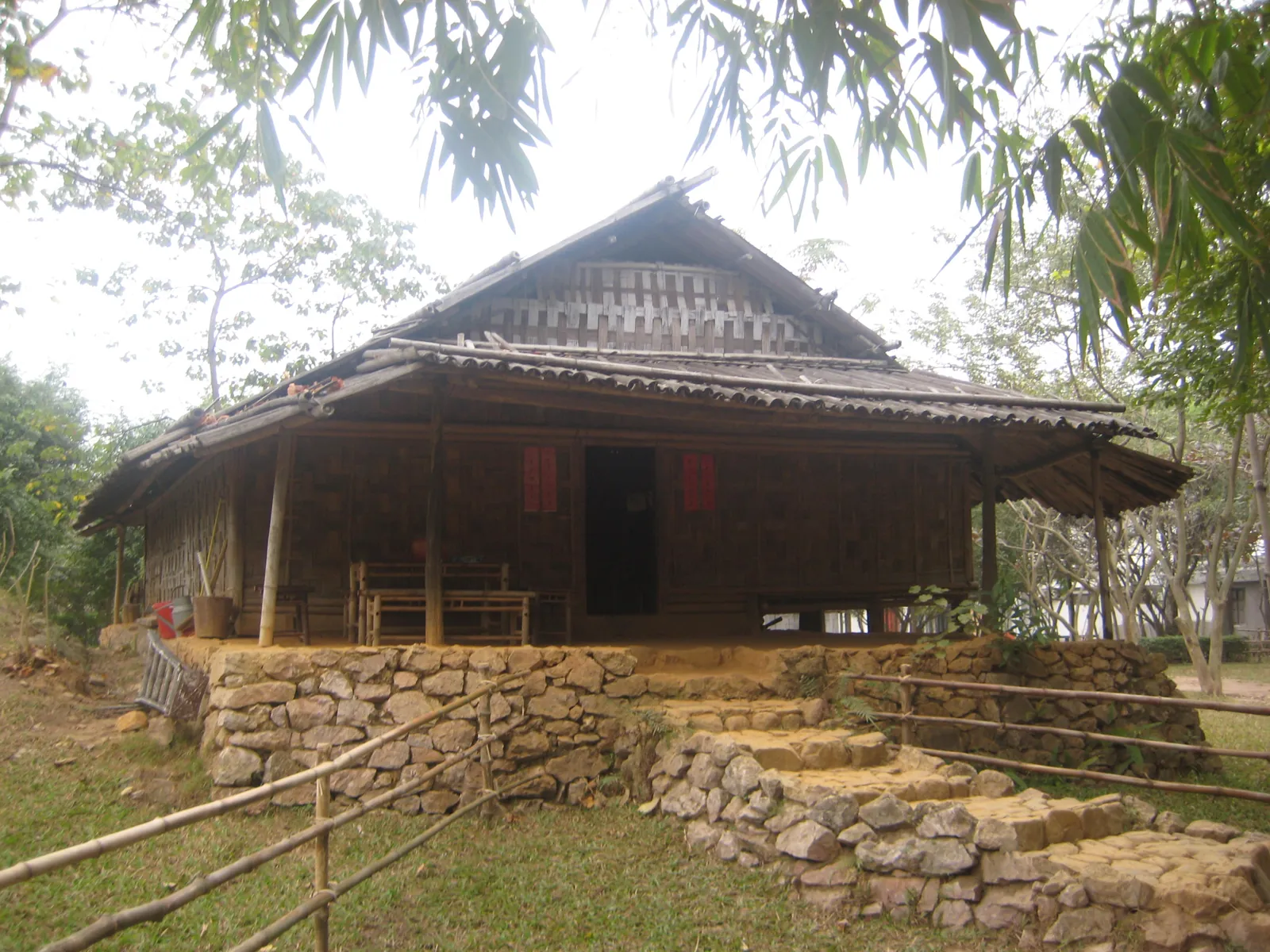
The tubs are made from pơ mu, a fragrant mountain conifer valued for its scent. And this tradition began at home, not in a spa: herbal baths were prepared for women in the days after giving birth and for newborns, as well as during winter for aching muscles and the first signs of a cold. Older accounts describe Red Dao mothers returning to work in the fields only days after childbirth, a resilience that families often credit, at least in part, to the bath.
From a home tradition to one of Sa Pa’s favourite soaks
Over the past few decades, the bath has also become part of Sa Pa’s tourism story. Báo Lào Cai reported in 2023 that about 40 households in Tả Phìn offered herbal baths to visitors, one of the highest numbers in the province, and a community cooperative there plans to make tea bags, pastes and extracts from the herbs. Dried bath packets are also sold at Sa Pa market and in Hà Nội. Trần Công Khánh estimates that hundreds of tonnes of fresh herbs a year now go into commercial bath medicine, while much of the profit goes to traders rather than the families who hold the knowledge. Traditionally, harvesters take only what they need and leave the roots to regrow, and researchers have called for conservation and fair benefit sharing as demand continues to grow.
What does the science say?
There are really two questions here: does the specific Red Dao herbal formula have an effect of its own, and does spending time in a long, warm soak have benefits?
- The formula: no trials yet. We found no clinical trials comparing the Red Dao bath with plain warm water, or with anything else. Vietnamese research on these plants so far has focused on identifying the species, cultivating them and protecting them. Some of the plants contain compounds that are active in lab studies, but that does not show that soaking in a diluted mixture of them for 15 minutes changes your health.
- The warm bath: more promising. In a Japanese study that followed 30,076 adults aged 40 to 59 for about 20 years, people who took a hot tub bath almost every day had a lower risk of cardiovascular disease than those who bathed twice a week or less. That is an association, though, not proof that the bath itself caused the difference.
- Bath before bed. A 2019 meta-analysis found that a warm shower or bath at 40–42.5 °C, taken one to two hours before bed for as little as ten minutes, helped people fall asleep faster and rate their sleep better. Warming the skin draws blood towards the hands and feet, which then helps the body’s core cool down, one of the signals involved in sleep.
So if you climb out of a Red Dao tub feeling loose, sleepy and warm to the bones, there is something very tangible about that experience. What nobody has measured yet is how much comes from the forest herbs, and how much comes from the hot water, the wooden tub, the cold mountain air outside and the satisfying tiredness of a long day’s trek.
Ōmni Evidence Scale: No good evidence yet, for the Red Dao herbal formula. Promising, for warm baths and sleep, and for regular hot baths and heart health. Enjoy the bath as a beautiful tradition, not as a treatment.
Good to know before you soak
Hosts usually suggest about 15 to 20 minutes in the tub, since longer soaks in hot, herb-rich water can leave people dizzy or drowsy; if that happens, the custom is simply to lie down and rest. A Việt Nam News reporter was told the bath does not suit people with blood pressure problems or pregnant women. Get up slowly, drink some water, and if your skin reacts to a plant, rinse off. Prices vary from village to village and change often, so the simplest approach is to ask your host directly.
What we think at Ōmni (and what we do not sell)
We do not offer herbal baths, and honestly, we would not try to recreate one. The Red Dao bath belongs to its mountains and forests, and to the families who have carried these recipes from one generation to the next. If you are travelling to Sa Pa, book a bath with a local family and enjoy it for what it is: a living piece of culture. And if you are curious about another Vietnamese tradition built around herbs and heat, read our piece on xông lá, the Vietnamese herbal steam.
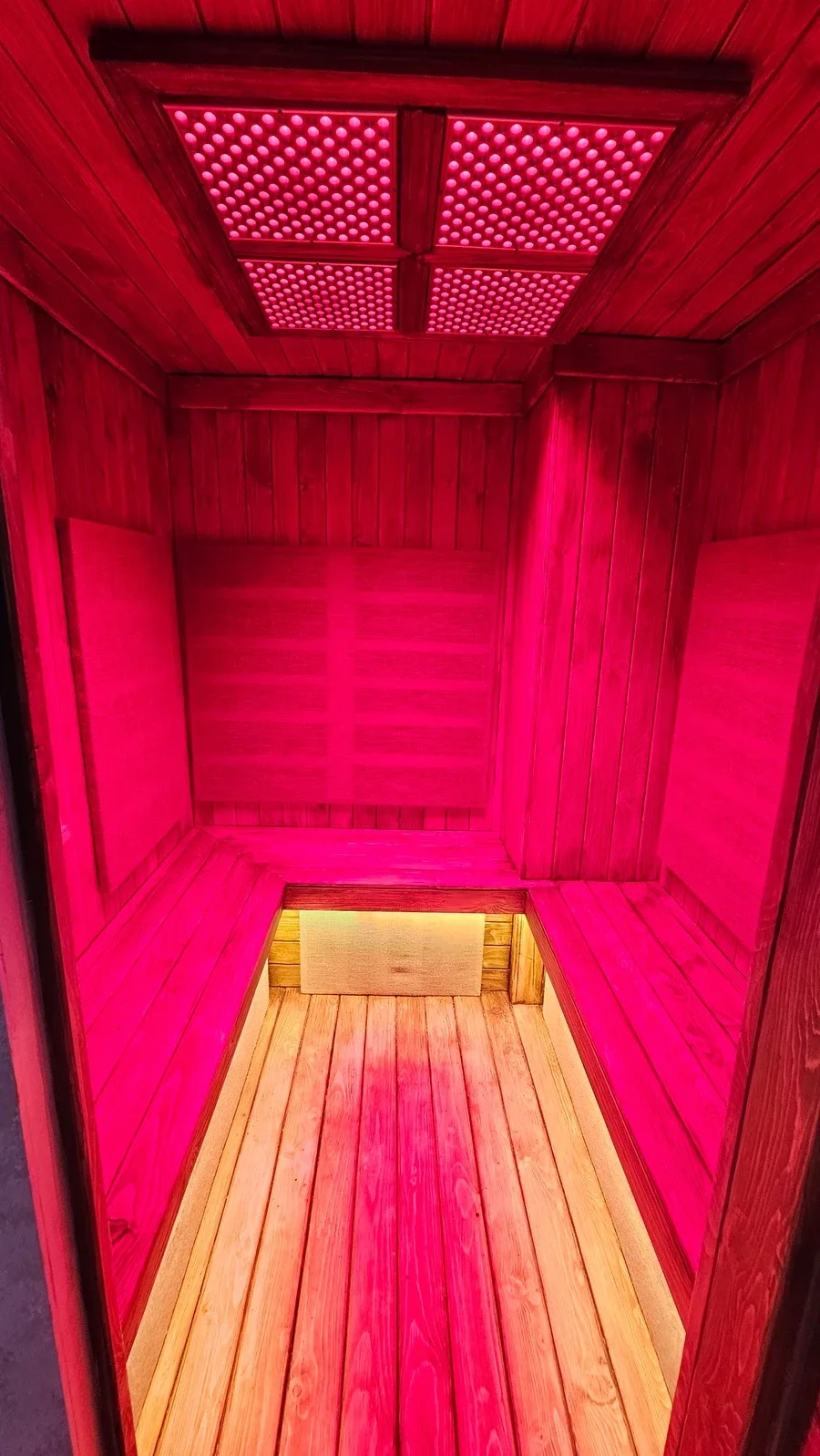
Back in Saigon, what we offer is a different kind of warmth and stillness. Ōmni Space in Thảo Điền comes from the team behind Float Vietnam, the country’s pioneer float centre since 2017. Our private infrared sauna with red light runs at 45–55 °C and costs 450,000 VND on its own, or 200,000 VND added to a float. A float lets you rest in about 25 cm of water with around 500 kg of dense, mineral-rich Epsom salt, warmed to 33–34 °C, close to skin temperature, inside a dark, quiet room. A single float costs 1,500,000 VND for 60 minutes or 2,000,000 VND for 90 minutes.
Ōmni Evidence Scale: Strong evidence, for float and stress. We rate it Strong because, alongside controlled trials, user experience is overwhelmingly positive: in a 2025 survey of regular floaters, 92% reported relaxation and 77% less stress, echoed by thousands of reviews, Reddit threads and forums, and by athletes and public figures who float.
Ōmni Space – Float Saigon is at 16C Quốc Hương, Thảo Điền. We are open 9:00–21:00 daily; the last float starts at 20:00, and walk-ins are welcome until 18:00.
Float PlanRunning on empty?Take the one-minute Float Plan quiz: tell us how you feel and what you need, and get a simple plan for your first session.Make my Float PlanFAQ
What is the Red Dao herbal bath?
It is a traditional bath of the Red Dao people around Sa Pa: forest leaves, stems and roots are boiled into a dark, fragrant liquid, then poured into a wooden tub made of pơ mu wood. It began as care for mothers after childbirth and has since become popular with visitors.
What herbs are in a Red Dao bath?
Anywhere from about 10 to 120 kinds of plant, depending on the family’s recipe. Reported ingredients include honeysuckle, lemongrass, cinnamon, star anise, camphor, starfruit leaves and forest plants such as thiên niên kiện.
Is the Red Dao herbal bath scientifically proven?
Not the herbal formula: we found no clinical trials. Warm baths themselves have promising research, including faster sleep after a warm bath one to two hours before bed, so there is research behind part of the relaxing experience even though the specific role of the herbs remains unknown.
How long should you stay in the bath?
Hosts usually suggest about 15 to 20 minutes. Longer soaks in the hot herbal water can make people dizzy or drowsy, so get out slowly and rest if you feel light-headed.
Can I get a Red Dao herbal bath at Ōmni Space?
No. We offer float rooms and a private infrared sauna with red light in Thảo Điền; the sauna costs 450,000 VND on its own or 200,000 VND added to a float. For the herbal bath itself, visit a Red Dao family near Sa Pa.
Written by the team at Ōmni Space – Float Saigon in Thảo Điền, Vietnam’s pioneer float centre since 2017. We do not sell herbal baths. General information, not medical advice; sources checked on 30 October 2026.
Sources
- Lê Nam, Báo Lào Cai (6 April 2023). Độc đáo bài thuốc tắm của người Dao đỏ ở Tả Phìn.
- Hồng Minh, Việt Nam News (25 June 2020). Nothing beats a bath, especially a Dao Đỏ herbal bath.
- Trần Công Khánh (2018). Dao people’s bath medicine. Đại Nam University.
- Ukai T, Iso H, Yamagishi K, et al. (2020). Habitual tub bathing and risks of incident coronary heart disease and stroke. Heart 106(10): 732–737.
- Haghayegh S, Khoshnevis S, Smolensky MH, Diller KR, Castriotta RJ (2019). Before-bedtime passive body heating by warm shower or bath to improve sleep: a systematic review and meta-analysis. Sleep Medicine Reviews 46: 124–135.
- van Dierendonck D, te Nijenhuis J (2005). Flotation restricted environmental stimulation therapy (REST) as a stress-management tool: a meta-analysis. Psychology & Health 20(3): 405–412.