Tag: Recovery by Water

  • Watsu and float: two ways to let water hold you

    Watsu and float: two ways to let water hold you

    In short: Watsu, short for “water shiatsu”, is a form of bodywork where a practitioner cradles you in chest-deep water at about 35 °C, slowly stretching, rocking and massaging you as you float. It was created in 1980 by Harold Dull at Harbin Hot Springs in northern California. A 2020 systematic review found encouraging effects on pain, movement and mood, but the evidence came from a small number of low- to moderate-quality trials, so we rate it Early evidence. Float therapy takes the other route to letting water hold you: no one touches you, the water is only about 25 cm deep but dense with Epsom salt, and the room can be dark and silent. One is a dance for two; the other, a solo pause. We run a float centre, so we are not neutral, and we will be clear about that as we go.

    Part of the Ōmni Recovery Library · Recovery by Water

    Maybe you have seen a video of it: one person lying back in a warm pool, eyes closed, body swaying like seaweed, while someone else gently turns and guides them through the water. It looks somewhere between massage, slow dance and being rocked to sleep as a child. If you have wondered what Watsu actually is, whether the research supports it, and how it compares with floating in a float room, this article walks through all three questions, so you can decide which kind of time in water feels more like what you need.

    Ōmni Evidence Scale: Early evidence, for Watsu (a 2020 meta-analysis leaning positive, but based on very few, mostly small trials). Promising, for exercise in warm water for knee and hip osteoarthritis. Strong evidence, for float and stress. See how we rate evidence on the Ōmni Evidence Scale.

    What is Watsu?

    In a Watsu session, you lie back in a warm pool while a practitioner stands beside you, supporting your head and body. They guide you through the water in slow, wave-like patterns, adding stretches, gentle twists, joint movements and pressure along points on the body. Your job is mostly to let go. Time can feel different too: in one study cited in the review below, sessions lasted about 36 minutes, yet most participants thought they had been in the water for an hour or more.

    Researchers describe Watsu as passive hydrotherapy in chest-deep, thermoneutral water at about 35 °C (studies used 32–39 °C), combining stretching of the body’s connective tissue, joint mobilisation, massage and shiatsu. “Thermoneutral” simply means the water is warm enough that your body has very little work to do to stay comfortable, which may be part of why settling into the experience can feel so effortless.
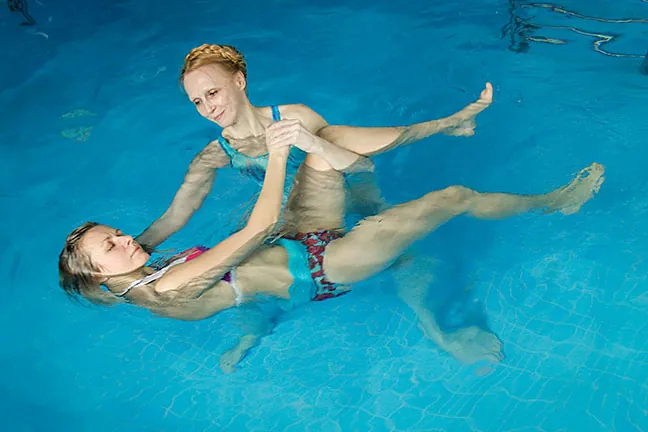
    A Watsu practitioner standing in a blue indoor pool, holding a woman who floats on her back with one knee bent and her eyes closed
    A Watsu session: the practitioner supports and gently moves the person floating. Photo: Saulėtekis, Wikimedia Commons, CC BY-SA 4.0.

    Born in a Californian hot spring

    Watsu has a surprisingly specific birthplace. In 1980, Harold Dull was teaching Zen Shiatsu at Harbin Hot Springs, a retreat in the hills of Lake County, northern California. He began bringing shiatsu stretches into the warm pool, working with people as they floated, and discovered that supporting someone in water created possibilities that touch on a table did not. From there, Watsu spread into spas and rehabilitation clinics around the world. When Dull died in 2019, Harbin noted that the registry he founded listed more than 20,000 teachers and students from 90 countries.

    Old black-and-white photograph of Harbin Hot Springs, a cluster of wooden buildings in a forested valley in Lake County, California
    Harbin Hot Springs in Lake County, California, in a 1915 government report, decades before Watsu began in its warm pool. Image: U.S. Government Printing Office, Wikimedia Commons, public domain.

    From shiatsu on a mat to shiatsu in water

    Shiatsu is a Japanese form of bodywork built around pressure from the thumbs, palms and elbows, usually performed on a mat on the floor. Watsu keeps the same spirit of slow, attentive touch, but changes the setting completely. In water, your body carries only a fraction of its usual weight, giving the practitioner room to guide your spine, hips and shoulders through movements that would be much more awkward on a mat.

    Close-up of a practitioner's hands pressing gently on the back of a person lying face down on a mat during a shiatsu session
    Shiatsu on land, the practice Watsu grew from. Photo: chiaravdberg, Wikimedia Commons, CC0.

    What science says about Watsu

    The clearest summary we found is a 2020 systematic review and meta-analysis in PLOS ONE, led by Agnes Schitter at the University of Bern’s Institute of Complementary Medicine in Switzerland. It brought together 27 studies of any design across a strikingly broad range of people: pregnant women, people with fibromyalgia, stroke, cerebral palsy, Parkinson’s disease, ankylosing spondylitis and juvenile arthritis, premature babies, and healthy volunteers.

    • The results lean positive. Pooled effects favoured Watsu for pain, physical function and mental symptoms such as stress and mood, with moderate effect sizes.
    • But the evidence base is narrow. Only five randomised controlled trials were assessed, and each pooled result rested on just one to three of them. The authors rated the quality of evidence as low to moderate at best and called for higher-quality trials.
    • Side effects were barely studied. Only six studies reported on them; one reported a swollen knee after a first session.
    • There was a conflict of interest, openly declared. The lead author had chaired the Swiss Aquatic Bodyworkers’ Association until 2016. That does not make the review wrong, but it is useful context, and one reason we would want to see more independent trials before rating the evidence any higher.

    Watsu also belongs to a larger and better-studied world: exercise and therapy in warm water. A 2016 Cochrane review of 13 trials with 1,190 people found that aquatic exercise for knee and hip osteoarthritis brings small, short-term but clinically relevant improvements in pain, disability and quality of life, about 5 points on a 100-point scale. That is active exercise, not passive bodywork, so it is not evidence for Watsu itself. But it does support a broader idea: warm water can be a gentle place for stiff, painful bodies to move. Interestingly, the Watsu review itself points to float research when discussing the deep relaxation and altered sense of time people report.
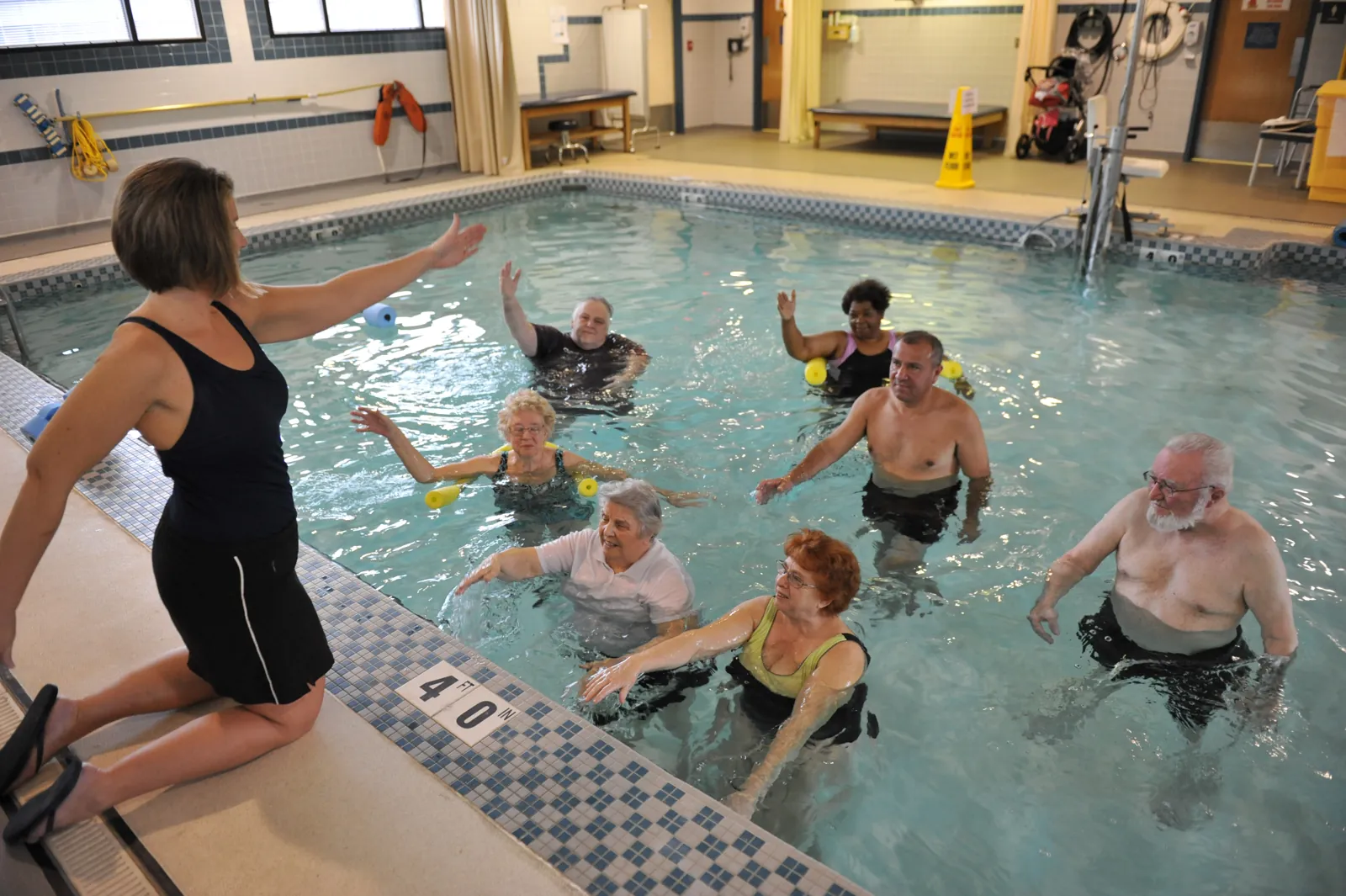
    A physiotherapist leading a group of older adults through exercises in a warm indoor therapy pool
    An aquatic therapy class: exercise in warm water has a stronger research base than Watsu. Photo: Mstizza, Wikimedia Commons, CC BY-SA 4.0.

    Ōmni Evidence Scale: Early evidence, for Watsu: a handful of small trials and one meta-analysis with a declared conflict of interest. Promising, for aquatic exercise in knee and hip osteoarthritis, backed by a Cochrane review.

    Watsu and float: two ways to let water hold you

    Both practices begin with the same quiet idea: when water carries your weight, your muscles no longer have to work so hard to hold you up. From there, they move in almost opposite directions. Watsu adds another person, movement and touch. A float strips almost everything away.

    In a float room at Ōmni, about 500 kg of dense, mineral-rich Epsom salt is dissolved in about 25 cm of water, warmed to 33–34 °C, close to skin temperature. The salt water supports you without effort as you lie face up, and nobody moves you. You can switch off the lights, let the sound fade away, and stay there for 60 or 90 minutes.

    WatsuFloat
    Who is in the waterYou and a trained practitionerJust you (or you and your partner in a couple room)
    WaterPlain warm water, chest-deep, about 35 °CAbout 25 cm of Epsom salt water, 33–34 °C
    What keeps you upThe practitioner and small floatsThe density of the salt water
    Touch and movementConstant: stretching, rocking, massageNone: stillness
    Light and soundUsually a lit pool, often with musicDark and quiet, if you choose
    Feels likeBeing rocked, a slow danceWeightless rest, a mind turning inward
    EvidenceEarly evidenceStrong evidence, for stress

    Float research goes back further. A 2005 meta-analysis of 27 flotation studies found positive effects on stress-related body measures and wellbeing, and in a Swedish randomised pilot trial, 65 working adults who floated 12 times over seven weeks reported less stress and anxiety and better sleep than a waiting group.

    Ōmni Evidence Scale: Strong evidence, for float and stress. We rate it Strong because, alongside these trials, user experience is overwhelmingly positive: in a 2025 survey of regular floaters, 92% reported relaxation and 77% less stress, echoed by thousands of reviews, Reddit threads and forums, and by athletes and public figures who float.
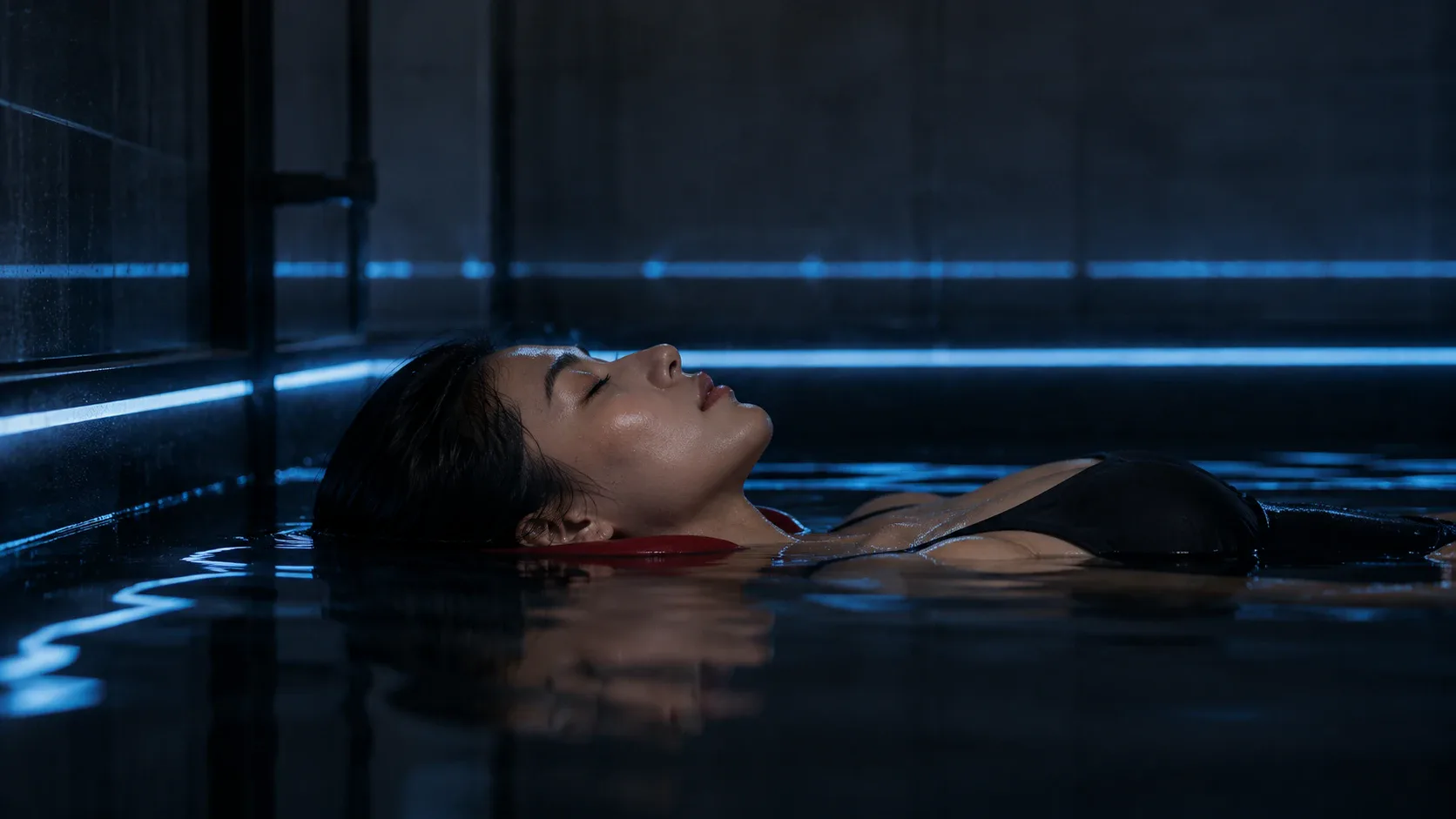
    A woman floating alone with her eyes closed in an Ōmni float pool, her head resting on a soft float pillow, blue light behind her
    Held by the water alone: floating at Ōmni needs no practitioner. Image: Ōmni Space.

    Which one suits you?

    If you enjoy being looked after, like massage and are curious about feeling your body move in ways that are difficult on land, Watsu may be a beautiful experience, provided you can find a trained practitioner and a warm pool. It is built around trust: you let another person support and guide your body for an hour, and for many people that human element is exactly the appeal.

    If what you are craving is space — no one needing anything from you, no touch, no conversation — then a float is the solitary version. For many floaters, that stillness is the whole point: nobody to respond to, nothing to perform, nowhere else to be. And, of course, some people enjoy both for entirely different moods.

    What we think at Ōmni (and, yes, what we sell)

    We sell floats, so keep that in mind. We do not offer Watsu, and we think it deserves respect as a skilled, hands-on practice with an interesting, if still thin, body of research. What we offer is the other way of being held by water. Ōmni Space in Thảo Điền comes from the team behind Float Vietnam, the country’s pioneer float centre since 2017. Each float room is private, with its own shower. A single float costs 1,500,000 VND for 60 minutes or 2,000,000 VND for 90 minutes; the couple room, one large square pool for two, adds 700,000 VND for the second person, which is the closest we come to sharing the water. New to it? Start with what float therapy is, or read how runners and gym-goers use floats for recovery.

    Ōmni Space – Float Saigon is at 16C Quốc Hương, Thảo Điền. We are open 9:00–21:00 daily; the last float starts at 20:00, and walk-ins are welcome until 18:00.

    Float PlanRunning on empty?Take the one-minute Float Plan quiz: tell us how you feel and what you need, and get a simple plan for your first session.Make my Float Plan

    FAQ

    What is Watsu?

    Watsu, or water shiatsu, is bodywork performed in warm, chest-deep water at about 35 °C. A practitioner supports you as you float, guiding you through slow stretches, rocking and massage. Harold Dull created it in 1980 at Harbin Hot Springs in California.

    Does Watsu have scientific evidence?

    Early evidence. A 2020 meta-analysis found encouraging effects on pain, movement and mood, but it relied on only a few small trials of low to moderate quality, and its lead author had ties to a Watsu association. Exercise in warm water has stronger support for knee and hip osteoarthritis.

    What is the difference between Watsu and float therapy?

    Watsu uses plain warm water and a practitioner who supports and moves you. A float uses about 25 cm of dense Epsom salt water that supports you by itself, with no touch, often in darkness and silence, for 60 or 90 minutes.

    Do I need to be able to swim for Watsu or a float?

    Not for a float: the water is only about 25 cm deep, and the salt keeps you supported at the surface. In Watsu, the practitioner supports you throughout the session, although the pool itself is chest-deep.

    Does Ōmni Space offer Watsu?

    No. We offer private float rooms in Thảo Điền, from 1,500,000 VND for 60 minutes. Our team is happy to walk you through the experience when you visit.

    Written by the team at Ōmni Space – Float Saigon in Thảo Điền, Vietnam’s pioneer float centre since 2017. We sell floats, not Watsu. General information, not medical advice; sources checked on 30 October 2026.

    Sources

    1. Schitter AM, Fleckenstein J, Frei P, Taeymans J, Kurpiers N, Radlinger L (2020). Applications, indications, and effects of passive hydrotherapy WATSU (WaterShiatsu): a systematic review and meta-analysis. PLOS ONE 15(3): e0229705.
    2. Harbin Hot Springs (18 September 2019). Honoring Harold Dull and his gift of Watsu.
    3. Bartels EM, Juhl CB, Christensen R, et al. (2016). Aquatic exercise for the treatment of knee and hip osteoarthritis. Cochrane Database of Systematic Reviews 3: CD005523.
    4. van Dierendonck D, te Nijenhuis J (2005). Flotation restricted environmental stimulation therapy (REST) as a stress-management tool: a meta-analysis. Psychology & Health 20(3): 405–412.
    5. Kjellgren A, Westman J (2014). Beneficial effects of treatment with sensory isolation in flotation-tank as a preventive health-care intervention: a randomized controlled pilot trial. BMC Complementary and Alternative Medicine 14: 417.
  • What’s in the Red Dao herbal bath of Sa Pa?

    What’s in the Red Dao herbal bath of Sa Pa?

    In short: In the hills around Sa Pa, Red Dao families gather armfuls of forest leaves, roots and stems, boil them into a dark, fragrant brew, then pour it into wooden tubs made from pơ mu, a scented mountain cypress. A single bath can contain anywhere from about 10 to 120 kinds of plant. The tradition began as care for women after childbirth and for newborns, and today it has become one of the best-loved experiences for visitors to villages such as Tả Phìn. We found no clinical trials of the bath itself, so the specific formula sits at “No good evidence yet”. The warm soak is a different story: regular hot baths and a warm bath before bed both have promising studies behind them. Ōmni does not offer herbal baths; we run a float centre, so we are not neutral, and we will be clear about that as we go.

    Part of the Ōmni Recovery Library · Recovery by Water

    You have spent the day trekking through Sa Pa’s rice terraces. Your legs feel heavy, the mountain air has turned cold, and then someone offers you a wooden tub filled with steaming, reddish-brown water scented with forest leaves, cinnamon and lemongrass. This is the Red Dao herbal bath, and it may be one of the most memorable ways to end a day in northern Vietnam. Here, we look at what goes into the tub, where the tradition comes from, what science can and cannot tell us about it, and how to enjoy the experience well.

    Ōmni Evidence Scale: No good evidence yet, for the Red Dao herbal formula itself (no clinical trials found). Promising, for regular warm baths and heart health (one large observational study) and for a warm bath before bed and sleep (a meta-analysis of small studies). See how we rate evidence on the Ōmni Evidence Scale.

    Who are the Red Dao?

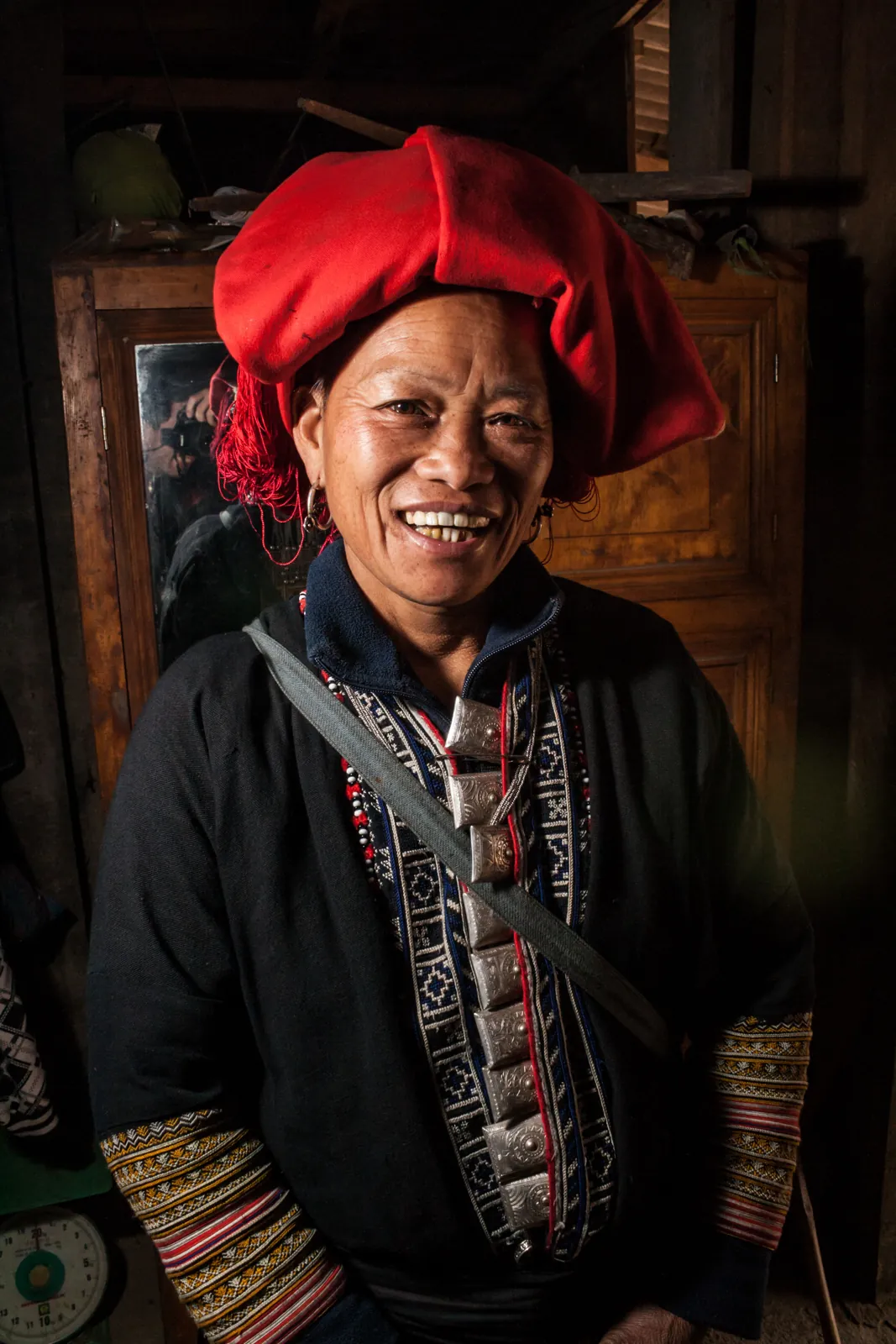
    The Dao (also written Yao or Zao) are one of Vietnam’s ethnic groups, living mainly across the mountainous north. The Red Dao, Dao Đỏ, take their name from the vivid red headscarves worn by the women, often finished with tassels and silver. Around Sa Pa in Lào Cai province, many Red Dao families live in villages such as Tả Phìn, about 10 to 12 kilometres from the town, as well as nearby hamlets such as Tả Chải.

    A smiling Red Dao woman in a bright red headscarf and dark embroidered jacket, photographed indoors in Tả Phìn village near Sa Pa
    A Red Dao woman in Tả Phìn village, near Sa Pa. Photo: Huascar80, Wikimedia Commons, CC BY-SA 4.0.

    What goes into a Red Dao herbal bath?

    In the Dao language, the bath medicine is called đìa zảo xin. Every household has its own recipe, usually handed down through the family, while experienced collectors know where to find each plant in the surrounding forest. According to a 2023 report in Báo Lào Cai, the provincial newspaper, one bath uses between 10 and 120 kinds of leaves and stems, gathered from hilltops, stream banks and even mistletoe growing on old trees. The plants mentioned there fall into broad groups according to their traditional use:

    • For the skin: honeysuckle (kim ngân), starfruit leaves, dill, camphor and lá vối.
    • For bones and joints: thiên niên kiện, wild peach (đào rừng) and lá lốt.
    • For warmth and digestion: lemongrass, star anise, cinnamon, sa nhân (a cardamom relative) and others.

    Ethnobotanist Trần Công Khánh has written that, among the many species found in a full Red Dao recipe, five to ten are considered the most important, while a 2004 survey of the Sa Pa bath identified 39 species from 23 plant families. The plants are chopped and boiled in a large pot, for some households about 20 minutes, for others many hours. The resulting dark liquid is poured into the tub, and the temperature is checked carefully before anyone steps in.

    Wooden tubs and a mother’s first bath

    The tubs are made from pơ mu, a fragrant mountain conifer valued for its scent. And this tradition began at home, not in a spa: herbal baths were prepared for women in the days after giving birth and for newborns, as well as during winter for aching muscles and the first signs of a cold. Older accounts describe Red Dao mothers returning to work in the fields only days after childbirth, a resilience that families often credit, at least in part, to the bath.

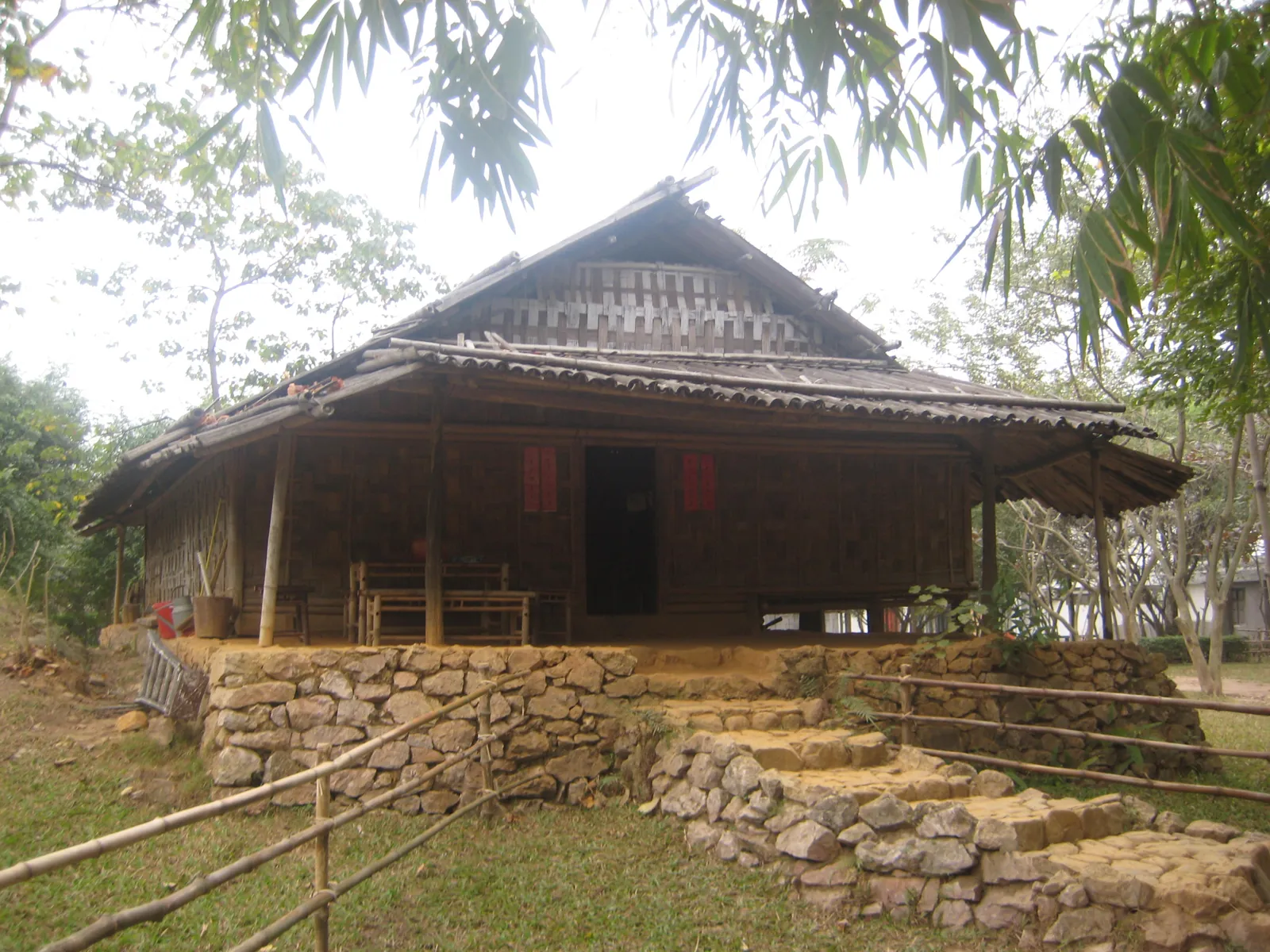
    A traditional Dao wooden house with a low thatched roof on a stone base, surrounded by trees, reconstructed at the Vietnam Museum of Ethnology
    A traditional Dao house, reconstructed at the Vietnam Museum of Ethnology in Hà Nội. Photo: Nam Hy Hoàng Phong, Wikimedia Commons, CC BY-SA 3.0.

    From a home tradition to one of Sa Pa’s favourite soaks

    Over the past few decades, the bath has also become part of Sa Pa’s tourism story. Báo Lào Cai reported in 2023 that about 40 households in Tả Phìn offered herbal baths to visitors, one of the highest numbers in the province, and a community cooperative there plans to make tea bags, pastes and extracts from the herbs. Dried bath packets are also sold at Sa Pa market and in Hà Nội. Trần Công Khánh estimates that hundreds of tonnes of fresh herbs a year now go into commercial bath medicine, while much of the profit goes to traders rather than the families who hold the knowledge. Traditionally, harvesters take only what they need and leave the roots to regrow, and researchers have called for conservation and fair benefit sharing as demand continues to grow.

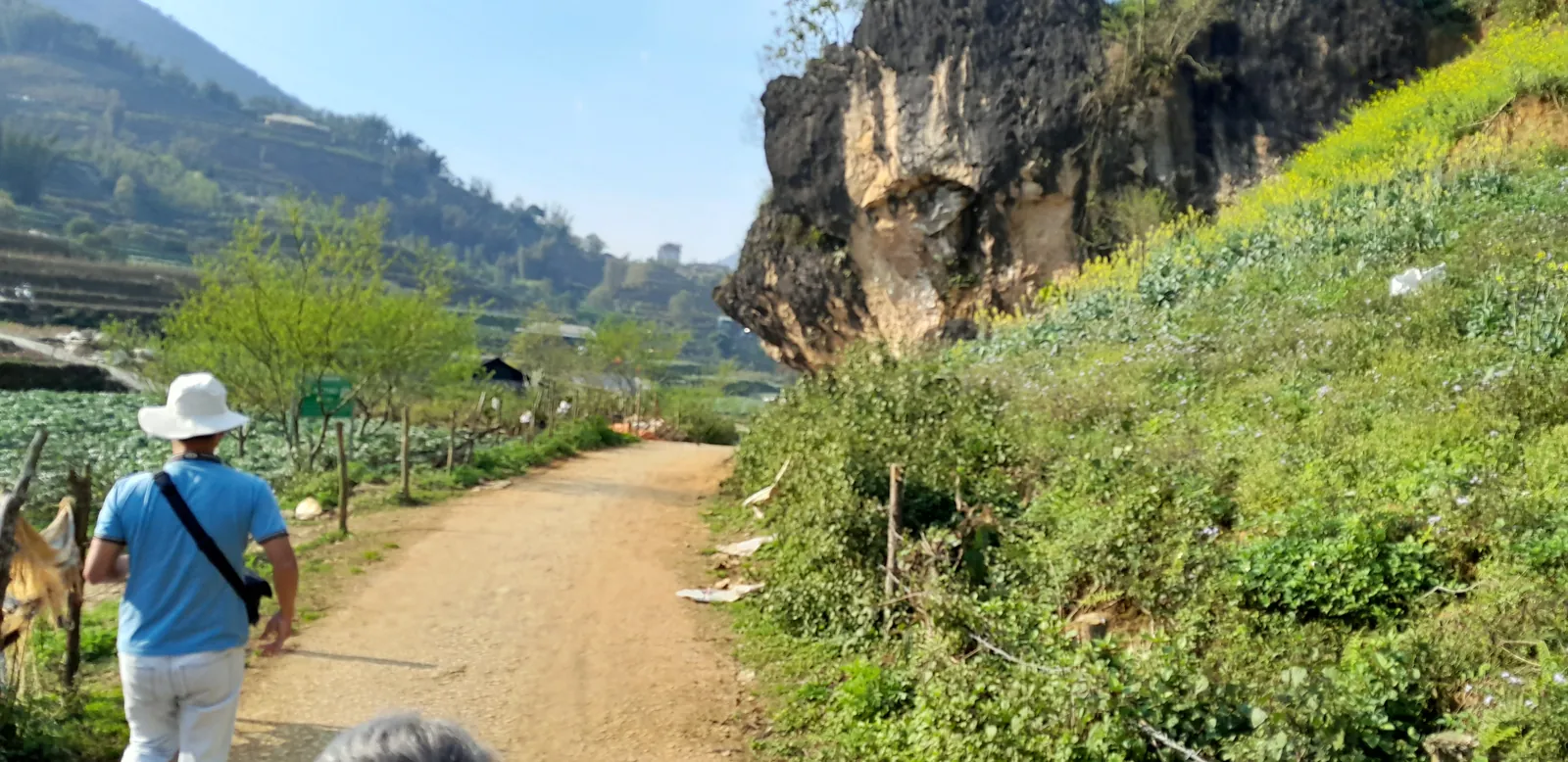
    Wide view of terraced rice fields and green hills around Tả Phìn near Sa Pa under a clear sky
    Fields and forest around Tả Phìn, where many of the bath plants are gathered. Photo: JakobHosp, Wikimedia Commons, CC BY 4.0.

    What does the science say?

    There are really two questions here: does the specific Red Dao herbal formula have an effect of its own, and does spending time in a long, warm soak have benefits?

    • The formula: no trials yet. We found no clinical trials comparing the Red Dao bath with plain warm water, or with anything else. Vietnamese research on these plants so far has focused on identifying the species, cultivating them and protecting them. Some of the plants contain compounds that are active in lab studies, but that does not show that soaking in a diluted mixture of them for 15 minutes changes your health.
    • The warm bath: more promising. In a Japanese study that followed 30,076 adults aged 40 to 59 for about 20 years, people who took a hot tub bath almost every day had a lower risk of cardiovascular disease than those who bathed twice a week or less. That is an association, though, not proof that the bath itself caused the difference.
    • Bath before bed. A 2019 meta-analysis found that a warm shower or bath at 40–42.5 °C, taken one to two hours before bed for as little as ten minutes, helped people fall asleep faster and rate their sleep better. Warming the skin draws blood towards the hands and feet, which then helps the body’s core cool down, one of the signals involved in sleep.

    So if you climb out of a Red Dao tub feeling loose, sleepy and warm to the bones, there is something very tangible about that experience. What nobody has measured yet is how much comes from the forest herbs, and how much comes from the hot water, the wooden tub, the cold mountain air outside and the satisfying tiredness of a long day’s trek.

    Ōmni Evidence Scale: No good evidence yet, for the Red Dao herbal formula. Promising, for warm baths and sleep, and for regular hot baths and heart health. Enjoy the bath as a beautiful tradition, not as a treatment.

    Good to know before you soak

    Hosts usually suggest about 15 to 20 minutes in the tub, since longer soaks in hot, herb-rich water can leave people dizzy or drowsy; if that happens, the custom is simply to lie down and rest. A Việt Nam News reporter was told the bath does not suit people with blood pressure problems or pregnant women. Get up slowly, drink some water, and if your skin reacts to a plant, rinse off. Prices vary from village to village and change often, so the simplest approach is to ask your host directly.

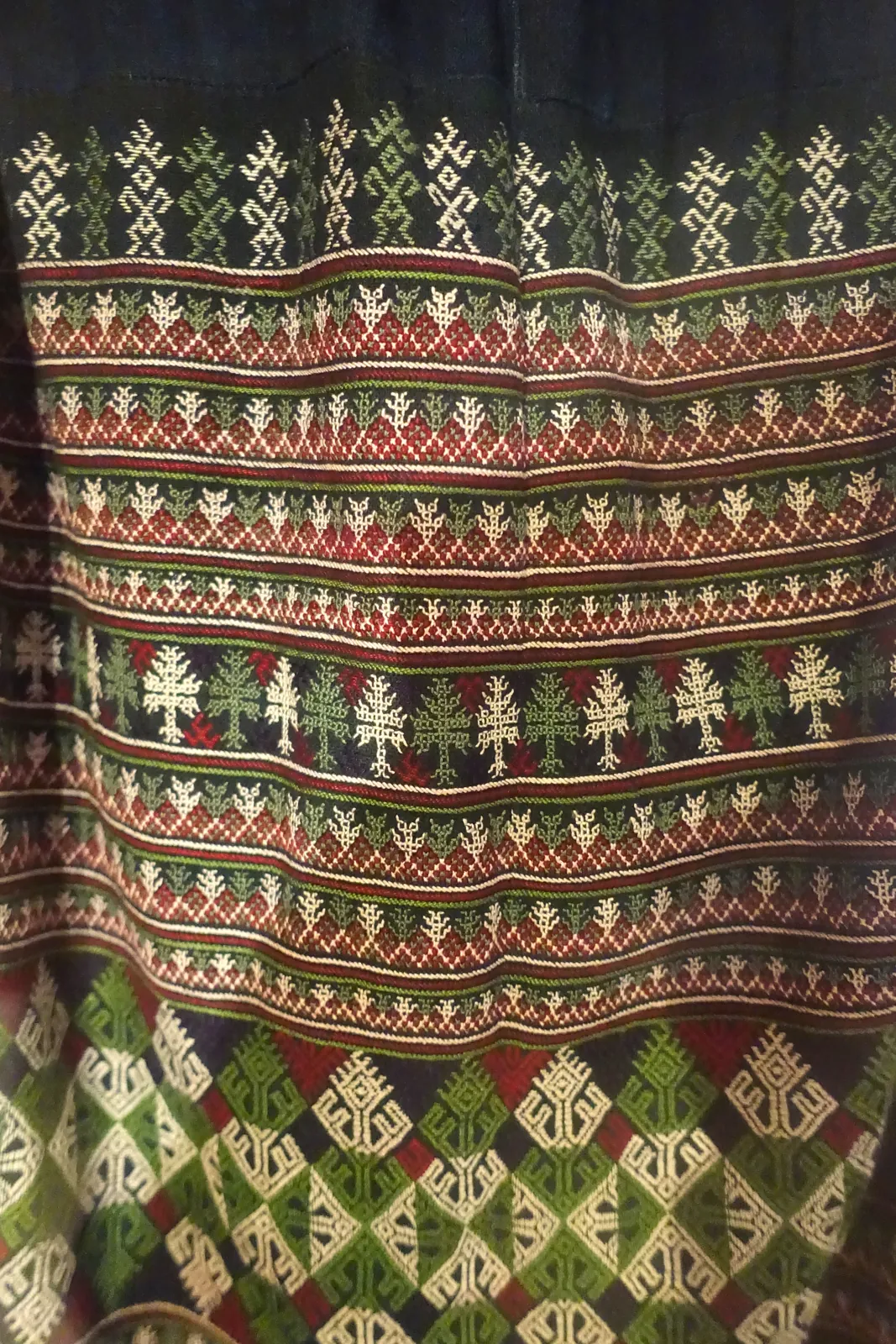
    Detail of a Red Dao costume from Lào Cai, 1972, with dense red, white and green embroidered patterns on dark cotton
    Embroidery on a Red Dao costume from Lào Cai, 1972, at the Vietnamese Women’s Museum in Hà Nội. Photo: Daderot, Wikimedia Commons, CC0.

    What we think at Ōmni (and what we do not sell)

    We do not offer herbal baths, and honestly, we would not try to recreate one. The Red Dao bath belongs to its mountains and forests, and to the families who have carried these recipes from one generation to the next. If you are travelling to Sa Pa, book a bath with a local family and enjoy it for what it is: a living piece of culture. And if you are curious about another Vietnamese tradition built around herbs and heat, read our piece on xông lá, the Vietnamese herbal steam.

    Back in Saigon, what we offer is a different kind of warmth and stillness. Ōmni Space in Thảo Điền comes from the team behind Float Vietnam, the country’s pioneer float centre since 2017. Our private infrared sauna with red light runs at 45–55 °C and costs 450,000 VND on its own, or 200,000 VND added to a float. A float lets you rest in about 25 cm of water with around 500 kg of dense, mineral-rich Epsom salt, warmed to 33–34 °C, close to skin temperature, inside a dark, quiet room. A single float costs 1,500,000 VND for 60 minutes or 2,000,000 VND for 90 minutes.

    Ōmni Evidence Scale: Strong evidence, for float and stress. We rate it Strong because, alongside controlled trials, user experience is overwhelmingly positive: in a 2025 survey of regular floaters, 92% reported relaxation and 77% less stress, echoed by thousands of reviews, Reddit threads and forums, and by athletes and public figures who float.

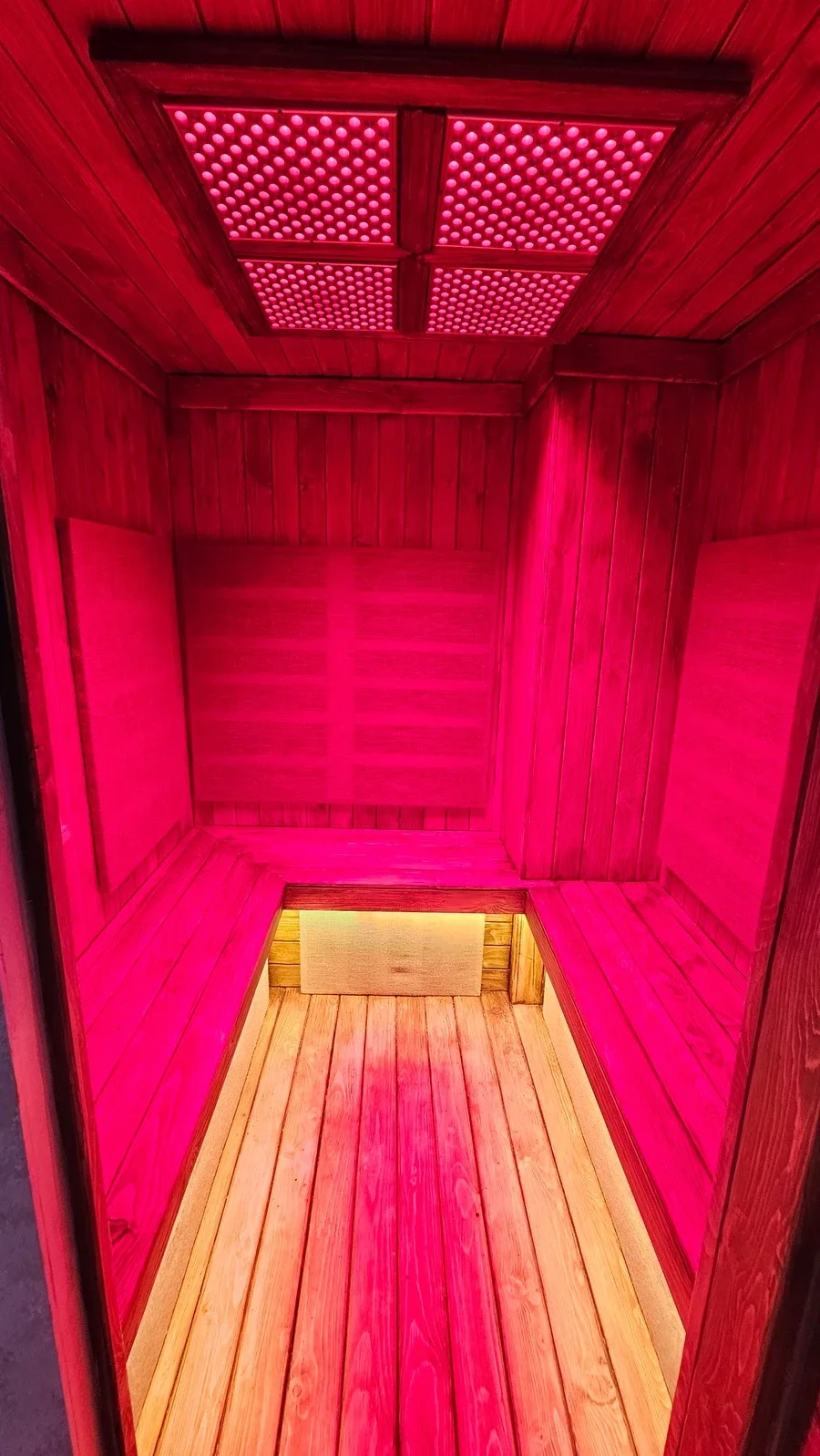
    Inside the infrared sauna cabin at Ōmni Space, wooden benches under a ceiling of red light panels
    A different kind of warmth: the infrared sauna with red light at Ōmni. Image: Ōmni Space.

    Ōmni Space – Float Saigon is at 16C Quốc Hương, Thảo Điền. We are open 9:00–21:00 daily; the last float starts at 20:00, and walk-ins are welcome until 18:00.

    Float PlanRunning on empty?Take the one-minute Float Plan quiz: tell us how you feel and what you need, and get a simple plan for your first session.Make my Float Plan

    FAQ

    What is the Red Dao herbal bath?

    It is a traditional bath of the Red Dao people around Sa Pa: forest leaves, stems and roots are boiled into a dark, fragrant liquid, then poured into a wooden tub made of pơ mu wood. It began as care for mothers after childbirth and has since become popular with visitors.

    What herbs are in a Red Dao bath?

    Anywhere from about 10 to 120 kinds of plant, depending on the family’s recipe. Reported ingredients include honeysuckle, lemongrass, cinnamon, star anise, camphor, starfruit leaves and forest plants such as thiên niên kiện.

    Is the Red Dao herbal bath scientifically proven?

    Not the herbal formula: we found no clinical trials. Warm baths themselves have promising research, including faster sleep after a warm bath one to two hours before bed, so there is research behind part of the relaxing experience even though the specific role of the herbs remains unknown.

    How long should you stay in the bath?

    Hosts usually suggest about 15 to 20 minutes. Longer soaks in the hot herbal water can make people dizzy or drowsy, so get out slowly and rest if you feel light-headed.

    Can I get a Red Dao herbal bath at Ōmni Space?

    No. We offer float rooms and a private infrared sauna with red light in Thảo Điền; the sauna costs 450,000 VND on its own or 200,000 VND added to a float. For the herbal bath itself, visit a Red Dao family near Sa Pa.

    Written by the team at Ōmni Space – Float Saigon in Thảo Điền, Vietnam’s pioneer float centre since 2017. We do not sell herbal baths. General information, not medical advice; sources checked on 30 October 2026.

    Sources

    1. Lê Nam, Báo Lào Cai (6 April 2023). Độc đáo bài thuốc tắm của người Dao đỏ ở Tả Phìn.
    2. Hồng Minh, Việt Nam News (25 June 2020). Nothing beats a bath, especially a Dao Đỏ herbal bath.
    3. Trần Công Khánh (2018). Dao people’s bath medicine. Đại Nam University.
    4. Ukai T, Iso H, Yamagishi K, et al. (2020). Habitual tub bathing and risks of incident coronary heart disease and stroke. Heart 106(10): 732–737.
    5. Haghayegh S, Khoshnevis S, Smolensky MH, Diller KR, Castriotta RJ (2019). Before-bedtime passive body heating by warm shower or bath to improve sleep: a systematic review and meta-analysis. Sleep Medicine Reviews 46: 124–135.
    6. van Dierendonck D, te Nijenhuis J (2005). Flotation restricted environmental stimulation therapy (REST) as a stress-management tool: a meta-analysis. Psychology & Health 20(3): 405–412.
  • Why can’t you sink in the Dead Sea, and where else can you float like that?

    Why can’t you sink in the Dead Sea, and where else can you float like that?

    In short: You cannot sink in the Dead Sea because its water contains about 340 grams of dissolved salt in every litre, roughly ten times more than the ocean, making it about a quarter denser than fresh water. Your body simply rides higher. People have travelled there for health for a long time, and a systematic review found the strongest evidence for psoriasis, where the region’s filtered sunlight appears to matter just as much as the water. The real danger is not sinking, but swallowing or inhaling that brine. Few other places let you float quite like this; a float room, filled with dense, mineral-rich Epsom salt water in a dark, quiet space, is probably the closest version you can book for an hour. We run a float centre, so we are not neutral.

    Part of the Ōmni Recovery Library · Recovery by Water

    You have probably seen the photo: someone lying back on the Dead Sea, reading a newspaper as if the water were a sofa. Maybe it is on your travel list, or maybe you have simply wondered how a sea can seem to refuse to let you go under. This article explains the simple physics behind it, what research actually says about the famous Dead Sea health trips, the one risk worth knowing about, and where else you can experience that same effortless lift, including an hour in a float room in Saigon.

    Ōmni Evidence Scale: Promising, for Dead Sea treatment of psoriasis (a systematic review of mostly small studies, where sun and water work together). Early evidence, for thalassotherapy, the wider family of sea-based treatments. Strong evidence, for float and stress. See how we rate evidence on the Ōmni Evidence Scale.

    Why can’t you sink in the Dead Sea?

    Whether something floats comes down to one simple comparison: is it denser than the liquid around it? Most people are only slightly less dense than fresh water, which is why, in a normal pool, your body sits fairly low and your legs tend to drift downward. Now dissolve a huge amount of salt into that water. The same volume of water becomes heavier, so it pushes upward more strongly on whatever is resting in it.

    The Dead Sea takes this to an extreme. In a 2018 study of its brine, researchers from Jordan and Germany measured about 340 grams of dissolved salts per litre and a density of 1.241 kg per litre. The open ocean holds roughly 35 grams per litre. So the Dead Sea is about ten times saltier than the sea you know, and about a quarter denser than fresh water. A body that only just floats in a pool suddenly sits remarkably high: your hips, knees and even your toes can break the surface, and sitting upright as though there were an invisible chair underneath you becomes possible.

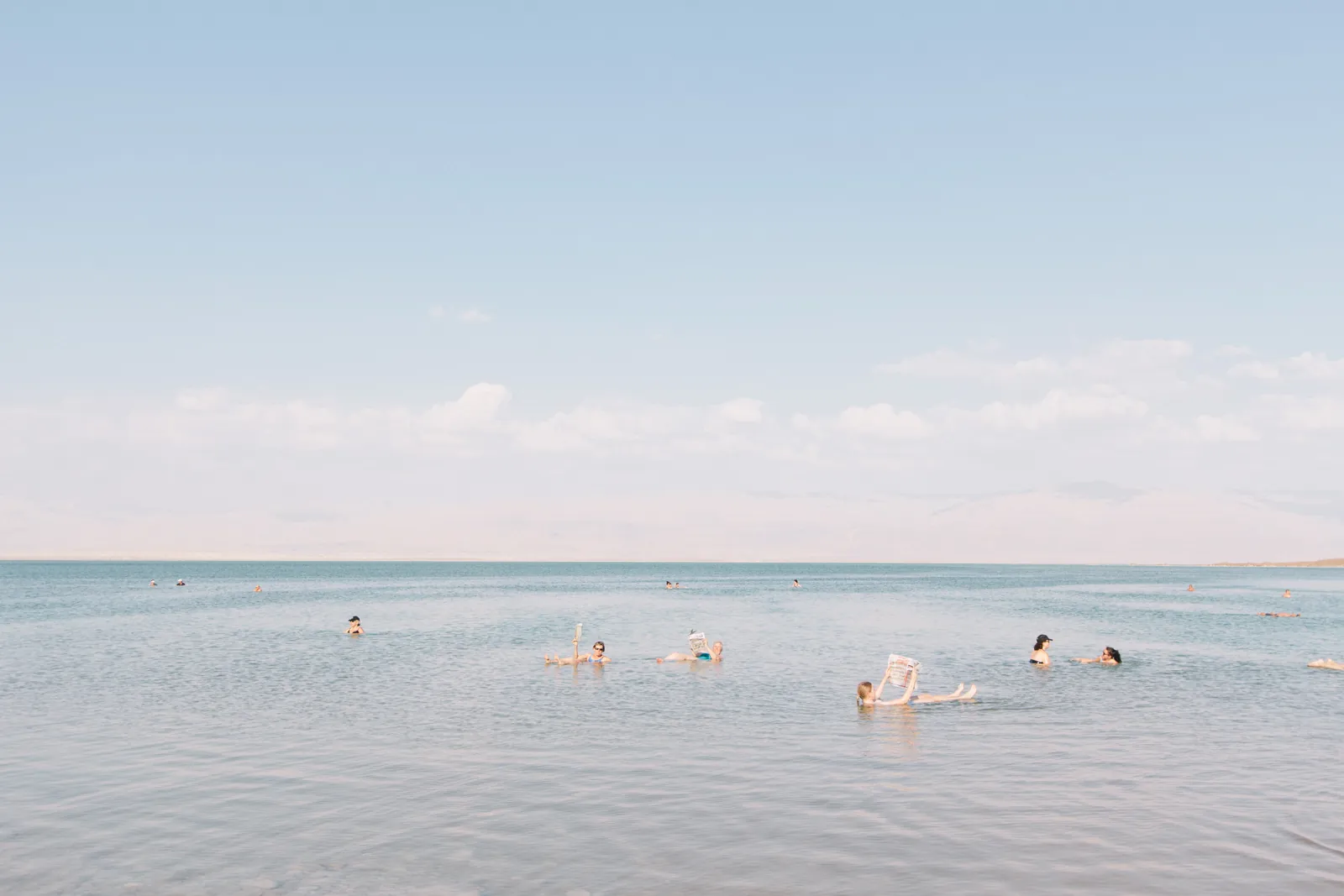
    Several people lying back and floating high on the pale, still water of the Dead Sea under a hazy sky
    Floating on the Dead Sea: bodies sit high in water roughly ten times saltier than the ocean. Photo: Rob Bye, Wikimedia Commons, CC0.

    Not the same salt as a float room

    The Dead Sea’s salt is not table salt, and it is not Epsom salt either. Its brine is dominated by chlorides, rich in magnesium and sodium, with calcium and potassium, and very little sulfate. Epsom salt, used in float rooms, is magnesium sulfate. Both make water dense enough to support the body, but the experience is different: Dead Sea water can sting sharply in any small cut or in the eyes, while a float room is designed for your skin to rest comfortably in the water for an hour. More on that below.

    A sea that keeps getting lower

    The Dead Sea is actually a lake, sitting at the lowest exposed point on land on the border of Jordan, Israel and the West Bank, and it is shrinking. Guinness World Records, citing Israel’s Environmental Protection Ministry, puts it at an average of around 436 metres below sea level and falling by about 1.1 metres a year. Much of the Jordan River’s water is now diverted before reaching it, while the desert sun continues to evaporate the lake.

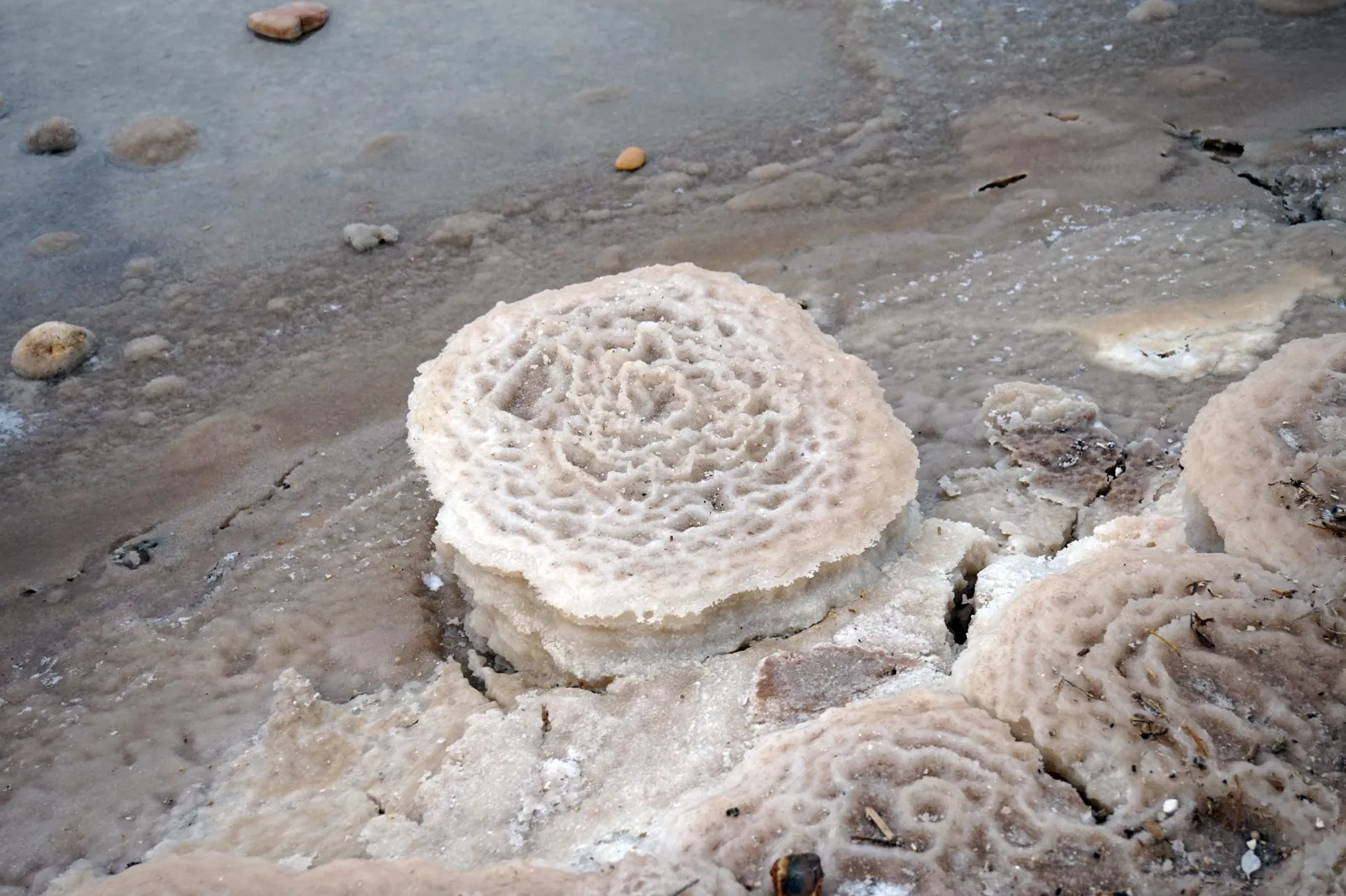
    Close-up of a white, ruffled salt formation shaped like a flower growing out of the grey mud on the Dead Sea shore
    Salt crystallising on the Dead Sea shore as the water level drops. Photo: Tiia Monto, Wikimedia Commons, CC BY-SA 3.0.

    From health trips to thalassotherapy: what people go there for

    For decades, people with skin and joint problems have spent several weeks by the Dead Sea, bathing, covering themselves in its black mud and, importantly, spending time in the sun. The location itself plays a part. Sunlight there travels through an extra 400-plus metres of air, which filters out more of the burning UVB rays, allowing people to spend longer in sunlight than they could at sea level.

    The broader idea of using the sea for health has a name in France: thalassotherapy, from the Greek thalassa, sea. The word was coined in 1865 by a French medical student, Joseph La Bonnardière, who joined two Greek roots, and thalasso centres with seawater pools and algae wraps still line parts of the French coast, from Saint-Malo to Arcachon.

    What science says

    • Psoriasis is the strongest case. A 2012 systematic review of the Dead Sea research, by researchers in Israel, found what they called bona fide evidence that Dead Sea treatment is especially effective for psoriasis, crediting the combination of local sunlight and bathing in the water. Most studies were small, many lacked a control group, and much of the research comes from researchers close to the region.
    • Joints: some encouraging signals. The same review found Dead Sea mud and bathing beneficial in studies of rheumatoid arthritis, psoriatic arthritis, ankylosing spondylitis and knee osteoarthritis. These were generally short studies involving relatively few participants.
    • Thalassotherapy in general is still thin. A 2025 narrative review found only 16 clinical studies that met its criteria. Results leaned positive, especially for psoriasis and fibromyalgia, but the authors called for better research on effect sizes, long-term benefits and risks.
    • Floating itself was not the thing being tested. Almost none of this research isolates the sensation of floating. Most of the measured benefits relate to sunlight on the skin and minerals in the water, rather than the feeling of weightlessness itself.

    Ōmni Evidence Scale: Promising, for Dead Sea treatment of psoriasis: a systematic review leans clearly positive, but the studies are mostly small and uncontrolled. Early evidence, for thalassotherapy and for Dead Sea treatment of joint conditions.

    The one real risk: water where it should not go

    You will not sink, but the water can still be dangerous if it gets where it should not. The main risk comes when someone rolls onto their front and swallows or inhales the brine. At Soroka University Medical Center in southern Israel, doctors reviewed 69 people treated after near-drowning in the Dead Sea. Their median age was 68. Most had abnormal blood levels of calcium and magnesium, 29 developed a lung inflammation, and 11 needed a breathing machine. Most recovered fully. The same 2012 review notes that swallowing large amounts of the water is toxic and can disturb heart rhythm.

    The practical advice follows naturally: stay on your back, do not swim on your front or dive, keep the water away from your face, and rinse with fresh water afterwards. A splash in the eyes stings intensely. The sun is the other quieter risk: even though it is filtered, it remains strong, and the review recorded more sun damage to the skin of people treated there.

    Where else can you float like that?

    There are not many places. The ocean, at about 3.5 percent salt, gives you a little extra lift, but nothing close to the Dead Sea. To reach that kind of buoyancy naturally, you generally need a closed basin in a dry, hot climate, where water evaporates faster than rivers can replace it.

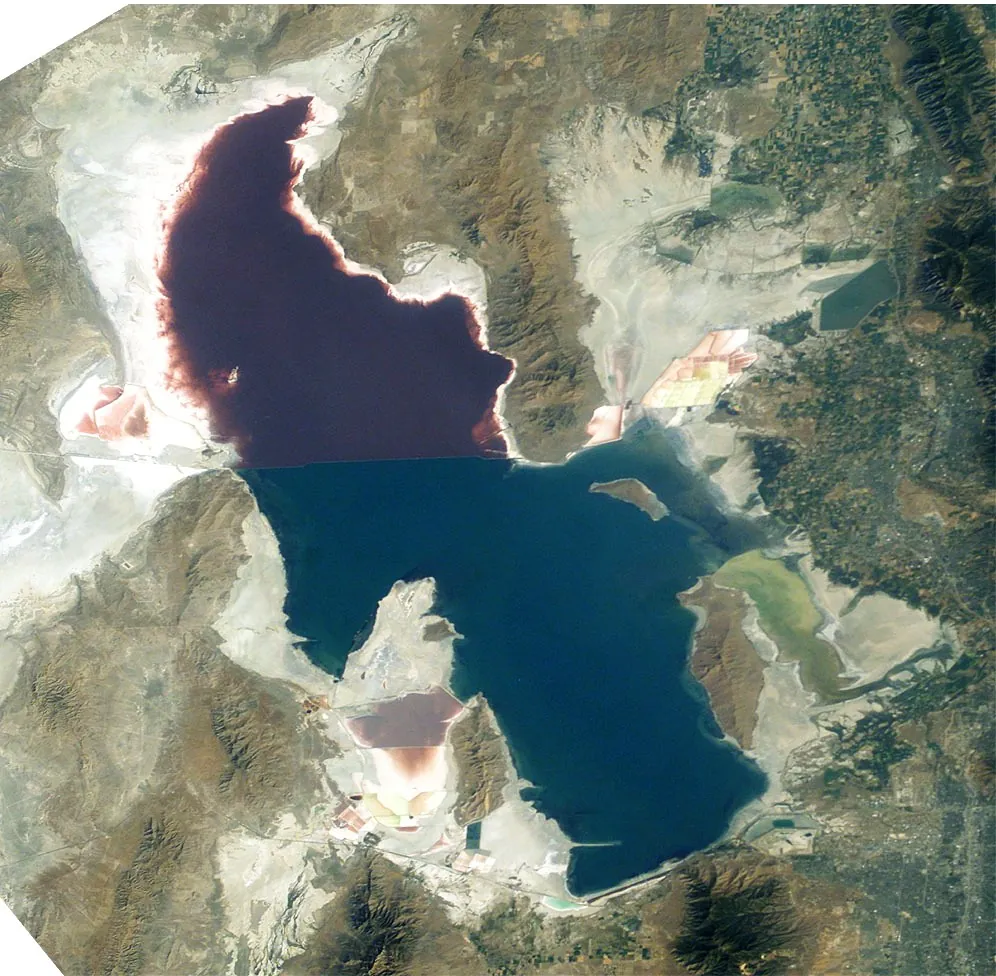
    One example is Utah’s Great Salt Lake. In 1959 a railway causeway split it in two. The southern arm receives almost all the river water and has averaged about 142 grams of salt per litre since 1966; the cut-off northern arm has averaged about 317 grams per litre and is often at or near saturation, close to Dead Sea levels. You can even see the difference from space: the north turns pink, thanks to salt-loving microbes that thrive there.

    Great Salt Lake in Utah seen from the International Space Station, the northern part pinkish purple and the southern part dark blue, divided by a straight railway causeway
    Great Salt Lake from the International Space Station, 2003. The railway causeway separates the saltier, pinkish north from the bluer south. Photo: NASA, Wikimedia Commons, public domain.

    And then there are the places we build. A float room recreates the Dead Sea’s most memorable trick, that effortless lift, while removing almost everything around it: the crowds, glare, wind and deep water. If you are curious about trying the effect in a bath, a pool or the sea at home, Float Vietnam has a guide: Can you float at home, in a bath, a pool or the sea?

    Dead Sea or float room: how they compare

    At Ōmni, each float pool holds about 500 kg of dense, mineral-rich Epsom salt dissolved in about 25 cm of water, warmed to 33–34 °C, close to skin temperature. During Thiền Nổi (float therapy), the boundary between skin and water can gradually become less noticeable, and many people describe a sense of weightlessness. The lights go down, the room becomes quiet, and you rest in the water for 60 or 90 minutes.

    Dead SeaFloat room
    What keeps you upAbout 340 g of mostly chloride salts per litreAbout 500 kg of Epsom salt (magnesium sulfate) in a shallow pool
    DepthOpen lake, deep waterAbout 25 cm; you cannot go under
    TemperatureDepends on season and weather33–34 °C, close to skin temperature
    Light and soundBright sun, beach, other peopleDark and quiet, if you choose
    Main exposureSun plus mineralsReduced light, sound and gravity
    Best evidencePromising, for psoriasis (sun plus water)Strong evidence, for stress
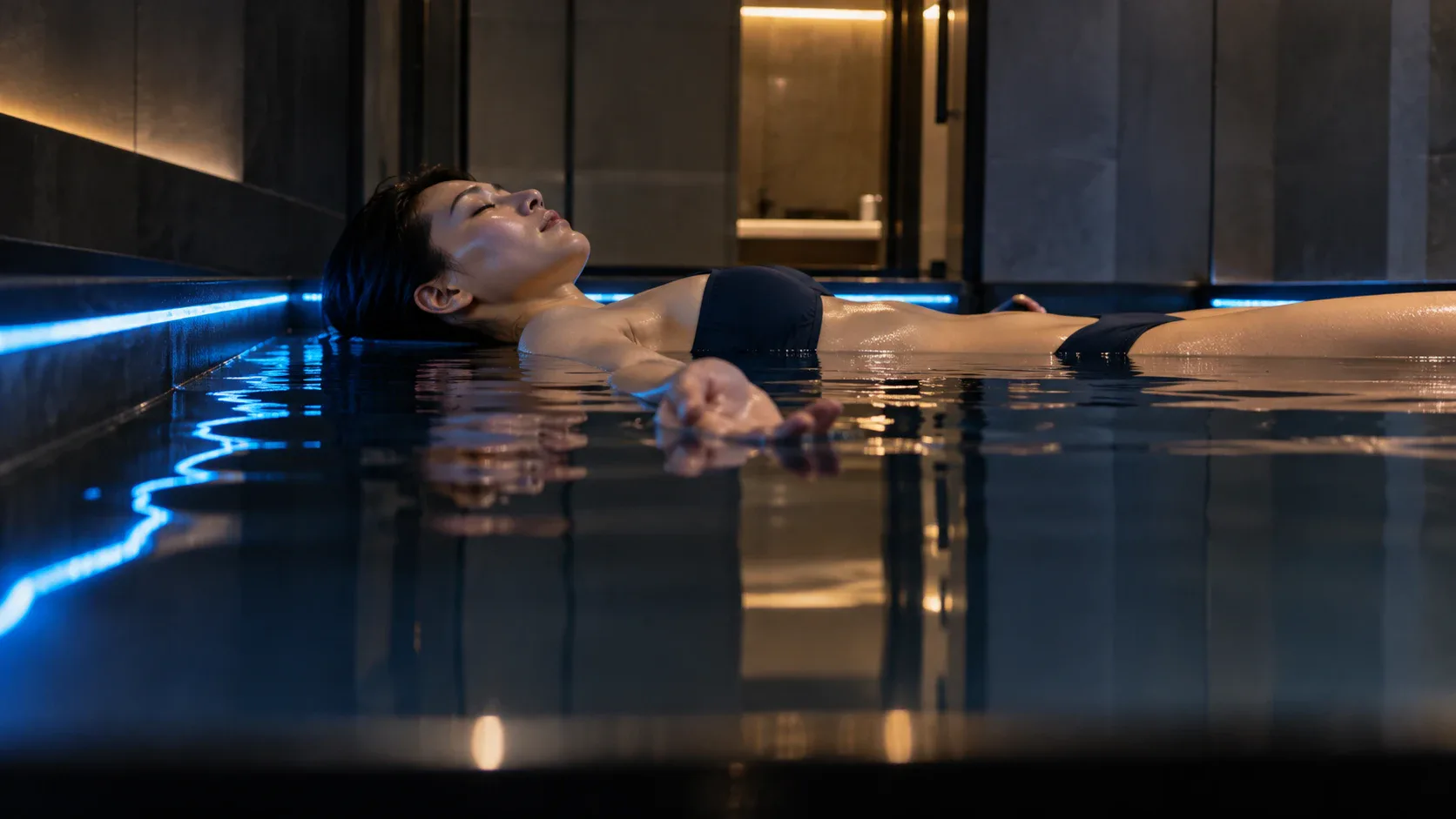
    A woman floating calmly on her back in a rectangular float pool at Ōmni Space, lit by a soft blue LED edge
    The Dead Sea’s effortless lift, without the sun, crowds or deep water: a private float room at Ōmni. Image: Ōmni Space.

    Resting in dense salt water inside a dark, quiet room has a research history of its own, stretching back to the 1970s. A 2005 meta-analysis of 27 flotation studies found positive effects on stress-related body measures and wellbeing, while a Swedish randomised pilot trial found that 65 working adults who floated 12 times over seven weeks reported less stress and anxiety and better sleep than a waiting group.

    Ōmni Evidence Scale: Strong evidence, for float and stress. We rate it Strong because, alongside these trials, user experience is overwhelmingly positive: in a 2025 survey of regular floaters, 92% reported relaxation and 77% less stress, echoed by thousands of reviews, Reddit threads and forums, and by athletes and public figures who float.

    What we think at Ōmni (and, yes, what we sell)

    We sell float sessions, so keep that in mind as you read this part. If you ever have the chance to visit the Dead Sea, go: lying back on that water beneath a desert sky is one of the strangest and most delightful sensations a body can experience. But the part people often remember most, being supported without having to do anything, does not require a flight to Jordan. Ōmni Space in Thảo Điền comes from the team behind Float Vietnam, the country’s pioneer float centre since 2017. A single float costs 1,500,000 VND for 60 minutes or 2,000,000 VND for 90 minutes; the couple room, one large square pool for two, adds 700,000 VND for the second person. New to it? Start with what float therapy is.

    An empty private float room at Ōmni Space, a pool of still water lit by soft blue LED lines
    A private float room at Ōmni, quiet and ready for the next guest. Photo: Ōmni Space.

    Ōmni Space – Float Saigon is at 16C Quốc Hương, Thảo Điền. We are open 9:00–21:00 daily; the last float starts at 20:00, and walk-ins are welcome until 18:00.

    Float PlanRunning on empty?Take the one-minute Float Plan quiz: tell us how you feel and what you need, and get a simple plan for your first session.Make my Float Plan

    FAQ

    Why can’t you sink in the Dead Sea?

    Its water contains about 340 grams of dissolved salt per litre, roughly ten times more than the ocean, making it about a quarter denser than fresh water. The human body is much less dense than that, so it naturally rides high on the surface.

    Is floating in the Dead Sea good for your skin?

    For psoriasis, the evidence is promising: a systematic review found Dead Sea treatment especially effective, largely through the combination of filtered sunlight and bathing. The studies were small, and the review also recorded more sun damage to the skin.

    Can you drown in the Dead Sea?

    Yes, even though you cannot sink easily. Rolling onto your front and swallowing or inhaling the brine can cause serious lung and heart problems. Stay on your back, do not dive, and keep the water away from your face.

    Is a float room the same as the Dead Sea?

    It recreates the effortless lift, not the place itself. A float room uses about 500 kg of Epsom salt in roughly 25 cm of water at 33–34 °C, in a dark, quiet private room, for 60 or 90 minutes. The Dead Sea adds desert sun, open water and a different mix of salts.

    Where can I float like in the Dead Sea in Saigon?

    In a float room. Ōmni Space in Thảo Điền has private float rooms, from 1,500,000 VND for 60 minutes. Our team is happy to show you around on site.

    Written by the team at Ōmni Space – Float Saigon in Thảo Điền, Vietnam’s pioneer float centre since 2017. We sell floats, not Dead Sea trips. General information, not medical advice; sources checked on 30 October 2026.

    Sources

    1. Abu-Qubu J, Merkel B, Dunger V, Rimawi O (2018). Variation of the chemistry of the Dead Sea brine as consequence of the decreasing water level. Aquatic Geochemistry 24: 121–135.
    2. Guinness World Records. Lowest body of water exposed: the Dead Sea (checked 30 October 2026).
    3. Katz U, Shoenfeld Y, Zakin V, Sherer Y, Sukenik S (2012). Scientific evidence of the therapeutic effects of Dead Sea treatments: a systematic review. Seminars in Arthritis and Rheumatism 42(2): 186–200.
    4. Antonelli M, Donelli D (2025). A narrative review of thalassotherapy and the health benefits of seawater and coastal climates. International Journal of Biometeorology 69: 517–526.
    5. Futura Santé. Faut-il avoir un problème médical pour partir en séjour de thalasso? (origin of the word thalassotherapy, 1865; checked 30 October 2026).
    6. Saidel-Odes LR, Almog Y (2003). Near-drowning in the Dead Sea: a retrospective observational analysis of 69 patients. Israel Medical Association Journal 5(12): 856–858.
    7. White JS, Null SE, Tarboton DG (2015). How do changes to the railroad causeway in Utah’s Great Salt Lake affect water and salt flow? PLOS ONE 10(12): e0144111.
    8. van Dierendonck D, te Nijenhuis J (2005). Flotation restricted environmental stimulation therapy (REST) as a stress-management tool: a meta-analysis. Psychology & Health 20(3): 405–412.
    9. Kjellgren A, Westman J (2014). Beneficial effects of treatment with sensory isolation in flotation-tank as a preventive health-care intervention: a randomized controlled pilot trial. BMC Complementary and Alternative Medicine 14: 417.