
In short: A Russian banya is hot, wet steam, followed by something that can look wonderfully strange from the outside: people gently swatting themselves, or each other, with a bundle of leafy birch or oak twigs called a venik. Turkey’s hammam takes a different route to a similar place, with warm marble, a heated “navel stone” and a vigorous scrub. In Ibusuki, in southern Japan, people are buried up to the neck in sand warmed by volcanic springs. Large observational studies link regular hot bathing, mostly dry sauna, with better heart health, while small lab studies suggest that wet heat can strain the body more than dry heat at a lower temperature. Nobody has properly tested the birch whisk itself. We could not find a banya or hammam in Saigon; Ōmni has a private infrared and red-light sauna, a gentler kind of heat.
Part of the Ōmni Recovery Library · Recovery by Temperature
Maybe you have seen the video: a steamy wooden room, someone lying face-down on a bench, and a friend in a felt hat enthusiastically waving and tapping them with a bundle of leaves while everyone seems delighted. From the outside, it looks slightly absurd. To the people inside, it is a ritual they genuinely enjoy. If you have ever wondered what is actually happening in there, and whether any of it has a real effect, this is for you. We will look at the Russian banya, its cousins the Turkish hammam and the Japanese hot-sand bath, what the research can actually tell us, and what is worth knowing when the heat gets serious.
Ōmni Evidence Scale: Promising, for regular hot bathing and heart health (large observational studies, mostly of dry sauna). Early evidence, for steam and hot-sand baths specifically (small lab studies). No good evidence yet, for the birch whisk itself. How we rate evidence.
What is a banya?
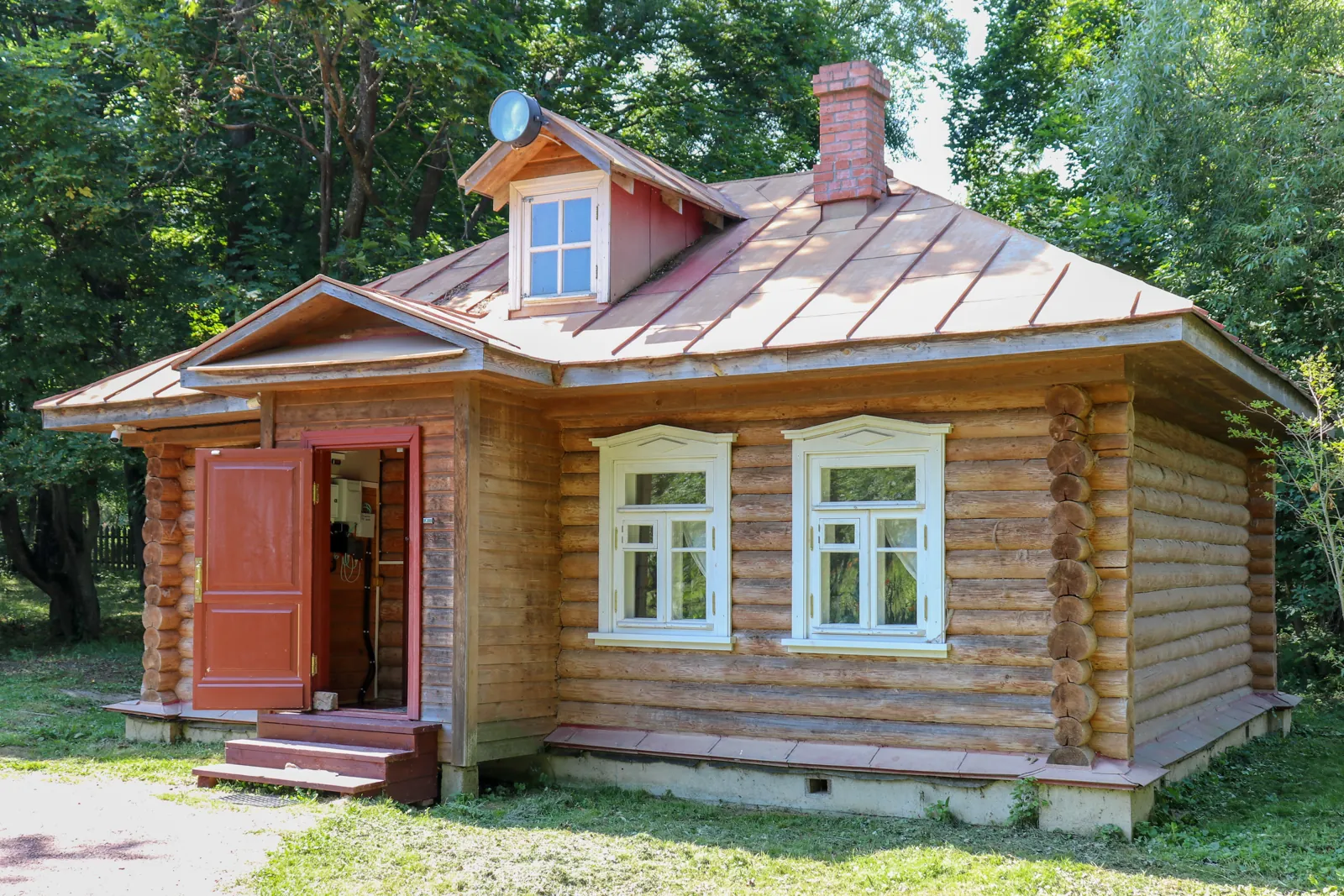
A banya is the Russian bathhouse: usually a wooden steam room heated by a stove packed with stones, somewhere to cool off, and quite often a table waiting with tea. Ladle water onto the hot stones and you get a burst of steam, turning the room hot and humid rather than giving you the dry heat of a Finnish sauna. Researchers measuring these rooms describe the Russian-style wet bath as hot air of roughly 40–70 °C, saturated with steam. The rhythm will feel familiar if you know other heat traditions: heat up, cool down (a cold plunge, a bucket, a snowbank), rest, repeat.
So why the birch branches?
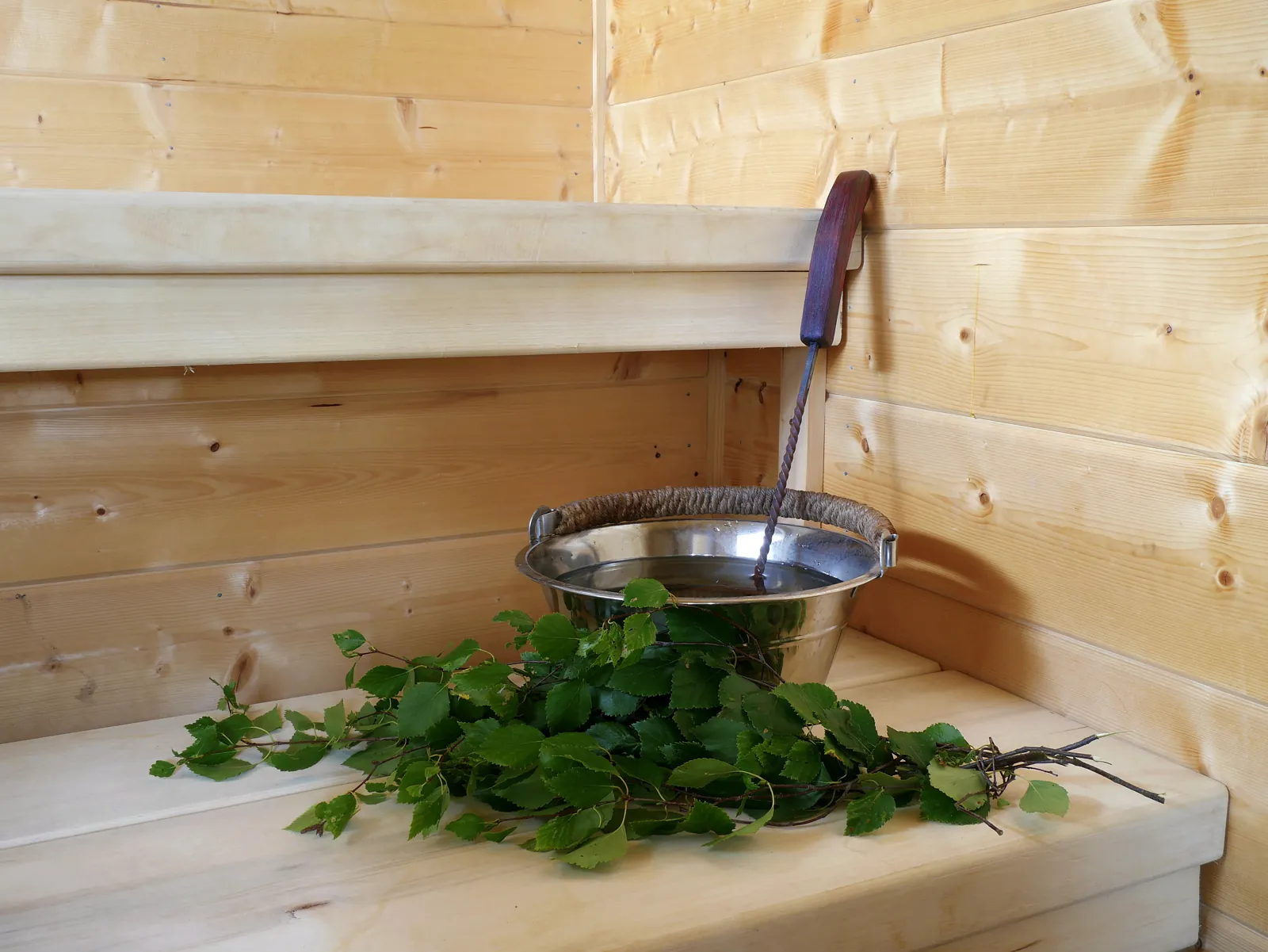
That leafy bundle is called a venik. It is made from birch or oak twigs, tied at the handle and soaked in hot water first so the leaves become soft and fragrant. In the steam room, the person holding the venik usually starts by fanning hot air over the bather, then pressing, patting and swatting along the back and legs, sometimes resting the warm leaves on the skin for a moment. Think less “beating” and more massage, fan and aromatherapy rolled into one. The Finns have essentially the same tool, called a vihta or vasta.
And this is not a new wellness trend. The Russian Primary Chronicle, compiled in Kyiv in the early twelfth century, tells a story of the Apostle Andrew travelling north and being amazed by bathhouses near where Novgorod now stands. People heated wooden huts until they became extremely hot, the chronicle says, then “they take young branches and lash their bodies” before pouring cold water over themselves. Historians doubt Andrew ever made the journey; the passage was probably a Kyivan joke at Novgorod’s expense. Still, it tells us something useful: whisking people with branches in a steam room was familiar enough to joke about nine hundred years ago.
The hammam: marble, steam and a serious scrub
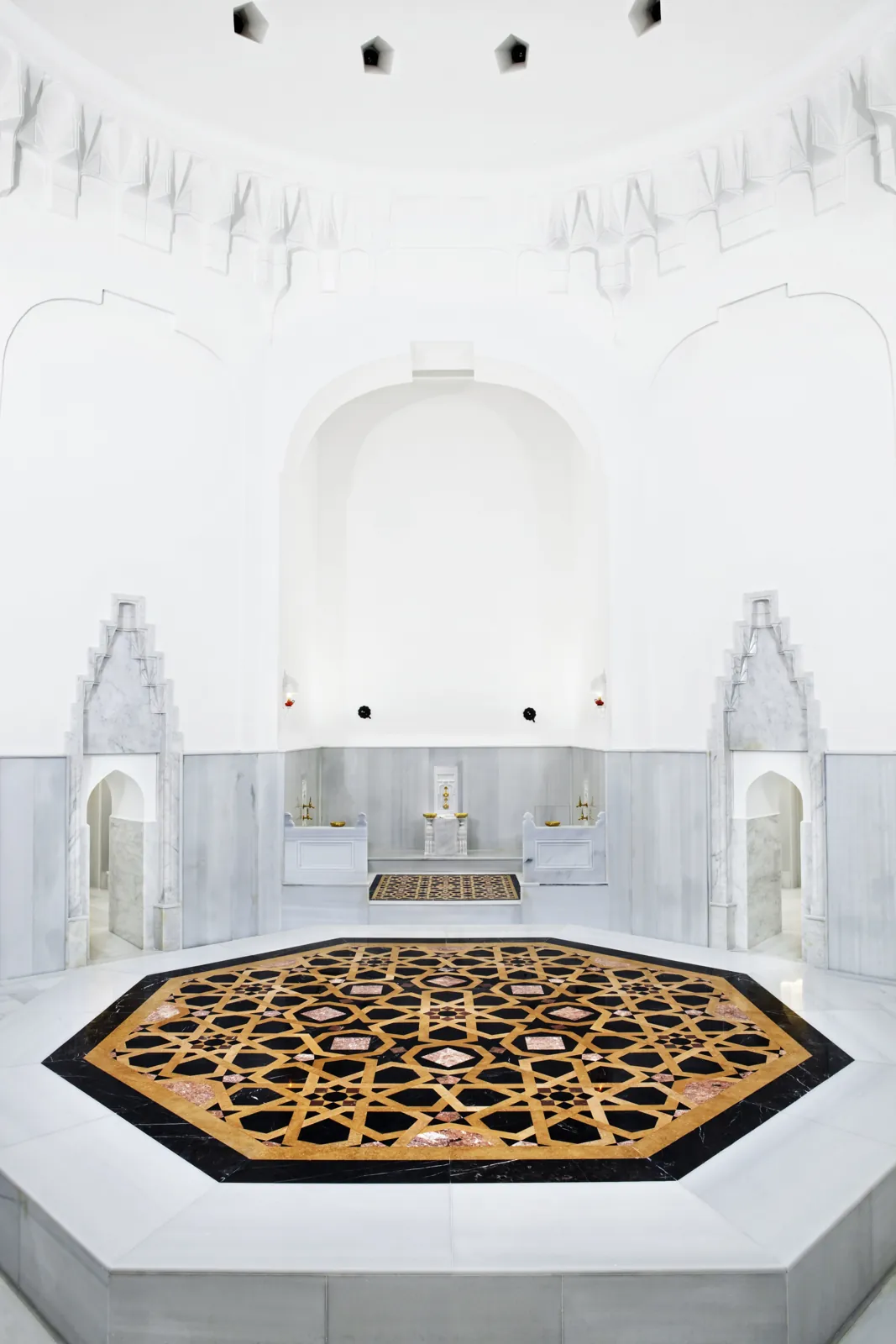
The hammam grew from the tradition of Roman and Hellenistic public baths. After the early Islamic expansion, bathhouses were adapted for ritual washing as well as everyday hygiene, eventually spreading from North Africa to Central Asia. The Ottoman version, often called the Turkish bath, unfolds through a sequence of spaces: somewhere to undress and rest, warmer rooms, then the hot room itself. At its centre is the göbek taşı, the “navel stone”: a large heated marble platform where you lie down and sweat. Then comes the kese, a coarse mitt used by an attendant to scrub the skin, often revealing far more dead skin than you expected was there. Soap foam, washing and a rinse at a marble basin complete the ritual.
Many of Istanbul’s grand bathhouses were designed as double baths, with separate halls for women and men. One of the best known is the Haseki Hürrem Sultan Hamam, designed in the sixteenth century by the architect Mimar Sinan for Roxelana, wife of Süleyman the Magnificent.
Sunamushi: buried in hot sand in Japan
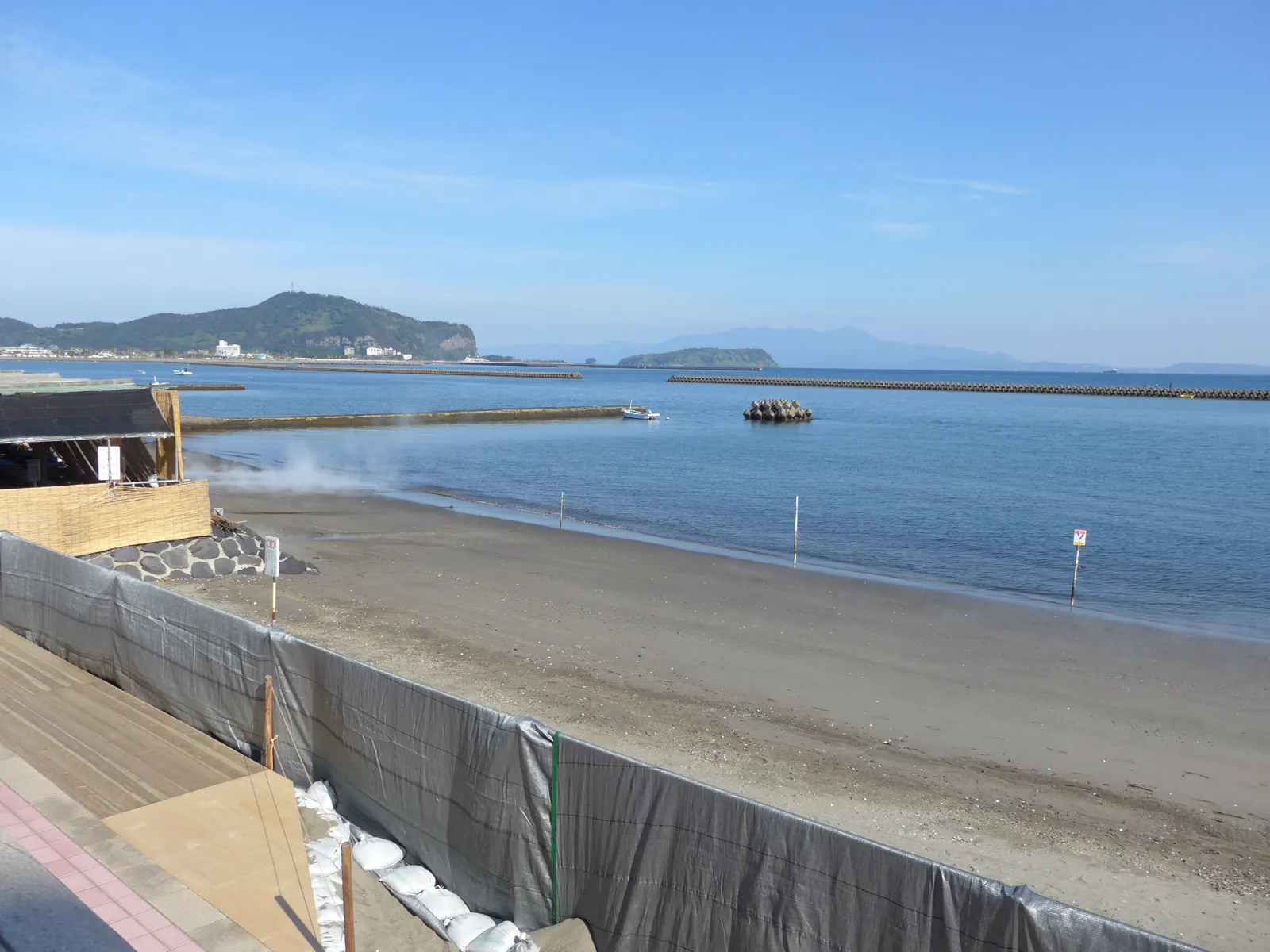
On the beach at Ibusuki, at the southern tip of Kyushu, hot spring water flows beneath the sand. Visitors change into a light cotton yukata, lie in a shallow trench, and an attendant shovels black volcanic sand over the body until only the head remains above ground. The sand is warmed to about 50–55 °C, and a session lasts about ten minutes. Imagine the weight of a heavy blanket, except the blanket is warm from the earth beneath you. This is sunamushi, the sand steam bath, followed afterwards by a shower or a soak in an onsen.
What does the science say?
Regular hot bathing: promising, but observational
Some of the best-known research on heat bathing comes from Finland. One study followed 2,315 middle-aged Finnish men for about twenty years and found that those using a sauna four to seven times a week had 63% fewer sudden cardiac deaths than those going once a week. It is an eye-catching number, but there is an important caveat: this was an observational study. People who use a sauna frequently may differ from other people in many ways, so the study shows an association, not proof that sauna itself caused the difference. And almost all of this research concerns dry Finnish saunas, not banyas or hammams.
Wet heat works the body harder
This is the part that catches many people by surprise. Steam can feel gentler because the thermometer shows a lower number, yet physiologically it can be more demanding. In a small Polish study, ten healthy young men did a 60-minute session in a dry sauna at about 91 °C and, a month later, in a wet steam bath at about 59 °C with 60% humidity. Their core temperature rose more in the cooler, wetter room (by 1.6 °C versus 1.2 °C), and their heart rate climbed more as well. The reason is straightforward: sweat cools us when it evaporates, and in saturated air evaporation becomes much harder. A larger 2026 study from the University of Jyväskylä in Finland, involving 50 adults, found the same pattern in Finnish saunas: as humidity rises, heart rate and core temperature climb faster, even when temperature stays the same.
So when banya regulars say a good steam “hits harder”, there is some physiology behind what they are feeling. The venik adds another layer: fanning pushes the hottest, wettest air directly onto the skin, which is one reason whisking can feel so intense.
Hot sand: one small trial
Japanese researchers recently compared three ways of getting warm in a small randomised crossover trial involving 14 healthy young men: 20 minutes in a Japanese steam sand bath at about 50 °C, a hot bath at about 41 °C, and a sauna at about 80 °C. Blood pressure fell by a similar amount after all three. The sand bath raised core temperature the least and was rated the most comfortable. It is only one small study in young men, which is why we consider the evidence early rather than conclusive.
And the birch whisk?
Here the answer is much simpler: we could not find a single controlled trial on the venik itself. The plausible effects are easy enough to understand: it behaves partly like massage, it moves hot air across the skin, and the leaves smell lovely. But claims that it “opens pores to detox” or “boosts immunity” have not been tested, so we would treat those as stories rather than scientific findings.
The risks, in plain words
For most healthy people, hot rooms are generally safe most of the time, and serious problems are rare. A Finnish study of sauna deaths from 1990 to 2002 recorded fewer than two per 100,000 inhabitants each year, in a country where sauna use is nearly universal, and alcohol was involved in about half of those cases. Across heat traditions, the practical lessons are remarkably similar:
- Alcohol and heat do not mix. Drinking dulls your sense of overheating and adds to dehydration.
- Steam burns. Throwing a big ladle of water onto very hot stones can send a scalding cloud upward, with the top bench feeling it first.
- Standing up too fast after a long heat session can leave you dizzy as blood pressure falls. Give yourself a moment before getting up.
- Wet marble is slippery, and a kese scrub done too aggressively can leave the skin raw.
- Hot sand and steam are hard to judge because the heat can build gradually. Ibusuki keeps sessions to about ten minutes for a reason.
If you begin to feel sick, confused or faint, that is your cue to stop: leave the heat, cool down and drink water.
Can you try any of this in Saigon?
Not quite, at least from what we could find. While researching our guide to saunas, ice baths and bathhouses in Saigon, we found Korean-style jjimjilbang, private onsen-style suites and Finnish-style sauna clubs, but no Russian banya or Turkish hammam. If the wider world of heat rituals interests you, our guide to Asia’s heat cultures also explores onsen, jjimjilbang and Vietnam’s own xông lá herbal steam.
What Ōmni thinks
We love these rituals because they feel so deeply human. Different countries have built very different traditions around the same simple rhythm: heat, cool, rest. And in our view, the rest matters just as much as the heat.
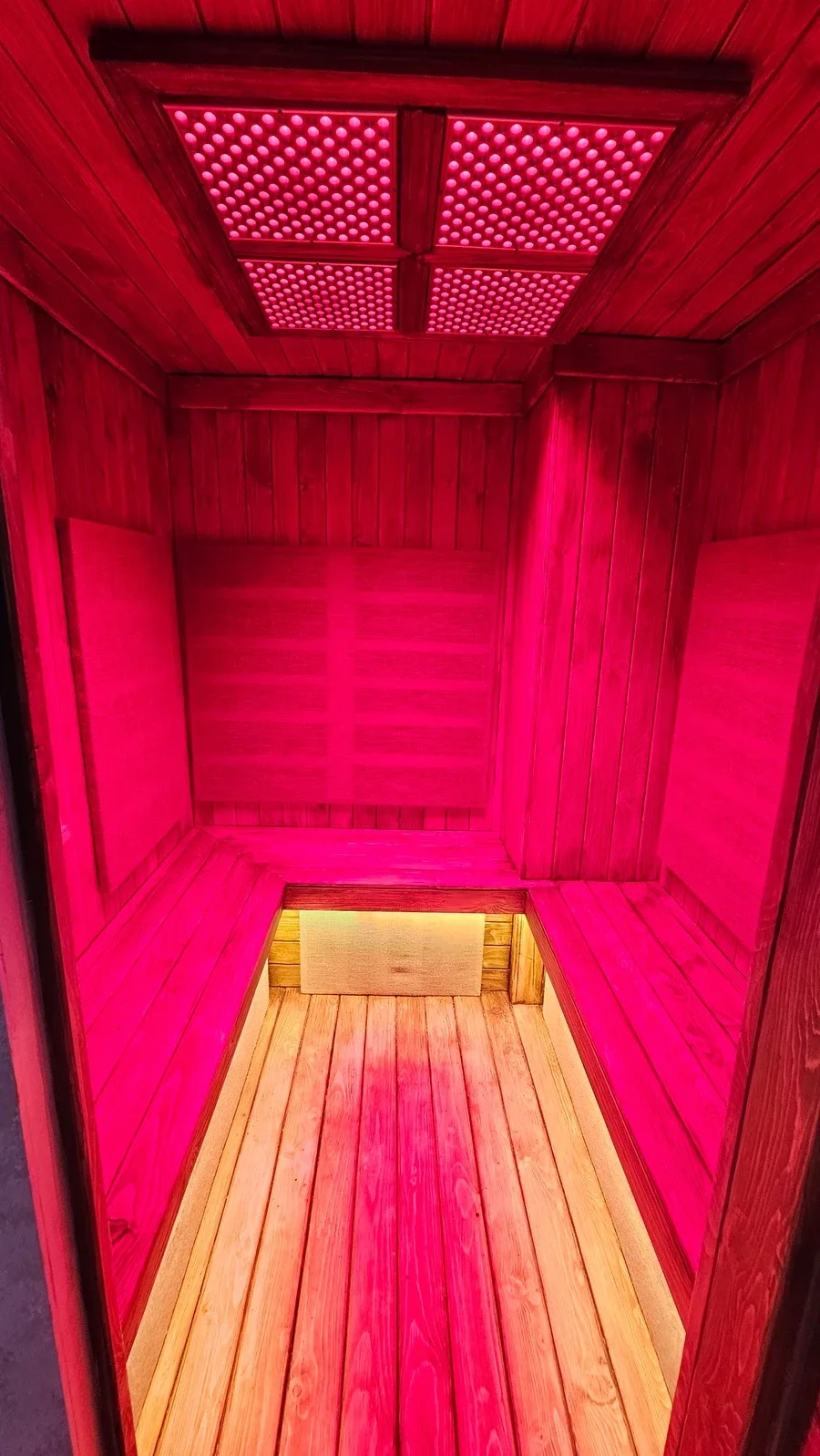
Just to be clear about what we offer: Ōmni Space does not have a banya, a hammam or a steam room. We have a private infrared and red-light sauna at 45–55 °C, which feels considerably gentler than a wet banya, alongside a private cold plunge at 7–12 °C. Each costs 450,000 VND on its own, or 200,000 VND added to a float. You can read more about the infrared sauna, the cold plunge, and alternating between them.
And for the rest part, we would suggest a float. In a float room, you lie back in warm water with dense, mineral-rich Epsom salt, surrounded by darkness and quiet, for 60 or 90 minutes. A meta-analysis of float studies and a randomised trial found less stress and better mood after regular floats.
Ōmni Evidence Scale: Strong evidence, for float and stress. We rate it Strong because, alongside these trials, user experience is overwhelmingly positive: in a 2025 survey of regular floaters, 92% reported relaxation and 77% less stress, echoed by thousands of reviews, Reddit threads and forums, and by athletes and public figures who float.
Float PlanRunning on empty?Take the one-minute Float Plan quiz: tell us how you feel and what you need, and get a simple plan for your first session.Make my Float PlanFAQ
Why do people hit each other with birch branches in a banya?
The bundle is called a venik, and it is soaked first so the leaves become soft. It is used to fan hot steam over the skin, then massage the body with light pats and swats. The sensation can be intense and pleasant, although no study has tested specific health effects from the venik itself.
What is the difference between a banya, a hammam and a sauna?
A Finnish sauna is hot and dry, often 80–100 °C. A banya usually runs cooler but is much more humid, with steam created by pouring water onto hot stones. A hammam is warm and humid too, but revolves around heated marble, washing and scrubbing.
Is a steam room easier on the body than a dry sauna?
Not necessarily. Small studies suggest that humid heat can raise core temperature and heart rate more than dry heat, because sweat cannot evaporate as effectively in saturated air.
Is there a banya or hammam in Saigon?
We could not find one. Saigon does have Korean-style jjimjilbang, onsen-style private suites and Finnish-style saunas; our Saigon sauna, ice bath and bathhouse guide lists the options we found.
Does Ōmni Space have a steam room?
No. Ōmni has a private infrared and red-light sauna at 45–55 °C, a private cold plunge at 7–12 °C and float rooms, in Thảo Điền. The sauna or cold plunge costs 450,000 VND on its own, or 200,000 VND added to a float.
Written by the team at Ōmni Space – Float Saigon in Thảo Điền, Vietnam’s pioneer float centre since 2017. We sell infrared sauna, cold plunge and float sessions, not banya or hammam visits. General information, not medical advice; sources checked on 30 October 2026.
Sources
- Christian History Institute. The Primary Source of the Millennium: Legends and Historical Events (quoting The Russian Primary Chronicle, trans. Cross SH, Sherbowitz-Wetzor OP, Medieval Academy of America, 1953).
- Pilch W, Szygula Z, Palka T, et al. (2014). Comparison of physiological reactions and physiological strain in healthy men under heat stress in dry and steam heat saunas. Biology of Sport 31(2): 145–149.
- University of Jyväskylä (10 July 2026). Research: Steam increases physiological strain during sauna bathing.
- Laukkanen T, Khan H, Zaccardi F, Laukkanen JA (2015). Association between sauna bathing and fatal cardiovascular and all-cause mortality events. JAMA Internal Medicine 175(4): 542–548.
- Horiuchi M, Fujii N (2026). Japanese steam sand bath heat therapy mediates comparable reductions in blood pressure with smaller discomfort and respiratory strains than hot water immersion and sauna. European Journal of Applied Physiology 126(3): 1391–1403.
- Kenttämies A, Karkola K (2008). Death in sauna. Journal of Forensic Sciences 53(3): 724–729.
- Wikipedia. Hammam (history, room sequence, göbek taşı, kese; checked 30 October 2026).
- Kyushu Tourism Organization. Ibusuki Onsen (sand bath at about 50–55 °C, about ten minutes; checked 30 October 2026).
- van Dierendonck D, te Nijenhuis J (2005). Flotation restricted environmental stimulation therapy (REST) as a stress-management tool: a meta-analysis. Psychology & Health 20(3): 405–412.
- Kjellgren A, Westman J (2014). Beneficial effects of treatment with sensory isolation in flotation-tank as a preventive health-care intervention: a randomized controlled pilot trial. BMC Complementary and Alternative Medicine 14: 417.