In short: Whole-body cryotherapy means spending two to three minutes in air at −110 °C or colder. That sounds far more extreme than an ice bath, but the number does not tell the whole story: air carries heat away much more slowly than water. In a head-to-head lab study, 4 minutes at −110 °C chilled the skin more than 8 °C water, yet cooled muscle and core by about the same amount. A Cochrane review found too little evidence to say cryo chambers reduce muscle soreness, and in a marathon trial cold water beat the chamber. Compression boots can feel pleasant, but recent reviews and a placebo-controlled trial found no faster recovery. Cryo chambers also carry real risks, including frostbite and, in nitrogen-cooled cabins, suffocation.
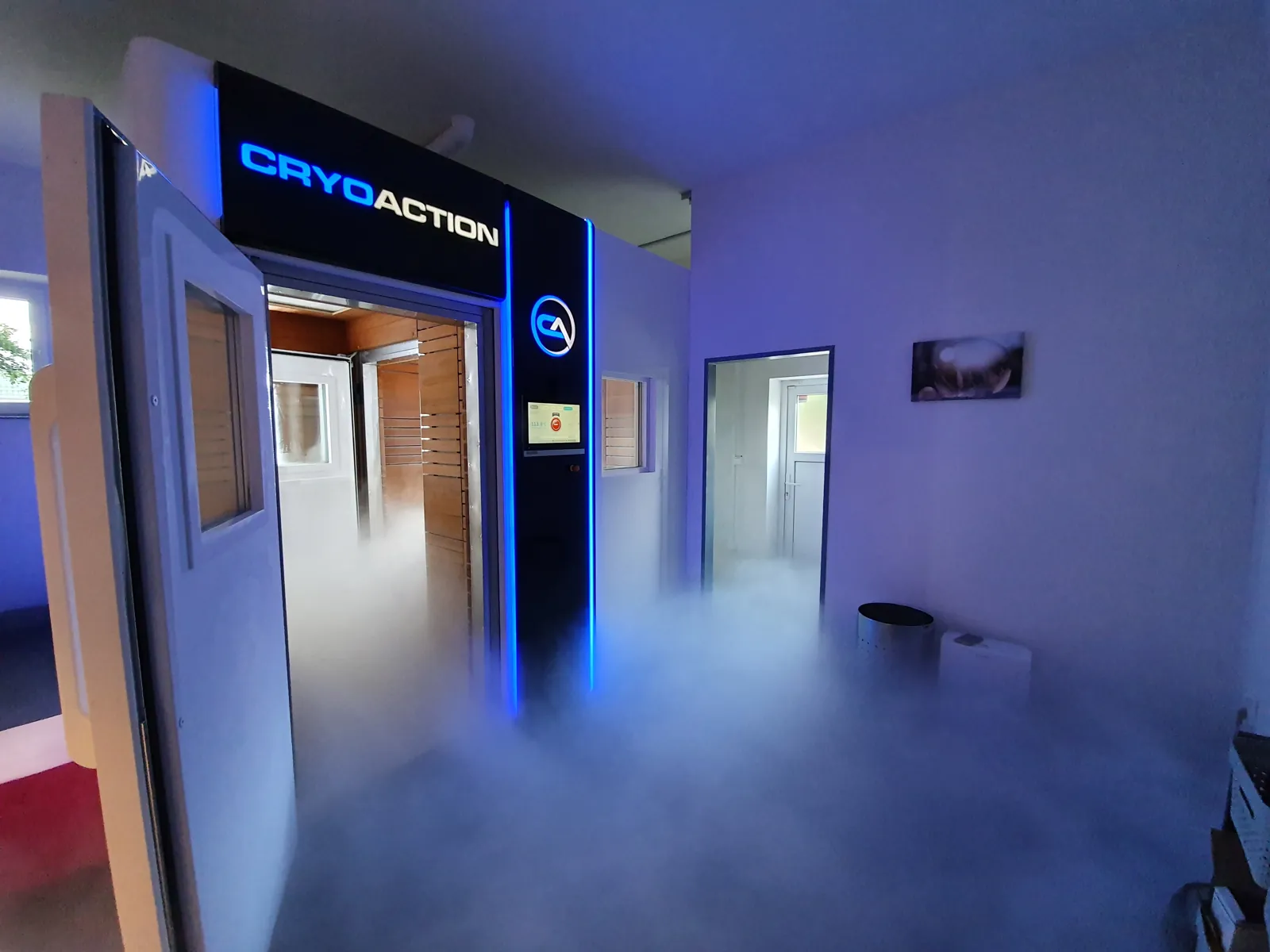
You have probably seen the photos: a footballer disappearing into a cloud of white vapour, a runner stretched out in inflatable leg sleeves, a wellness studio menu where “cryo” costs about as much as a small holiday. It certainly looks high-tech. But does −110 °C actually do something an ice bath cannot? And are those futuristic leg sleeves worth renting? Here is how each gadget works, what the trials actually found, and the risks that tend to get less space in the brochure.
Part of the Ōmni Recovery Library · Recovery by Temperature · Ōmni Evidence Scale: Early evidence
Where it came from, and what a session looks like
Whole-body cryotherapy began in Japan. In the late 1970s, rheumatologist Toshiro Yamauchi noticed that his patients with rheumatoid arthritis seemed to do better after winter holidays in the mountains, so he built a chamber filled with very cold, dry air to recreate that effect. The idea travelled to Poland and Germany for rheumatism clinics, then into elite sport and, much later, city wellness studios.
Today, you will mainly come across two kinds of machine.
- The walk-in chamber. In the classic clinical protocol, you enter in swimwear, socks, clogs, a headband and a mask, spend about 30 seconds in an anteroom at −60 °C, then move into the main room at −110 to −140 °C for no more than three minutes. Electrically cooled chambers contain breathable air around the whole body.
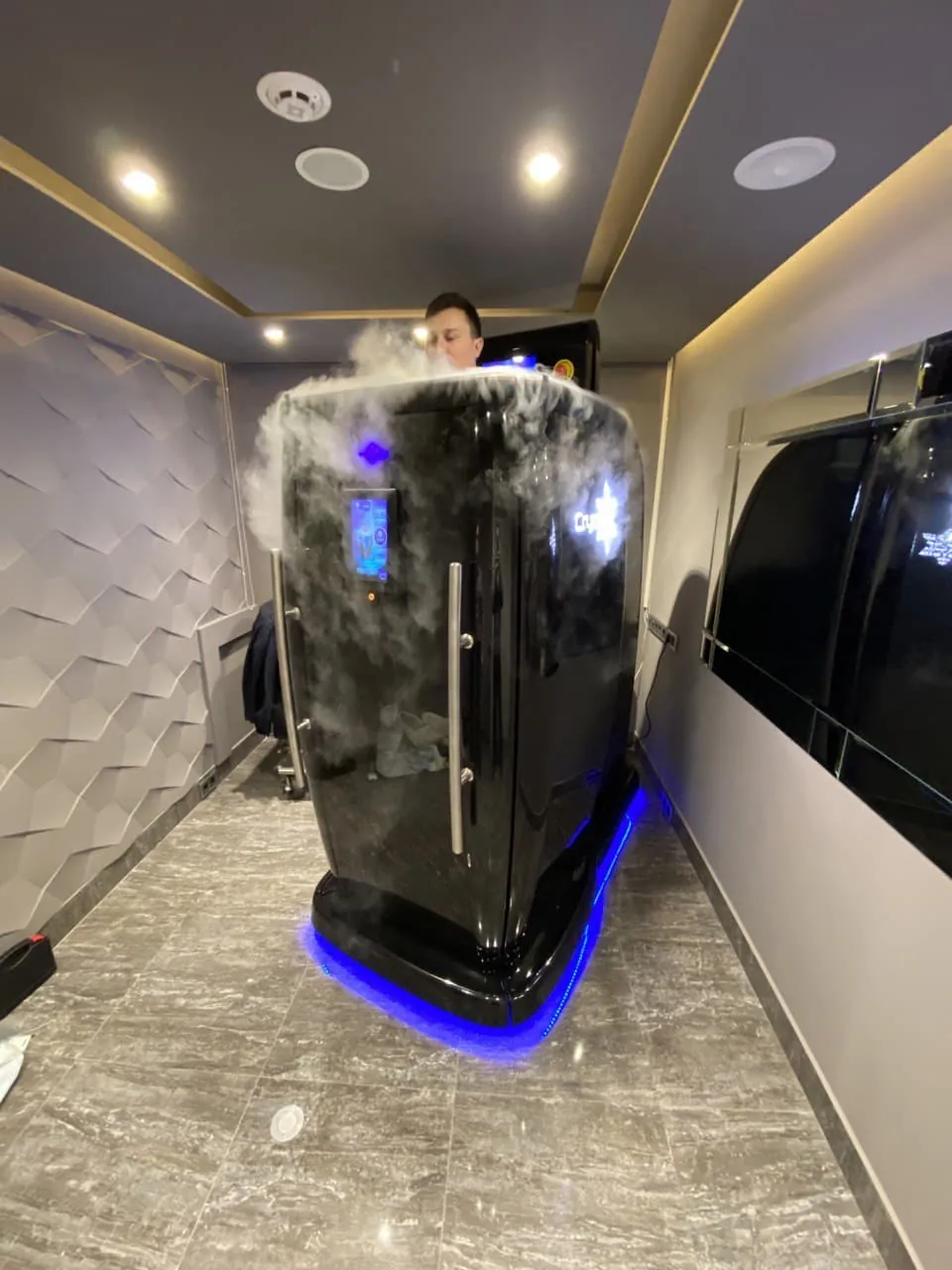
- The “cryosauna” tube. This is a single-person cylinder, open at the top, with your head staying above the rim. Many use liquid nitrogen vapour flowing around the body for cooling. This is the version you are more likely to see in wellness studios.
Why −110 °C air is not “ten times colder” than an ice bath
Temperature is only half the story. What really matters is how quickly heat leaves your body, and water pulls heat away more than 20 times faster than still air. That is why you can spend a while outside on a dry −20 °C day, yet be in trouble within minutes in water only just above freezing.
Joseph Costello and colleagues measured this directly in 2012. Twenty active young men did 4 minutes of whole-body cryotherapy at −110 °C and, on another day, 4 minutes in 8 °C water. The chamber cooled the skin more, with an average drop of about 12 °C versus 8 °C. But the fall in muscle temperature, measured with a probe in the thigh, and in core temperature was similar, and slightly greater after the water. Put simply, that dramatic number on the cryo chamber’s screen is felt mostly at the skin.
What the science actually says about cryo chambers
Muscle soreness. In 2015, a Cochrane review, the gold standard for summarising medical trials, searched for every randomised trial of whole-body cryotherapy for soreness after exercise. It found just four small lab trials involving 64 people, all but four of them young men. The evidence was rated “very low” quality, and the authors concluded that there was not enough evidence to say whether cryotherapy reduces soreness or helps people feel recovered. None of the trials actively checked for side effects.
Chamber versus water. In a 2018 trial, 31 trained men ran a marathon and then received either a cold-water bath, a cryo chamber session or a placebo. Cryotherapy was worse than cold water for recovering muscle function, although the chamber group reported slightly less training stress. Neither cold method beat the placebo for functional recovery. Cold water itself has a stronger research record: a 2022 meta-analysis of 52 studies found that cold-water immersion reduced muscle soreness and helped muscle power recover 24 hours after hard exercise. On our own scale, the cold plunge for muscle recovery rates Promising.
Disease claims. Cryo studios sometimes mention arthritis, anxiety, weight loss and more. In 2016 the US Food and Drug Administration reviewed the literature, found “very little evidence” for these uses, and stated that it had not cleared or approved any whole-body cryotherapy device to treat any medical condition.
Plausible versus proven. A short blast of extreme cold certainly wakes you up and cools your skin quickly; that sharp, tingling, “reset” sensation is real, and plenty of athletes enjoy it. What has not been shown is that it speeds recovery more than a plunge, or treats a disease.
Compression boots: the other high-tech recovery gadget
Compression boots are long inflatable sleeves that zip around your legs. A pump fills separate chambers from the feet upwards, squeezing and releasing in waves, usually for around half an hour. The technique, intermittent pneumatic compression, comes from hospitals, where it is used to keep blood moving in bedridden patients. In sport, the idea is that it can help “flush” tired legs.
The sensation can be lovely, a little like a slow, firm leg massage. Whether it actually speeds recovery is a different question:
- A 2025 systematic review found moderate-certainty evidence that compression boots do not reduce muscle soreness 24 hours after damaging exercise.
- A 2026 randomised trial in 23 international-level youth footballers compared 30 minutes of high-pressure boots after matches with a placebo cream and found no difference in jump height, muscle fatigue, muscle damage markers, or how tired and sore the players felt.
- A 2026 network meta-analysis of recovery methods in elite endurance athletes, including cold water, cryotherapy, compression and massage, found that none clearly beat simply resting. A sham immersion in neutral-temperature water performed as well as the active methods. The authors’ conclusion: expectation cannot yet be separated from a real physical effect.
So if you enjoy the boots, enjoy them. Just do not expect them to replace what sleep, food and time already do remarkably well.
Ōmni Evidence Scale: Early evidence, for whole-body cryotherapy: a handful of small, mostly male trials, rated very low quality by Cochrane, with cold water doing as well or better in direct comparisons. Compression boots: Early evidence, and the better trials so far find no faster recovery. See how we rate evidence on the Ōmni Evidence Scale.
The risks: frostbite and nitrogen
Extreme cold is not gentle on tissue. The FDA lists frostbite, burns and eye injuries among the risks of whole-body cryotherapy. Wet skin is the classic issue: sweat or damp clothing can freeze onto the skin almost instantly at −110 °C, which is why clinical protocols require completely dry skin and protection for the hands, feet and ears.
Nitrogen-cooled tubes introduce another, invisible risk. Nitrogen itself is not poisonous, but it displaces oxygen from the air and has no smell. The FDA warns of asphyxiation “especially when liquid nitrogen is used for cooling”. In October 2015, a 24-year-old spa worker in Las Vegas was found dead inside a nitrogen-cooled cryotherapy tube that she had apparently used alone after closing time. The coroner ruled the death an accident caused by asphyxia: oxygen inside such a chamber can fall below 5% during use, compared with about 21% in normal air.
The practical safety list:
- Never alone. A trained staff member should watch the whole session, and you should be able to step out whenever you want.
- Completely dry skin, with no sweat or damp swimwear; gloves, socks and ear cover should stay on.
- No more than about three minutes. More time does not mean more benefit.
- In a nitrogen tube, keep your head above the rim and get out if you feel dizzy, light-headed or confused.
- Not for everyone. Clinical guidelines rule it out for people with uncontrolled heart disease, Raynaud’s (fingers that turn white in the cold), cold intolerance, acute breathing problems, open skin lesions or claustrophobia.
- Compression boots are low-risk, but are not used when a blood clot in the leg is suspected.
What we think at Ōmni
A little transparency first: Ōmni has no cryo chamber and no compression boots. We do have a cold plunge, so yes, we have a stake in the water side of this conversation. That is also why we have tried to let the trials speak for themselves rather than dress the conclusion up.
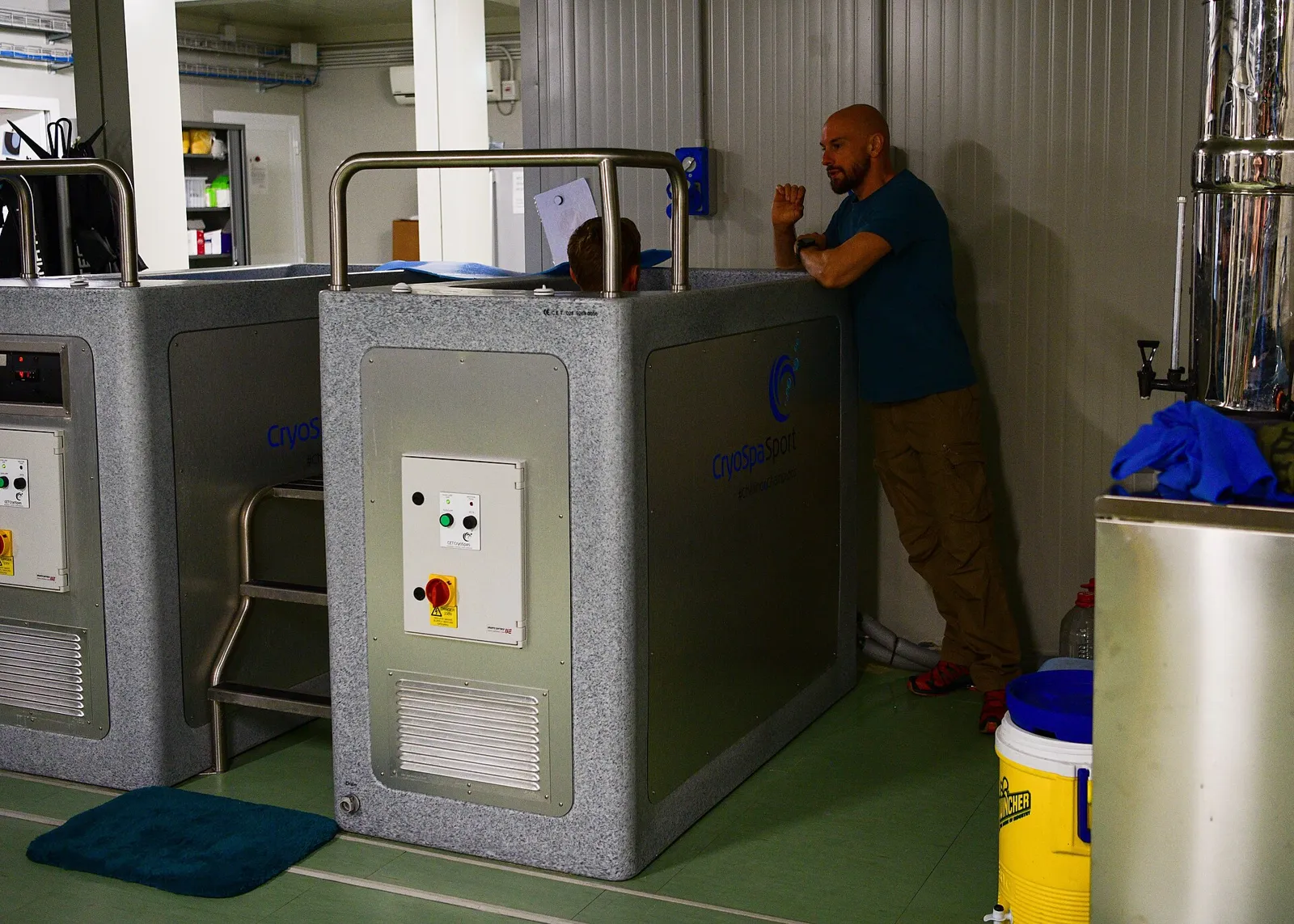
Our reading is simple: for cold, water does the job. It cools muscle as well as a chamber, has more trials behind it, costs less and brings no nitrogen risk. Our cold plunge is kept at 7–12 °C, in a private 30-minute session that you can take at your own pace: a few short dips, slow long exhales, face out of the water. It costs 450,000 VND on its own or 200,000 VND added to a float, and the whole sauna and cold plunge room, for up to 4 people for 60 minutes, is 900,000 VND. Bring your own swimwear for the plunge; our infrared and red-light sauna and float rooms need none. If you are curious about combining heat and cold, read our contrast therapy guide.
And sometimes, after a hard block of training, what your legs and your head need most is simply a proper pause. That is where float therapy comes in. You lie face up in about 25 cm of water with around 500 kg of dense, mineral-rich Epsom salt, warmed to 33–34 °C, close to skin temperature, with no pressure on the joints and nothing you need to do. See how runners and gym regulars in Saigon use it in our float for recovery guide. Float has been explored across hundreds of scientific studies; in a Swedish randomised pilot trial, 65 working adults who floated 12 times over seven weeks reported less stress and anxiety and better sleep than a waiting group.
Ōmni Evidence Scale: Strong evidence, for float and stress. We rate it Strong because, alongside these trials, user experience is overwhelmingly positive: in a 2025 survey of regular floaters, 92% reported relaxation and 77% less stress, echoed by thousands of reviews, Reddit threads and forums, and by athletes and public figures who float.
Ōmni Space is a quiet float centre at 16C Quốc Hương, Thảo Điền, created by the team behind Float Vietnam, the country’s pioneer float centre since 2017. A single float costs 1,500,000 VND for 60 minutes or 2,000,000 VND for 90 minutes; the couple room adds 700,000 VND for the second person. Open 9:00–21:00 daily; last float 20:00; walk-ins until 18:00.
FAQ
Is cryotherapy better than an ice bath?
Not on the evidence we have today. A chamber at −110 °C chills the skin more, but cools muscle and core by about as much as a few minutes in 8 °C water. In a marathon trial, cold water was better than the chamber for recovering muscle function, and cold-water immersion has many more trials behind it.
Does whole-body cryotherapy reduce muscle soreness?
We do not know yet. A Cochrane review found only four small trials, mostly involving young men, and rated the evidence very low quality, too weak to tell us whether cryotherapy reduces soreness or improves recovery.
Is whole-body cryotherapy safe?
It has real risks, including frostbite, especially on wet skin, and suffocation in nitrogen-cooled tubes, where oxygen can fall far below normal. Never use one alone, keep your skin completely dry, cover your hands, feet and ears, and stay no longer than about three minutes.
Do compression boots help recovery?
They can feel good, but a 2025 review found moderate-certainty evidence that they do not reduce muscle soreness, while a 2026 placebo-controlled trial in elite youth footballers found no faster recovery. Think of them as a pleasant massage, not a recovery shortcut.
Does Ōmni have a cryo chamber?
No. Ōmni has a private cold plunge kept at 7–12 °C, an infrared and red-light sauna and float rooms. When it comes to cold, we think water does the job with fewer risks.
Written by the team at Ōmni Space – Float Saigon in Thảo Điền, which runs a cold plunge, an infrared and red-light sauna and float rooms. General information, not medical advice; sources checked on 30 October 2026.
Sources
- Costello JT, Baker PR, Minett GM, Bieuzen F, Stewart IB, Bleakley C (2015). Whole-body cryotherapy (extreme cold air exposure) for preventing and treating muscle soreness after exercise in adults. Cochrane Database of Systematic Reviews 2015(9): CD010789. doi:10.1002/14651858.CD010789.pub2
- Costello JT, Culligan K, Selfe J, Donnelly AE (2012). Muscle, skin and core temperature after −110 °C cold air and 8 °C water treatment. PLOS ONE 7(11): e48190. doi:10.1371/journal.pone.0048190
- Wilson LJ, Cockburn E, Paice K, et al. (2018). Recovery following a marathon: a comparison of cold water immersion, whole body cryotherapy and a placebo control. European Journal of Applied Physiology 118: 153–163. doi:10.1007/s00421-017-3757-z
- Moore E, Fuller JT, Buckley JD, et al. (2022). Impact of cold-water immersion compared with passive recovery following a single bout of strenuous exercise on athletic performance in physically active participants: a systematic review with meta-analysis and meta-regression. Sports Medicine 52: 1667–1688. doi:10.1007/s40279-022-01644-9
- Lombardi G, Ziemann E, Banfi G (2017). Whole-body cryotherapy in athletes: from therapy to stimulation. An updated review of the literature. Frontiers in Physiology 8: 258. doi:10.3389/fphys.2017.00258
- U.S. Food and Drug Administration (2016). Whole body cryotherapy (WBC): a “cool” trend that lacks evidence, poses risks. Consumer Update, 5 July 2016 (archived copy).
- Associated Press (November 2015). Coroner: woman suffocated in cryotherapy accident. Via Hawaii News Now.
- Canez MS, da Silva LI, Ferreira GD, de Araújo FX, Luza LP (2025). Effects of photobiomodulation, intermittent pneumatic compression and neuromuscular electrical stimulation on muscle recovery: systematic review with meta-analysis. Journal of Bodywork and Movement Therapies 44: 570–584. doi:10.1016/j.jbmt.2025.06.021
- Maia F, Tito S, Correia M, Nakamura FY, Ribeiro J (2026). Intermittent pneumatic compression does not improve post-match neuromuscular, biochemical or perceptual recovery in international-level youth soccer players: a randomized placebo-controlled trial. BMC Sports Science, Medicine and Rehabilitation 18: 126. doi:10.1186/s13102-026-01580-5
- Jin Y, Pan D, Li M, Zhu D, Wen J (2026). Physical recovery modalities in competitive and elite endurance athletes: a systematic review and network meta-analysis finding limited evidence of benefit over passive recovery. Frontiers in Sports and Active Living 8: 1876924. doi:10.3389/fspor.2026.1876924
- Kjellgren A, Westman J (2014). Beneficial effects of treatment with sensory isolation in flotation-tank as a preventive health-care intervention: a randomized controlled pilot trial. BMC Complementary and Alternative Medicine 14: 417.
- Hilpert K, Chis Ster I (2025). Experiences and perceptions of regular floatation-REST users: results from an online survey. Journal of Clinical Images and Medical Case Reports 6(5): 3600.