
In short: the float tank began with a question. In 1954, neuroscientist John C. Lilly built the first isolation tank at the US National Institute of Mental Health to find out what the brain does when almost nothing reaches it from the outside world. Its story runs through Cold War laboratories, the counterculture and decades of research before arriving at the warm, quiet float rooms we know today. At Ōmni Space in Thảo Điền, Saigon, you can experience a 60-minute float for 1,500,000 VND or a 90-minute float for 2,000,000 VND.
Imagine telling someone that you plan to spend an hour lying in warm salt water, alone in a quiet room, doing absolutely nothing. It sounds like a lovely way to rest. But who came up with such an unusual idea? If you’ve seen a float tank in Stranger Things, heard Joe Rogan talk about one, or passed a float centre and wondered what goes on inside, the real history might surprise you. It takes us from a government laboratory to Cold War psychology, through dolphins, Hollywood and the counterculture, and eventually to a quiet street in Thảo Điền. And it all began with a scientist who wanted to know what happens when the mind is left alone.
1954: a scientist goes into the dark
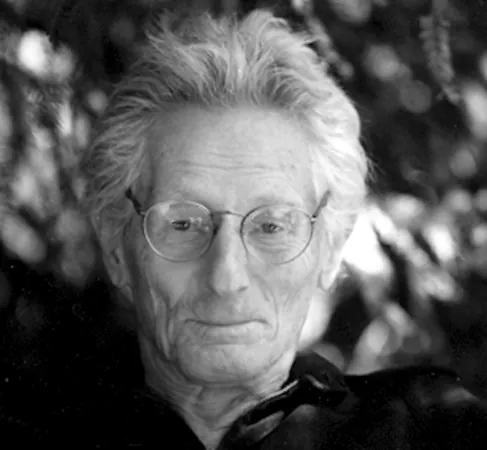
In the early 1950s, John Cunningham Lilly was a young neurophysiologist working at the US National Institute of Mental Health (NIMH) in Bethesda, Maryland, while also training in psychoanalysis. At the time, scientists were debating a surprisingly simple question: does the brain need a constant stream of sights, sounds and sensations to stay awake? If you took all that input away, would it fall asleep? Or would the mind carry on, creating its own experience?

Lilly wanted to find out for himself. In 1954, he built a tank filled with warm water, placed it in a dark, soundproof room and tried it. It was nothing like the comfortable float rooms we have today. He had to submerge himself in water and breathe through a sealed mask covering his head. Working with his colleague Jay Shurley, Lilly tested the arrangement on himself before inviting others to try it, carefully observing what happened to his mind when the outside world fell quiet.
What he described was far from a brain switching off. His mind remained awake and active. Thoughts and images grew vivid, sometimes taking on an almost dreamlike quality, even as he remained conscious. Lilly had discovered something that would fascinate him for the rest of his life: when you give the mind very little to respond to, it still has plenty to explore.
The tank’s dark twin: sensory deprivation and the Cold War
There is another side to this history, and it helps explain why float tanks still carry an air of mystery. Around the same time Lilly was exploring consciousness, other researchers were studying sensory deprivation for very different reasons. The two stories often get tangled together, but they deserve to be understood separately.
In the early 1950s, Western governments were increasingly concerned about “brainwashing”. At McGill University in Montreal, psychologist Donald Hebb conducted experiments funded by Canada’s Defence Research Board. Student volunteers spent days lying in small rooms, wearing goggles, gloves and cardboard tubes over their arms, with a constant humming sound in their ears. Many reported confusion, restlessness and hallucinations. Intelligence agencies paid attention. A CIA interrogation manual from 1963, known as KUBARK and declassified decades later, discussed sensory deprivation as a means of putting pressure on prisoners.

But those experiments were not float sessions. Hebb used isolation rooms, not float tanks, and participants remained there for days. The research focused on stress and control, rather than voluntary rest. The historical picture is still complicated, though. In a 2019 study, historian Charlie Williams describes an unpublished paper from the late 1950s in which Lilly himself discussed isolation using the language of behaviour control. Only later did Lilly become widely known for presenting the tank as a way to explore one’s own mind.
So what separates those early experiments from a float today? A very simple thing: you decide what happens. In those Cold War experiments, the researcher controlled the environment. At Ōmni, you do. The door is never locked. You can sit up, switch on the light, open the door or use your private shower whenever you like. If you prefer a little light throughout your session, you can leave it on. The quiet is yours to choose.
Lilly’s wild years: dolphins, psychedelics and Altered States
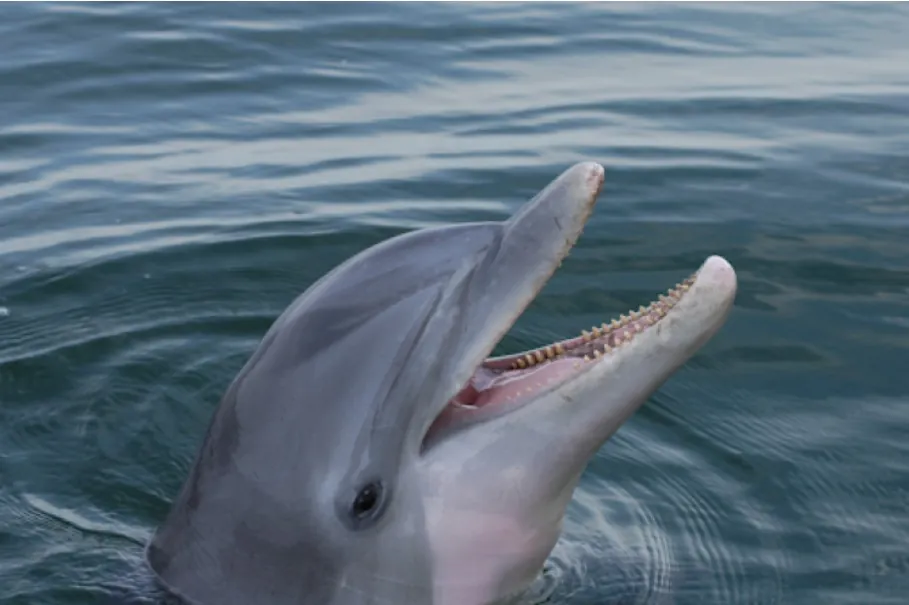
John Lilly’s curiosity didn’t stop with the human brain. In the late 1950s, he left NIMH and turned his attention to dolphins, spending years trying to understand how they communicate and publishing a popular book about his work in 1961. By the 1960s and 70s, he had become a familiar figure in the counterculture, openly writing about his own experiments combining long sessions in isolation tanks with LSD and, later, ketamine. Those were personal experiments from a very different era, not a guide to floating today. At Ōmni, the experience is simply warm water, quiet and the option of darkness. Nothing else is needed.
Lilly’s life was so unusual that Hollywood found a story in it. The 1980 film Altered States, starring William Hurt, drew inspiration from his work, following a scientist whose experiments in a tank lead to extraordinary transformations. It brought the isolation tank into popular culture, along with an image that had little in common with an ordinary float session. And if you remember Eleven’s salt-water bath in Stranger Things, that’s another memorable piece of fiction. Real floating is considerably simpler: you lie back, the water supports you, and you have some time entirely to yourself.
The 1970s: from upright mask to floating face-up
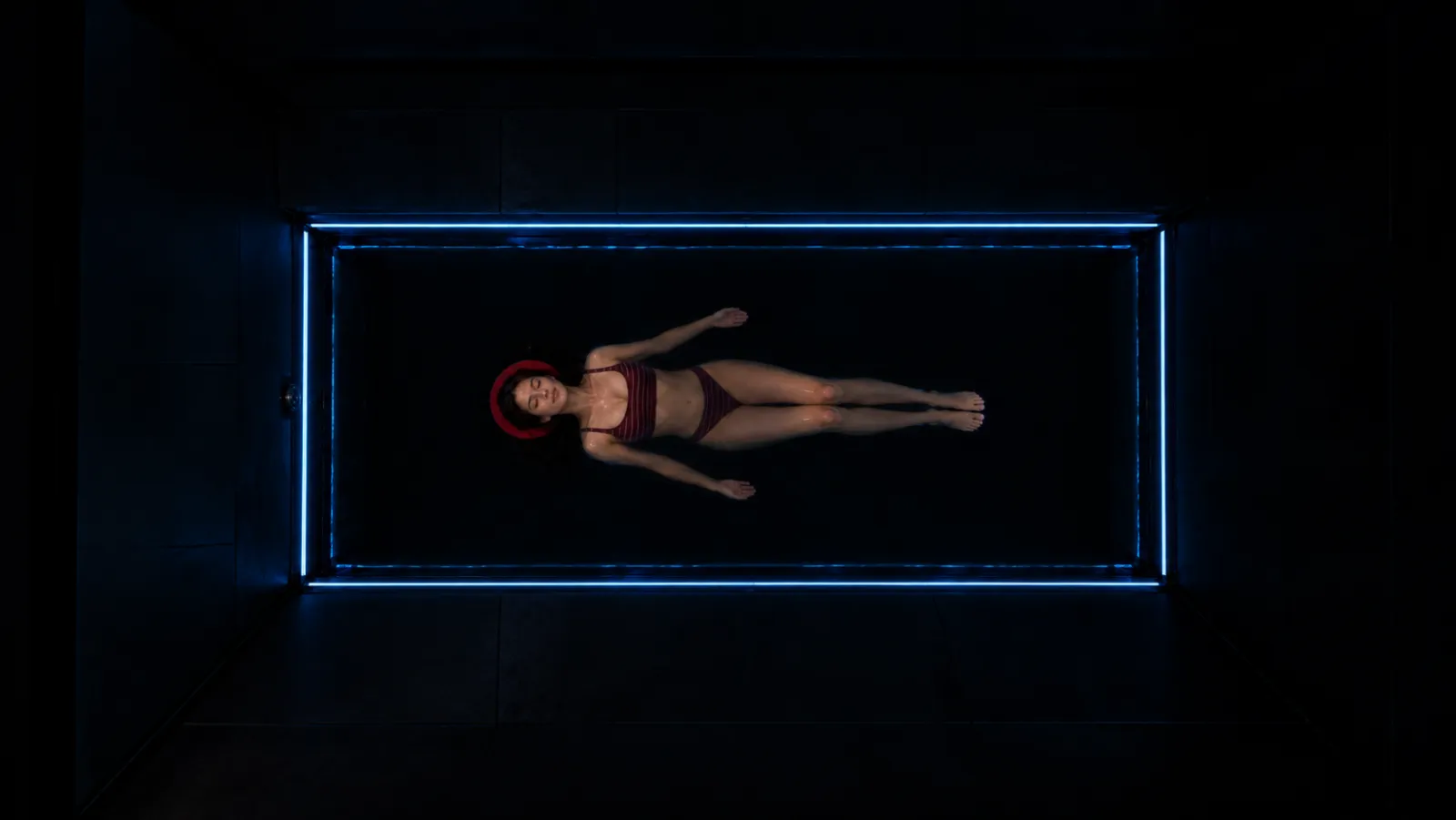
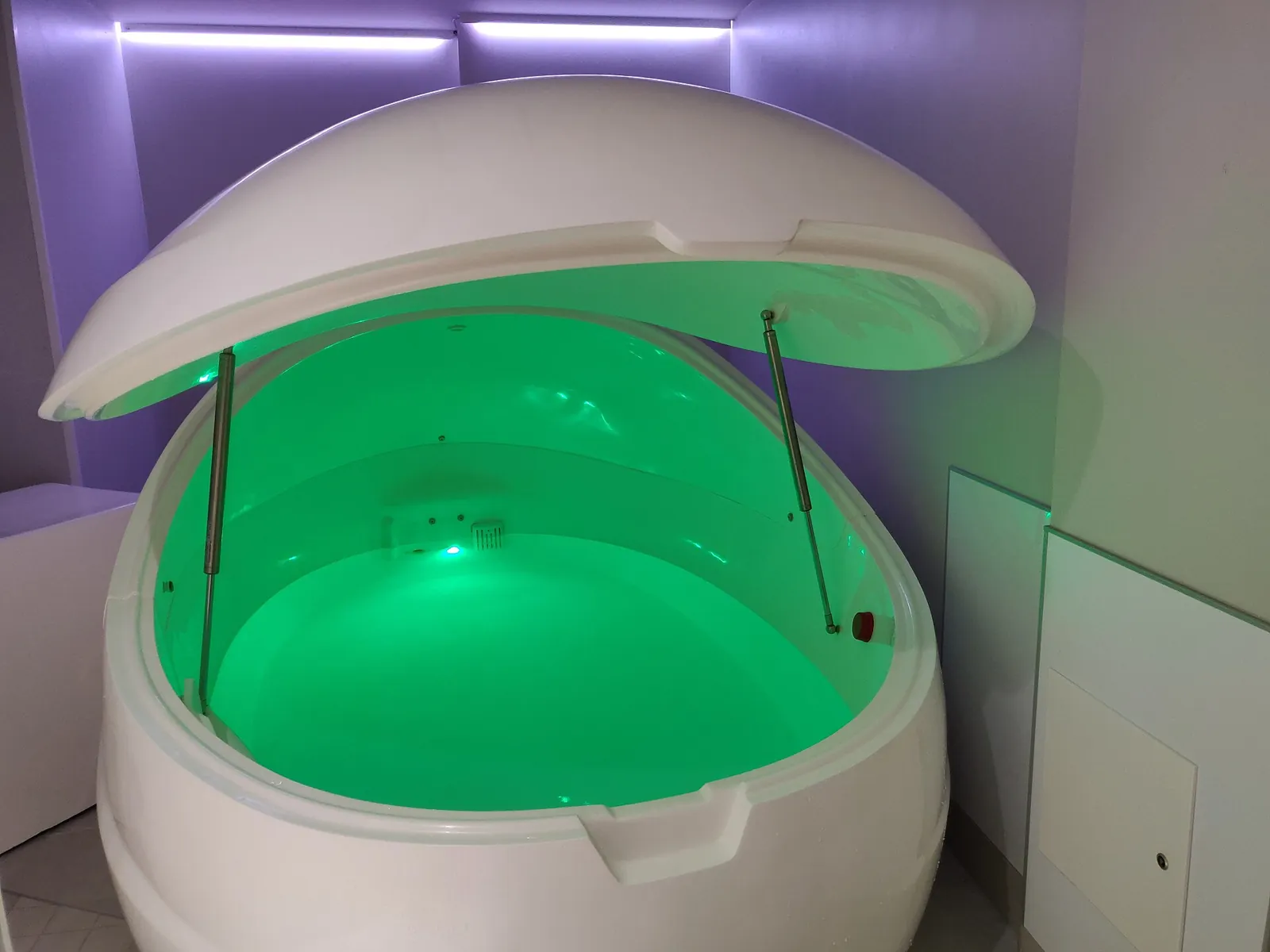
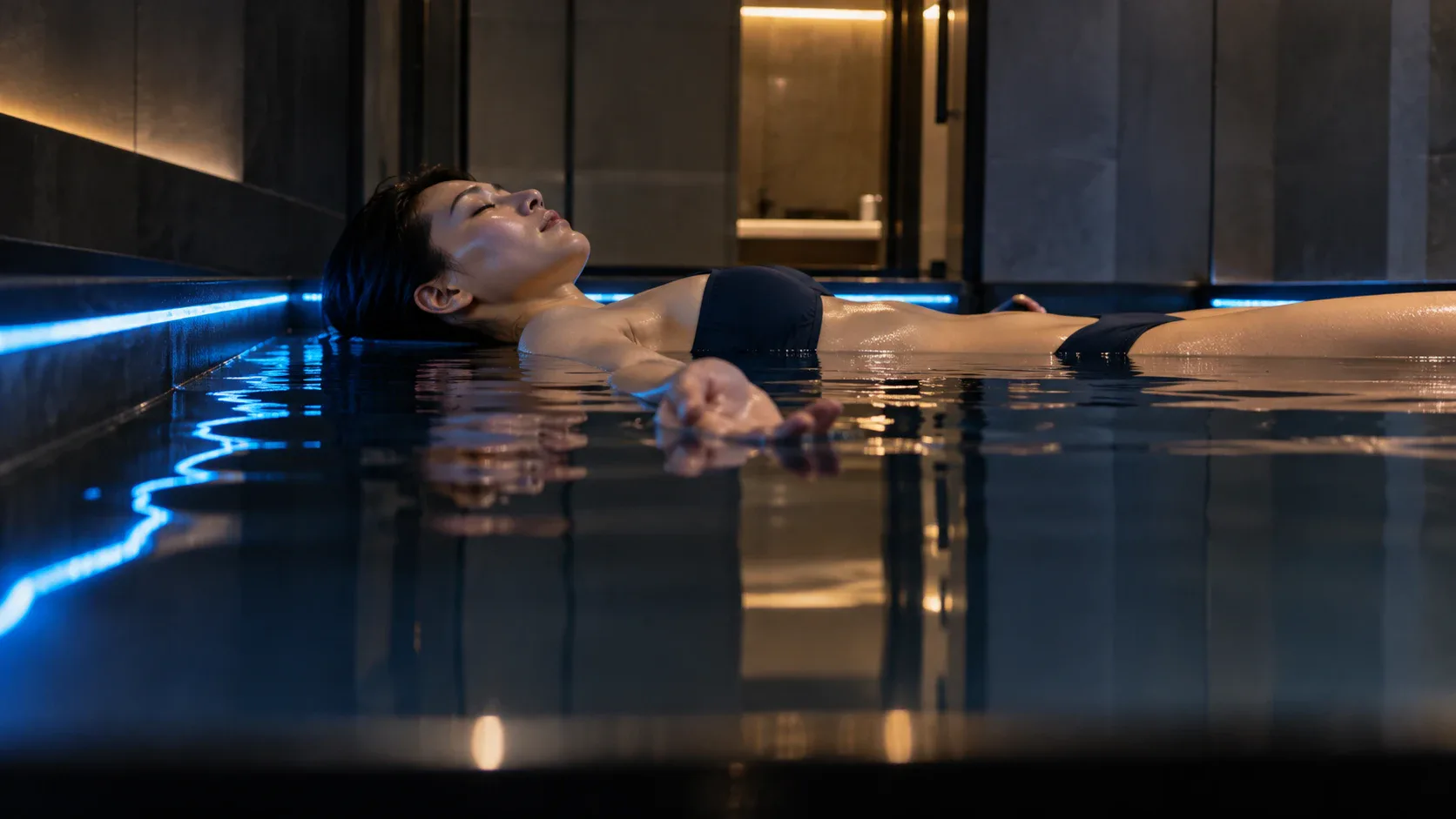
Somewhere along the way, Lilly and other experimenters realised they could do away with that cumbersome breathing mask. Dissolve enough salt in water, and the water becomes dense enough to hold a person comfortably on the surface, face-up, with their nose and mouth in the air. It was a wonderfully simple change. Instead of being submerged, you could lie back in shallow water warmed close to skin temperature, supported by dense, mineral-rich Epsom salt. That is still the basic idea behind a modern float.

In 1972, a computer programmer named Glenn Perry attended one of Lilly’s workshops in California and experienced the tank for himself. The idea stayed with him. With his partner Lee Perry and encouragement from Lilly, he began developing tanks that ordinary people could use. Their Samadhi Tank Company became one of the earliest commercial float tank makers in the early 1970s. By the end of the decade, the first float centres were welcoming the public in California. What had started as a scientist’s personal experiment was becoming something anyone could try.
From “sensory deprivation” to REST
As more scientists became interested in floating, the language around it began to change. “Sensory deprivation” sounded rather severe for an experience people were increasingly choosing for relaxation. Psychologists Peter Suedfeld and Roderick Borrie proposed a different term: REST, short for Restricted Environmental Stimulation Technique (or Therapy). Suedfeld brought together much of the early research in his 1980 book. Today, researchers generally use Floatation-REST, and the old word “deprivation” has largely fallen out of favour. There’s something fitting about that change. Many people who float say that when there’s less to see, hear and feel, they become more aware of their breathing, heartbeat and thoughts. Less stimulation doesn’t necessarily mean less experience.
What elite soldiers reportedly train in
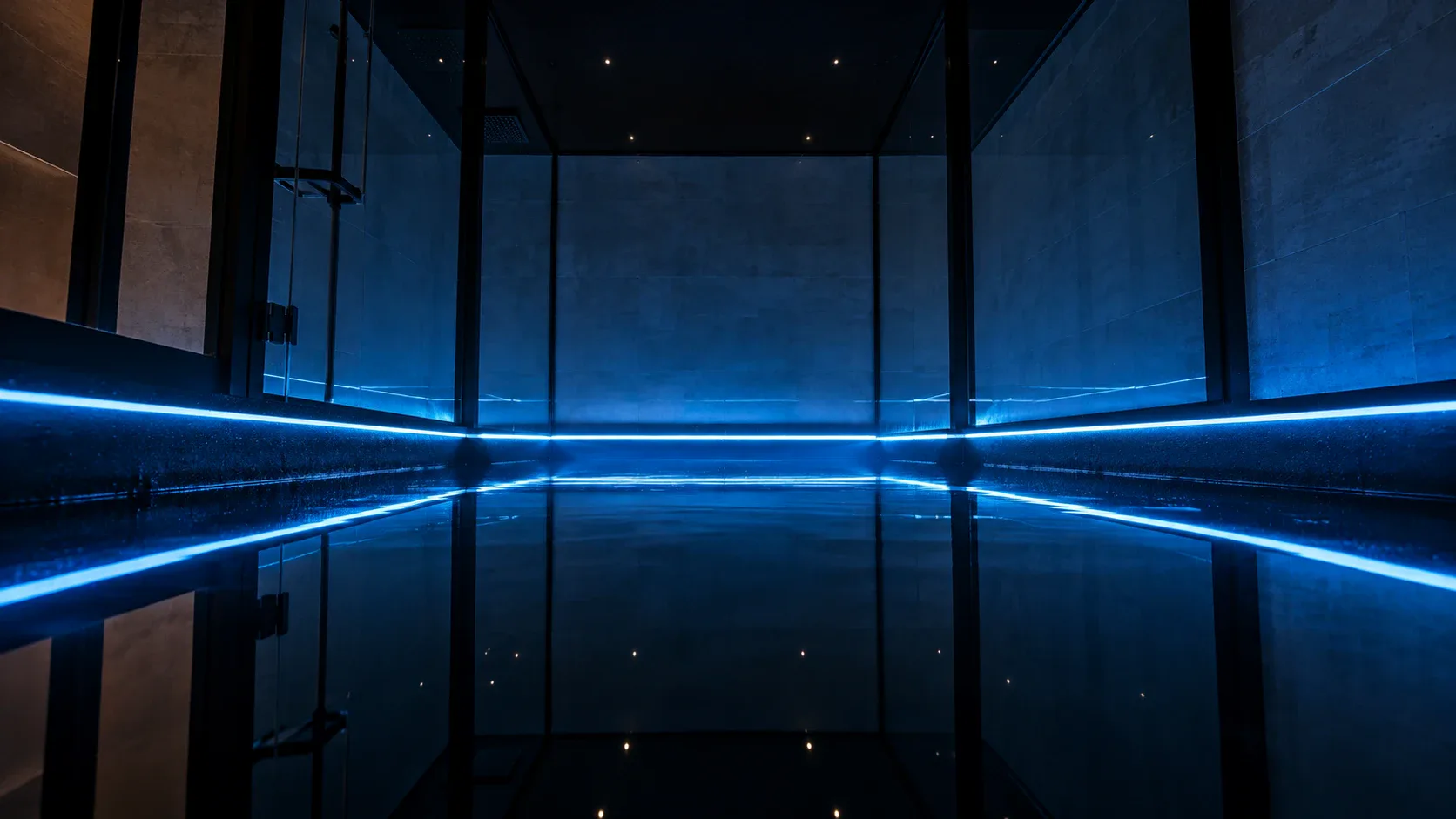
The military connection appears again in a more recent account, although it’s important to distinguish what has been reported from what has been independently confirmed. In their 2017 book Stealing Fire, Steven Kotler and Jamie Wheal describe a “Mind Gym” used by a US Navy SEAL team. According to the authors, it included float tanks and biofeedback equipment, helping operators practise entering calm, focused states more quickly. It’s a fascinating account, but it remains the authors’ account. We haven’t seen official confirmation or published data supporting it, so we wouldn’t present it as an established fact.
Beyond that story, there’s a much more accessible world of civilian floating. Professional athletes have spoken publicly about using it as part of recovery, while researchers continue to investigate what it may offer. If you’re curious about rest and recovery after exercise, you might enjoy our guide to recovery with heat, cold and float in Saigon.
The float tank today: from the lab back to the lab
There is something lovely about where this story has come full circle. Seventy years after Lilly’s first experiment, float tanks are once again being studied in laboratories, this time with modern research methods. At the Laureate Institute for Brain Research in Tulsa, Oklahoma, psychiatrist Justin Feinstein and his colleagues have been exploring how floating affects the mind and body. In one study, 50 people living with anxiety and stress-related conditions reported substantially less anxiety and an improved mood after a single session. A smaller brain-imaging study found reduced communication between regions involved in bodily sensation and the brain’s default-mode network following floating. Float therapy is now an active research field, with clear effects on stress, anxiety and muscle tension in the studies so far, and new trials are still under way. We explain how we assess the strength of such findings on the Ōmni Evidence Scale.
And what about the question Lilly asked all those years ago? His experiments suggested that the mind doesn’t simply switch off when the world grows quiet. It continues to experience, notice and sometimes dream. Today, many people come to floating for a much simpler reason. They want a little room to think, to rest, or perhaps to do nothing at all. And some leave feeling a little lighter than when they arrived.
From the lab to Thảo Điền
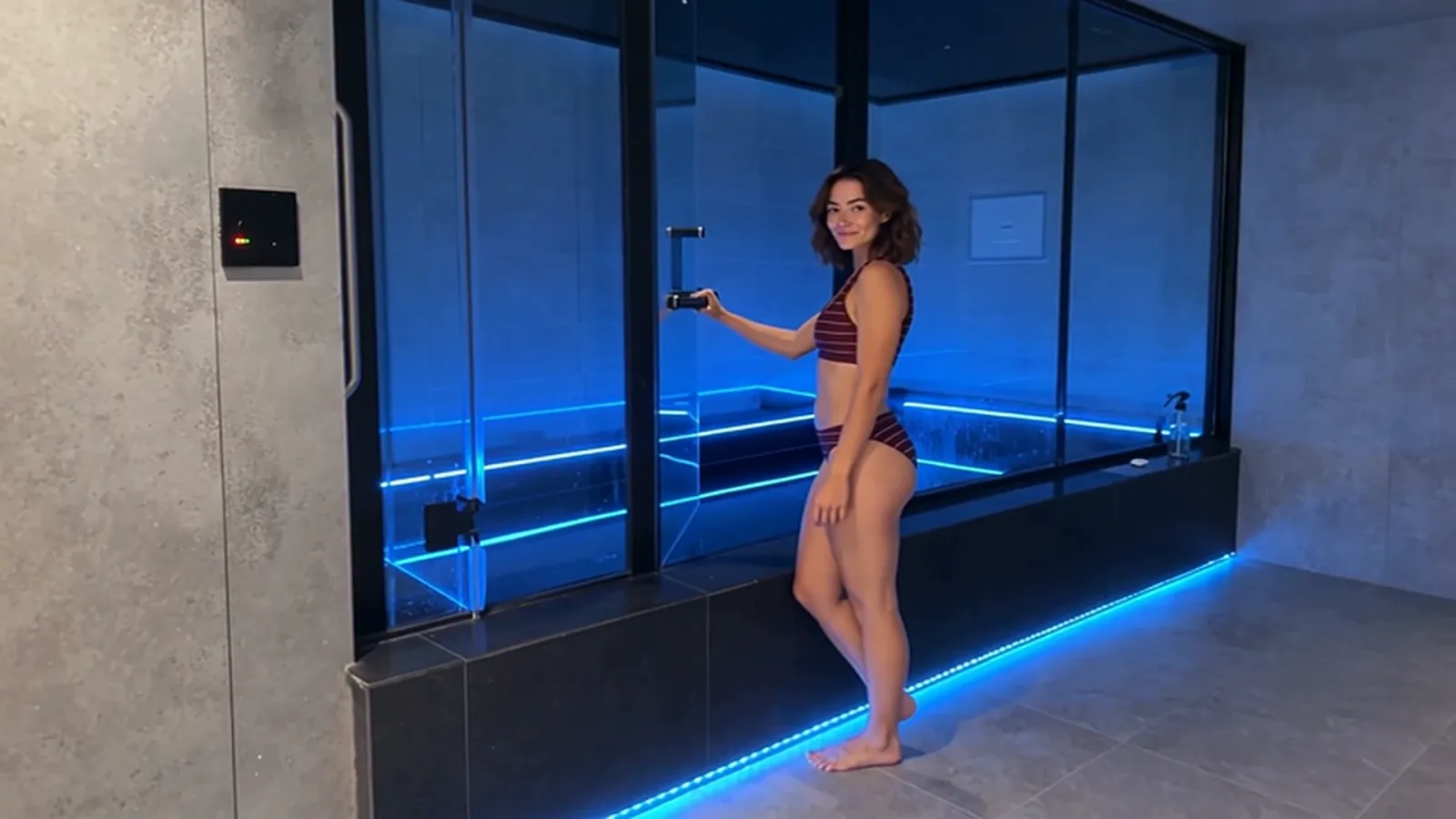
For us at Ōmni Space, this story is personal. We’ve been introducing people in Vietnam to floating since 2017, when we began as Float Vietnam. Today, you’ll find us at 16C Quốc Hương in Thảo Điền, where the experience looks quite different from Lilly’s original experiment in 1954:
- You’re in control. Your float room is private, and the door is never locked. Sit up, open it, or switch the light on and off whenever you feel like it.
- Warm and clean. The water is kept close to skin temperature, with dense Epsom salt to support your body. It’s filtered after every session, and each room has its own shower.
- No swimsuit needed and no previous experience required. We’ll show you how everything works before you begin, so you can take things at your own pace.
- Open every day from 9:00 to 21:00, with the last float starting at 20:00.
| Session | Price |
|---|---|
| Float 60 minutes | 1,500,000 VND |
| Float 90 minutes | 2,000,000 VND |
| Float for two, 60 / 90 minutes (one large square pool) | 2,200,000 / 2,700,000 VND |
| Intro Pack, 3 × 90 minutes | 3,000,000 VND |
Never tried it before? Start with what float therapy actually is, then take a look at how to prepare for your first float. There’s very little you need to do.
Still curious? Come see what your first float at Ōmni might feel like, from the moment you arrive to the moment you leave.
Float PlanRunning on empty?Take the one-minute Float Plan quiz: tell us how you feel and what you need, and get a simple plan for your first session.Make my Float PlanFrequently asked questions
Who invented the float tank?
Neuroscientist John C. Lilly built the first isolation tank at the US National Institute of Mental Health in 1954. The more comfortable, face-up version using Epsom salt water came later. In the early 1970s, Glenn and Lee Perry helped bring the idea to the public by developing some of the first commercial float tanks.
Why did John Lilly create the isolation tank?
He wanted to understand what happens to the brain when almost no information comes in through the senses. Some scientists thought it might simply shut down or fall asleep. Lilly’s experiments suggested otherwise: the mind could remain awake, active and full of its own experiences.
Did the CIA use float tanks?
There’s no good evidence that it did. During the Cold War, intelligence agencies were interested in sensory deprivation, and a 1963 CIA interrogation manual discussed its use. But the research involved isolation rooms and prolonged confinement, not the voluntary float sessions we know today. In a modern float room, you’re free to choose the light, open the door and end your session whenever you wish.
Do Navy SEALs use float tanks?
According to the 2017 book Stealing Fire, a Navy SEAL team used a “Mind Gym” equipped with float tanks. That’s how the authors describe it, but we haven’t seen official confirmation, so it’s best understood as a reported account rather than an established fact.
Is a float tank the same as a sensory deprivation tank?
Yes, they’re different names for essentially the same idea. Researchers now tend to use the term Floatation-REST. You lie face-up in warm Epsom salt water, in a private, quiet room where you can choose to turn off the lights. And unlike the old phrase “sensory deprivation” might suggest, you can turn the light back on or open the door whenever you like.
Where can I try a float tank in Ho Chi Minh City?
You can try one at Ōmni Space, 16C Quốc Hương, Thảo Điền. We’re open every day from 9:00 to 21:00. A 60-minute session costs 1,500,000 VND, while a 90-minute session is 2,000,000 VND. If it’s your first time, we’ll guide you through everything before you begin.
Written by the team at Ōmni Space in Thảo Điền. The historical details are drawn from the sources below. Where accounts differ on exact dates, we’ve used the broader period rather than suggesting more certainty than the evidence allows.
Sources
- Williams C (2019). On ‘modified human agents’: John Lilly and the paranoid style in American neuroscience. History of the Human Sciences 32(5): 84–107.
- John C. Lilly. Wikipedia (overview of his NIMH work, dolphin research and later life).
- Central Intelligence Agency (1963). KUBARK Counterintelligence Interrogation (July 1963), declassified 1997.
- Suedfeld P (1980). Restricted Environmental Stimulation: Research and Clinical Applications. New York: John Wiley & Sons.
- Kotler S, Wheal J (2017). Stealing Fire: How Silicon Valley, the Navy SEALs, and Maverick Scientists Are Revolutionizing the Way We Live and Work. New York: Dey Street Books.
- Feinstein JS et al. (2018). Examining the short-term anxiolytic and antidepressant effect of Floatation-REST. PLoS One 13(2): e0190292.
- Al Zoubi O et al. (2021). Taking the body off the mind: decreased functional connectivity between somatomotor and default-mode networks following Floatation-REST. Human Brain Mapping 42(10): 3216–3227.