
In short: You cannot order your mind to stop thinking; the harder you try, the louder it tends to get. What works is almost the opposite: reduce what keeps pulling your attention away, then practise coming back, again and again, until the spaces between thoughts begin to grow on their own. On our map of float meditation, this is Floor 2, “Quiet mind”: thoughts become fewer, then settle, and the stillness stays through the rest of the session. At home, you can train the same skill in ten minutes a day by counting your breaths.
Read in Vietnamese: Lặng đầu: tầng 2 của Thiền Nổi, khi đầu óc thôi suy nghĩ nhiều
The day can feel perfectly manageable while you are busy. Then you lie down in your apartment in Thảo Điền or District 1, the air-con hums, and suddenly everything comes back: the email you have not answered, tomorrow’s meeting, something a colleague said at lunch, a call home you keep postponing because of the time difference. You tell yourself to stop thinking, and somehow that makes the thoughts even louder. This guide looks at why that happens, what a float may do to the busy, self-focused part of the brain, and gives you a 10-minute practice to help quiet your mind tonight.

Why “just stop thinking” doesn’t work
A busy mind is probably one of the most common reasons people try meditation. And the first instruction many of us give ourselves is also the one that tends to fail: stop thinking.
The brain is built to take in and process information. Light, noise, a phone buzzing on the table, a sore shoulder: any of them can pull your attention away. And even when the room finally goes quiet, the mind usually finds something else to work on. Most often, it turns to stories about you: what you did yesterday, what tomorrow might bring, what someone else thinks of you.
Scientists link this kind of self-focused thinking to a set of brain regions called the default mode network (DMN). You can think of it as an inner narrator that always seems to have something to say. Meditation does not force that narrator into silence. Instead, you learn to notice when you have been carried away by its story, then gently return to what is happening right now. You do that again, and again. And sometimes, between one story and the next, a quiet gap appears on its own.
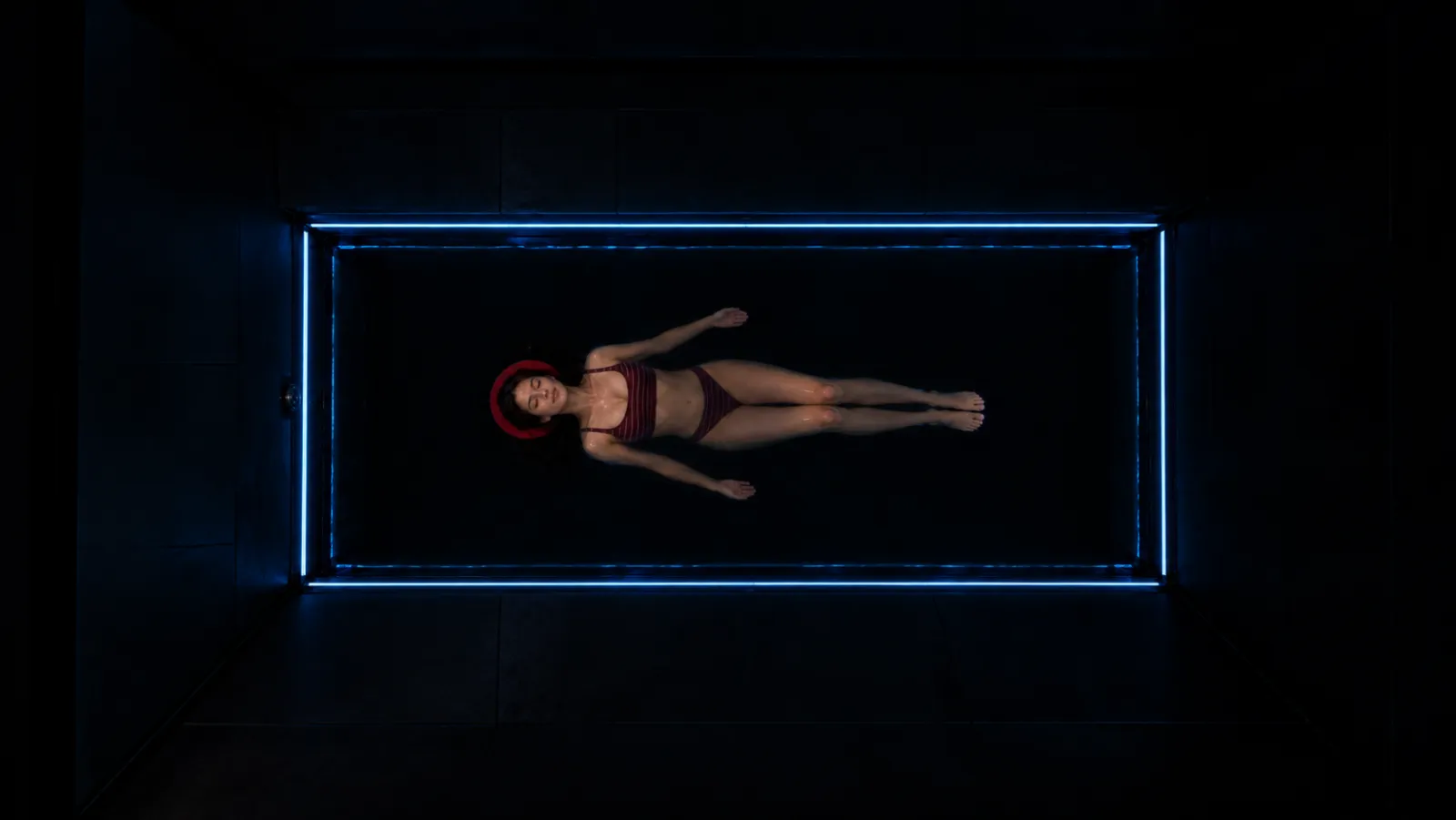
Floor 2 of float meditation: Quiet mind
On our Meditation Hub, we picture the mind as a building, with each floor representing a deeper level of stillness. Sitting meditation is the stairs; a float is the elevator. On Floor 1, “Body lets go”, the shoulders, jaw and back begin to soften, while thoughts still rise and fall in waves.
On Floor 2, those waves begin to spread further apart. Then, at some point, the surface becomes still. The quiet does not just appear for a second and disappear; it can remain until the float ends.
People who reach this floor usually describe three shifts:
- Body: the sense of the body fades and the senses seem to quiet down. You may no longer be quite sure where your hands and feet are, or where your skin ends and the water begins.
- Mind: calm, with no chain of thoughts running, yet still awake and clear rather than drowsy.
- Time: it becomes difficult to tell how long you have been lying there. A long stretch and a short one can start to feel much the same.
Ōmni’s founder describes it this way: somewhere in the middle of a float, the thoughts begin to thin out. One appears, then dissolves. Another comes, and settles too. Then a deeper quiet can open up, and the sense of time almost disappears. When the float ends, many guests feel as though they have only been lying there for 15 or 20 minutes.
This is a description of experience, not a promise. Some days the mind settles quickly; on others, it takes more time. Every float can stop at a different floor.
Why the mind goes quiet more easily in a float
Does a float make it easier to quiet your mind? Yes, it can likely help, because it reduces many of the things that keep the mind busy, all at once. The float room can be completely dark and quiet. The water sits at about 33–34 °C, close to skin temperature, so the boundary between your body and the water becomes harder to notice. About 500 kg of dense, mineral-rich Epsom salt in about 25 cm of water supports your whole body, so your muscles no longer have to work to hold you upright.
Normally, the brain keeps track of a constant stream of signals: whether you are leaning or straight, where your arms and legs are, which part of the body is carrying your weight. In the water, many of those signals become much quieter. With less outside information to keep monitoring, the mind has more room to settle.
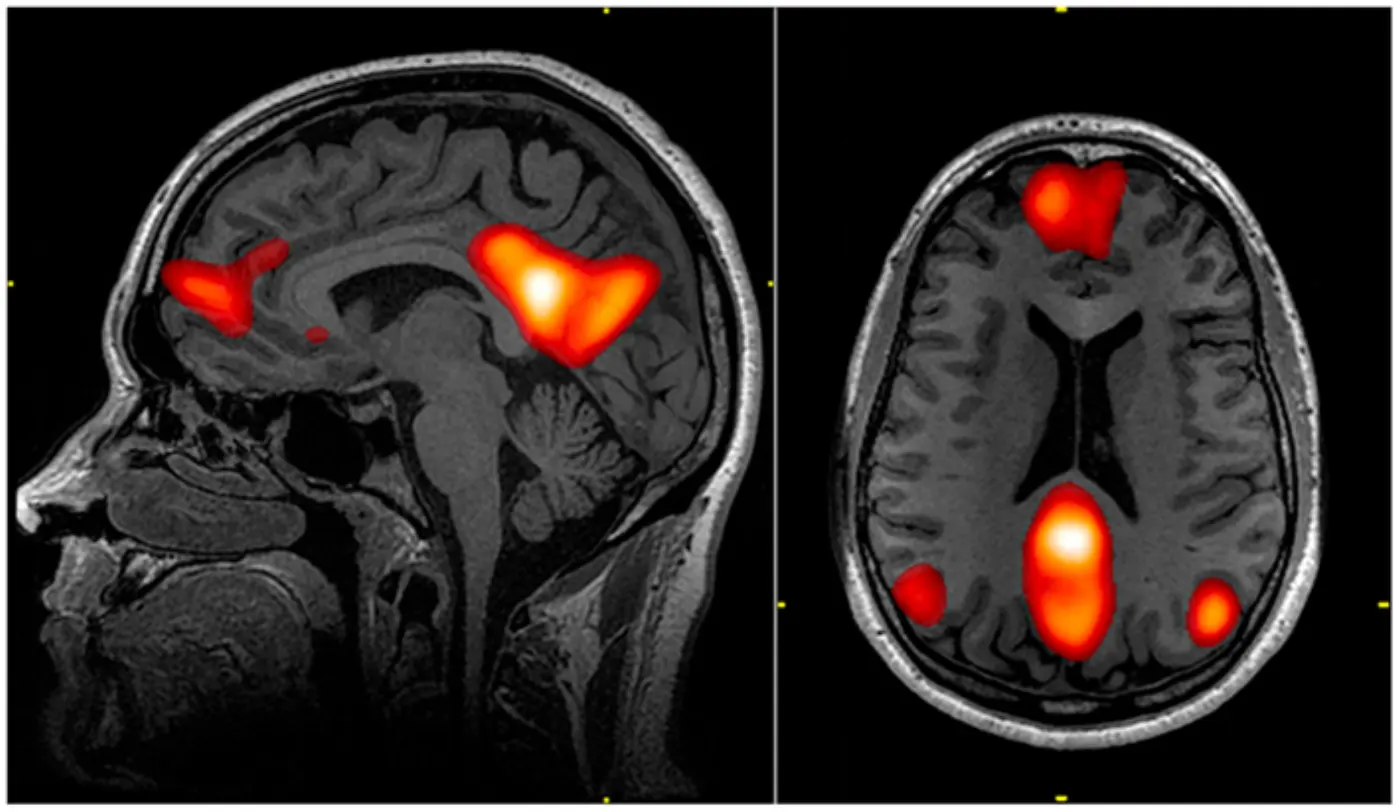
What a brain scan showed. In 2021, a team at the Laureate Institute for Brain Research in Oklahoma scanned the brains of healthy adults before and after a 90-minute float, and compared the results with 90 minutes of lying still in a zero-gravity chair. After the float, connections within the back part of the default mode network became weaker, as did the links between this network and brain areas involved in mapping the body. The team called their paper “Taking the body off the mind”. That phrase comes surprisingly close to what many floaters describe: the body is still there, but it stops taking up so much attention.
To be clear about what that means: this was the first study of its kind, and it measured the brain before and after one session, not during the float itself. The resting comparison in the chair showed a similar pattern, suggesting that simply reducing what reaches the senses may account for much of the effect. So this is an interesting clue, not proof of what the brain is doing on Floor 2.
Ōmni Evidence Scale: Early evidence, for a float calming the brain network linked to self-focused thinking. One first brain-imaging study in healthy adults, measured before and after a single session; a resting comparison showed a similar pattern.
The effect of floating on stress itself has been studied much more. In a randomised crossover study of 31 people with high anxiety sensitivity, a 90-minute float lowered anxiety and muscle tension and increased feelings of relaxation and serenity compared with a control session. In a Swedish randomised pilot trial, 65 working adults who floated 12 times in seven weeks reported less stress and anxiety and better sleep than a waiting group. Float therapy is still a young but active research field: randomised controlled trials have shown clear effects on anxiety, stress and muscle tension, and many people also report sleeping better.
Ōmni Evidence Scale: Strong evidence, for float and stress. We rate it Strong because, on top of these trials, user experience is overwhelmingly positive: in a 2025 survey of regular floaters, 92% reported relaxation and 77% less stress, echoed by thousands of reviews, Reddit threads and forums, and by athletes and public figures who float. See how we rate evidence on the Ōmni Evidence Scale.
Stairs or elevator? On a cushion, before attention can really gather, many people first spend a long time dealing with sore knees, a tired back or the effort of holding a posture. In a float, the water carries the body while darkness and quiet remove many distractions, so some people reach Floor 2 in their very first sessions. Others need a few floats before the body becomes familiar with the water. Both are normal.
A room on Floor 2: the pool seems to turn, tilt or drift
Sometimes, right in the middle of the quiet, something curious happens. You know you are lying still on the water, yet it may feel as though the whole pool is slowly turning, your body is tilting or rolling, or you are drifting gently to one side.
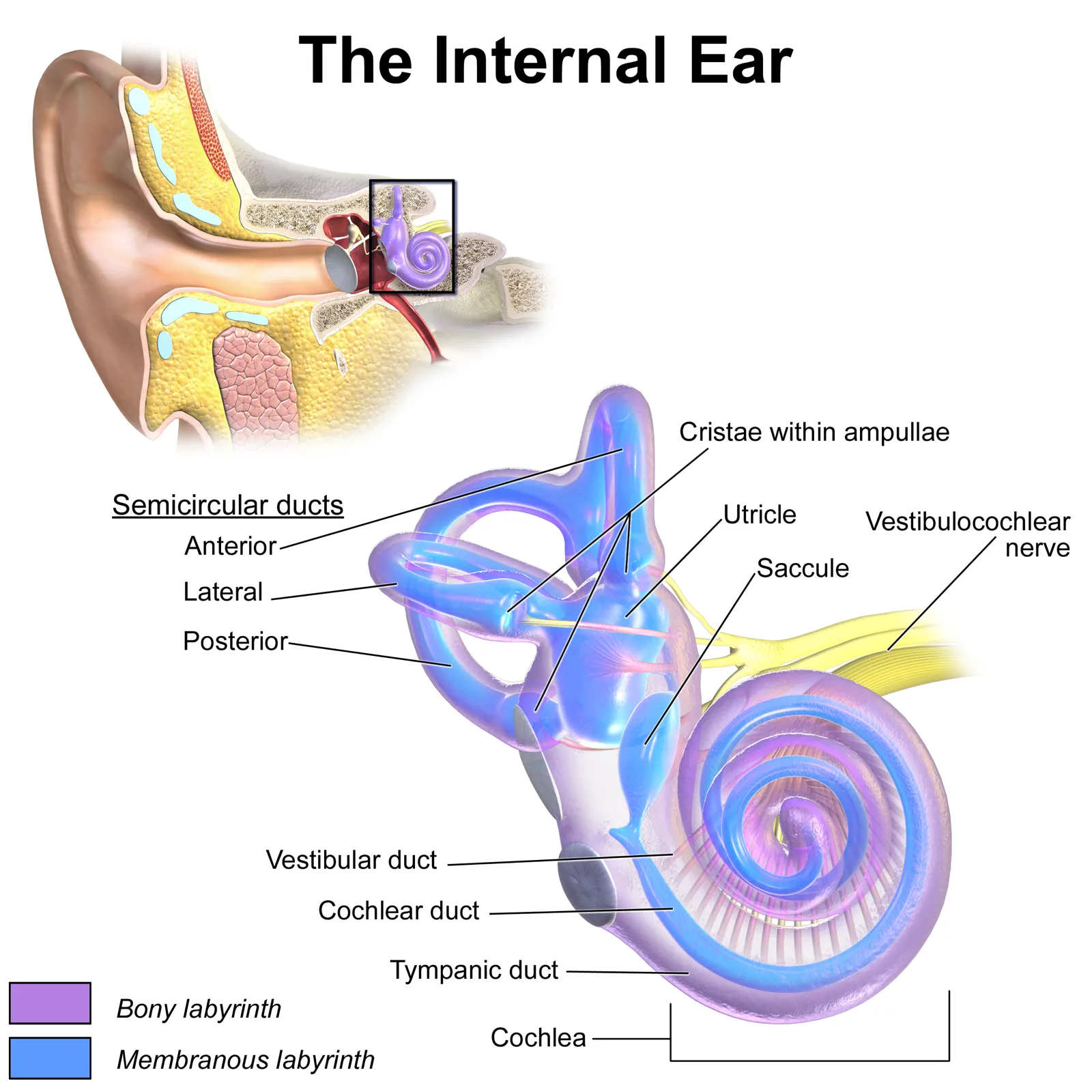
This is most likely related to how the brain senses direction and movement. In everyday life, the balance organs in your inner ear (the vestibular system), together with signals from your muscles and joints, tell the brain whether you are standing, sitting or lying down, and which way you are leaning. In a float, many familiar cues from gravity and contact become faint. With less information to work from, the brain can sometimes interpret that quiet as movement even though your body has not moved at all.
You do not need to explain it or fix it. Simply notice: “Ah, I’m feeling a spin.” Then stay still and let the sensation come and go on its own. If you would like to reorient yourself, open your eyes or switch on the light; in our rooms, you control it yourself.
A 10-minute practice to quiet your mind at home
Even without a float pool, you can train the key skill behind Floor 2: noticing where your attention has gone, then bringing it back without turning it into a fight. Four simple rules:
- Fewer inputs: choose a quiet spot, dim the lights or wear an eye mask, and leave your phone in another room if you can. Sit or lie down, whichever feels more comfortable.
- Count your breaths: on each out-breath, count silently from 1 to 7, then begin again at 1. If you lose count or suddenly find yourself at 11, simply start again.
- Come back gently: when you notice that you have drifted into another thought, simply note “thinking”. You can even smile because you noticed. Then return to the next breath. Every return is another repetition, not a failure.
- Short and regular: ten minutes a day is easier to sustain than an hour once a week. A practice does not need to be long to count.
- 0:00–1:30 · Settle: sit or lie down, take three slow breaths, and find the breath.
- 1:30–6:00 · Count: count 1 to 7 on each out-breath, returning whenever you drift.
- 6:00–9:00 · Rest: let the counting go and simply notice the small gaps.
- 9:00–10:30 · Return: move a little and gently open your eyes.
Find a quiet place. Sit on a chair or a cushion, or lie down on your back, whichever feels comfortable. Put your phone on silent and out of reach. If the room is bright, dim the lights, or simply close your eyes. [pause 5 seconds]
Take a slow breath in through your nose, followed by a long, easy breath out. Again. And once more. Then let the breath settle into its own rhythm. [pause 15 seconds]
For the next ten minutes, there is nothing you need to stop and nothing you need to achieve. Thoughts will come. That is what minds do. We are practising just one small skill: noticing where attention has gone, and gently bringing it back. [pause 5 seconds]
Feel the breath wherever it is easiest to notice. Perhaps the cool air at the nostrils, or the belly gently rising and falling. [pause 15 seconds]
Now begin counting silently on each out-breath. Breathe in, and as you breathe out, count one. Breathe in, breathe out, two. Continue up to seven, then begin again at one. [pause 40 seconds]
If you lose count, or suddenly find yourself at eleven, that is fine. Simply begin again at one. No one is keeping score. [pause 40 seconds]
At some point, you may notice that you are no longer counting. You are planning dinner, replaying a conversation, answering an email in your head. That moment of noticing is the practice. Quietly say to yourself, “thinking”, then come back to the next out-breath. One. [pause 45 seconds]
Each time you return, you are not failing. You are training. Maybe smile a little, simply because you noticed. [pause 45 seconds]
Keep counting softly, one to seven. Let thoughts pass like motorbikes on the street below your window. You can hear them without having to climb on. [pause 45 seconds]
Now, if it feels natural, let the counting fall away. Simply rest with the breath. Breathing in. Breathing out. [pause 30 seconds]
Notice the small gaps. The space at the end of an out-breath. The moment after one thought has left and before the next one arrives. You do not need to make those gaps longer. Just notice them when they are there. [pause 45 seconds]
If the mind becomes busy again, return to counting. One, on the next out-breath. There is always a way back. [pause 30 seconds]
Rest here a little longer, with whatever quiet is here. [pause 20 seconds]
Now get ready to return. Take a slightly deeper breath. Move your fingers and toes. Notice the sounds in the room. [pause 10 seconds]
When you are ready, open your eyes. Whatever happened in these ten minutes, whether the mind was busy or quiet, you practised coming back. That is how a quieter mind is built: one return at a time.
- The mind feels busier than ever? That is common in the first few minutes: you may simply be noticing more clearly what was already there. Keep counting.
- Getting sleepy? Sit up, or open your eyes slightly. At bedtime, falling asleep is fine.
- Want more guidance? Start with our breathwork guide to calm down quickly, the 10-minute NSDR (yoga nidra) reset for deep rest, or the body scan if the body feels restless. For a kinder mood around the practice, try loving-kindness meditation.
The goal is not to empty your head on command. It is to know how to come back each time you notice that you have followed a thought, without being hard on yourself for wandering.

A quiet mind is not sleep
There is an important difference between Floor 2 and falling asleep. On Floor 2, the mind can become very still while you remain awake. You still know you are here; there is simply no story running through your head. When you fall asleep, that ordinary awareness fades as well.
Further up the building, when the body rests so deeply that it feels close to sleep while part of the mind remains aware, floaters reach Floor 3, “Awake sleep”. Some describe dream-like images there, similar to the way people describe lucid dreams.
And if you do fall asleep during a float, there is no need to treat it as a miss. The water is still supporting you, and sleep is rest too.

Try it at Ōmni in Thảo Điền
Ōmni’s suggestion, drawn from the research and our guests’ experience rather than a study prescription: try ten minutes of breath counting on most days, and consider a float when your head has felt full for too long, after a heavy week or a long flight.
- Where and when: Ōmni Space – Float Saigon, 16C Quốc Hương, Thảo Điền. Open 9:00–21:00 every day; the last float starts at 20:00.
- Prices: a single 60-minute float is 1,500,000 VND; the couple room is 2,200,000 VND per room for 60 minutes. Everything else is on the price page.
- In the room: you control the lights yourself, every guest receives earplugs, and a Halo neck pillow is available if your neck would like some extra support. Allow about 30 extra minutes for a short guide and showers.
- Booking: on the booking site. Visiting Saigon? See our visitors page. New to floating? Read what float therapy is and before your first float, and see how often to float.
Safety notes
- The spinning feeling is usually the balance system responding to fewer familiar cues. If it bothers you, open your eyes or turn on the light. If you often feel dizzy outside the pool, tell us before your float and check with your doctor.
- Feeling uneasy? Quiet practice is gentle for most people, but if it makes you anxious, open your eyes, shorten the session, or count out loud.
- Not a replacement for care. Breath counting and floating do not replace treatment for anxiety, depression or insomnia, but they can support it alongside your doctor’s plan. Do not change or stop medication on your own.
- For floating: every guest fills in a health questionnaire, fully and honestly, at every visit.
If you feel overwhelmed or unsafe, call 115 for emergency help in Vietnam.
Float PlanRunning on empty?Take the one-minute Float Plan quiz: tell us how you feel and what you need, and get a simple plan for your first session.Make my Float PlanFAQ
How do I quiet my mind when I can’t stop thinking?
Do not try to force thoughts out. Reduce what keeps pulling at your attention, such as light, noise and your phone, rest your attention on the breath, and gently return each time you notice that you have drifted. With regular practice, quiet gaps tend to appear more naturally.
What is Floor 2, “Quiet mind”, in float meditation?
It is the second floor on our map of float meditation: the waves of thought become fewer and then settle until the end of the session. The sense of the body and the senses fades, and time becomes difficult to judge, while the mind remains awake and clear.
Why do I lose track of time in a float?
In the float room, light, sound and the usual feeling of gravity are greatly reduced. With so few outside cues marking the passage of time, your sense of how long you have been there can shift. Many guests feel as though they have only been floating for 15 or 20 minutes when the session ends.
Can I reach a quiet mind in my first float?
Some people experience it in their very first float; others need a few sessions to become familiar with the water. The floors are a map of what you may encounter, not a score for the session, and nobody can promise which floor a particular float will reach.
Is it normal to feel like the pool is spinning?
Yes. A gentle sense of spinning or tilting can appear when the balance system in your inner ear receives fewer familiar cues. It does not mean your body is actually moving or that something is wrong. You can stay still and let the sensation pass, or open your eyes or turn on the light to reorient yourself.
Written by the team at Ōmni Space – Float Saigon in Thảo Điền. General information, not medical advice; checked on 29 October 2026.
Sources
- Al Zoubi O, Misaki M, Bodurka J, et al. (2021). Taking the body off the mind: decreased functional connectivity between somatomotor and default-mode networks following Floatation-REST. Human Brain Mapping 42(10): 3216–3227.
- Feinstein JS et al. (2018). The elicitation of relaxation and interoceptive awareness using floatation therapy in individuals with high anxiety sensitivity. Biological Psychiatry: Cognitive Neuroscience and Neuroimaging 3(6): 555–562.
- Kjellgren A, Westman J (2014). Beneficial effects of treatment with sensory isolation in flotation-tank as a preventive health-care intervention: a randomized controlled pilot trial. BMC Complementary and Alternative Medicine 14: 417.
- Hilpert K, Chis Ster I (2025). Experiences and perceptions of regular floatation-REST users: results from an online survey. Journal of Clinical Images and Medical Case Reports 6(5): 3600.
- Float Vietnam (2026). Các tầng Thiền Nổi: bản đồ những gì bạn có thể gặp trong bể (the map of float meditation floors, in Vietnamese).
Leave a Reply