
In short: Mouth taping means placing a strip of tape over your lips at night to encourage breathing through your nose. In May 2025, a systematic review in PLOS ONE gathered every study it could find: 10 small studies, all rated poor quality. Two found that taping reduced snoring and breathing pauses in mouth-breathers with mild sleep apnoea; beyond that narrow group, the evidence for better sleep is minimal. Four studies raised serious safety concerns, especially the risk of sealing your mouth when your nose is blocked. Nasal breathing is a good habit. Taping your mouth shut is not a proven way to get there.
You have probably seen it by now: someone on TikTok puts a little strip of tape across their lips before bed and promises deeper sleep, a sharper jaw and fresher breath by morning. It looks harmless, costs almost nothing, and starts from a real idea: we are built to breathe through our noses. So, should you try it? Here is what the most complete review so far actually found, who might have a reason to be interested, who should avoid it, and what nasal breathing really does for you.
Part of the Ōmni Recovery Library · Recovery by Breath
Ōmni Evidence Scale: No good evidence yet for mouth taping as a general sleep aid. For snoring in mouth-breathers with mild sleep apnoea, two small, uncontrolled studies suggest a possible benefit: Early evidence at best. See how we rate evidence on the Ōmni Evidence Scale.
Where mouth taping comes from
Sleep researchers were studying ways to keep the mouth closed at night long before the idea went viral, partly for a practical reason: people using CPAP machines or other breathing support can lose air through an open mouth, so some studies tested tape or patches to keep the lips together. The idea reached a much wider audience in the 2020s, helped along by books such as James Nestor’s bestseller Breath and by short videos from wellness influencers and athletes. “Mouth taping” soon became a nightly ritual for many people who had never been told they had a breathing problem at all.
The appeal is easy to see. Many of us wake with a dry mouth, many of us snore (or are told we do), and the fix looks simple, cheap and natural. But “simple” and “safe” are not the same question, which is exactly what a team in Canada set out to examine.
What the 2025 review found
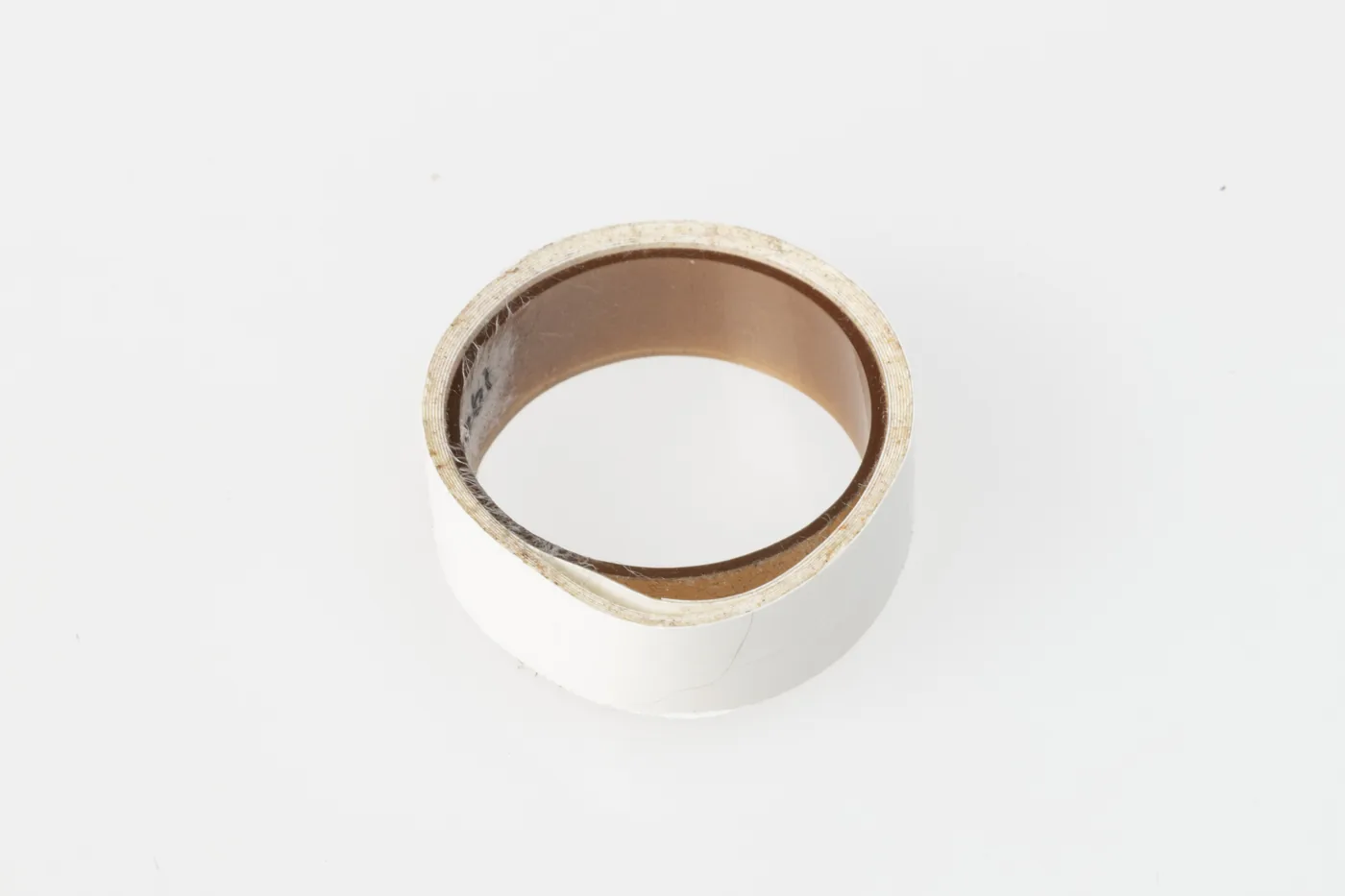
The review, led by Jess Rhee with sleep surgeon Brian Rotenberg and colleagues, was published in PLOS ONE in May 2025. The team searched the medical literature from 1999 to early 2024 for studies on mouth taping or other ways of closing the mouth during sleep in people who mouth-breathe, snore or have obstructive sleep apnoea (OSA: the airway repeatedly narrows or closes during sleep). Ten studies made the cut. Together they covered a little over 200 people, and every one of them scored “poor” on the quality scale the authors used. The studies were also too different from one another to combine into a single statistical result.
The headline results
- Breathing pauses (AHI): only two studies found a meaningful drop in the apnoea-hypopnoea index, the number of breathing pauses or shallow breaths per hour. In one, from Taiwan, the median fell from 8.3 to 4.7 events per hour after a week of taping. In the other, it fell from 12 to 7.8 with an oral patch. Both groups had mild sleep apnoea (fewer than 15 events per hour).
- Snoring: three studies reported less snoring.
- Air leaking through the mouth: three studies found that taping reduced it, which matters mainly for people using CPAP.
- With a dental device: one study found that adding tape to a mandibular advancement device (a mouthguard-like splint) helped more than the device alone; tape by itself did not change breathing pauses.
The authors’ conclusion was straightforward: the data do not support mouth taping as a sound treatment for people with sleep-disordered breathing in general. Any apparent benefit was limited to a narrow group, mouth-breathers with mild OSA, and even there the studies were small and mostly had no control group.
A closer look at the most positive study
The best-known positive result comes from Lee and colleagues at Chang Gung Memorial Hospital in Taiwan, published in 2022. Twenty adults with mild OSA who were known mouth-breathers slept with a small strip of silicone tape over their lips for a week. Breathing pauses and the snoring index both fell by about half, and 13 of the 20 counted as good responders. That is an encouraging signal. It is also a retrospective study of 20 people, 19 of them men, with no comparison group and home sleep tests rather than full lab studies. The authors themselves called it preliminary.
The risks: when your nose is not a reliable backup
Four of the ten studies explicitly warned about serious risks. The main one is simple: if your nose is blocked by a cold, allergies, a deviated septum or nasal polyps, and your mouth is taped, you have closed off your other airway. One early research team wrote that they could not advocate taping for long-term home use because of the risk of asphyxia when the nose is obstructed. Another raised the possibility of choking on stomach contents if someone regurgitates at night. Several studies simply excluded people with nasal problems, which means their results tell us little about the people most likely to be harmed.
The second risk is less obvious. Snoring is the classic sign of obstructive sleep apnoea, which is very common and often undiagnosed: a 2019 estimate in The Lancet Respiratory Medicine put the number of adults aged 30 to 69 with OSA at around 936 million worldwide. In the university’s announcement of the review, Rotenberg warned that people with undiagnosed sleep apnoea who tape their mouths may be making their symptoms worse without realising it. Tape that makes you snore a little less can also make it easier to overlook a condition that only a sleep study can confirm. In the Taiwan study, the authors noted that mouth taping is not recommended for moderate or severe OSA.
There are smaller, everyday downsides too: skin irritation or tape allergy around the lips, and discomfort from feeling unable to open your mouth.
Nasal breathing: the part that is true
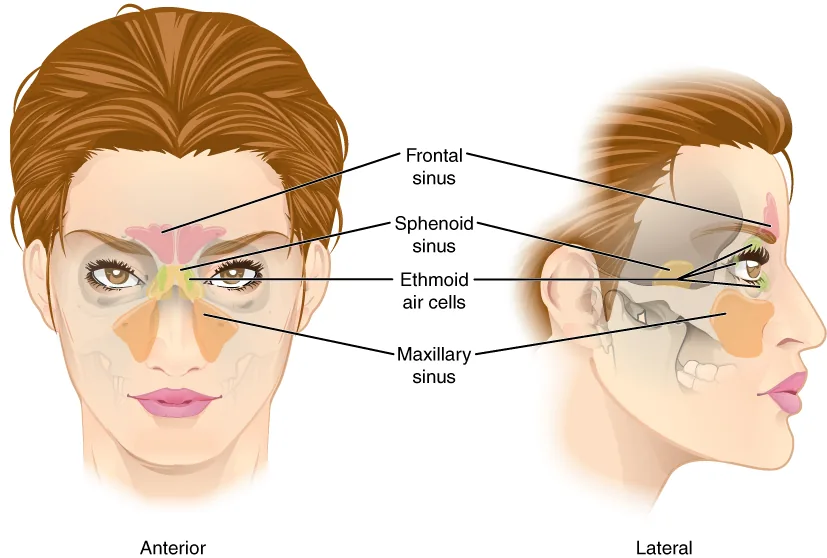
The trend borrows from a sound idea. Your nose is not just a passage for air. It filters dust and particles, warms and moistens the air before it reaches your lungs, and adds something else: the sinuses around your nose produce nitric oxide. In 1995, a Swedish team led by Jon Lundberg showed in Nature Medicine that the air inside the human paranasal sinuses contains very high levels of this gas, which may help keep the sinuses free of bacteria. Breathing through your nose also tends to be slower and calmer than breathing through your mouth.
So the more useful question is not “should I tape my mouth?” but “why am I breathing through my mouth?” A blocked nose, allergies, a structural problem or sleep apnoea all have different answers, and none of them are solved by tape. During the day, slow nasal breathing is something you can practise while awake and in control; our breathwork guide explains the main techniques and what the research on each one says.
What Ōmni thinks
We like the idea behind mouth taping: paying attention to how you breathe and letting the body’s own design do its job. We are less convinced by the tape itself. The best review so far found little benefit outside a narrow group, alongside a real risk for exactly the people who may not know they are vulnerable. If you snore loudly, wake unrefreshed, or someone has noticed you stop breathing at night, those are signs of sleep apnoea worth having tested properly rather than simply quieting with tape. If you just want to breathe more slowly and calmly, practise it while awake, when you can actually feel what is happening.
Rest is our speciality. In a float, you lie back in warm water holding about 500 kg of dense, mineral-rich Epsom salt, in a private room you can make completely dark and quiet, and many people notice their breathing slowing down naturally. Randomised trials have found clear effects on stress and anxiety. We rate it Strong because, alongside these trials, user experience is overwhelmingly positive: in a 2025 survey of regular floaters, 92% reported relaxation and 77% less stress, echoed by thousands of reviews, Reddit threads and forums, and by athletes and public figures who float. Many people also sleep better; we explain what the research says in our article on floating and sleep. A single float costs 1,500,000 VND for 60 minutes or 2,000,000 VND for 90 minutes; the couple room adds 700,000 VND for the second person. We are at 16C Quốc Hương, Thảo Điền, open 9:00–21:00 daily, from the team behind Float Vietnam, the country’s pioneer float centre since 2017.


FAQ
Does mouth taping actually work?
For most people, there is no good evidence that it improves sleep. A 2025 systematic review of 10 small, poor-quality studies found a possible benefit only for snoring and breathing pauses in mouth-breathers with mild sleep apnoea.
Is mouth taping dangerous?
It can be. Four of the 10 studies in the review warned of serious risks, chiefly suffocation if your nose is blocked, and taping may also mask undiagnosed sleep apnoea. Researchers say it is not recommended for moderate or severe sleep apnoea.
Can mouth taping help with snoring?
Three small studies reported less snoring, mostly in mouth-breathers with mild sleep apnoea. Loud snoring is also the classic sign of sleep apnoea, which only a sleep study can confirm.
Why is breathing through your nose better?
Your nose filters, warms and moistens the air, while your sinuses add nitric oxide, which may help keep them free of bacteria. Nasal breathing also tends to be slower and calmer.
What was the 2025 mouth taping review?
Rhee and colleagues, PLOS ONE, May 2025: a systematic review of studies from 1999 to 2024 on closing the mouth during sleep. It concluded that the data do not support mouth taping as a sound treatment for sleep-disordered breathing.
Written by the team at Ōmni Space – Float Saigon in Thảo Điền as part of the Ōmni Recovery Library. General information, not medical advice; sources checked on 30 October 2026.
Sources
- Rhee J, Iansavitchene A, Mannala S, Graham ME, Rotenberg B (2025). Breaking social media fads and uncovering the safety and efficacy of mouth taping in patients with mouth breathing, sleep disordered breathing, or obstructive sleep apnea: a systematic review. PLOS ONE 20(5): e0323643.
- Schulich School of Medicine & Dentistry, Western University (2025). No evidence for viral mouth taping trend, sleep expert says.
- Lee YC, Lu CT, Cheng WN, Li HY (2022). The impact of mouth-taping in mouth-breathers with mild obstructive sleep apnea: a preliminary study. Healthcare 10(9): 1755. doi:10.3390/healthcare10091755.
- Benjafield AV et al. (2019). Estimation of the global prevalence and burden of obstructive sleep apnoea: a literature-based analysis. The Lancet Respiratory Medicine 7(8): 687–698.
- Lundberg JO, Farkas-Szallasi T, Weitzberg E et al. (1995). High nitric oxide production in human paranasal sinuses. Nature Medicine 1(4): 370–373.
- van Dierendonck D, te Nijenhuis J (2005). Flotation restricted environmental stimulation therapy (REST) as a stress-management tool: a meta-analysis. Psychology & Health 20(3): 405–412.
- Kjellgren A, Westman J (2014). Beneficial effects of treatment with sensory isolation in flotation-tank as a preventive health-care intervention: a randomized controlled pilot trial. BMC Complementary and Alternative Medicine 14: 417.
- Hilpert K, Chis Ster I (2025). Experiences and perceptions of regular floatation-REST users: results from an online survey. Journal of Clinical Images and Medical Case Reports 6(5): 3600.
Leave a Reply