
In short: The earliest clear written descriptions of meditation come from ancient Indian texts such as the Upanishads. From there, Jainism, Buddhism and Yoga each developed their own paths of practice. In China, Buddhist meditation met Daoism, and out of that meeting Chan (Zen) slowly took shape. Judaism, Christianity and Sufi Islam have their own contemplative ways too. So meditation does not belong to any one religion: each tradition has its own methods, language and goal, yet they keep meeting in four places: attention, repetition, silence and letting go.
You may have tried a meditation app in a Saigon apartment, or wondered whether meditation is “a Buddhist thing”. The honest answer is more interesting than yes or no. This guide follows meditation from India’s oldest texts to the desert monks, Kabbalists, Sufis and hospital programmes of today, separating what tradition says from what historians can confirm.
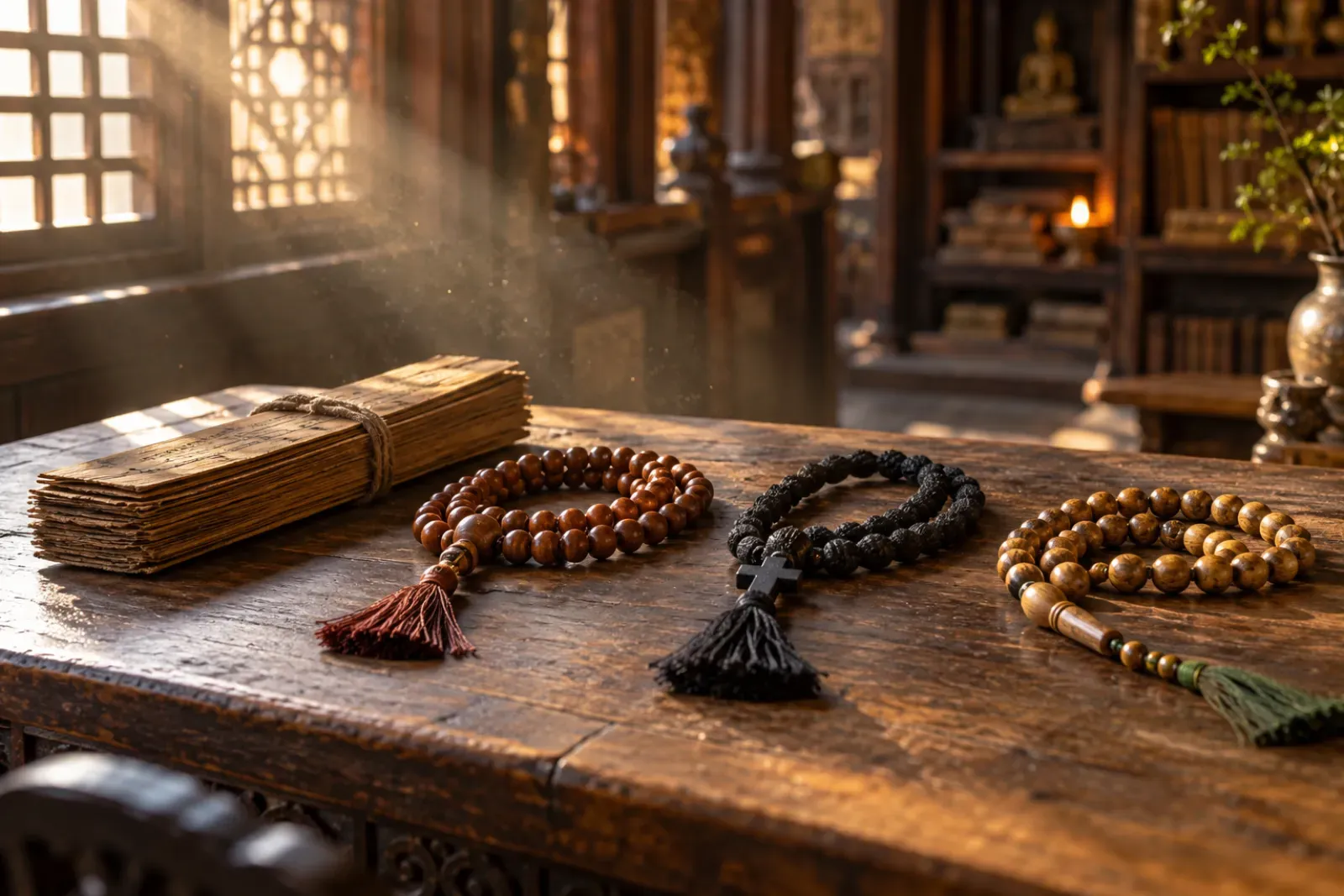
Ancient India: from faint traces to the Vedas and Upanishads
The oldest written records of meditation come from India. Before clear writing, archaeology offers only pieces of a puzzle.
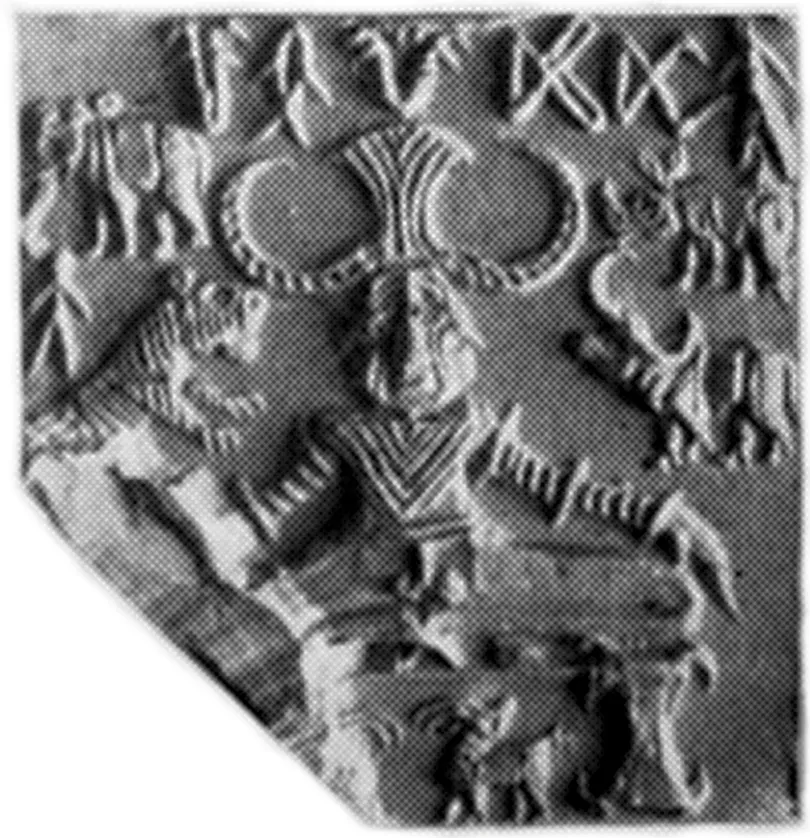
One piece often quoted as “proof” is the Pashupati seal, found at Mohenjo-daro in the Indus Valley Civilisation and dated to roughly the second half of the third millennium BCE. It shows a seated figure with knees spread, surrounded by animals, which the archaeologist John Marshall read as a yoga posture. This remains a hypothesis: the Indus script is undeciphered, and many scholars say we cannot be sure the figure is meditating, or even human. So “meditation is 5,000 years old” goes further than the evidence allows.
Firmer ground begins with the Vedas. The Rig Veda already mentions munis, silent ascetics living on the edge of society. Then come the Upanishads: early ones such as the Brihadaranyaka and Chandogya around 700–500 BCE, and later ones such as the Katha and Shvetashvatara around 300–100 BCE. These two later texts contain some of the earliest descriptions of holding the body upright, regulating the breath and drawing the senses inward, practices then grouped under the word yoga. The Sanskrit word dhyāna, deep and settled attention, also comes from this soil. In China it became chan-na, then chan: thiền in Vietnamese, zen in Japanese.
Jainism and the world of the wandering ascetics
Around the 6th–5th centuries BCE, many people in the Ganges basin left home to become śramaṇas, “those who strive”. Rather than Vedic ritual, they practised austerity, meditation and debate, seeking a way out of the cycle of rebirth. Jainism and Buddhism both grew from this movement.
Mahāvīra, the most revered figure of Jainism, lived at the same time as the Buddha. Early texts describe him standing motionless for very long periods in a practice called kāyotsarga, “abandoning the body”, which is still practised today. Jains, including lay people, also practise sāmāyika: a set period of sitting still with an even, balanced mind, as if stepping out of ordinary life to live like a monk for a while. The scholar Paul Dundas notes that Jain meditation has long been bound up with austerity rather than standing as a separate practice.
The Buddha: from calming the mind to seeing things arise and pass
Buddhism did not “invent” meditation. It put meditation at the centre of the path to liberation and carried it across Asia.
Tradition places the life of the Buddha, Siddhārtha Gautama, at around 560–480 BCE. Many scholars today place him later, in the 5th century BCE, and the dates are still debated. The Mahāsaccaka Sutta (Majjhima Nikāya 36) tells how he studied with two meditation teachers, Āḷāra Kālāma and Uddaka Rāmaputta, reached very deep states of absorption, yet felt it was not enough. Austerity pushed to exhaustion was not the way either. Then he remembered sitting as a boy under a rose-apple tree, his mind settling by itself into quiet joy, and a different direction opened.
From then on, Buddhist meditation is often pictured as having two wings. Samatha (calm) settles and unifies the mind and can lead to the meditative absorptions (jhāna). Vipassanā (insight) means seeing clearly how everything arises and passes away. Two of the most basic practices, open to any beginner, are following the breath and cultivating loving-kindness.
Over time Buddhism branched into several schools. Theravāda keeps the Pāli Canon and is widespread in Sri Lanka, Thailand and Myanmar. Some Mahāyāna writers once called it “Hīnayāna” (“lesser vehicle”), a name many Theravāda Buddhists find disrespectful. Mahāyāna spread north and gave rise to Chan/Zen. Vajrayāna took root in Tibet, with visualisation, mantra and practices aimed at recognising the nature of mind. How these branches differ gets its own article in this series.
The Yoga Sūtras and dhyāna in Hinduism
In Hinduism, meditation was set out systematically in the Yoga Sūtras of Patañjali, a collection of nearly two hundred short aphorisms. Many scholars date it to around the start of the Common Era; estimates range from a few centuries earlier to the 4th–5th century CE. Its famous opening defines yoga as the stilling of the movements of the mind.
Patañjali describes eight limbs, from ethics, posture, breath and withdrawal of the senses to concentration, meditation (dhyāna) and absorption (samādhi). Dhyāna, the seventh, is attention flowing unbroken towards one object. Posture is just one limb, a way to sit steadily for meditation, far from today’s yoga studio. Alongside sit japa (repeating sacred sounds) and bhakti (devotion). More in Meditation in Hinduism, later in this series.
China: where Daoism met Chan (Zen)
Before Buddhism arrived in China, Daoism already had its own quiet sitting. When the two met, they borrowed each other’s language within one culture, and in that setting Chan gradually took shape.
In the chapter “The Great and Venerable Teacher”, the Zhuangzi (late 4th century BCE) tells how Yan Hui reports to Confucius that he has forgotten benevolence and righteousness, then rites and music, and finally that he can “sit and forget” (zuowang): letting go of the body, setting aside the knowing of the senses and the intellect, and merging with what pervades everything. Confucius then asks to become his student. In the Tang dynasty, Sima Chengzhen (647–735) wrote a whole treatise on sitting and forgetting. Daoism also had guarding the One (shouyi), which Ge Hong (4th century) regarded as the highest practice of his time, and from the Tang onwards inner alchemy (neidan), which treats the body as a furnace and uses breath, attention on the lower belly (dantian) and stillness to refine essence, energy and spirit.
When Buddhism reached China, translators borrowed many Daoist words to express new ideas. According to tradition, Bodhidharma, who arrived in China around the 5th–6th century, was the first patriarch of Chan. Historians see him as a figure somewhere between history and legend. By the time of the Sixth Patriarch, Huineng (638–713), Chan emphasised seeing one’s own true nature directly, in the middle of ordinary life.
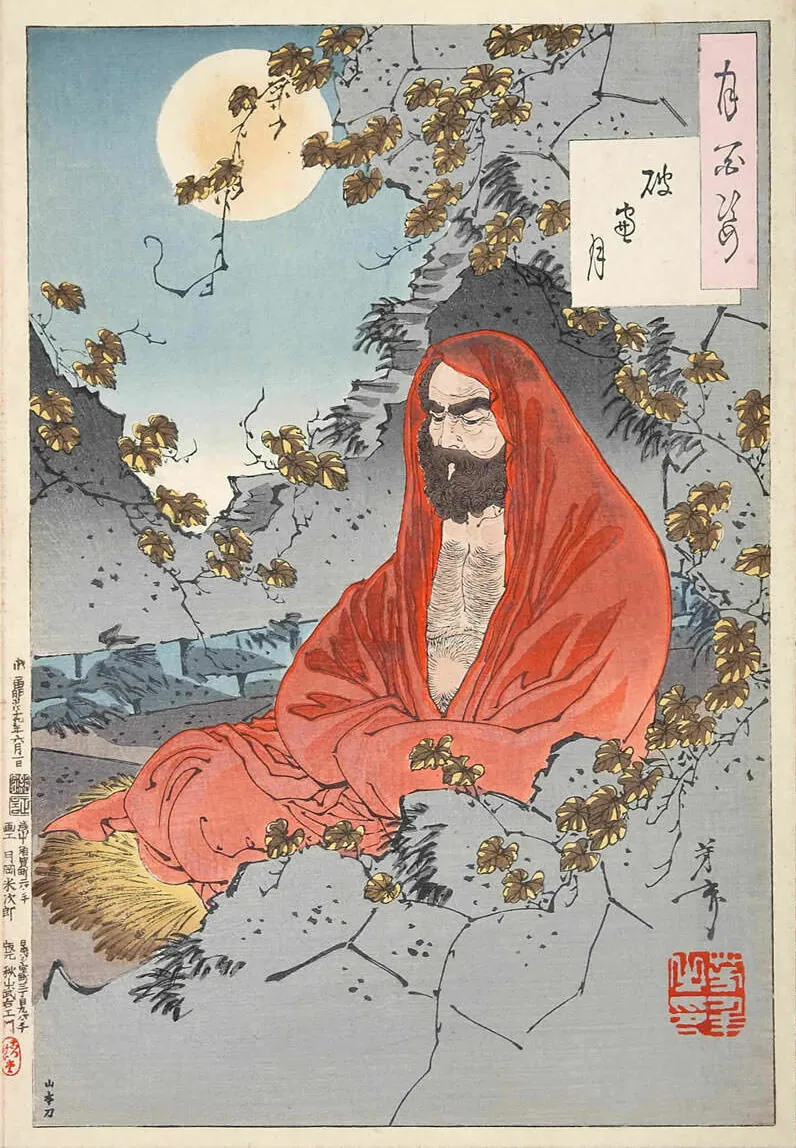
Scholars still debate whether Daoism shaped Chan deeply or mostly lent it vocabulary, with a Mahāyāna core. From China, Chan travelled to Vietnam (tradition dates Vinītaruci’s arrival at Pháp Vân pagoda to around 580, while Thích Nhất Hạnh saw the 3rd-century Khương Tăng Hội as the true beginning), then to Korea and Japan.
Judaism: Kabbalah and hitbodedut
In the late 13th century, Abraham Abulafia, a teacher in the Jewish mystical tradition of Kabbalah, taught a method of permuting the letters of the divine name: writing them, speaking them, then holding them in the mind. Breathing patterns and postures went with it; the aim was devekut, communion with God.
By the time of Rebbe Nachman of Breslov (1772–1810), hitbodedut, “being alone with oneself”, had become widespread. Each day, ideally in a field or forest, the practitioner spends at least an hour speaking to God in their mother tongue, saying everything in their heart.
Christianity: from the desert to Centering Prayer
In the 3rd and 4th centuries, many people left the cities for the Egyptian desert to live in silence and unceasing prayer. Saint Anthony is called “the father of monasticism”. The sayings of these Desert Fathers were later gathered into collections.
In the Christian East, this stream grew into hesychasm, from the Greek word for stillness. It flourished on Mount Athos in the 14th century, together with Saint Gregory Palamas. Its heart is the Jesus Prayer: “Lord Jesus Christ, Son of God, have mercy on me.” The words are repeated, sometimes in rhythm with the breath, until the prayer is felt to have “entered the heart”. The Philokalia, printed in 1782, brought this way of prayer to a wide Orthodox readership.
In the West, monks read Scripture in the slow, contemplative way known as Lectio Divina. In the 12th century, the Carthusian monk Guigo II described it as a ladder of four rungs: reading, meditation, prayer and contemplation.
In the 1970s, three Trappist monks at St. Joseph’s Abbey in the United States, William Meninger, Basil Pennington and Thomas Keating, developed Centering Prayer, drawing on the 14th-century book The Cloud of Unknowing. The practitioner sits quietly with a short “sacred word”. Each time they notice the mind has wandered off into thought, they gently return.
Sufi Islam: dhikr, the practice of remembrance
Dhikr means “remembrance”, rooted in the Qur’an’s call to remember God often (33:41). Sufis repeat a divine name or short phrase, silently or aloud together, often with the rhythm of the breath.
Each Sufi order (tariqa) has its own form of dhikr. Al-Ḥallāj (d. 922) saw dhikr as a way of keeping the soul constantly aware of God’s presence. By the time of Ibn ʿAṭāʾ Allāh (d. 1309), there were detailed manuals on how to practise it.
Meditation reaches the West and meets science
On 11 September 1893, Swami Vivekananda spoke at the World’s Parliament of Religions in Chicago, opening a wave of American interest in Indian yoga and meditation. In the 20th century, teachers from Japan, Tibet, Myanmar, Thailand and Vietnam opened centres in the West.
In 1979, Jon Kabat-Zinn founded a stress reduction programme at the University of Massachusetts Medical School, later known as MBSR (Mindfulness-Based Stress Reduction). Meditation was taught in a hospital without doctrine and began to be studied systematically. That journey gets its own article in this series.
Summary table: meditation across traditions
| Tradition | When (approx.) | Main practices | Aim, in the tradition’s own terms |
|---|---|---|---|
| Ancient India (Upanishads) | c. 700–100 BCE | Breath regulation, withdrawing the senses | Realising that ātman (the self) is one with Brahman |
| Jainism | From c. 6th–5th century BCE | Kāyotsarga, sāmāyika | Shedding karma, liberating the soul |
| Buddhism | From c. 5th century BCE | Samatha, vipassanā, loving-kindness | The end of suffering, awakening |
| Yoga (Hinduism) | Yoga Sūtras: around the start of the Common Era | Eight limbs, dhyāna, japa | Stilling the mind, liberation |
| Daoism | From the late 4th century BCE | Sitting and forgetting, guarding the One, inner alchemy | Harmony with the Dao, nourishing life |
| Chan/Zen | From c. 6th–7th century | Seeing one’s nature, kōans, “just sitting” | Seeing one’s true nature in daily life |
| Judaism | 13th century; 18th–19th century | Letter meditation, hitbodedut | Communion with God |
| Christianity | From 3rd–4th century; 14th century; 1970s | Jesus Prayer, Lectio Divina, Centering Prayer | Communion with God |
| Sufi Islam | From c. 9th–10th century | Dhikr | Awareness of God’s presence |
| Secular | From 1979 (MBSR) | Mindfulness, body scan | Less stress, living with awareness |
The common threads between traditions
Lay these paths side by side and four threads appear.
- Attention: on the breath in some places, on a holy name in others, on presence itself in others still.
- Repetition: the Jesus Prayer, the phrase of dhikr, the mantra of japa, returning again and again like waves on a shore.
- Silence: the desert of the Desert Fathers, the forest of Rebbe Nachman, the cave wall of Bodhidharma.
- Letting go: from kāyotsarga and “sitting and forgetting” to the “notice and return” of Centering Prayer.
But sharing a few practices does not mean the traditions share the same destination. A Buddhist seeks the end of suffering. A Christian seeks communion with God. A Sufi seeks the presence of God. Philosophers of religion still debate whether deep experiences share a common core or are shaped by culture and belief from the start. Our meditation hub does not place these paths on a ladder from lower to higher. Each one is told in its own language.
From these traditions to everyday life today
Today we inherit a whole library of practices gathered across the centuries. Breath meditation goes back to the Discourse on Mindfulness of Breathing. The body scan is related to the body sweeping taught on vipassanā retreats. Yoga nidra is borrowed from Indian tradition. Many Catholics still sit in Centering Prayer every morning. You do not need to change religion to meditate, nor leave your own.

Floating is another way to touch that old stillness through a very modern experience. At Ōmni Space in Thảo Điền you lie in about 25 cm of water with around 500 kg of dense, mineral-rich Epsom salt, kept at 33–34 °C, close to skin temperature, in a dark, quiet private float room. When the body no longer has to hold itself up, letting go can come faster and more gently. Think of it as a lift to the first floors of meditation: not a shortcut to awakening, and not a replacement for the paths these traditions have walked. If you would like to begin somewhere simple, start with our meditation hub.
Float PlanRunning on empty?Take the one-minute Float Plan quiz: tell us how you feel and what you need, and get a simple plan for your first session.Make my Float PlanFrequently asked questions
Is meditation a religion?
No. Meditation is a way of training the mind that appears in many religions, but it is not a religion in itself. In Buddhism it is tied to doctrine and the path to liberation, while secular programmes such as MBSR teach it without any religious belief system.
Where did meditation originate?
The earliest clear descriptions are in ancient Indian texts, especially the Katha and Shvetashvatara Upanishads, along with early Buddhist and Jain scriptures. The idea that meditation goes back to the Indus Valley Civilisation, based on the Pashupati seal, remains unproven. China also had its own forms of quiet sitting from the time of Zhuangzi.
Can Christians meditate?
Yes. Christianity has its own contemplative tradition, from the Desert Fathers and Lectio Divina to Centering Prayer, developed by Trappist monks in the 1970s. Many Catholics also practise breath meditation or secular mindfulness as a way of quieting the mind.
What is the difference between meditation and prayer?
Prayer usually turns the heart towards God to speak, ask, give thanks or listen. Meditation usually emphasises training attention and awareness, with or without a religious object. The line is not always sharp: the Jesus Prayer, dhikr and Centering Prayer are prayer and meditation at the same time.
Written by the team at Ōmni Space – Float Saigon in Thảo Điền. General information on history and culture; dates for ancient figures are scholarly estimates. Checked on 5 November 2026.
Sources
- “Upaniṣads”. Internet Encyclopedia of Philosophy.
- Bryant E. “Yoga (Patañjali)”. Internet Encyclopedia of Philosophy.
- “Buddha”. Stanford Encyclopedia of Philosophy.
- Mahāsaccaka Sutta (Majjhima Nikāya 36), translated by Thanissaro Bhikkhu. Access to Insight.
- “Zhuangzi”. Stanford Encyclopedia of Philosophy.
- Pregadio F. “Early Daoist Meditation and the Origins of Inner Alchemy”.
- Wolfson ER. “Abraham Abulafia & Ecstatic Kabbalah”. My Jewish Learning (from Jewish Mysticism: A Philosophical Overview, 1996).
- “Antonians”. Catholic Encyclopedia, New Advent.
- “Hesychasts”. Catholic Encyclopedia (1910), New Advent.
- “Jesus Prayer”. OrthodoxWiki.
- “History of Centering Prayer”. Contemplative Outreach.
- “Dhikr”. The Institute of Ismaili Studies.
- “Swami Vivekananda and his 1893 speech”. Art Institute of Chicago.
- “Mysticism”. Stanford Encyclopedia of Philosophy.