
In short: Feeling worn out after months or years in Saigon is more normal than you might think. Adjusting to a new culture, constant noise, heat, late calls home and simply missing people can all add up. Life in Ho Chi Minh City feels lighter when you build a simple rhythm around it: small weekly resets (green space, movement, people, screens off) and a deeper-rest anchor such as a float every few weeks.
Maybe it is month three and the honking is no longer charming. Maybe it is year three, you genuinely love this city, and somehow you still wake up tired. Your inbox fills while you sleep, the afternoon heat seems to follow you everywhere, and a birthday back home is happening without you. That does not mean you are doing expat life wrong. Saigon asks a lot from your senses and attention. Here is why even people who love living here can feel drained, and a reset plan that can actually fit into a real Saigon week.
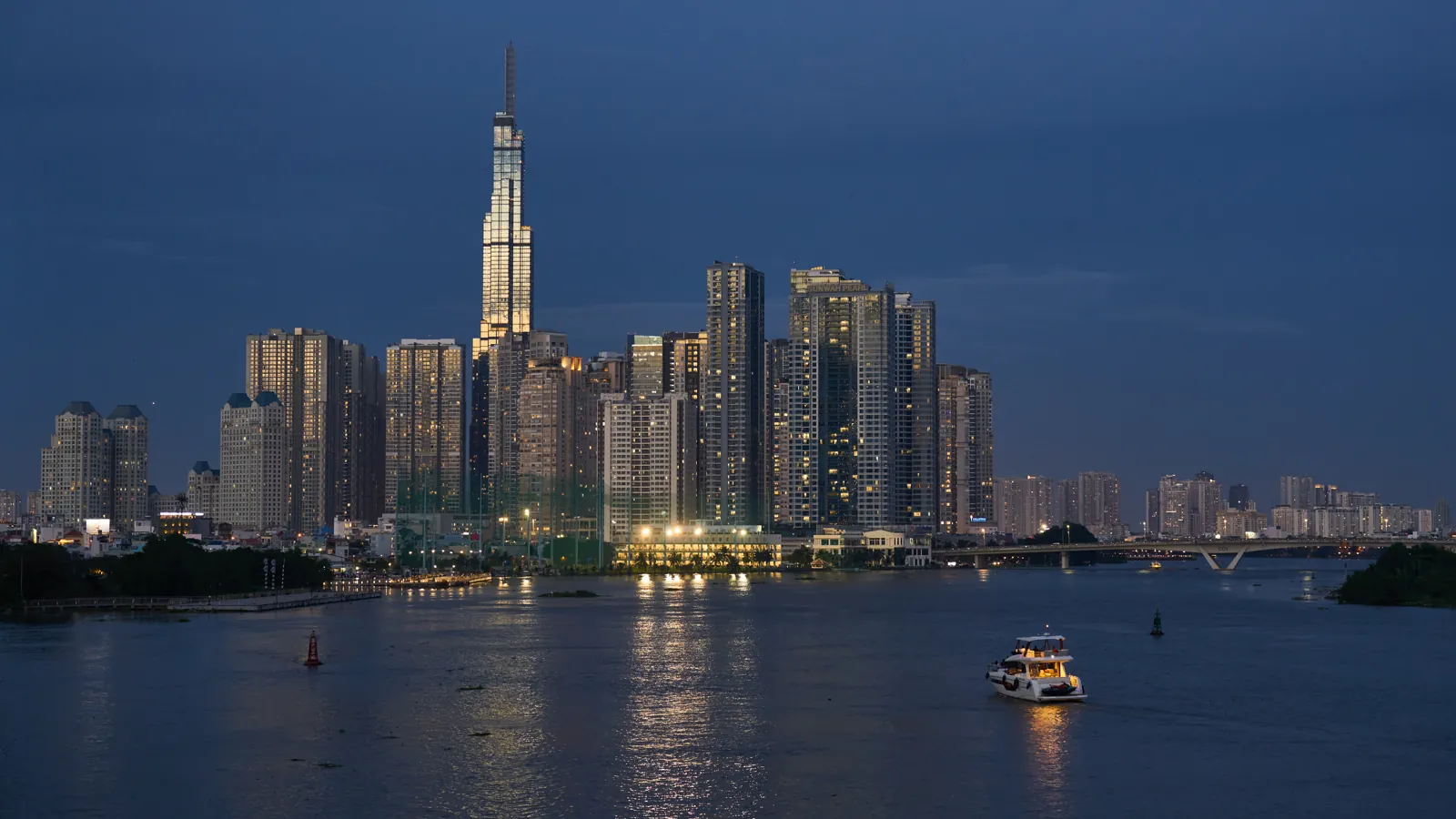
Why Saigon can tire you out, even when you love it
- Adjusting takes energy, and it rarely happens in a straight line. The classic “U-curve” moves from honeymoon to culture shock to feeling at home, but when Black and Mendenhall reviewed the evidence in 1991, the picture was mixed: many people simply do not move through neat stages. A 2005 analysis of 66 studies and 8,474 expatriates found that adjustment shapes job satisfaction, performance and whether people want to stay. So if month eighteen somehow feels harder than month two, that is common.
- You are living between two cultures. Psychologists call the strain “acculturative stress”. In John Berry’s research, people who keep their own roots while building genuine ties with the new culture (what he calls integration) feel less stress than people who become disconnected from both. It is something you can build, little by little, each week.
- The city is loud. The World Health Organization recommends road traffic noise below 53 dB on average and below 45 dB at night, to protect health and sleep. In 2017, the city measured 71 to 83.5 dB at eight major junctions, and three cyclists who rode over 1,000 km around Ho Chi Minh City averaged 78.8 dB(A) in a 2019 study. The measures are different, but the gap is hard to miss.
- The heat follows you into the night. A 2022 study of over 47,000 adults in 68 countries, using sleep trackers, found that people slept less as temperatures rose, falling asleep later and waking earlier. On very warm nights, above 30 °C, they lost just over 14 minutes on average. Our Saigon heat guide has practical ideas for the hottest months.
- Work can run on someone else’s clock. Vietnam is on UTC+7, which means calls with Europe or the US often fall late at night or very early in the morning, just when your body wants to slow down.
- The people you love may be far away. Close ties matter: across 148 studies with over 300,000 people, those with stronger social relationships were 50% more likely to survive the follow-up period. Distance does not make those relationships less important; it simply means your support network needs a little more care when you live here.
The load is real. So the rest you give yourself needs to feel real too.
Everyday tiredness, or time to talk to someone?
A reset routine is meant for the everyday load of life. Sometimes, though, what you are feeling deserves professional support too, and there is no shame in adding it. The NHS advises seeing a doctor if low mood lasts more than two weeks or you are struggling to cope. It is worth reaching out if you notice:
- low mood, poor sleep or a loss of interest in things you enjoy that lasts more than two weeks;
- drinking more, or relying on something else, to switch off at night;
- worry taking over your day, or finding yourself pulling away from people;
- any thoughts of harming yourself: this is urgent, call 115 in Vietnam or go to the nearest emergency department.
If you would rather speak with someone in English, the Australian Consulate-General in Ho Chi Minh City publishes a list of counselling and psychological services (July 2026; it does not endorse them), and other consulates keep similar lists. Some international clinics and hospitals have English-speaking psychologists and psychiatrists, while online therapy with a licensed therapist from home can let you talk in your own language. For work stress, see our burnout recovery plan; for worry, our anxiety guide.
Your Saigon reset kit
You probably do not need to disappear on a retreat. A few small things you genuinely repeat each week can go a long way.
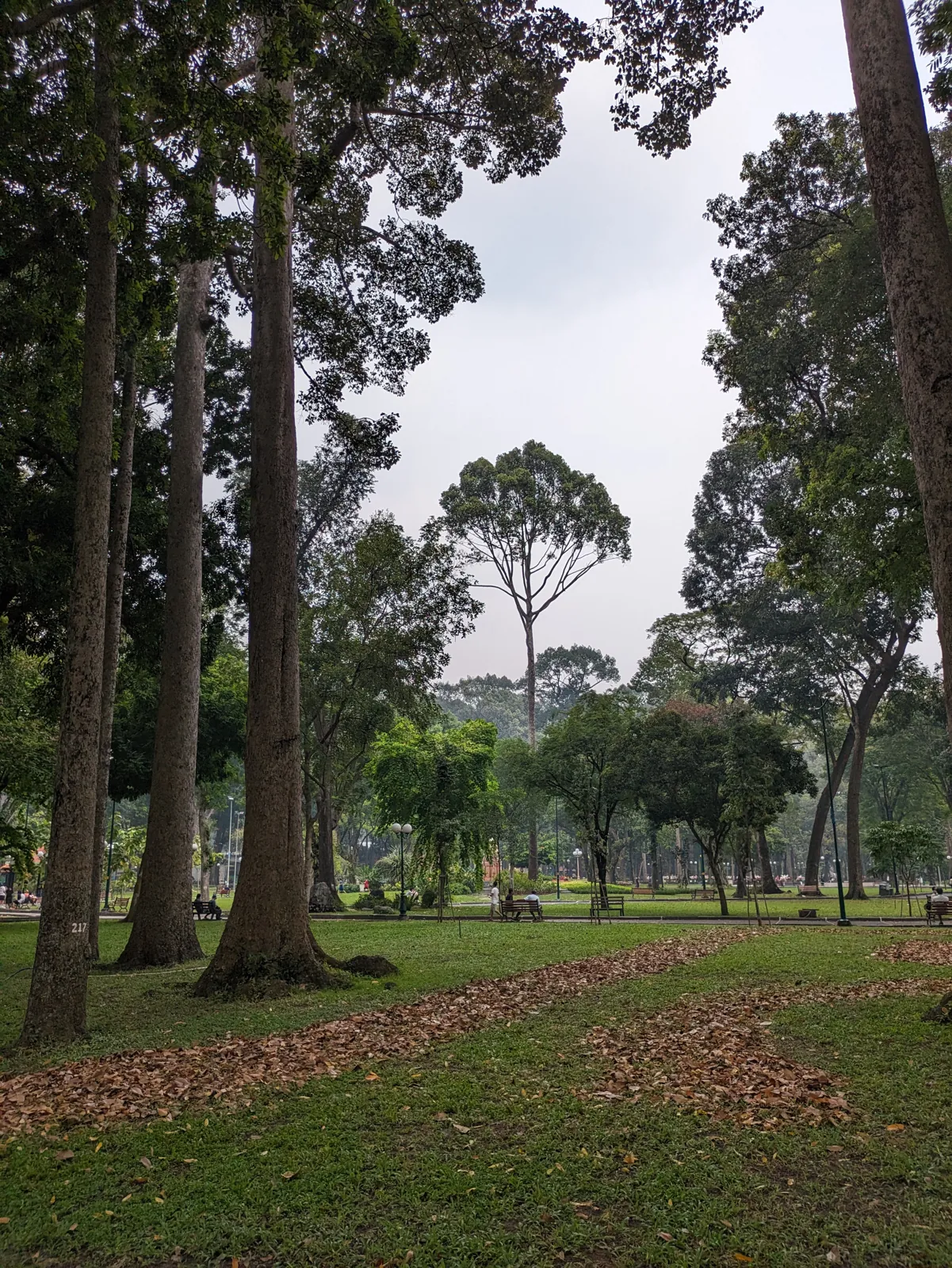
- Find some green and quiet. In a study of nearly 20,000 people in England, those who spent at least 120 minutes a week in nature were more likely to report good health and wellbeing. In Saigon, earlier is usually better: Tao Đàn Park has one of the city’s best tree canopies, while the 20-hectare Saigon Riverside Park in Thủ Thiêm, with its Creative Park section between Ba Son and Thủ Thiêm bridges, gives you space to look out across the river. Our Thảo Điền guide has a few quieter corners too.
- Move with other people. Running groups, yoga and pickleball are easy to find through community chats. Go early or after sunset, and drink before you feel thirsty.
- Play with heat and cold. A short infrared sauna and a cold plunge can make a satisfying reset after a day at a desk. Infrared sauna research is still small (we rate it Early evidence), so enjoy it as a ritual rather than expecting miracles. See our infrared sauna, cold plunge and contrast therapy guides.
- Build community in both directions. Keep one standing call home at a time that works for both sides, and choose one thing here that has nothing to do with work: a language class, volunteering, a book club. That is Berry’s integration made practical.
- Give screens some edges. Agree on a no-calls window with your team; keep the last 30 minutes before bed screen-free. Our digital detox guide has plans for an hour, a day or a weekend.
- Make room for deep rest. Alongside sleep, give yourself one deeper reset where the sensory volume gets turned right down: a float.
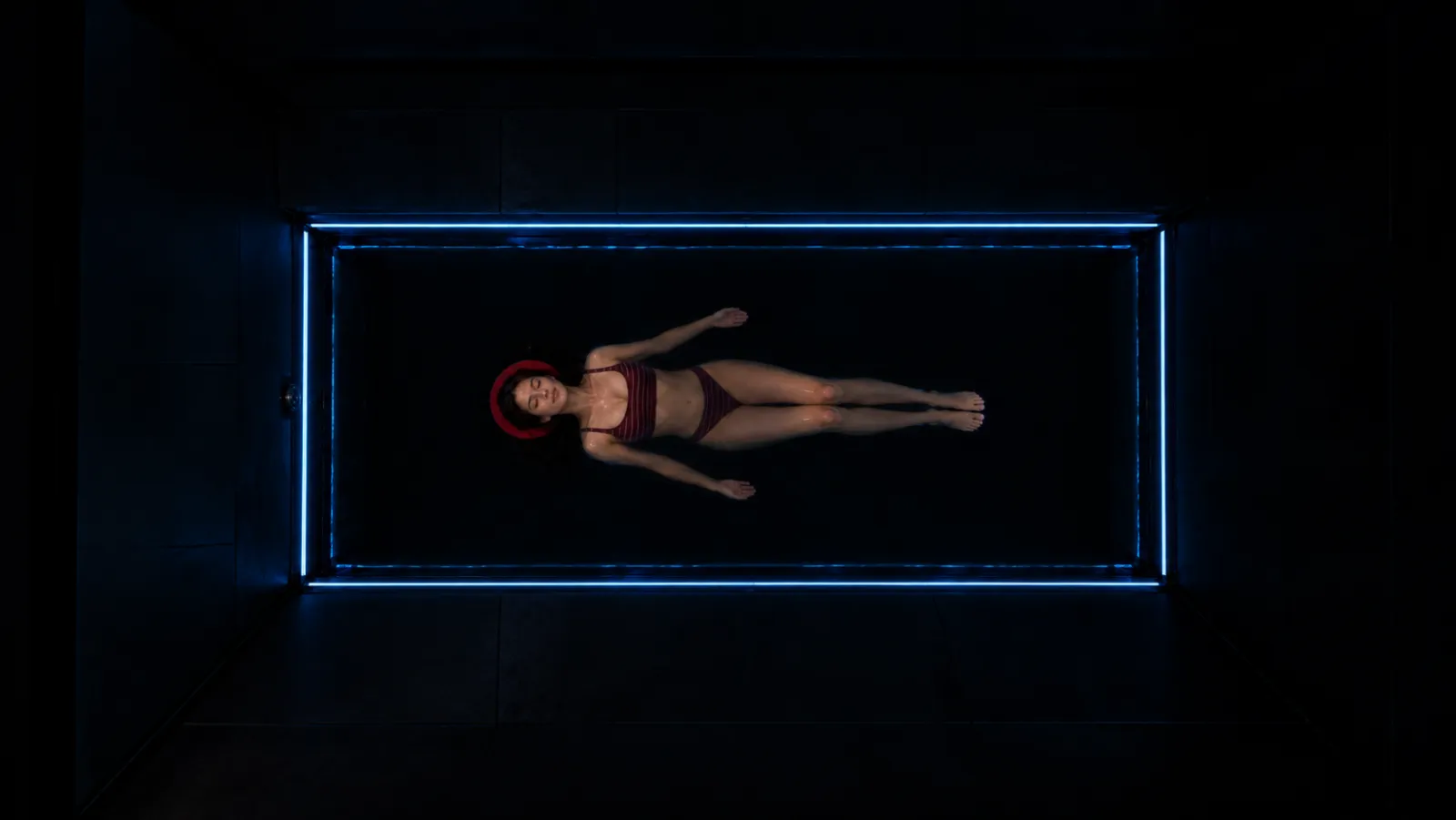
Make float your weekly or monthly anchor in Ho Chi Minh City
A normal day in Saigon is full of input: horns, heat, light, messages, two languages. A float is almost the exact opposite. You lie back in about 25 cm of water with around 500 kg of dense, mineral-rich Epsom salt, warmed to 33–34 °C, close to skin temperature. The water carries your weight, so your muscles can stop holding you up, and behind soundproof glass doors with the lights off, the city simply stops asking for your attention.
Most floats have a gentle rhythm of their own: you settle into the water, the body becomes still, thoughts begin to settle too, and then you return, often wondering where the time went. It is a kind of deep rest, closer to meditation than sleep; and if you doze off, the water continues to support you.
What the research says. In a Swedish randomised trial, 65 employees in a workplace health project floated 12 times over seven weeks. Compared with a waiting group, they reported less stress, anxiety, depression and worst pain, alongside more optimism and better sleep (a pilot study with self-reported results). In a 2018 study at the Laureate Institute for Brain Research in the US, 50 people with anxiety and stress-related conditions felt much less anxious after one hour-long float, with less stress and muscle tension (promising, though without a comparison group).
Can a float help with expat stress specifically? Yes, it can likely support it. No study has looked specifically at expats, but the idea makes sense: no noise, no light, no gravity to fight and no messages can give an overloaded nervous system a full hour with far less coming in. Many guests who live here leave feeling lighter. That calm tends to be strongest in the days after a float and gradually fades as ordinary life fills the space again, which is why a steady rhythm can make more sense than one big session.
Float therapy is still a young but very active research field: randomised controlled trials have shown clear effects on anxiety, stress, muscle tension and sleep, while new clinical studies are still under way.
Ōmni Evidence Scale: Strong evidence, for float and stress. Several trials, including one in a workplace, point in the same direction. We rate it Strong because, alongside these trials, user experience is overwhelmingly positive: in a 2025 survey of regular floaters, 92% reported relaxation and 77% less stress, echoed by thousands of reviews, Reddit threads and forums, and by athletes and public figures who float. See how we rate evidence on the Ōmni Evidence Scale.
Ōmni Evidence Scale: Early evidence, for float and sleep. Better sleep appeared as a secondary, self-reported result in small trials; many guests tell us they sleep well after a float, but the research is still thin. For expat life itself there are no studies, so we rely on the mechanism and our guests’ experience.
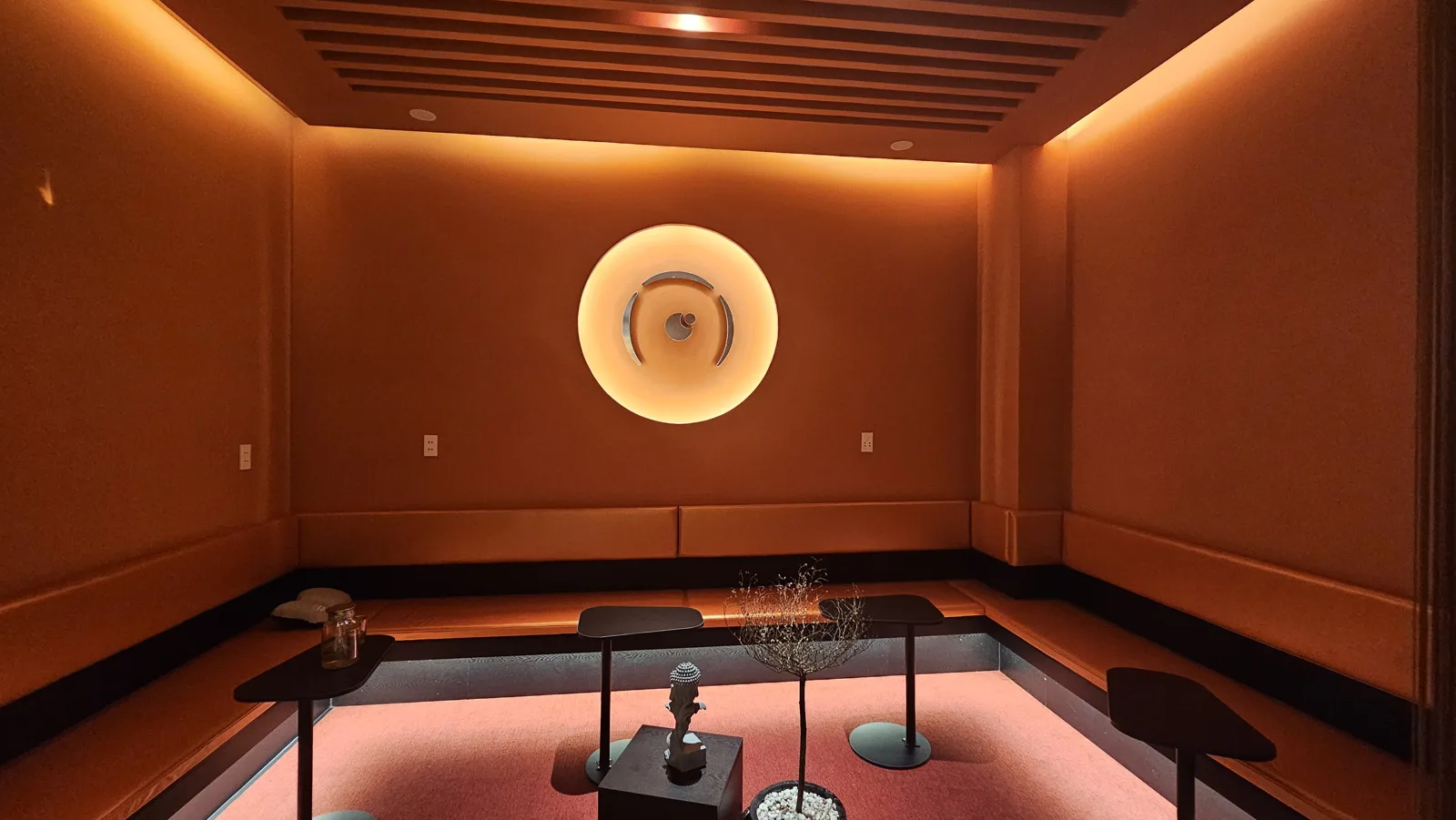
Ōmni Space – Float Saigon is at 16C Quốc Hương, Thảo Điền, and many of our regulars live right here in the city. We are open 9:00–21:00 every day and the last float starts at 20:00, so an after-work float is easy to fit in: book evening slots ahead online. Walk-ins are welcome until 18:00. Every float room is private, no swimsuit needed, with earplugs and a Halo neck pillow ready for you. We also have an infrared sauna, cold plunge and Guided Brainwaves. Our team opened Vietnam’s first float centre (Float Vietnam) in 2017; guests rate us 4.9 ★ · 73 Google reviews (7 November 2026). You can find current prices on the price page.
A simple reset rhythm for a Saigon week
Think of this table as Ōmni’s suggestion, drawn from the research above and what seems to work for our regular guests, not as a prescription.
| How often | Small reset | Why it helps |
|---|---|---|
| Every day | 10 quiet minutes after the late call; water and shade at midday | A little buffer between work and sleep |
| Every week | One green morning; one movement session with others; one call home | Nature, movement and connection |
| Every week, if you like | Sauna and cold plunge, or one screen-free evening | A clear “off” signal after a long week |
| Every two to four weeks | A 60–90-minute float | A full hour with almost no input; your deep-rest anchor |
| In hard stretches | Float weekly for a while: deadlines, a move, a month you miss home | A little more support when the load rises |
New to floating? Start with three floats fairly close together, then find your rhythm at one to three a month; see how often should you float. You can also read what float therapy is and before your first float so you know what to expect.
Never floated before? See what your first float is like →
FAQ
Is it normal to feel exhausted after moving to Saigon?
Yes. A new culture, daily noise, heat, late calls and distance from family all take energy, and adjustment often comes in waves, even after you have been here for years.
How do expats in Ho Chi Minh City deal with stress?
A simple rhythm helps: green space and movement each week, connection both here and at home, clearer limits around screens and late calls, and a deeper reset such as a float every few weeks.
Where can I find an English-speaking therapist in Ho Chi Minh City?
Start with the counselling list from the Australian Consulate-General in HCMC or your own consulate, ask an international clinic, or speak online with a licensed therapist from home. In an emergency, call 115.
How often should I float for stress?
Try three floats fairly close together, then every one to three weeks, with weekly floats for a while during harder periods. A steady rhythm matters more than one long session.
Can I float in the evening after work?
Yes. Ōmni Space in Thảo Điền is open until 21:00 and the last float starts at 20:00. For evening slots, it is best to book ahead online.
Will floating help me sleep better in Saigon’s heat?
It may help. Small trials reported better sleep and many guests tell us they sleep well afterwards, but the evidence is still early. A cool, dark bedroom still matters too.
Written by the team at Ōmni Space – Float Saigon in Thảo Điền. General information, not medical advice; checked on 27 October 2026.
Sources
- Black JS, Mendenhall M (1991). The U-curve adjustment hypothesis revisited: a review and theoretical framework. Journal of International Business Studies 22(2): 225–247.
- Bhaskar-Shrinivas P, Harrison DA, Shaffer MA, Luk DM (2005). Input-based and time-based models of international adjustment: meta-analytic evidence and theoretical extensions. Academy of Management Journal 48(2): 257–281.
- Berry JW (2005). Acculturation: living successfully in two cultures. International Journal of Intercultural Relations 29(6): 697–712.
- World Health Organization Regional Office for Europe (2018). Environmental Noise Guidelines for the European Region.
- Tuổi Trẻ News (14 July 2017). Noise stresses out Ho Chi Minh City residents.
- Gelb J, Apparicio P (2019). Noise exposure of cyclists in Ho Chi Minh City: a spatio-temporal analysis using non-linear models. Applied Acoustics 148: 332–343.
- Minor K, Bjerre-Nielsen A, Jonasdottir SS, Lehmann S, Obradovich N (2022). Rising temperatures erode human sleep globally. One Earth 5(5): 534–549.
- Holt-Lunstad J, Smith TB, Layton JB (2010). Social relationships and mortality risk: a meta-analytic review. PLoS Medicine 7(7): e1000316.
- NHS. Low mood, sadness and depression.
- Australian Consulate-General Ho Chi Minh City, DFAT (July 2026). Contact list: counselling and/or psychological services, Vietnam.
- White MP et al. (2019). Spending at least 120 minutes a week in nature is associated with good health and wellbeing. Scientific Reports 9: 7730.
- Vietnam Coracle. Saigon’s parks and open spaces.
- Tuổi Trẻ News (January 2025). Thu Duc City opens riverside Creative Park.
- Kjellgren A, Westman J (2014). Beneficial effects of treatment with sensory isolation in flotation-tank as a preventive health-care intervention: a randomized controlled pilot trial. BMC Complementary and Alternative Medicine 14: 417.
- Feinstein JS et al. (2018). Examining the short-term anxiolytic and antidepressant effect of Floatation-REST. PLoS One 13(2): e0190292.
- Hilpert K, Chis Ster I (2025). Experiences and perceptions of regular floatation-REST users: results from an online survey. Journal of Clinical Images and Medical Case Reports 6(5): 3600.