
In short: Loving-kindness meditation (metta) is a simple practice of quietly sending kind wishes: first to yourself, then to someone you love, someone you barely notice, someone you find difficult, and finally to everyone. Four phrases are enough: “May I be at peace. May I be healthy. May I be happy. May I live with ease.” You do not have to make yourself feel anything special. Research rates it Promising for increasing positive emotions, with early evidence that it may also help us feel closer to others and treat ourselves more kindly.
Read in Vietnamese: Thiền tâm từ (metta) cho người mới: bài 10 phút gửi lời tử tế
Maybe you moved to Saigon for work. Maybe you are only here for a few weeks, while your family and oldest friends are seven time zones away. After a long day, you replay the one thing you got wrong in a voice you would never use with a friend. And then there is that colleague, landlord or driver who somehow gets under your skin before they have even said a word. This guide gives you a 9-minute loving-kindness meditation you can press play on tonight, in Đức’s voice, along with what the research really says and a simple way to use the practice at the beginning or end of a float in Thảo Điền.
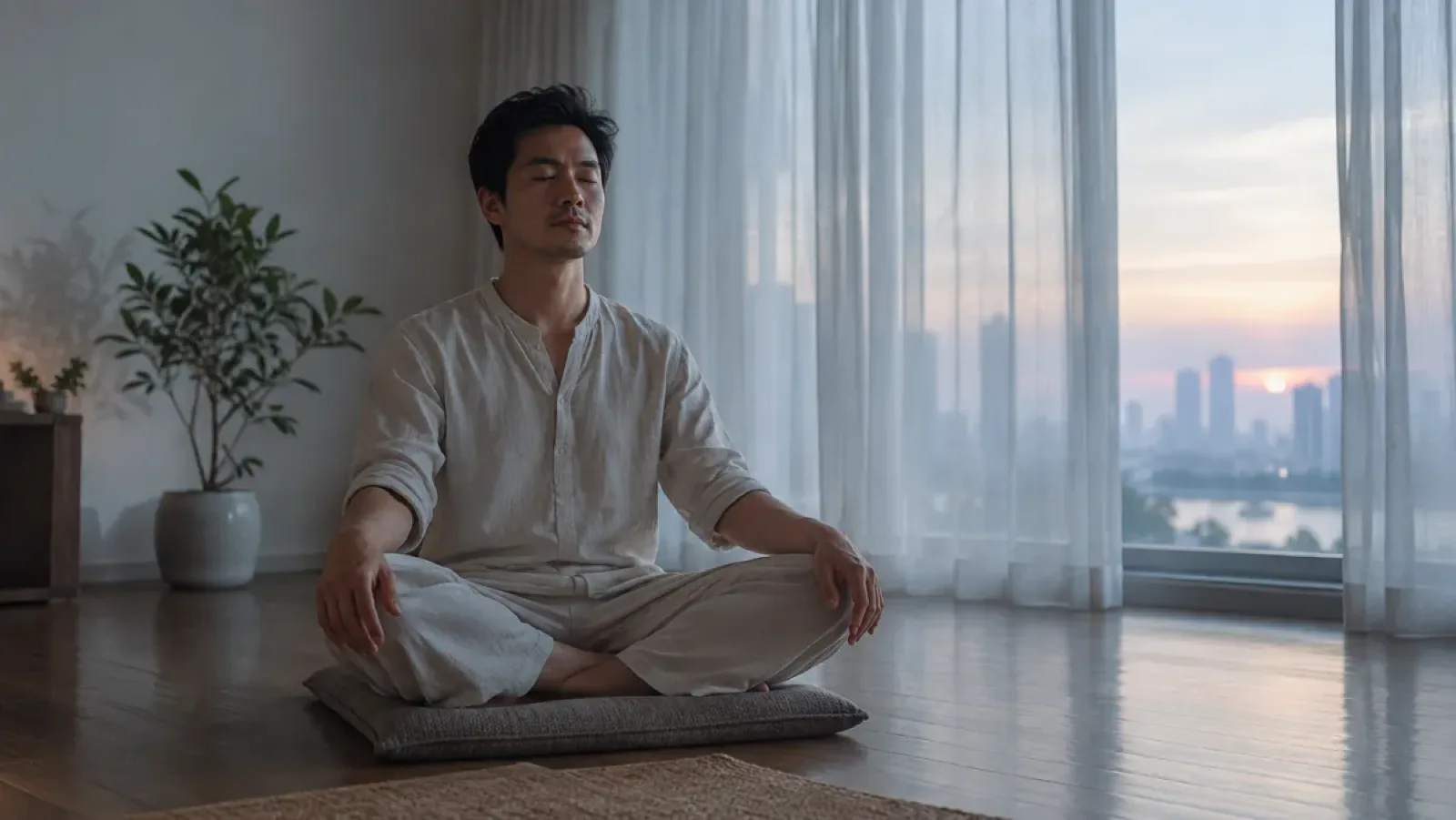
What is loving-kindness (metta) meditation?
The first three lessons in our meditation hub bring your attention to the breath, to each part of the body, and to deep rest. This practice is a little different. Instead of simply noticing what is happening, you gently cultivate something on purpose: an attitude of kindness.
Metta is a Pali word from the language of the early Buddhist texts. It is usually translated as loving-kindness or friendliness. In simple terms, it means wishing for someone to be peaceful and happy, without asking them to earn or deserve that wish first.
In the Karaṇīya Metta Sutta, a short text in the Sutta Nipāta, the Buddha uses a mother’s love for her only child as an image for metta. From that close and familiar kind of love, the circle of kindness gradually widens to every living being, “far or near”.
Today, loving-kindness meditation is also taught in many programmes without any religious framing at all. You do not need to be Buddhist, or anything else, to give it a try.
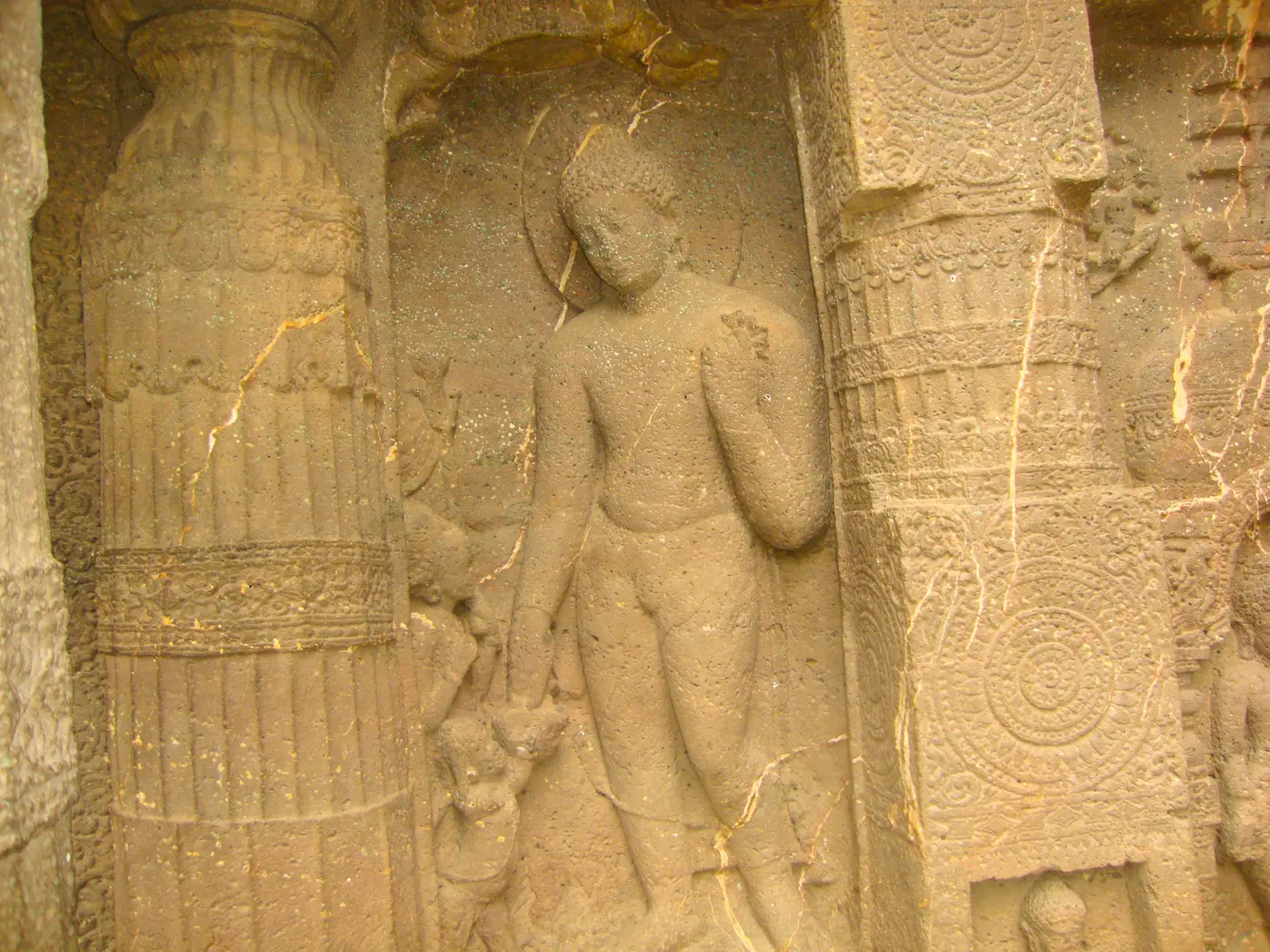
The five circles of loving-kindness
The traditional practice begins with the people for whom warmth comes most easily, then slowly expands towards people who feel more distant. Imagine a circle that starts small and keeps growing.
| Circle | Who you send wishes to | Why |
|---|---|---|
| 1 | Yourself | You deserve kindness as much as anyone else. For many people, this is also the hardest circle. |
| 2 | Someone you love, or someone who has been kind to you | Warmth often comes naturally here, making kindness easier to bring to life. |
| 3 | Someone neutral | The security guard in your building, the person who makes your iced coffee, your delivery driver: people you see all the time but rarely think about. |
| 4 | Someone difficult | Begin with someone who only annoys you a little. There is no need to choose someone who has hurt you deeply. |
| 5 | Everyone, every being | From the people around you to your neighbourhood, the city, and eventually everywhere. |
There is no single correct set of words. Four common wishes are to be at peace, to be healthy, to be happy and to live with ease. If another wording feels more natural to you, use it. The point is not to find beautiful words. It is the kind intention behind them.

What the research says about loving-kindness meditation
Loving-kindness meditation has been studied less extensively than mindfulness. Even so, the findings so far point in a fairly consistent direction.
More positive emotions. Barbara Fredrickson’s team at the University of North Carolina asked working adults to practise loving-kindness meditation over seven weeks. Over time, their everyday positive emotions increased, alongside a stronger sense of purpose in life and better relationships with the people around them. A 2015 review by Zeng and colleagues, pooling 24 studies, also found that loving-kindness meditation increases positive emotions by a moderate amount.
Feeling closer to others. In a laboratory study at Stanford, Hutcherson and colleagues (2008) found that even a few minutes of loving-kindness practice helped people feel more connected to, and warmer towards, others, including strangers they had only seen in photos.
Low mood and self-compassion. A 2014 review by Galante and colleagues found that kindness-based meditation can reduce self-reported low mood and increase self-compassion. The quality of the studies available at the time was only low to moderate, and the authors also noted that sending kind wishes can feel challenging at first for some people.
Alongside therapy. A 2011 review by Hofmann and colleagues concluded that loving-kindness and compassion meditation may be useful additions to established treatments such as cognitive behavioural therapy, particularly for difficulties involving other people, such as social anxiety or anger.
Ōmni Evidence Scale: Promising, for loving-kindness meditation and positive emotions. A review of 24 studies and a 7-week trial point in the same direction, with moderate effects.
Ōmni Evidence Scale: Early evidence, for feeling closer to others after a few minutes of practice (one laboratory study), and for less low mood and more self-compassion (a review of small trials of low to moderate quality).
A 9-minute guided loving-kindness meditation
Press play and follow Đức’s voice, or read the words below slowly to yourself. You need a chair or a cushion, and your phone on silent.
- 0:00–1:40 · Settle: sit comfortably, a few long breaths out, a hand on your chest.
- 1:40–3:20 · Circle 1: kind wishes to yourself.
- 3:20–4:28 · Circle 2: to someone you love.
- 4:28–5:32 · Circle 3: to someone you see often but rarely notice.
- 5:32–6:53 · Circle 4: to someone a little difficult.
- 6:53–8:10 · Circle 5: to everyone, everywhere.
- 8:10–9:00 · Come back: feel your chest, then gently open your eyes.
Welcome. Today we will practice loving-kindness meditation. That simply means sending kind wishes, first to yourself, and then, little by little, out to other people. It takes about nine minutes. You don’t have to get it exactly right. Just sit down, and follow along.
Find a comfortable seat. Keep your back upright, but not stiff. Rest your hands lightly on your thighs. You can close your eyes, or let your gaze rest on one spot in front of you.
Take a few slow, long breaths out. With each out-breath, let your shoulders drop a little, and let your face soften a little.
If it feels good, place one hand on your chest. Feel the warmth of your palm resting there.
Now, send these wishes to yourself. Say them silently, and slowly.
May I be at peace. May I be healthy. May I be happy. May I live with ease.
Keep repeating these words with the rhythm of your breath. There is no need to feel anything special. If the words feel a little forced, that’s okay. Just plant them gently, like planting a seed.
May I be at peace. May I be healthy. May I be happy. May I live with ease.
Now bring to mind someone you love, or someone who has been kind to you. Picture their face, and that familiar smile. Silently, send them these wishes.
May you be at peace. May you be healthy. May you be happy. May you live with ease.
Keep repeating them with your breath, and see them smiling back at you.
Next, think of someone you see often, but rarely notice. Maybe the security guard in your building, the person who makes your coffee, or the delivery driver. They also want to be at peace, just like you.
May you be at peace. May you be healthy. May you be happy, and live with ease.
Repeat this a few more times, with the rhythm of your breath.
When you feel ready, think of someone who sometimes makes you a little uncomfortable. Just a little. That person also has their own tiring days.
May they be at peace. May they suffer a little less.
Keep repeating it silently, gently.
If it is not easy to send them these wishes yet, you can come back to yourself for a while. Simply wish yourself peace. That is loving-kindness practice too.
Now, let the circle grow wider. From the people in your home, to the people in your neighborhood, across the whole city, and then everywhere.
May everyone be at peace. May all beings be happy.
Repeat with your breath, and let these wishes travel far.
May everyone be at peace. May all beings be happy.
Come back to the feeling in your chest right now. Maybe a little warmth, a little lightness, or maybe nothing clear yet. Whatever you feel is fine.
Take a slightly deeper breath in. Gently move your fingers. When you are ready, open your eyes.
Thank you for taking this time to be kind to yourself, and to others.
Small tips for practising
- Feels forced, or you feel nothing? That is completely fine. Loving-kindness is a little like caring for a plant: you water it regularly without standing over it and waiting for it to grow.
- Hard to send kindness to yourself? Begin with a friend you genuinely care about. Once that warmth comes more naturally, gently turn it back towards yourself.
- Still irritated by the difficult person? Pick someone who bothers you less, or leave that circle out for a few days.
- Best time? In the morning before you check your phone, or at night before sleep.
- No time for nine minutes? Do only circles 1 and 2, about four minutes. Need to settle quickly before a meeting? The long-exhale breathing guide works faster; for deep rest, try NSDR.

Loving-kindness and float therapy
Is loving-kindness easier in a float? It can be a natural place to practise it. In the float pool, about 500 kg of dense, mineral-rich Epsom salt in about 25 cm of water supports your whole body at about 33–34 °C, close to skin temperature, inside a room that can become fully dark and quiet. When your body no longer needs to hold a posture and your mind has space to settle, a few simple kind wishes can become easier to stay with.
There are two simple ways to combine them:
- To begin your float: spend the first few minutes with long, slow breaths out and let the body go (see Floor 1, Body lets go). Then offer a few wishes to yourself and let everything settle in its own time.
- To close your float: in the last few minutes, before the lights come on, bring to mind the people close to you and the people around you, and quietly wish them peace. Then carry a little of that feeling back into your day.
In our meditation hub, we picture the mind as a building: sitting meditation is the stairs, while a float is the elevator. On that map, loving-kindness belongs on Floor 5, Deep contentment, where happiness can become very quiet and seem to spread through the whole body. Earlier floors include Floor 2, Quiet mind. Nobody can promise which floor a session will reach; the practice simply gives you a way to become familiar with that feeling and give it room to grow.
Float therapy itself is still a young but very active field of research: randomised controlled trials have shown clear effects on anxiety, stress and muscle tension, and many people also report sleeping better.
Ōmni Evidence Scale: Strong evidence, for float and stress. We rate it Strong because, alongside these trials, user experience is overwhelmingly positive: in a 2025 survey of regular floaters, 92% reported relaxation and 77% less stress, echoed by thousands of reviews, Reddit threads and forums, and by athletes and public figures who float. See how we rate evidence on the Ōmni Evidence Scale.
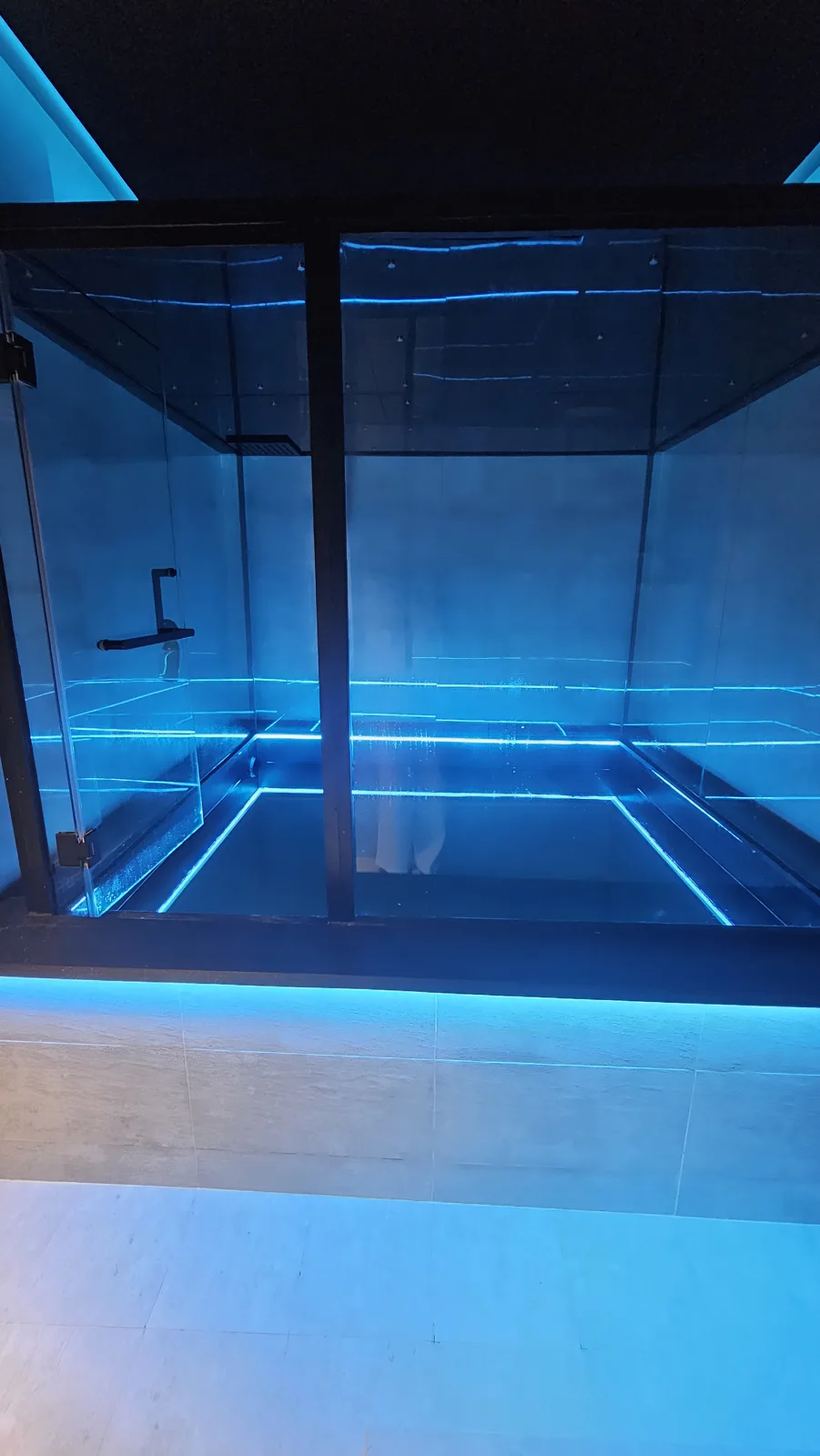
Floating as a couple? The couple room at Ōmni has one large shared float pool. In the last few minutes, try quietly sending kind wishes to the person floating beside you.

Where to start, and trying it at Ōmni
Try nine minutes a day for one week. Then simply notice whether anything has shifted in the way you treat yourself or the people around you. Do not search for a special feeling; pay attention to the small moments in ordinary life instead.
- Where and when: Ōmni Space – Float Saigon, 16C Quốc Hương, Thảo Điền. Open 9:00–21:00 every day; the last float starts at 20:00.
- Prices: a single 60-minute float is 1,500,000 VND; the couple room is 2,200,000 VND per room for 60 minutes. You can find everything else on the price page.
- In the room: you control the lights yourself, every guest gets earplugs, and a Halo neck pillow is available if your neck feels tense. Allow about 30 extra minutes for a short guide and showers.
- Booking: choose a time on the booking site. Visiting Saigon? See our visitors page. New to floating? Start with what float therapy is and before your first float.
Safety notes
- Gentle for most people. Loving-kindness meditation is a gentle practice and is generally considered safe for most people.
- Old wounds. If you have been through deep hurt, bringing certain people to mind may stir difficult memories. You do not have to continue with that circle. Return to wishing yourself well, or practise with a teacher or therapist.
- Not a replacement for care. Loving-kindness meditation does not replace treatment for depression or anxiety, but it can be used alongside your doctor’s plan. Do not change or stop medication on your own.
- For floating: every guest fills in a health questionnaire, fully and honestly, at every visit.
If you feel overwhelmed or unsafe, call 115 for emergency help in Vietnam.
Float PlanRunning on empty?Take the one-minute Float Plan quiz: tell us how you feel and what you need, and get a simple plan for your first session.Make my Float PlanFAQ
What is loving-kindness meditation?
It is a meditation in which you silently send kind wishes to yourself, someone you love, someone neutral, someone difficult and finally everyone, with the intention of cultivating kindness. It comes from the Metta Sutta of early Buddhism and is also widely taught without any religious framing.
What are the loving-kindness phrases for beginners?
“May I be at peace. May I be healthy. May I be happy. May I live with ease.” Feel free to change the wording so the wishes sound natural and close to your heart.
What if I don’t feel anything during metta?
That is completely normal. Keep saying the words slowly and sincerely without trying to manufacture a particular feeling. Warmth often develops gradually over days of practice.
How is loving-kindness different from mindfulness meditation?
Mindfulness helps you notice what is happening without immediately judging it. Loving-kindness actively cultivates a kind attitude towards yourself and others. The two practices can support each other very naturally.
Can I practise loving-kindness during a float?
Yes. Try it during the first or last few minutes of your float. With your body supported by the water in a dark, quiet room, quietly sending kind wishes can feel especially natural.
Written by the team at Ōmni Space – Float Saigon in Thảo Điền; guided meditation voiced by Đức Nguyễn. General information, not medical advice; checked on 29 October 2026.
Sources
- Karaṇīya Metta Sutta: Loving-kindness (Sutta Nipāta 1.8), translated by Bhikkhu Sujato. SuttaCentral.
- Fredrickson BL, Cohn MA, Coffey KA, Pek J, Finkel SM (2008). Open hearts build lives: positive emotions, induced through loving-kindness meditation, build consequential personal resources. Journal of Personality and Social Psychology 95(5): 1045–1062.
- Hutcherson CA, Seppala EM, Gross JJ (2008). Loving-kindness meditation increases social connectedness. Emotion 8(5): 720–724.
- Zeng X, Chiu CPK, Wang R, Oei TPS, Leung FYK (2015). The effect of loving-kindness meditation on positive emotions: a meta-analytic review. Frontiers in Psychology 6: 1693.
- Galante J, Galante I, Bekkers MJ, Gallacher J (2014). Effect of kindness-based meditation on health and well-being: a systematic review and meta-analysis. Journal of Consulting and Clinical Psychology 82(6): 1101–1114.
- Hofmann SG, Grossman P, Hinton DE (2011). Loving-kindness and compassion meditation: potential for psychological interventions. Clinical Psychology Review 31(7): 1126–1132.
- Kjellgren A, Westman J (2014). Beneficial effects of treatment with sensory isolation in flotation-tank as a preventive health-care intervention: a randomized controlled pilot trial. BMC Complementary and Alternative Medicine 14: 417.
Leave a Reply