
In short: Burnout is long-term work stress that was never resolved, not a medical diagnosis. The closest research, a Swedish workplace trial, used 12 floats over seven weeks and saw stress, anxiety and depression fall while sleep improved. In Ho Chi Minh City (Saigon), you can copy that rhythm: three floats in two weeks, then about two a week.
It often starts quietly. You wake up tired after eight hours of sleep, open your laptop and feel a small wall of dread. If that sounds familiar, you are not weak and you are not alone. This guide was written by the team at Ōmni Space – Float Saigon in Thảo Điền for office workers, managers, founders and shift workers in Saigon and Ho Chi Minh City, and for the HR and team leads who look after them. It is general information, not medical advice. Details were checked on 12 October 2026.
What burnout is (and what it is not)
The World Health Organization describes burn-out in the ICD-11 as a syndrome caused by chronic workplace stress that has not been successfully managed. It lists it as an “occupational phenomenon”, not as a medical condition, and says it has three parts:
- Exhaustion: feeling drained of energy, even after rest.
- Mental distance: feeling cynical or negative about your job, or switching off from it.
- Reduced efficacy: feeling that you are no longer good at what you do, or getting less done.
The WHO is clear that the term belongs to work only; it should not be used for stress in other parts of life. Common signs include Sunday-evening dread, irritability with colleagues and trouble switching off at night.
Burnout or depression? They can look alike, and they can overlap. A useful difference is scope. Burnout is tied to work. Depression, as the WHO describes it, means low mood or loss of interest in usual activities most of the day, nearly every day, for at least two weeks, and it reaches into everything: friends, food, hobbies, sleep, hope. The ICD-11 burn-out entry excludes mood disorders and anxiety disorders, which means those are recognised and treated as conditions in their own right. If a holiday does not help at all, or if the heaviness follows you everywhere, talk to a doctor.
Burnout in Saigon and Ho Chi Minh City: what the numbers say
Vietnam’s data tells a mixed story. In Gallup’s State of the Global Workplace 2026 report (2025 data), only 13% of Vietnamese employees said they felt a lot of stress the previous day, against 25% in Southeast Asia and 40% worldwide. But only 9% were engaged at work, the lowest level in Southeast Asia (the regional average is 25%). Low stress with low engagement looks less like a fire and more like a slow fade.
Other surveys ask the question differently. In 2022, the HR consultancy Anphabe surveyed nearly 58,000 staff at 515 companies and found that 42% often or very often felt stressed; banking (53%) and industrial materials (56%) were among the highest. And in March 2026, the Ministry of Health published a draft circular that would, for the first time, bring chronic stress, work pressure and academic pressure into community-based mental health monitoring.
The research: what Swedish studies show
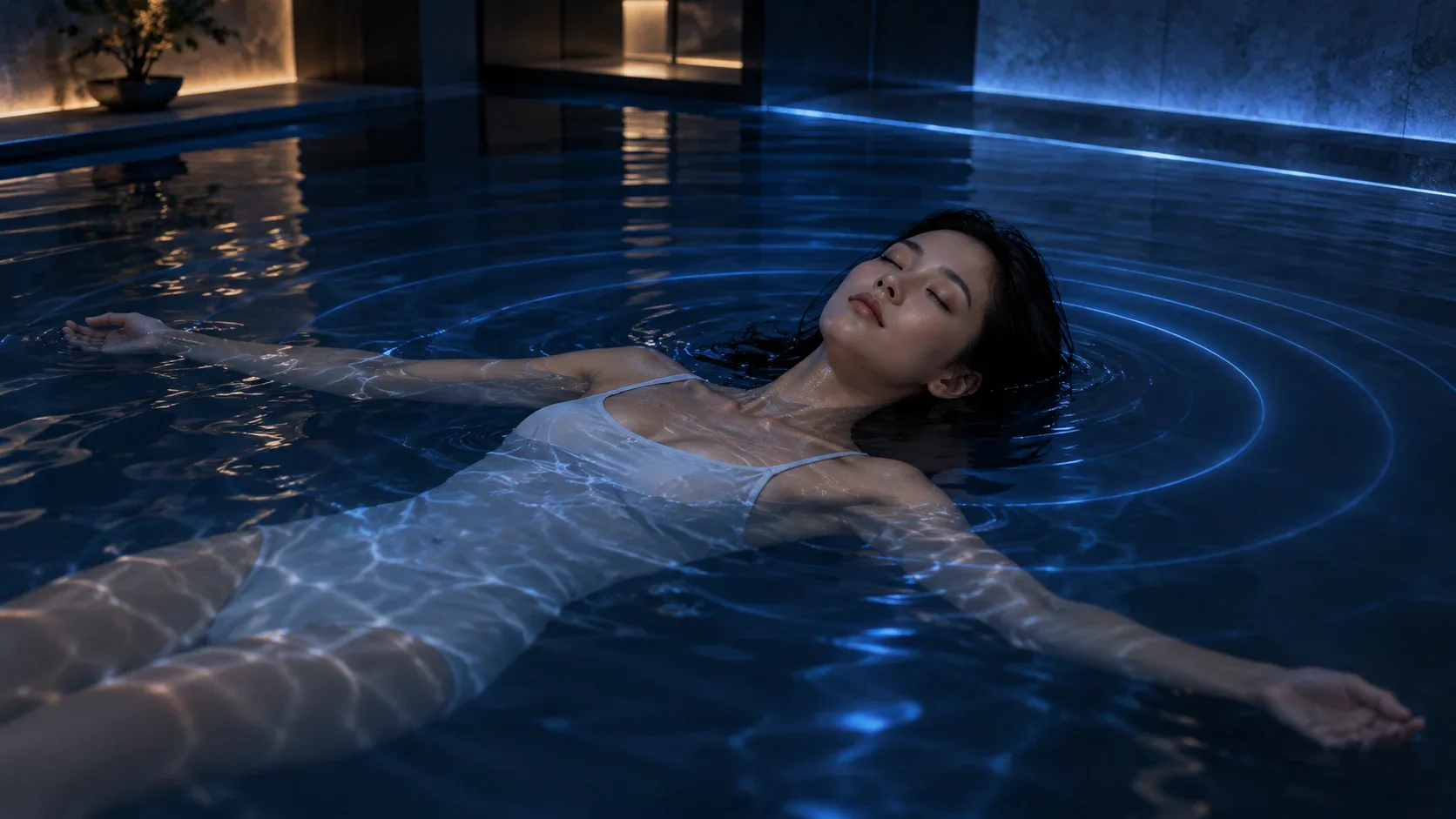
Float therapy means lying in warm, very salty water that holds you up, in a quiet room. Much of the stress research comes from Karlstad University in Sweden. Here are the studies behind this plan.
- The model for this plan: floating at work. Kjellgren and Westman (2014) recruited 65 working adults through a workplace health project run by three retail companies, most of them women. They were randomly assigned to 12 floats over seven weeks (about two a week, 45 minutes each) or to a waiting list. In the float group, stress, anxiety, depression and worst pain fell, while optimism and sleep quality improved. The waiting-list group showed no significant changes.
- Stress-related pain: is more always better? Bood and colleagues ran a series of trials with patients who had stress-related muscle pain. Their 2006 study reported that floating helped elicit the relaxation response (the body’s calming “brake”) in patients with stress-related ailments. In 2007 they compared 12 sessions with 33 sessions in 37 patients: 12 sessions already brought clear gains in pain and stress-related symptoms, and the extra sessions added little, except for a few measures such as diastolic blood pressure. Patients with burnout-related depression showed some of the largest drops in depression.
- The bigger picture. A meta-analysis (pooling the results of many studies) by van Dierendonck and te Nijenhuis in 2005 combined 27 studies with 449 people and found relatively strong positive effects on the body (such as lower cortisol and blood pressure), on wellbeing and on performance.
- Burnout itself. Kjellgren, Buhrkall and Norlander (2010) followed six people with burnout through a ten-week programme that combined floating with psychotherapy, and interviewed them. All six described a real psychological change and a better quality of life, and all were back at full-time work by the end. It is tiny, has no control group, and mixes floating with therapy.
Float therapy is a young but very active research field: randomised controlled trials have shown clear effects on anxiety, stress, muscle tension and sleep, and new clinical studies are still under way. For a deeper look at the Swedish work, our sister site has written about Karlstad University’s float research.
The honest limits. The groups are small, often a few dozen people, and mostly Swedish women. You cannot “blind” a float, so expectation plays a part. The workplace trial compared floating with a waiting list, not with another relaxing activity, and measured results right after the programme, not months later. And no large trial has tested floating for burnout as defined by the WHO.
Ōmni Evidence Scale: Strong evidence, for float and stress. Several trials, including one run in a workplace, point the same way. We rate it Strong because, on top of these trials, user experience is overwhelmingly positive: in a 2025 survey of regular floaters, 92% reported relaxation and 77% less stress, echoed by thousands of reviews, Reddit threads and forums, and by athletes and public figures who float. See how we rate evidence on the Ōmni Evidence Scale.
Ōmni Evidence Scale: Early evidence, for float and burnout specifically. The only burnout-focused study is a qualitative one with six people, and it combined floating with psychotherapy. It is encouraging, but it cannot tell us how much the float itself helped.
A 7-week float plan for burnout recovery
This plan follows the rhythm of the 2014 workplace trial: 12 floats in seven weeks. Our sessions are 90 minutes, longer than the study’s 45. If 12 is too much for your time or budget, a lighter version of six to eight floats is still a meaningful break, but be aware that the study used 12.
| Week | Floats | Focus at home |
|---|---|---|
| Week 1 | 2 (a few days apart) | Sleep: a fixed wake-up time, even at weekends. |
| Week 2 | 1 (3 floats in total) | Boundaries: one evening with notifications off. |
| Week 3 | 2 | Movement: two easy runs or brisk walks. |
| Week 4 | 2 | Breathing: five minutes of slow breathing a day. |
| Week 5 | 2 | Screens: a phone-free first hour of the morning. |
| Week 6 | 2 | Work: say no to one non-essential task. |
| Week 7 | 1–2 (about 12 in total) | Review: what helped, and what will you keep? |
Weeks 1–2: land. Three floats close together help your body learn the experience, because the first float is often spent learning to let go. Our article on why three float sessions matter explains why. The Introduction Package fits this exactly: 3 × 90 minutes for 3,000,000 VND, valid for 3 months, with sauna included. It is for one person and cannot be shared.
Weeks 3–7: build a rhythm. About two floats a week brings you to around 12, like the study.
| Option | What you get | Price |
|---|---|---|
| Full plan (about 12 floats) | Introduction Package (3 × 90 min) + Sustain membership (9 × 90 min, valid 6 months) | 3,000,000 + 8,000,000 = 11,000,000 VND |
| Lighter plan (8 floats) | Introduction Package (3 × 90 min) + Renew membership (5 × 90 min, valid 3 months) | 3,000,000 + 4,500,000 = 7,500,000 VND |
| Pay as you go | Single Room, 90 minutes | 2,000,000 VND per float |
| Add-ons with a float | Infrared sauna, cold plunge or Brainwaves Neuro Align | +200,000 VND each |
Best times. An after-work float suits most people: you leave the day in the water. We are open 9:00–21:00 every day, and the last session starts at 20:00. Walk-ins are welcome until 18:00; for evening slots, book ahead.
Habits between floats
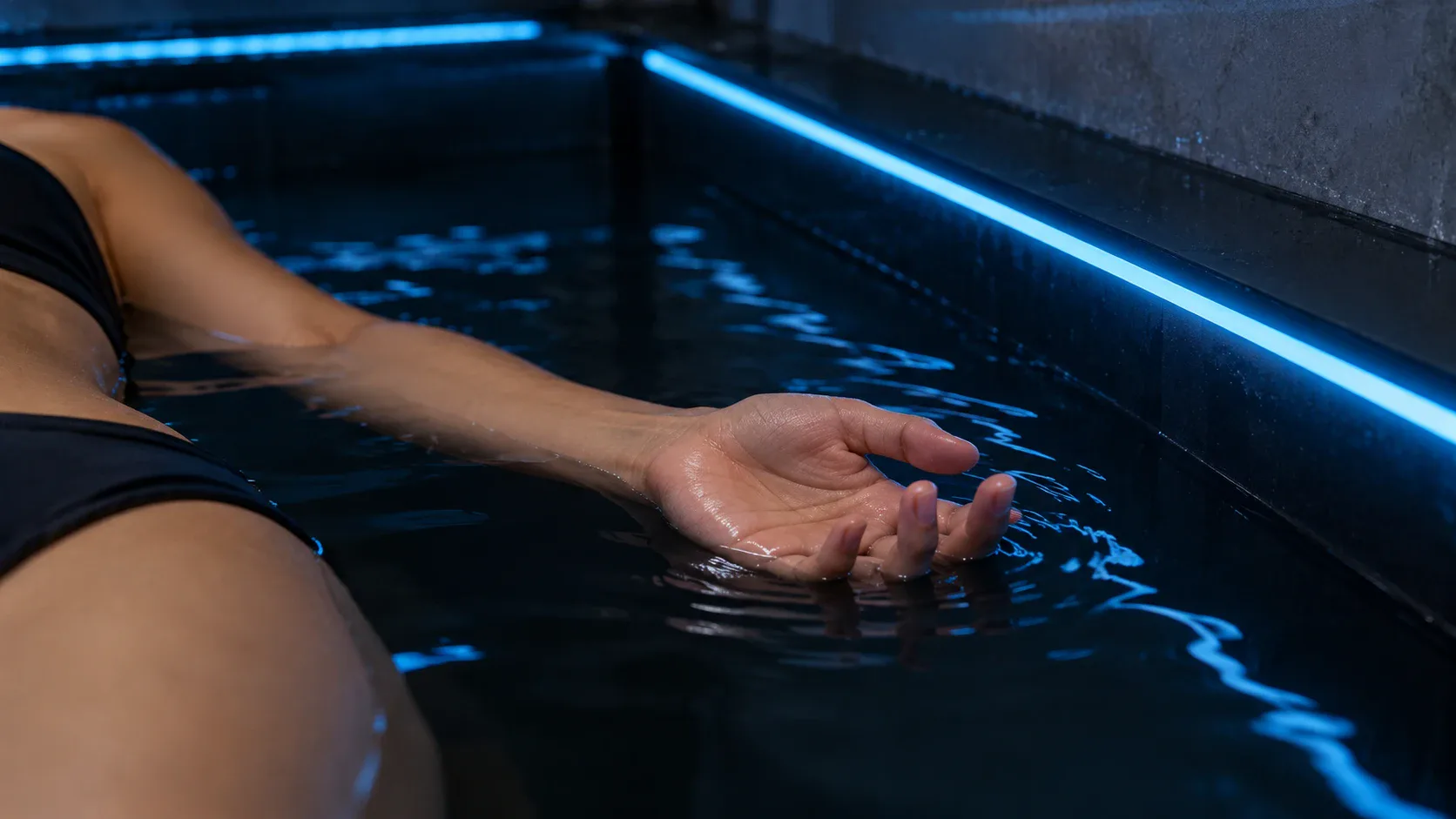
Burnout grows from daily patterns, so recovery needs small daily habits too.
- Sleep first. Burnout and poor sleep feed each other. Our insomnia plan for Saigon has practical steps.
- Move your body. Regular aerobic exercise such as running is the only other practice we rate Strong evidence. Start with two easy sessions a week.
- Breathe slowly. A few minutes a day can take the edge off. See our breathwork guide.
- Put down the phone. Constant messages keep the alarm system switched on. Our digital detox guide shows how to start.
- If worry is the main problem, read our guide to float therapy for anxiety in Saigon.
For teams and HR
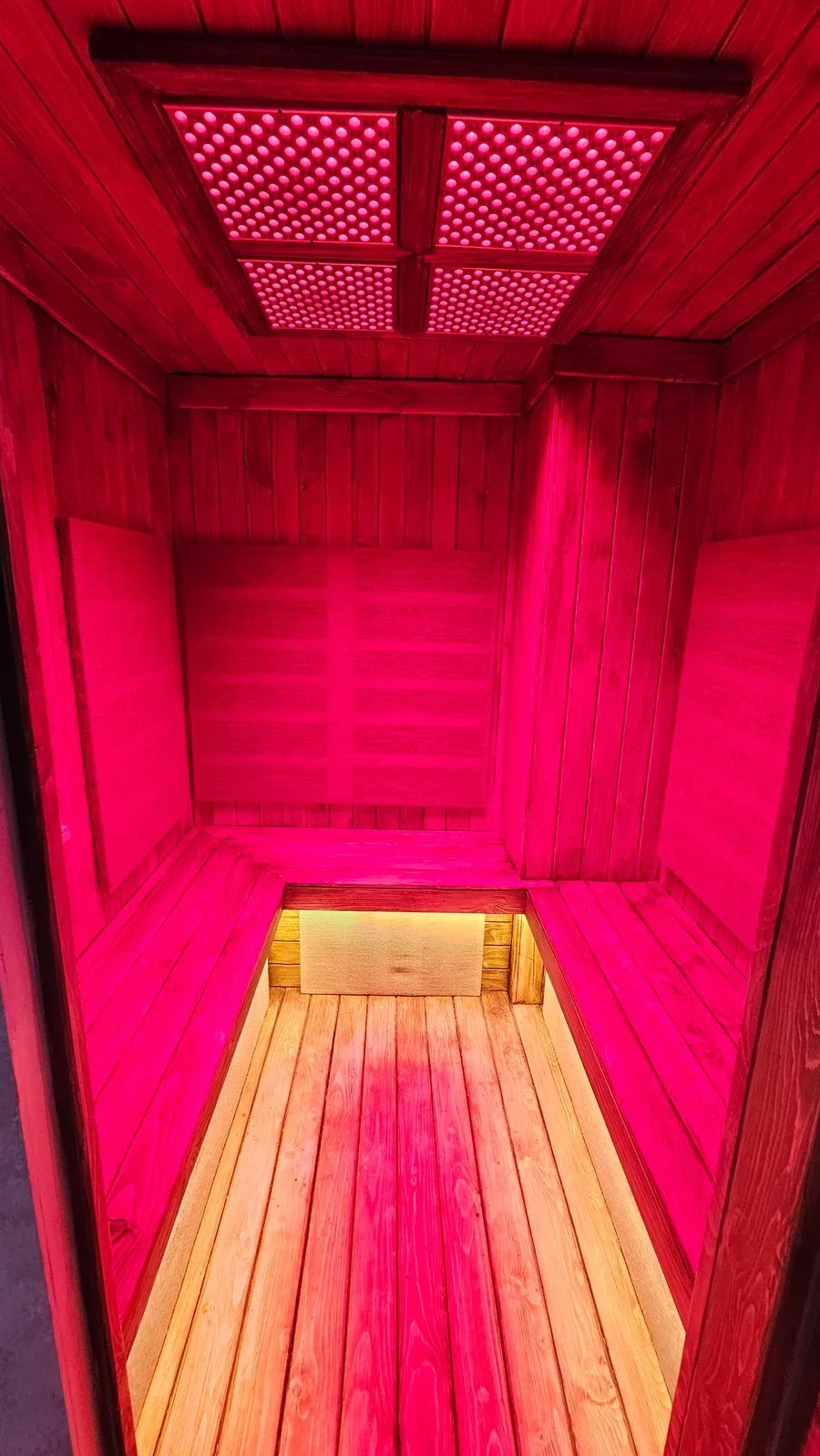
The 2014 trial came out of a workplace health project, which makes it the closest evidence for an employer programme. For HR leads, floating can be one part of a wider plan that also looks at workload and time off; it helps people recover, but it does not fix the workload.
Shareable packages let a team use one pool of sessions:
| Sessions | Price | Valid for | Saving |
|---|---|---|---|
| 10 | 18,000,000 VND | 6 months | 10% |
| 20 | 34,000,000 VND | 12 months | 15% |
| 50 | 80,000,000 VND | 18 months | 20% |
| 100 | 150,000,000 VND | 24 months | 25% |
For programme ideas, see our page on corporate wellness in Saigon.
When to get more help
- Float is not a treatment for depression. It can sit alongside care from a professional, not replace it. Keep taking any medicine you have been prescribed.
- See a doctor or licensed psychologist if low mood lasts most days for more than two weeks, if sleep problems go on for more than three months, or if you can no longer manage work or daily life.
- If you have thoughts of harming yourself, please reach out to a doctor or psychologist today, or to someone you trust. In an emergency in Vietnam, call 115.
- Before your first float, fill in the health questionnaire honestly, and read before your first float.

Where to try it in Saigon
Our centre is at 16C Quốc Hương, Thảo Điền, open 9:00–21:00 every day. A Single Room float costs 1,500,000 / 2,000,000 / 2,500,000 VND for 60 / 90 / 120 minutes. See all options on our services page.
FAQ
Is burnout a medical diagnosis?
No. The WHO lists burn-out in the ICD-11 as an occupational phenomenon caused by unmanaged chronic work stress, not as a medical condition. Depression and anxiety disorders are separate conditions that a doctor can diagnose and treat.
Can float therapy help with burnout?
It can help with the stress behind it. A Swedish workplace trial found that 12 floats over seven weeks lowered stress, anxiety and depression and improved sleep. Research on burnout itself is small: one study of six people who combined floating with psychotherapy.
How many float sessions do I need?
The study used 12 floats over seven weeks. We suggest three floats in the first two weeks, then about two a week. A lighter plan of six to eight floats is an option, but it is less than the study used.
When is the best time to float if I work long hours?
After work suits most people, and many sleep better that night. We are open 9:00–21:00 daily, the last session starts at 20:00, and walk-ins are welcome until 18:00.
How much does a 7-week float plan cost in Ho Chi Minh City?
About 12 floats cost 11,000,000 VND with the Introduction Package plus the Sustain membership. A lighter eight-float plan costs 7,500,000 VND with the Introduction Package plus the Renew membership.
Can my company pay for floats for the team?
Yes. Shareable packages of 10, 20, 50 or 100 sessions cost 18, 34, 80 or 150 million VND, are valid for 6 to 24 months, and save 10% to 25%.
Sources
- World Health Organization (2019). Burn-out an “occupational phenomenon”: International Classification of Diseases.
- World Health Organization. Depressive disorder (depression), fact sheet.
- Gallup (2026). State of the Global Workplace: Vietnam country-level data.
- Tuổi Trẻ News (2026). Vietnamese workers among Southeast Asia’s least engaged despite high optimism: Gallup.
- The Investor (2022). 42% of Vietnamese workers regularly experience stress: survey (Anphabe).
- Vietcetera (2026). Burnout, but make it official: Vietnam may start tracking work stress.
- Kjellgren A, Westman J (2014). Beneficial effects of treatment with sensory isolation in flotation-tank as a preventive health-care intervention: a randomized controlled pilot trial. BMC Complementary and Alternative Medicine 14: 417.
- Bood SÅ, Sundequist U, Kjellgren A, Norlander T et al. (2006). Eliciting the relaxation response with the help of flotation-REST in patients with stress-related ailments. International Journal of Stress Management 13(2): 154–175.
- Bood SÅ, Sundequist U, Kjellgren A, Nordström G, Norlander T (2007). Effects of flotation REST on stress related muscle pain: are 33 flotation sessions more effective than 12 sessions? Social Behavior and Personality 35(2): 143–156.
- van Dierendonck D, te Nijenhuis J (2005). Flotation restricted environmental stimulation therapy (REST) as a stress-management tool: a meta-analysis. Psychology & Health 20(3): 405–412.
- Kjellgren A, Buhrkall H, Norlander T (2010). Psychotherapeutic treatment in combination with relaxation in a flotation tank: effects on “burn-out syndrome”. The Qualitative Report 15(5): 1243–1269.
- Hilpert K, Chis Ster I (2025). Experiences and perceptions of regular floatation-REST users: results from an online survey. Journal of Clinical Images and Medical Case Reports 6(5): 3600.
Leave a Reply