
In short: Sound healing in Saigon means singing bowls (chuông xoay), crystal bowls, gong baths and handpan sessions, often with binaural beats or “432 Hz” music. Most people find them relaxing. The research is early: one uncontrolled singing bowl study, a 2025 review asking for better trials, and no good evidence that 432 Hz is special.
This guide was written by the team at Ōmni Space in Thảo Điền. We opened Vietnam’s first float centre (Float Vietnam, Hanoi, 2017), and we spend our days thinking about one question: what does an experience actually do for the nervous system, and how strong is the evidence? Sound healing has grown fast in Saigon, from small bowl circles to concert halls. Here is what each practice is, what the studies show, and where to try it.
What “sound healing” means
“Sound healing” is a loose umbrella term. It covers any session where you sit or lie still while someone plays slow, resonant sounds, and the aim is to relax rather than to perform. You will also see “sound bath”, which Vietnamese media usually translate as tắm âm thanh. “Healing” here is a marketing word, not a medical one.
Singing bowls (chuông xoay)
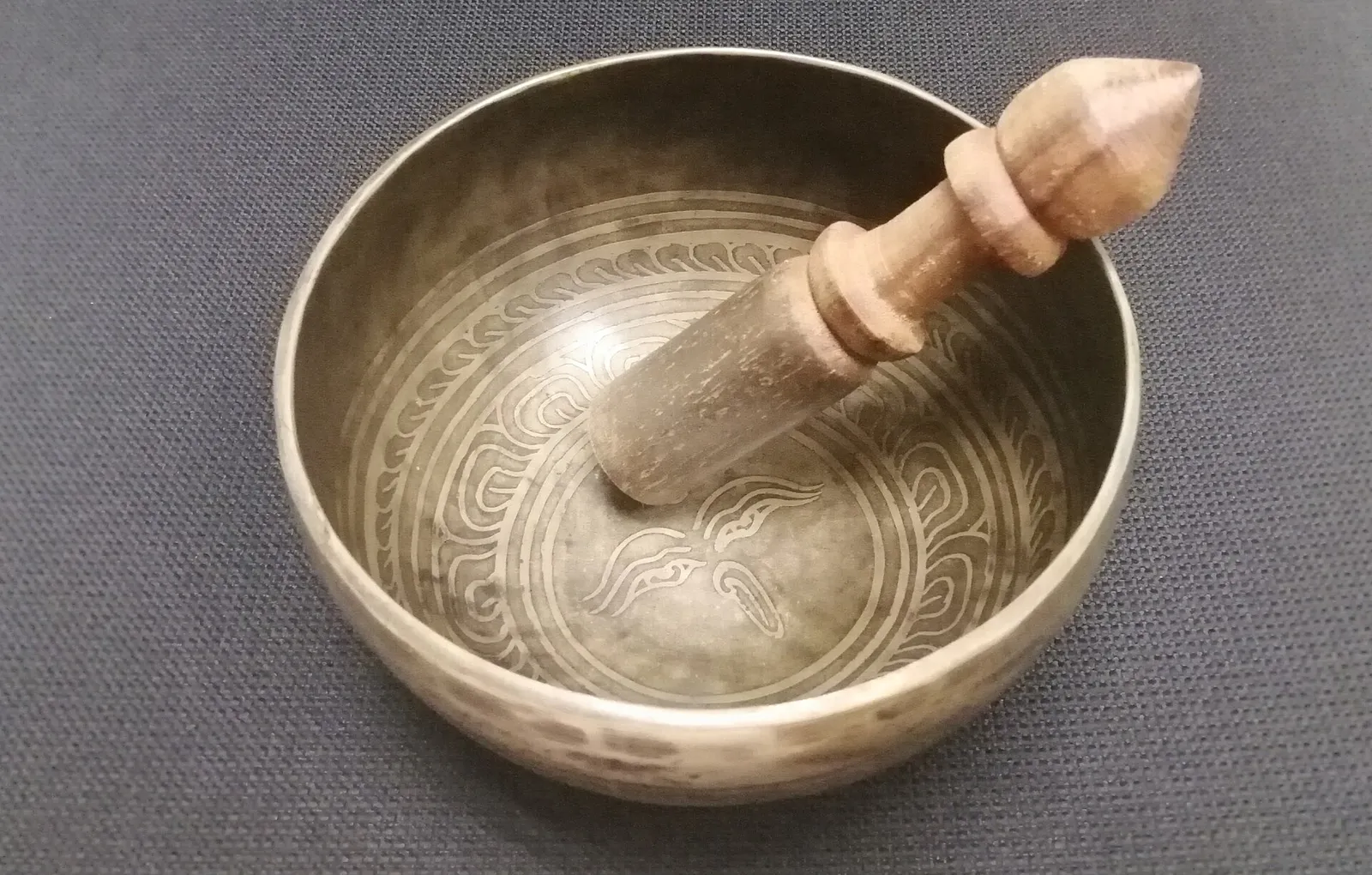
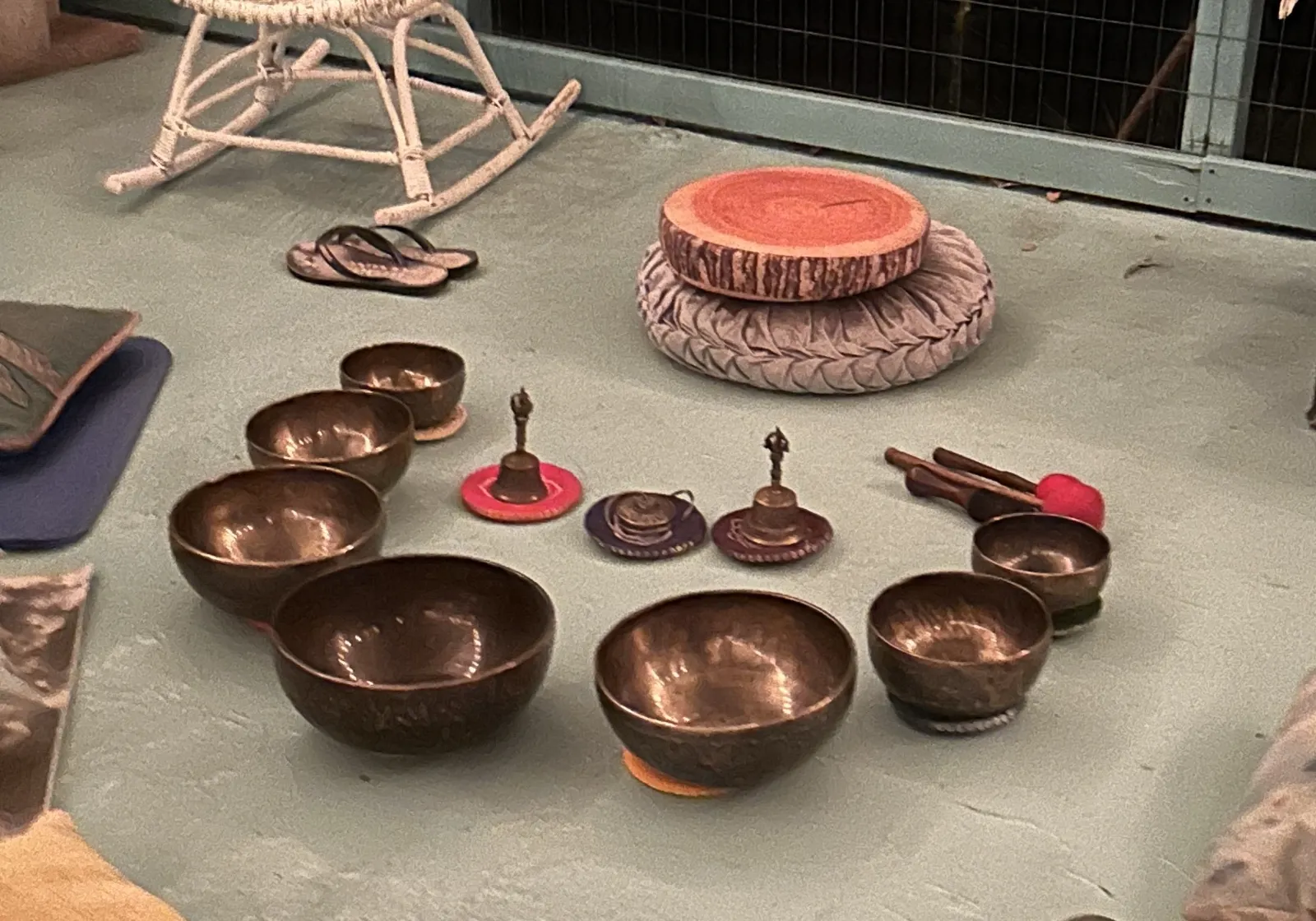
A singing bowl is a metal bowl, often called a Himalayan or Tibetan bowl. The player strikes it, or runs a wooden mallet slowly around the rim until the bowl starts to “sing” with a long, humming tone. That circling motion is why Vietnamese speakers call it chuông xoay, the “turning bell”. You will also see thiền chuông (bell meditation) and chuông xoay Tây Tạng (Tibetan singing bowl). Vietnam’s national newspaper Nhân Dân has used the phrase liệu pháp âm thanh chuông xoay Himalaya, Himalayan singing bowl sound therapy.
Crystal bowls
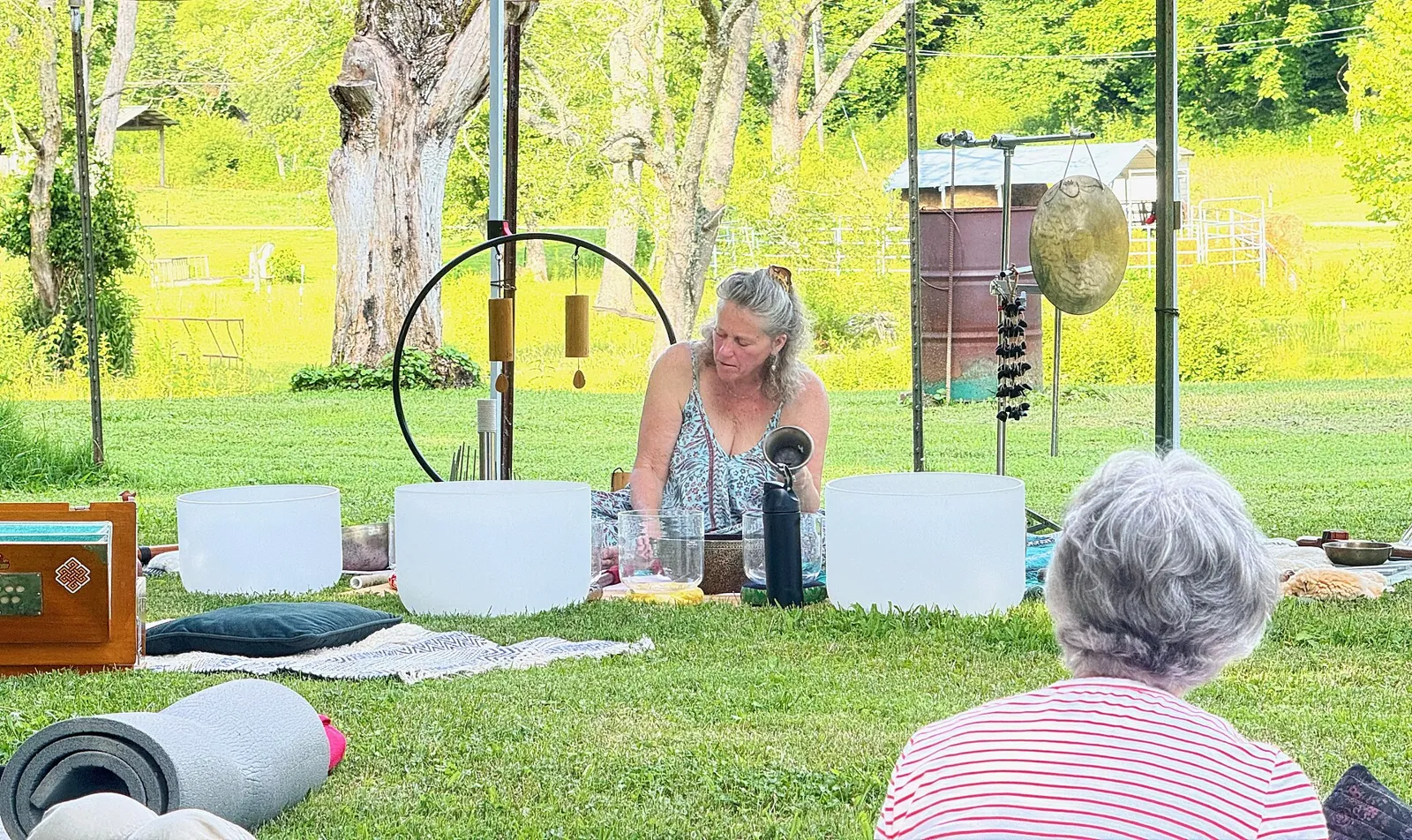
Crystal bowls are made from quartz rather than metal, and are often called chuông pha lê in Vietnamese. There does not yet seem to be one standard Vietnamese term. They are played in the same way as metal bowls. The research we reviewed focuses on metal singing bowls, so we cannot say anything specific about crystal bowls on their own.

Gong baths
A gong bath is a sound bath where one or more large gongs are the main instrument. You lie down, close your eyes, and the sound rises and falls around you. In Vietnamese the instrument is simply “gong”, or cồng/chiêng, the bronze gongs familiar from Vietnamese tradition.
Binaural beats
Binaural beats are not an instrument. They are a listening effect. You wear headphones, and each ear hears a slightly different tone. Your brain hears a slow “beat” between the two. Many relaxation and sleep tracks use them.
432 Hz music
Some musicians tune their instruments so that the note A sits at 432 Hz, instead of the usual 440 Hz. Online, it is often sold as a “healing frequency”.
The handpan: a young instrument with a long echo
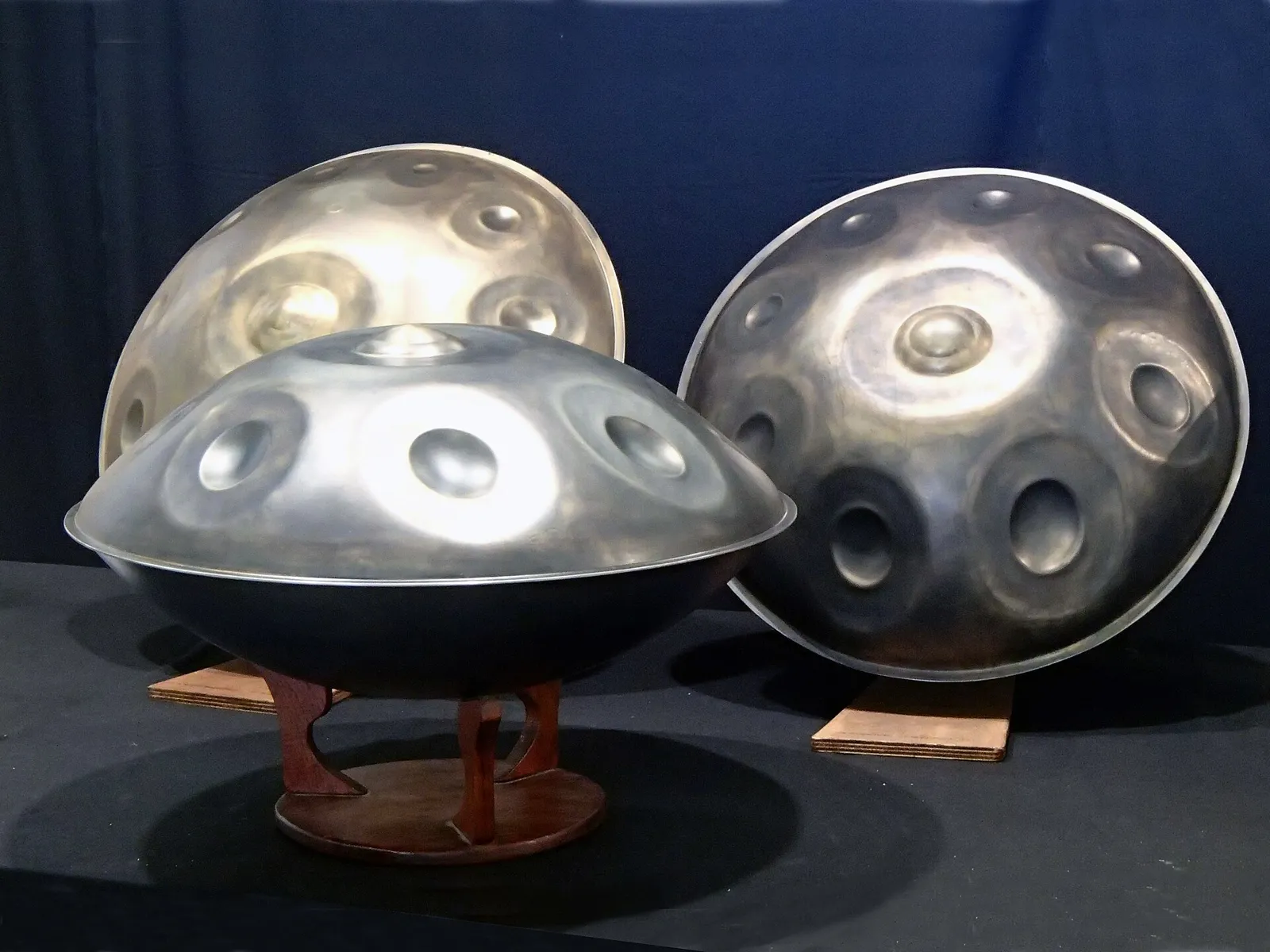
The handpan looks ancient, but it is one of the youngest instruments you will meet. The first one, called the Hang, was made in 2000 by Felix Rohner and Sabina Schärer at PANArt in Bern, Switzerland. It is made from two deep-drawn half-shells of nitrided steel, glued together at the rim into a lens shape.
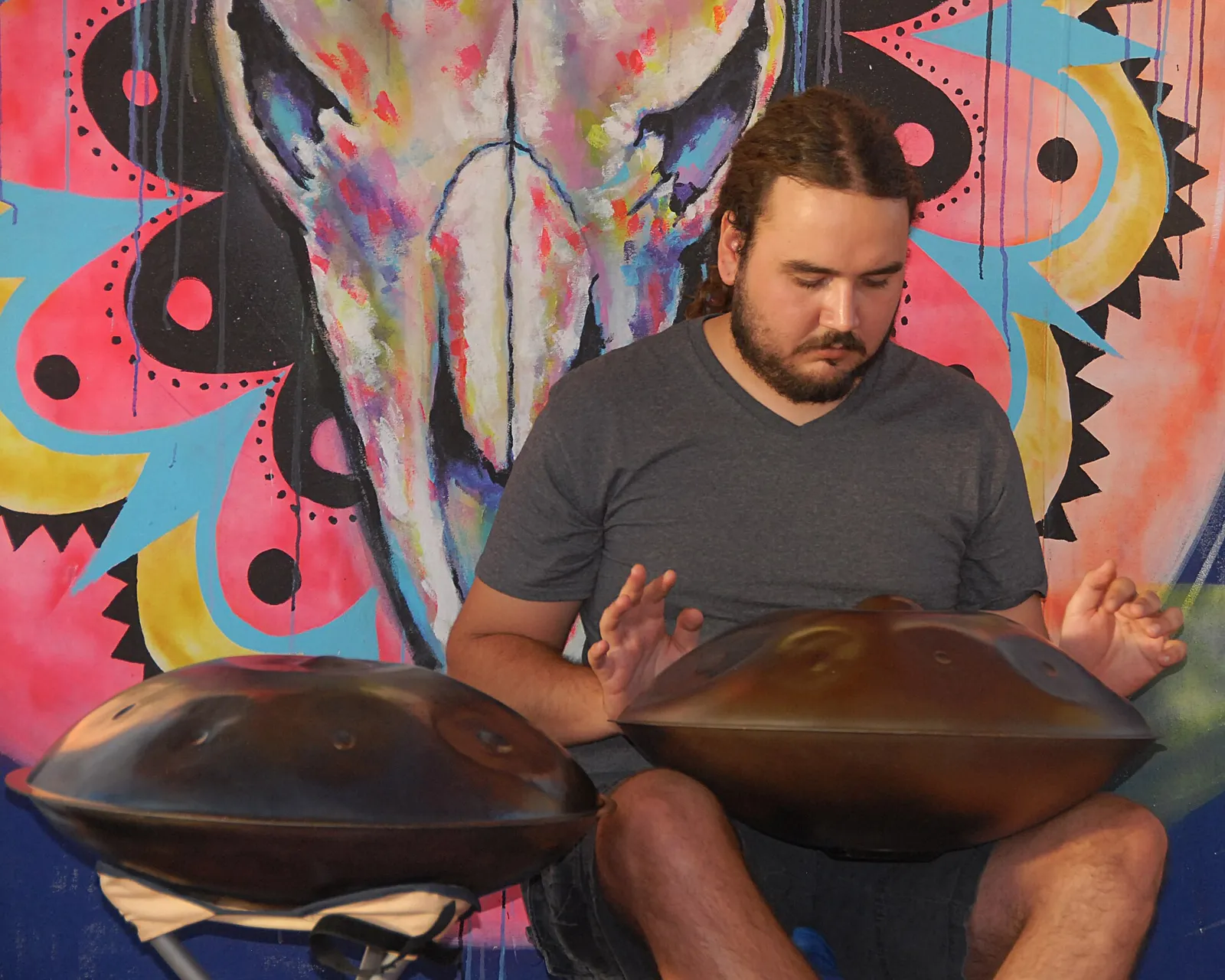
The idea drew on the Caribbean steelpan and the Indian clay pot drum called the ghatam, partly through the Swiss musician Reto Weber. PANArt made the first generation from 2001 to 2005, released the “Low Hang” in 2005, and stopped making the Hang around 2013.
“Hang” is a protected name. From around 2007, other makers began building similar instruments and used the general name handpan. PANArt has objected to the term “hang drum”, although you will still hear it often. In Vietnam people say “handpan” or trống hang (hang drum).
What the research actually shows
Singing bowls
The study you will see quoted most is Goldsby and colleagues (2017). 62 adults joined a one-hour singing bowl meditation. Afterwards they reported less tension, anger, fatigue and low mood, and the changes were statistically clear. People who had never tried it before showed a larger drop in tension than regular users.
The catch: there was no control group. Nobody spent the same hour lying quietly without bowls. So we cannot tell how much came from the bowls, and how much came from lying down, being in a group, or simply expecting to feel calmer.
A 2025 systematic review (Lin, Yang and Wang, in the journal Healthcare) looked at 14 studies. It concluded that singing bowls have “potential” to reduce stress. But the studies were too different in design to combine, so there was no meta-analysis, and the authors called for well-designed randomised trials.
Ōmni Evidence Scale: Early evidence. Small studies report people feel calmer after a bowl session, but the best-known one had no control group and a 2025 review still calls for proper trials.
Binaural beats
This is the best-studied item on the list. A 2019 meta-analysis by Garcia-Argibay and colleagues pooled 22 studies. It found a moderate overall effect (g = 0.45) across memory, attention, anxiety and pain perception. The effect was stronger when people listened before a task rather than during it. Because outcomes were pooled, the effect on anxiety alone is less clear.
Ōmni Evidence Scale: Promising. A meta-analysis of 22 studies found a moderate effect on attention, memory, anxiety and pain, though results vary and the effect on anxiety alone is less clear.
432 Hz
The evidence here is thin. A small 2019 pilot study with 33 people found heart rate dropped by about 4.8 beats per minute with 432 Hz music, a result right at the edge of statistical significance. A 2025 randomised trial in 43 cancer patients compared 432 Hz with 443 Hz music and found only a small difference in heart rate (a median drop of 3 versus 1 beat per minute). Writing in BMC Complementary Medicine and Therapies, the authors of that 2025 trial note that the theory behind 432 Hz rests on historical and philosophical ideas, not on experimental data. Calm music at any tuning can feel relaxing. There is no good reason to think 432 Hz is special.
Ōmni Evidence Scale: No good evidence yet. A few small studies show tiny heart-rate changes, and the authors of a 2025 trial note that the 432 Hz theory is not based on experimental data.
Gong baths
We could not find good-quality research on gong baths specifically. They may feel relaxing, like any quiet lying-down session, but there is no study we can point to.
Ōmni Evidence Scale: No good evidence yet. We found no good-quality studies looking at gong baths on their own.
A word of caution on numbers. Some Vietnamese websites claim that sound healing “lowers cortisol by 32–42%”. We could not find any source for these figures, so please treat them with care.
| Practice | What it is | Ōmni Evidence Scale |
|---|---|---|
| Singing bowls (chuông xoay) | Metal bowls struck or circled with a mallet | Early evidence |
| Crystal bowls | Quartz bowls played the same way | Not studied separately |
| Gong bath | Lying down while large gongs are played | No good evidence yet |
| Binaural beats | Slightly different tones in each ear, through headphones | Promising |
| 432 Hz music | Music tuned to A = 432 Hz | No good evidence yet |
| Handpan | Steel instrument played by hand | An instrument, not a therapy |
Sound and silence: two ends of the same spectrum
The most important ingredient in a sound session may be the one nobody advertises. For an hour, you lie still. Your phone is away. Nobody needs anything from you. The sound gives a busy mind something gentle to follow, and that alone can help you let go. It is telling that Saigon’s largest sound healing concert series is called “Journey Into Silence”.
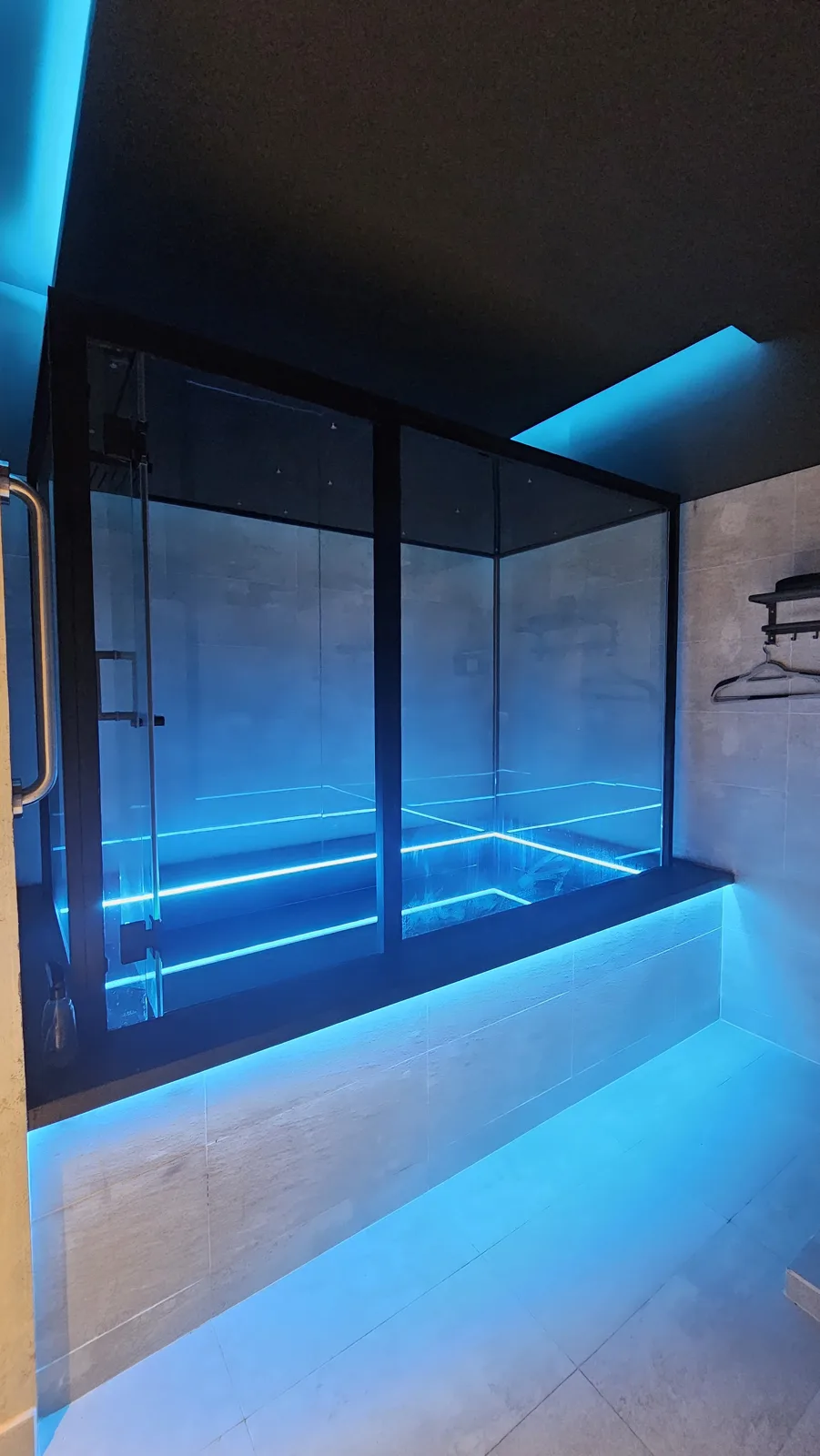
If sound healing gives the mind one soft thing to hold, floating sits at the quietest end of the same spectrum. In a float you lie in warm, salt-heavy water, in the dark, with almost no sound at all. Float research is further along than sound research, though it still has the usual limits of small samples and expectation effects. Some people love the guidance of sound. Others find that silence is what finally lets their body settle. Both are worth trying.
At Ōmni we also offer Brainwaves Neuro Align, a 30-minute light-and-sound session that sits somewhere in between: guided rhythm, but with your eyes closed and nothing else to do. It is 450,000 VND on its own, or +200,000 VND with any float. If you are curious how light-and-sound devices compare, see our guide to meditation devices.
Safety notes
- Sound healing is a relaxation practice. It is not a treatment for any illness, and it should not replace care from your doctor.
- Gongs can be loud. Choose a spot that feels comfortable, and it is fine to move further away or step out.
- With binaural beats, keep headphone volume at a comfortable level.
- Sessions that combine flickering light with sound are different. Flashing light between about 3 and 30 times a second can trigger seizures in people with photosensitive epilepsy, which affects up to about 1 in 4,000 people. If you or a close family member has epilepsy or has had seizures, tell the staff before any light-and-sound session. Before Neuro Align, Ōmni asks every guest to fill in a health questionnaire, first by email before the visit and again on site.
Where to try it in Saigon
Sound healing in Ho Chi Minh City ranges from big concerts to small studio sessions. These are places and events we found in public sources. We have not tried them all, and schedules change, so please check with each one directly.
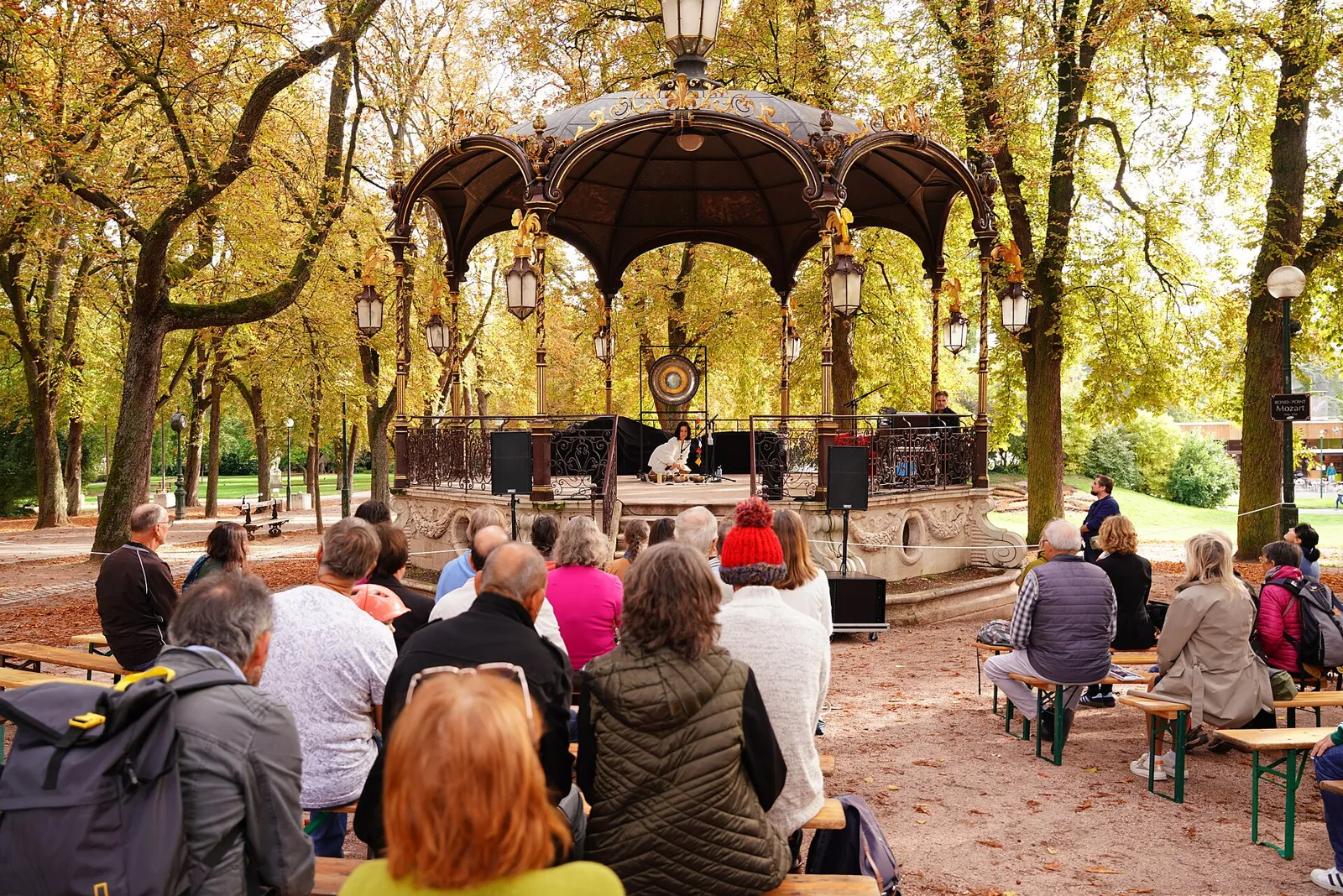
- Sound Healing Concert series. Organised by Sound Healing World. The 2025 edition, “Journey Into Silence”, took place on 6–7 September 2025 at White Palace (Võ Văn Kiệt), with Ani Choying Drolma, singing bowl master Santa Ratna Shakya and Trần Mạnh Tuấn. It was billed as the first sound healing concert in Vietnam. The 2026 edition was held on 12 September 2026 at GEM Center, with a Hanoi show on 19 September 2026. The wider “Hành trình tĩnh lặng” series has run more than 20 programmes since May 2023. See soundhealingconcert.com for upcoming dates.
- OM Himalayas / OM Healing. Described by Nhân Dân as a pioneer, with centres in Hanoi and Ho Chi Minh City.
- SHAN Healing. Singing bowl sessions and practitioner training.
- Be Here Now, 21/20 Xuân Thủy, Thảo Điền.
- Amanaki Thao Dien. The hotel’s wellness offer includes a 60-minute sound healing session with seven Himalayan bowls.
- Quan Tea Dining and Tea Lab in Thủ Thiêm have also been listed for singing bowl sessions.
- Soul Yoga Saigon hosts sound workshops, and Be Still Yoga offers sound baths that can be booked through Viator. Short 30- and 45-minute singing bowl sessions are also listed on GetYourGuide.
- Gong baths: we did not find a dedicated gong bath event with a confirmed date in Ho Chi Minh City. Ask the studios above.
- The quiet end: if you want to compare sound with near-total silence, Ōmni Space is at 16C Quốc Hương, Thảo Điền, open 9:00–21:00 daily. Floats start from 1,500,000 VND for 60 minutes. Our Thảo Điền guide can help you plan the rest of the day.
Where to learn handpan in Vietnam
There is no single “Saigon handpan community” yet. Most players gather around a particular teacher or workshop.
- Anahata Handpan (Phú Nhuận, HCMC) teaches and sells instruments. Founder Nguyễn Tuấn Việt is a certified Malte Marten Method teacher and co-founder of OM Wellness Studio in Ho Chi Minh City.
- Handpanvietnam.com has made, sold and taught handpan since 2020. Its six-session course is listed at 1,900,000 VND.
- Hang Drum Vietnam by Long Percussion runs in-person courses.
- Handpan Vietnam is based in Hanoi, and there is an online beginner course by Chí Hùng on Unica.
FAQ
What is chuông xoay?
Chuông xoay is the common Vietnamese name for a singing bowl, a Himalayan or Tibetan metal bowl. The name comes from the way the player circles a mallet around the rim to make the bowl “sing”.
Does sound healing really work?
Many people feel calmer after a session, and small studies agree. But the best-known singing bowl study had no control group, and a 2025 review called for proper randomised trials. Binaural beats have the strongest evidence so far. Think of sound healing as a way to relax, not a treatment.
Is 432 Hz a healing frequency?
There is no good evidence for that. A few small studies show tiny changes in heart rate, and the authors of a 2025 trial note that the 432 Hz theory is based on historical and philosophical ideas rather than experiments.
Is a handpan the same as a hang drum?
The Hang was the original instrument, made by PANArt in Switzerland in 2000. “Hang” is a protected name, so from around 2007 other makers used the general term “handpan”. PANArt does not like the name “hang drum”, although it is still widely used.
How is floating different from a sound bath?
A sound bath gives your mind gentle sounds to follow. A float takes almost all sound and light away while warm salt water holds your body. Both invite deep rest. Some people prefer guidance, others prefer silence. See before your first float if you want to try it.
Sources
- Goldsby TL et al. (2017). Effects of Singing Bowl Sound Meditation on Mood, Tension, and Well-being. J Evid Based Complementary Altern Med 22(3):401–406.
- Lin, Yang & Wang (2025). Systematic review of singing bowl interventions. Healthcare (MDPI).
- Garcia-Argibay M et al. (2019). Efficacy of binaural auditory beats in cognition, anxiety, and pain perception: a meta-analysis. Psychol Res 83:357–372.
- Randomised trial of 432 Hz vs 443 Hz music in cancer patients (2025). PMC11755923.
- Hohneck et al. (2025), BMC Complementary Medicine and Therapies (DOI of the same trial).
- Hang (instrument). Wikipedia.
- Handpan origin and history. Sound Sculpture.
- Âm nhạc – liệu pháp chăm sóc sức khỏe tinh thần. Nhân Dân (09/2025).
- Sound bath: sử dụng âm thanh để thiền định. VOV.
- First sound healing concert to entertain Vietnamese audience. Vietnam News (2025).
- Sound Healing Concert (official site).
- Photosensitive epilepsy. Epilepsy Society (UK).
Leave a Reply