
In short. Heart rate variability (HRV) is the tiny change in time between heartbeats. Wearables measure it during sleep, compare it with your usual range and turn it into scores such as Readiness, Recovery, HRV Status, Energy Score or Nightly Recharge. In an independent 2025 study against a chest-strap ECG, Oura rings tracked nightly HRV most closely, followed by WHOOP, then Garmin and Polar. Short sleep, alcohol, hard training, illness, heat and humidity can all drag HRV down. Slow breathing at about six breaths a minute, regular aerobic exercise, enough sleep and less alcohol have the best evidence for raising it. Follow your 7-day trend, not one red morning. In Saigon, train early, sleep cool and make room for proper rest.
The air conditioner hums. Your phone lights up. Before your feet even touch the floor, your watch delivers the verdict: recovery 31%. Red. Strange. You slept reasonably well, had one beer in Thảo Điền and barely feel Saturday’s run. So what is that number actually saying? Should those 6:00 intervals be cancelled? Here is how HRV works, what your wearable measures, how much to trust it and what genuinely helps your body recover in Saigon.
HRV: the tiny wobble between heartbeats
Your heart is not a metronome. Even at rest, one gap between beats might last 0.92 seconds, the next 1.01. That difference, measured in milliseconds, is heart rate variability.
Much of it comes from your autonomic nervous system: the automatic wiring behind your heartbeat and breathing. Its sympathetic branch prepares you for action. Its parasympathetic branch, working largely through the vagus nerve, helps you rest and recover. As you breathe in, your heart speeds up slightly. As you breathe out, it slows. Those little changes create HRV.
Most wearables use RMSSD, short for the root mean square of successive differences between beats. It reflects much of that vagal, rest-and-repair activity. Apple has traditionally recorded SDNN, the standard deviation of the gaps between beats. Different calculation, different number. An Apple reading and an Oura reading are not interchangeable.
Is higher HRV better?
Usually, yes. A heart that adjusts its rhythm easily can respond to effort and settle afterwards. Across large populations, higher resting HRV tends to accompany better fitness and health. It also naturally declines with age.
But a low morning reading is not automatically bad news. Your body may be processing yesterday’s workout, a short night, alcohol, stress or an approaching cold. Think of HRV as a weather report for your nervous system, not a diagnosis.
Your baseline beats your friend’s number
Two healthy adults of the same age can have very different HRV readings. Age, sex, genetics, fitness and the device all matter. That is why wearables learn your personal baseline. The useful question is not “Is this a good HRV?” It is “Is this normal for this body, this week?”
What your ring or watch actually measures
Different names, similar ingredients. Most devices track HRV and resting heart rate during sleep, compare them with your baseline, then add information such as sleep, activity, breathing or temperature. Here is what the scores mean and how the devices performed in independent tests.
| Device | Score name | When HRV is measured | What goes into the score | Accuracy vs ECG (independent studies) |
|---|---|---|---|---|
| Oura Ring | Readiness (0–100; 85+ optimal, under 70 “pay attention”) | Through the night | HRV balance (recent vs long-term), resting heart rate, temperature, sleep, activity | Gen 4: CCC 0.99, error about 6%; Gen 3: 0.97 |
| WHOOP | Recovery (0–100%; green 67–100, yellow 34–66, red 0–33) | During sleep | HRV, resting heart rate, respiratory rate, sleep | WHOOP 4.0: CCC 0.94 |
| Apple Watch | Readiness (0–10, from Recover to Go For It) on Series 12 and Ultra 4 | Overnight and during the day | Activity, training load, vitals, sleep score | Series 6: ICC 0.67 during sleep (good). Health app has traditionally used SDNN |
| Garmin | HRV Status, Body Battery, Training Readiness | During sleep; about three weeks to set a baseline | 7-day average HRV vs baseline; Training Readiness adds sleep, load and stress | Fenix 6: CCC 0.87, error about 11% |
| Samsung Galaxy Watch and Galaxy Ring | Energy Score | During sleep | Sleep quality, HRV, activity, stress | Older Gear Sport: acceptable during sleep |
| Polar | Nightly Recharge and ANS charge (−10 to +10) | First four hours of sleep | Heart rate, HRV, breathing rate vs your past 28 days | Grit X Pro: CCC 0.82, error about 16% |
| Amazfit (Zepp app) | HybridCharge (0–100), earlier Readiness or BioCharge | Overnight | Sleep, HRV, resting heart rate, self-reported load | No independent validation found |
CCC runs from 0 to 1; closer to 1 means closer agreement with the ECG. Score details from each brand’s own pages, checked 21 November 2026; features vary by model.

Can you trust your wearable’s HRV?
Quite a lot, especially overnight. A 2025 study from Ohio State University and the US Air Force Research Laboratory, published in Physiological Reports, compared five wearables with a Polar H10 chest-strap ECG. Thirteen healthy adults contributed 536 nights of home recordings.
Oura Gen 4 came closest to the ECG, followed by Oura Gen 3 and WHOOP 4.0. Garmin Fenix 6 showed moderate agreement; Polar Grit X Pro was the loosest. The Air Force funded the research, not the brands.
A separate 2022 sleep-lab study of 53 adults found good to excellent agreement for WHOOP 3.0, Apple Watch Series 6, Polar Vantage V and Oura Gen 2. Garmin Forerunner 245 performed less well, although its HRV was measured during a short awake test before bed rather than overnight.
Four things matter when interpreting these results:
- Small samples. The 2025 study included thirteen healthy people, none with heart rhythm problems.
- Changing algorithms. Software updates can change scores. A 2022 result may not describe the same watch in 2026.
- Night versus day. Optical sensors work best when you are still. Moving around makes daytime readings noisier.
- Different calculations. RMSSD, SDNN and proprietary scores are not the same thing. Switching brands means learning a new baseline.
The practical answer? A modern wearable is useful for following your own recovery trend. It is not a medical ECG. Garmin puts it plainly: HRV “is not a diagnostic tool”.
Seven things that drag HRV down
A wedding in District 1. A late deadline. A heroic workout in 35 °C heat. Sometimes the reason for that red score is hiding in plain sight.
- Alcohol. Among 4,098 Finnish employees, an HRV-based measure of night-time recovery fell by about 9, 24 and 39 percentage points after low, moderate and high alcohol intake. Even small amounts mattered. Being physically active offered no protection.
- Short sleep. A 2025 meta-analysis covering 11 studies and 549 people found that sleep deprivation significantly reduced RMSSD. Your nervous system notices a short night.
- Late, heavy dinners. Evidence is thinner, but a small Japanese study found that moving meals five hours later for two weeks shifted daily heart-rate and HRV rhythms. Polar also identifies late exercise, illness and alcohol as factors that can disrupt early-night recovery.
- Hard training. A demanding session can temporarily lower HRV. As your body adapts, it recovers. Endurance researchers therefore favour weekly trends over isolated readings.
- Getting sick. Apple Watch HRV patterns changed before some New York health care workers tested positive for COVID-19. An unexplained drop alongside higher resting heart rate and temperature deserves attention.
- Heat and humidity. In a Spanish laboratory study, sitting at 35 °C rather than 19 °C lowered HRV. After a 30-minute run at 38 °C, HRV returned to baseline in about 4 hours in dry air, versus 8 to 24 hours in humid air. Very Saigon.
- Long flights and time zones. Across 20,293 nights from 52 professional tennis players, each time zone crossed reduced first-night sleep by about 11 minutes. Eastward travel was hardest. HRV shifts were small, making sleep the bigger concern.

How to raise HRV, according to research
There is no magic gadget that reliably doubles HRV. The strongest habits are wonderfully ordinary: sleep, movement, breathing and fewer drinks. Some recovery practices offer useful short-term shifts, too. Each option below is rated using the Ōmni Evidence Scale, specifically for its effect on HRV.
| Habit or tool | What the research found | Ōmni Evidence Scale (for HRV) | How to try it in Saigon |
|---|---|---|---|
| Enough regular sleep | Sleep loss lowers RMSSD in a 2025 meta-analysis of 11 studies | Promising | Keep a steady bedtime and a cool, dark bedroom |
| Slow breathing at about 6 breaths a minute, or HRV biofeedback | A review of 223 studies: HRV rises during practice, right after and after weeks of training; biofeedback trials show small-to-moderate benefits | Promising (very consistent during practice) | Five minutes a day: in for about 4 seconds, out for about 6 |
| Regular aerobic exercise, including easy zone 2 | 16 randomised trials: training raised RMSSD and SDNN | Promising | Three to five easy sessions a week, run or ride before 7:00 |
| Less alcohol | Dose-dependent drop in night-time recovery (4,098 people) | Promising | Alcohol-free nights before key sessions; water between drinks |
| Cold water after exercise (face or body) | 12 randomised trials: faster rest-and-repair recovery after exertion; a cold face splash alone helped in one trial | Promising (short-term) | A brief cold plunge or cold face splash after a hard session, kept away from strength days |
| Sauna | HRV dips in the heat, then the rest-and-repair side rises during cool-down | Early evidence | Sauna, cool down slowly, sip water, then rest |
| Meditation | 19 randomised trials: no significant rise in resting HRV | Early evidence | Pair it with slow breathing if HRV is your goal |
| Float therapy | Lower blood pressure, slower breathing and a stronger rest-and-repair signal during a float; lower resting heart rate that night | Early evidence for HRV; Strong evidence for stress and relaxation | A 60- or 90-minute float on a rest day or after a big race |
Breathing is the quickest lever. At about six breaths a minute, breathing-related changes in heart rate align with the body’s blood-pressure reflex, making those changes larger. Researchers call it resonance. Try the exercises in the breathwork guide, or explore 4-7-8 vs box breathing.
Aerobic exercise builds the baseline. Slow breathing can lift HRV within minutes. Regular, easy cardio helps build it over months. Start with what zone 2 cardio is, then find company through run clubs and races in Saigon or cycling in Saigon.
Cold and heat offer shorter nudges. Cold exposure after exercise can speed the return of rest-and-repair activity. Sauna temporarily lowers HRV in the heat, followed by a rebound during cooling. Neither replaces sleep. Explore cold plunge vs cold shower, the ice-water face dive reflex and does a cold plunge after the gym kill your gains?

Float therapy: giving your nervous system a break
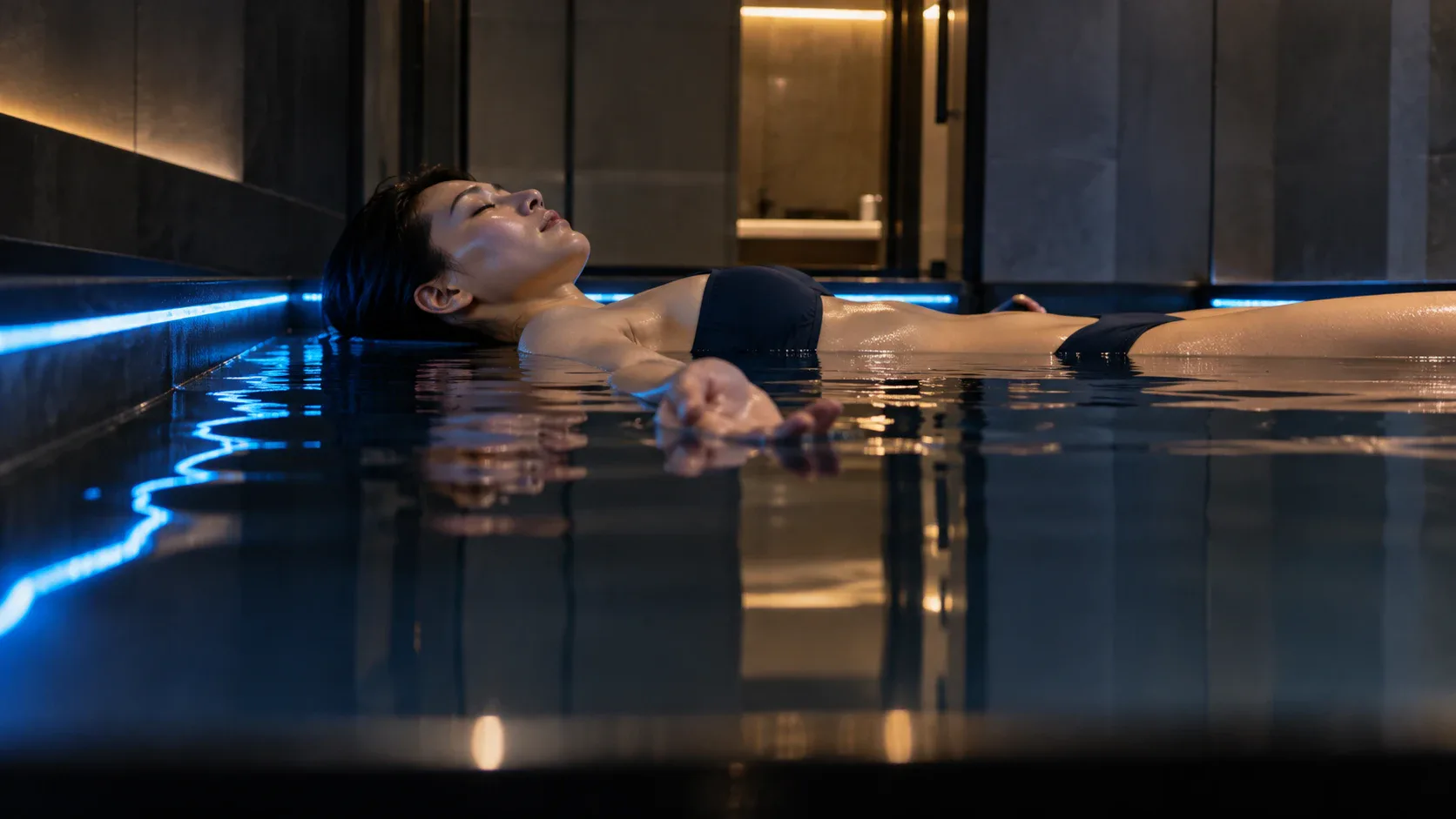
Imagine an hour with nothing to carry, balance, read or answer. That is the idea behind floating.
You lie back in about 25 cm of water containing around 500 kg of dense, mineral-rich Epsom salt. The water supports your entire weight. At 33–34 °C, close to skin temperature, the boundary between body and water begins to disappear. Lights off. Sound off. No notifications. No effort needed to stay afloat. Curious? Begin with what is float therapy.
The nervous system responds. In a randomised crossover study at the Laureate Institute for Brain Research, 57 adults spent 90 minutes floating and, on another day, watched a peaceful nature film. During floating, blood pressure dropped, breathing slowed and the proportion of high-frequency HRV associated with vagal activity increased. The researchers described a shift “toward a more parasympathetic state”.
Another study, published in 2025, followed 97 college athletes wearing Oura rings. Resting heart rate was lower on the night after floating than on the night before. Across 2,319 surveys, 85% reported feeling better afterwards, including less soreness, stress and fatigue.
In Switzerland, 20 highly trained athletes compared an hour of floating with an hour-long nap. Most preferred floating and reported greater well-being afterwards.
Together, these findings show why floating belongs in a recovery routine. It eases the stress response, slows breathing and encourages the nervous system towards rest and repair. A morning HRV score reflects more than one session, but regular deep rest can become part of the habits that support a healthier baseline. Explore float therapy for anxiety and float therapy as a brain reset.
Ōmni Evidence Scale: Strong, for float therapy and stress or relaxation. Early evidence, for float therapy and HRV specifically. Research shows lower blood pressure, slower breathing and stronger rest-and-repair activity during floating, alongside lower resting heart rate the following night.
Read your recovery score. Don’t let it run your life.
A wearable should help you recover, not give you another thing to worry about. Five simple habits make the data more useful.
- Follow the week. Researchers monitoring Olympic athletes use rolling 7-day averages because individual mornings fluctuate. Garmin’s HRV Status follows the same principle.
- Look for the reason. A red score after three glasses of wine makes sense. An unexplained drop with higher resting heart rate and temperature is a good reason to ease off.
- Listen to your body. Garmin cautions that a single HRV reading “should not automatically determine” training intensity. Feeling strong on a yellow day? Warm up and reassess.
- Adjust instead of cancelling. Swap intervals for easy zone 2, a walk or a swim. HRV-guided training studies found results at least as good as fixed plans, often with fewer hard sessions.
- Stay consistent. Wear the device snugly, in the same position each night, and keep your sleeping environment similarly cool.
The Saigon factor: hot days, humid nights
Ho Chi Minh City adds its own challenge. Heat lowers HRV. Humidity can delay recovery after exercise. Even an 18:00 riverside run can leave a trace on tomorrow’s score.
- Move before the heat builds. Training before 7:00 is cooler. The Saigon heat guide covers timing and hydration.
- Give sleep a cool room. Heat affects HRV, so bedroom temperature matters. Read too hot to sleep? Cooling down in Saigon and floating for better sleep.
- Make recovery part of the plan. After a HYROX simulation, long ride or half marathon, schedule a proper rest day. Explore HYROX and CrossFit in Saigon and float therapy for runners and gym recovery.
- Just landed? After a long flight, put sleep and morning light ahead of your score. See recovering from a long-haul flight.

Where to recover in Saigon
No laboratory required. Good sleep, steady training and somewhere to properly switch off are a strong start. The guide to sauna, ice baths and bathhouses in Saigon maps the options. Contrast therapy explains alternating heat and cold, while biohacking in Ho Chi Minh City explores the wider scene, including red light therapy. For more background, Float Vietnam examines biohacking and what the science says.
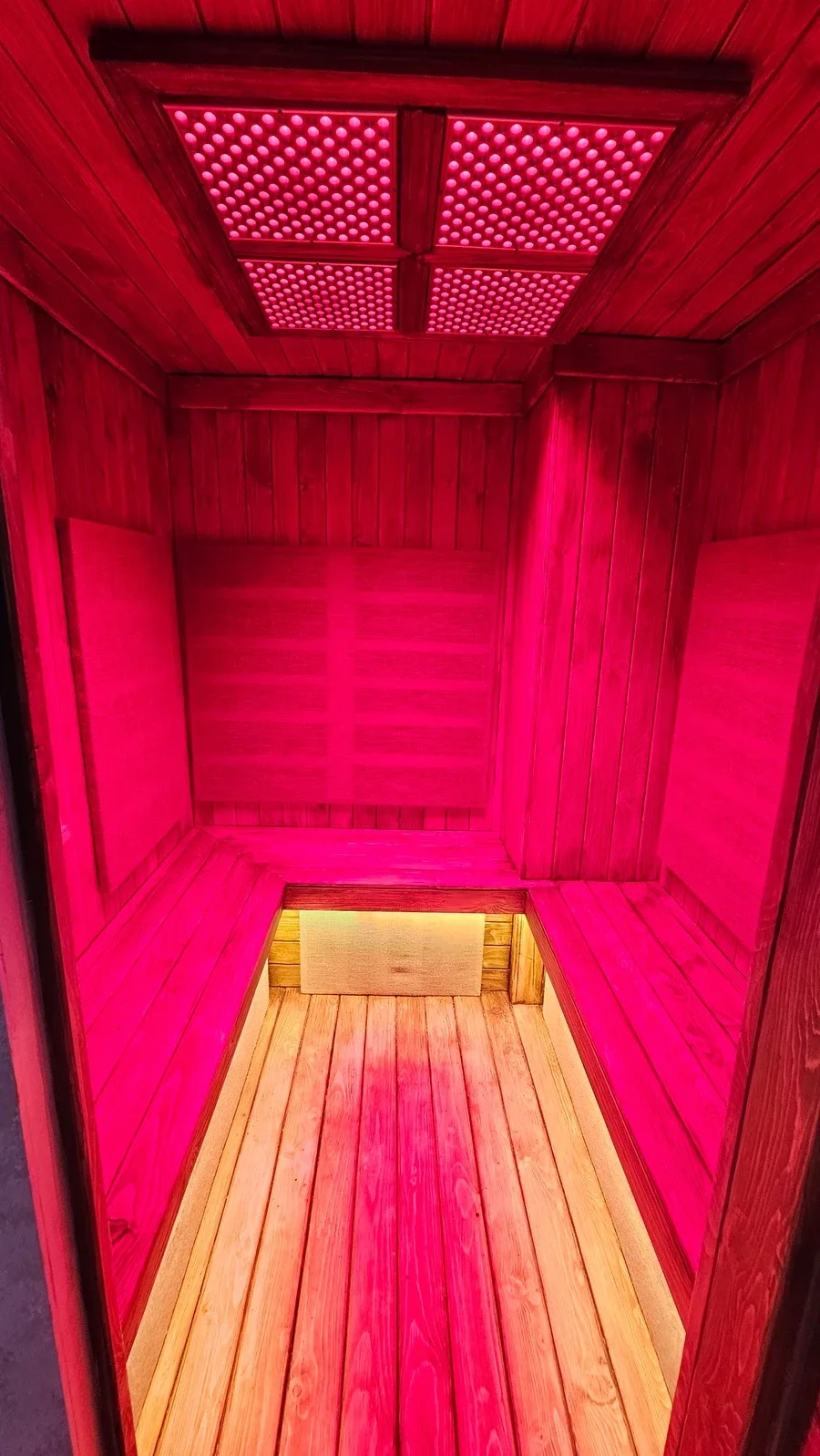
At 16C Quốc Hương in Thảo Điền, Ōmni Space offers private float rooms, an infrared sauna with red light (45–55 °C) and a cold plunge (7–12 °C). On a red-score day, settle into a float and let the water do the holding. On a green day after a tough workout, combine sauna, cold plunge and floating, then check your ring the following morning. Bring a swimsuit for the plunge; swimwear is optional for floating and sauna. Coming with friends? The entire sauna and cold plunge room can be booked for up to four people for 60 minutes. Open 9:00–21:00 daily, with the last float at 20:00. Book online. Any questions, our team will advise on site.
Still curious? Explore the Recovery Library, float and visualisation for athletes, does a sauna help you sleep? and the Vietnamese lunch nap.
Float PlanRunning on empty?Take the one-minute Float Plan quiz: tell us how you feel and what you need, and get a simple plan for your first session.Make my Float PlanTravelling through Vietnam with a wearable on your wrist? See how a float fits your trip →
FAQ
What is a good HRV score?
There is no universal number. HRV varies with age, sex, genetics, fitness and device. Your own baseline matters most. A stable or gradually rising 7-day average is generally a reassuring sign.
Why is my HRV low when I feel fine?
Possible culprits include alcohol, a late dinner, a warm bedroom, recent hard training or an approaching cold. Sometimes it is ordinary variation or a loose strap. Check the weekly trend alongside how you feel.
Which wearable measures HRV most accurately?
In an independent 2025 comparison with a chest-strap ECG, Oura Gen 4 and Gen 3 showed the closest agreement for nightly HRV, followed by WHOOP 4.0, Garmin Fenix 6 and Polar Grit X Pro. The study was small and tested specific models. Consistent tracking matters more than chasing brands.
What is the fastest way to raise HRV?
Slow breathing at about six breaths a minute can raise HRV within minutes. For a stronger long-term baseline, focus on regular aerobic exercise, sufficient sleep and less alcohol.
Does float therapy increase HRV?
Floating lowers blood pressure, slows breathing and increases the rest-and-repair signal during a session. A study also recorded lower resting heart rate the following night. Float therapy has strong evidence for stress reduction and relaxation, making it a valuable part of a recovery routine that supports your nervous system over time.
Does Saigon’s heat affect my HRV?
Yes. Heat lowers HRV, and humid conditions can slow its recovery after exercise. In one study, HRV returned to baseline after about 4 hours in dry heat but took 8 to 24 hours in humid heat. Train early and keep your bedroom cool.
Written by the team at Ōmni Space in Thảo Điền. Device features and studies checked on 21 November 2026. Wearable scores and features change with software updates. Ōmni Space does not sell or recommend any particular device. For general information only.
Sources
- Task Force of the European Society of Cardiology and the North American Society of Pacing and Electrophysiology (1996). Heart rate variability: standards of measurement, physiological interpretation and clinical use. Circulation, 93(5), 1043–1065.
- Shaffer, F., & Ginsberg, J. P. (2017). An overview of heart rate variability metrics and norms. Frontiers in Public Health, 5, 258.
- Dial, M. B., et al. (2025). Validation of nocturnal resting heart rate and heart rate variability in consumer wearables. Physiological Reports, 13(16), e70527. 13 adults, 536 nights; Oura Gen 3 and Gen 4, WHOOP 4.0, Garmin Fenix 6 and Polar Grit X Pro vs Polar H10.
- Miller, D. J., Sargent, C., & Roach, G. D. (2022). A validation of six wearable devices for estimating sleep, heart rate and heart rate variability in healthy adults. Sensors, 22(16), 6317.
- Hernando, D., et al. (2018). Validation of the Apple Watch for heart rate variability measurements during relax and mental stress in healthy subjects. Sensors, 18(8), 2619.
- Sarhaddi, F., et al. (2022). A comprehensive accuracy assessment of Samsung smartwatch heart rate and heart rate variability. PLoS One, 17(12), e0268361.
- Oura. Readiness Score: contributors and score ranges (checked 21 November 2026).
- WHOOP. WHOOP 101: Recovery as a 0–100% score with green, yellow and red ranges (checked 21 November 2026).
- Apple Newsroom (9 September 2026). Introducing Apple Watch Series 12: Readiness score from 0 to 10, HRV measured up to 24 times more often.
- Apple Support. Track your overnight and daytime vitals with Apple Watch (published 14 September 2026).
- Apple Developer. HealthKit: heartRateVariabilitySDNN.
- Garmin. Owner’s manual: Heart Rate Variability Status (three weeks of sleep data; seven-day average vs baseline; Balanced, Unbalanced, Low).
- Garmin Malaysia blog. What is HRV? Heart rate variability, normal range and how to improve HRV (Body Battery, Training Readiness, single-reading caution).
- Samsung. How to check your Energy Score with the Galaxy Ring (HRV during sleep, sleep quality, activity).
- Samsung UK. Health features on the Galaxy Watch8 and Watch8 Classic (Energy Score).
- Polar. Nightly Recharge recovery measurement (ANS charge −10 to +10, RMSSD, first four hours of sleep, 28-day baseline).
- Amazfit Support. How do I check my readiness score?
- the5krunner (25 May 2026). Amazfit HybridCharge vs Garmin Body Battery and Whoop: 0–100 score replacing BioCharge and Readiness in the Zepp app.
- Pietilä, J., et al. (2018). Acute effect of alcohol intake on cardiovascular autonomic regulation during the first hours of sleep in a large real-world sample of Finnish employees. JMIR Mental Health, 5(1), e23.
- Zhang, S., et al. (2025). Effects of sleep deprivation on heart rate variability: a systematic review and meta-analysis. Frontiers in Neurology, 16, 1556784.
- Yoshizaki, T., et al. (2013). Influence of dietary behavior on the circadian rhythm of the autonomic nervous system as assessed by heart rate variability. Physiology & Behavior, 118, 122–128.
- Plews, D. J., et al. (2013). Training adaptation and heart rate variability in elite endurance athletes: opening the door to effective monitoring. Sports Medicine, 43(9), 773–781.
- Manresa-Rocamora, A., et al. (2021). Heart rate variability-guided training for enhancing cardiac-vagal modulation, aerobic fitness, and endurance performance: a methodological systematic review with meta-analysis. International Journal of Environmental Research and Public Health, 18(19), 10299.
- Düking, P., et al. (2021). Monitoring and adapting endurance training on the basis of heart rate variability monitored by wearable technologies: a systematic review with meta-analysis. Journal of Science and Medicine in Sport, 24(11), 1180–1192.
- Hirten, R. P., et al. (2021). Use of physiological data from a wearable device to identify SARS-CoV-2 infection and symptoms and predict COVID-19 diagnosis: observational study. Journal of Medical Internet Research, 23(2), e26107.
- Abellán-Aynés, O., Manonelles, P., & Alacid, F. (2021). Cardiac parasympathetic withdrawal and sympathetic activity: effect of heat exposure on heart rate variability. International Journal of Environmental Research and Public Health, 18(11), 5934.
- Abellán-Aynés, O., et al. (2019). Recovery of heart rate variability after exercise under hot conditions: the effect of relative humidity. Wilderness & Environmental Medicine, 30(3), 260–267.
- Maynard, J. R., et al. (2025). Effect of travel on sleep patterns and athletic performance in female professional tennis players: a retrospective cohort study utilizing WHOOP 3.0 tracking. Sports Health, 18(1), 73–82.
- Laborde, S., et al. (2022). Effects of voluntary slow breathing on heart rate and heart rate variability: a systematic review and a meta-analysis. Neuroscience & Biobehavioral Reviews, 138, 104711.
- Shao, R., Man, I. S. C., & Lee, T. M. C. (2024). The effect of slow-paced breathing on cardiovascular and emotion functions: a meta-analysis and systematic review. Mindfulness, 15, 1–18.
- Lehrer, P., et al. (2020). Heart rate variability biofeedback improves emotional and physical health and performance: a systematic review and meta analysis. Applied Psychophysiology and Biofeedback, 45(3), 109–129.
- Lehrer, P. M., & Gevirtz, R. (2014). Heart rate variability biofeedback: how and why does it work? Frontiers in Psychology, 5, 756.
- Amekran, Y., & El hangouche, A. J. (2024). Effects of exercise training on heart rate variability in healthy adults: a systematic review and meta-analysis of randomized controlled trials. Cureus, 16(6), e62465.
- Galvez-Rodriguez, C., et al. (2025). Cold water immersion, heart rate variability and post-exercise recovery: a systematic review. Physiotherapy Research International, 30(2), e70033.
- Al Haddad, H., et al. (2010). Influence of cold water face immersion on post-exercise parasympathetic reactivation. European Journal of Applied Physiology, 108(3), 599–606.
- Laukkanen, T., et al. (2019). Recovery from sauna bathing favorably modulates cardiac autonomic nervous system. Complementary Therapies in Medicine, 45, 190–197.
- Brown, L., et al. (2021). The effects of mindfulness and meditation on vagally mediated heart rate variability: a meta-analysis. Psychosomatic Medicine, 83(6), 631–640.
- Flux, M. C., et al. (2022). Exploring the acute cardiovascular effects of Floatation-REST. Frontiers in Neuroscience, 16, 995594.
- Vatne, E., et al. (2025). Effects of daytime floatation-restricted environmental stimulation therapy on nocturnal cardiovascular physiology, sleep, and subjective recovery in collegiate student-athletes. Journal of Strength and Conditioning Research, 39(8), 857–867.
- Besson, C., et al. (2024). Comparison of 1-hour floatation-REST versus conventional napping on heart rate variability in active individuals. BMJ Open Sport & Exercise Medicine, 10(4), e002292.
- Feinstein, J. S., et al. (2018). Examining the short-term anxiolytic and antidepressant effect of Floatation-REST. PLoS One, 13(2), e0190292.


