
In short: Your first float is about getting to know the room. Your second gives you more room to settle. The shower, the lights and the silence are familiar. You remember how it feels when the water takes your weight. With less for your mind to check, deep rest often comes sooner. Several float studies that found clear effects on stress and anxiety followed people through a series of sessions. For your second float of Thiền Nổi (float therapy) at Ōmni Space in Thảo Điền, try one small change. Turn off the lights, try a different arm position or a short body scan, or stay for 90 minutes instead of 60.
You step out of the shower after your first float. Your shoulders sit a little lower. Your thoughts come a little slower and quieter. Somewhere between the lounge and the street, you catch yourself wondering what it would feel like to get back in. Next time, you already know the water will hold you. That small bit of familiarity can change how you spend your next hour in the water.
First float, take it in. Second float, settle in.
Think back to your first visit. Even if you felt calm, part of you was still getting your bearings. Where’s the light switch? How does the pillow work? Is that the end-of-session music already? Your brain was doing what it does in any new place.
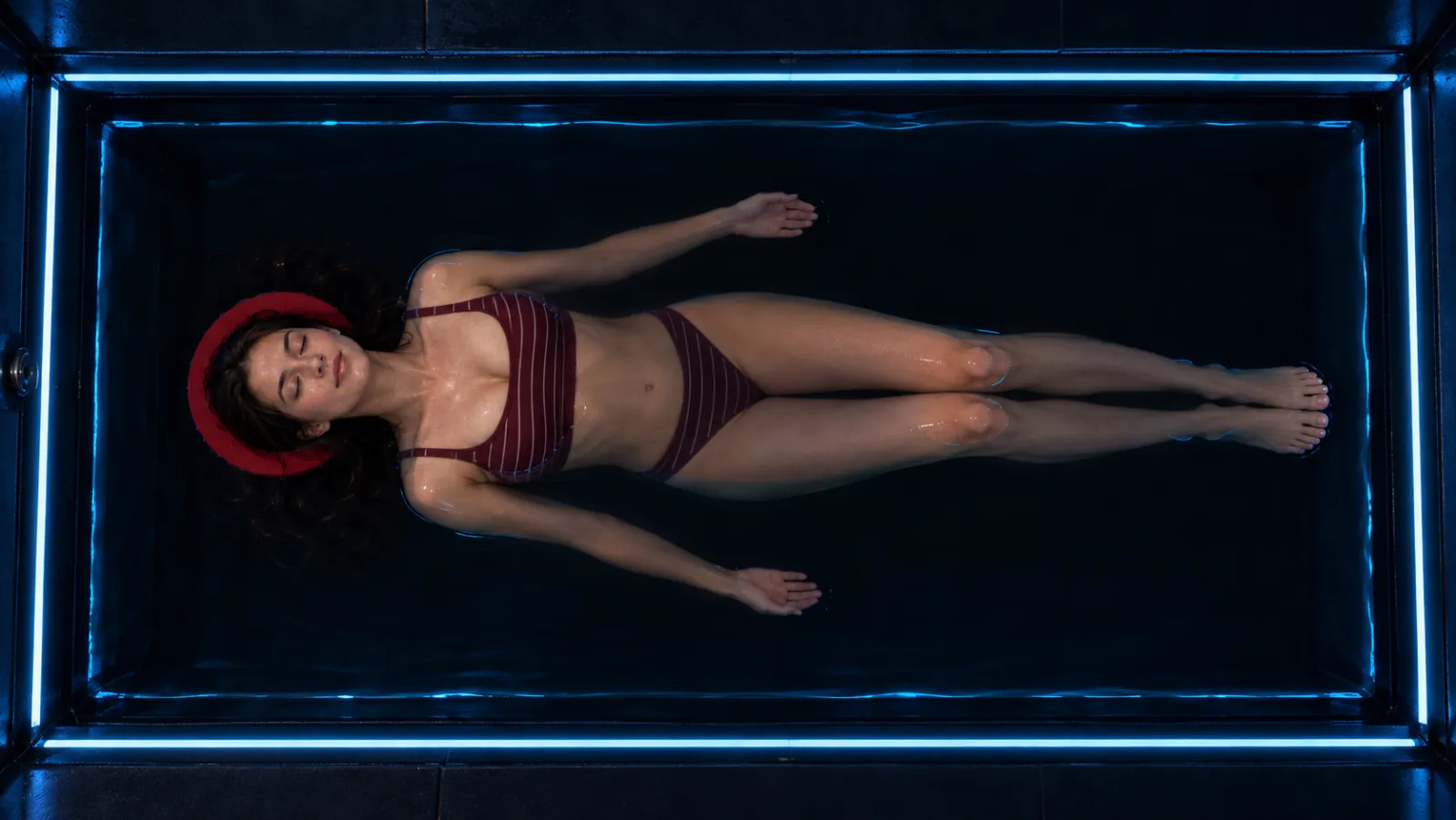
On your second visit, you know the routine. Shower, put in your earplugs, step in and lie back. You know the water will hold you, thanks to around 500 kg of dense, mineral-rich Epsom salt in about 25 cm of water at 33–34 °C, close to skin temperature. When the session ends, there’s music, a short notice and then the hum of the filter. With less to figure out, many guests say they settle sooner and rest deeply for longer.
What feels different the second time
Your brain has less to check
Psychologists call it habituation. The brain pays close attention to something new. When the same thing happens again and again and turns out to be safe, that response softens. Researchers have seen it across many species and describe it as one of the simplest forms of learning.
On your first float, there’s a lot to take in. Your body feels weightless. The room goes dark and quiet. The water feels warm against your skin. By your second visit, those sensations are familiar. It’s easier to turn your attention inward. That helps explain why many guests say they settled sooner and rested more deeply on their second visit.
The first-time “wow” can soften, too. In a 2024 trial at the Laureate Institute for Brain Research, some of the strongest positive feelings eased slightly in later sessions. The authors suggested that familiarity made the experience feel less novel. As the surprise fades, lying back in the water starts to feel familiar in its own right.
What the studies found over a series of floats
A single float can make a clear difference. In a 2018 study at the same institute, 50 people with anxiety and stress-related conditions floated for one hour. Their anxiety dropped sharply right afterwards. The result is promising. The study was open-label and had no control group, which limits what it can establish.
The longer trials looked at what happens when people come back. In a Swedish pilot trial, 65 working adults floated 12 times over seven weeks. Compared with a waiting-list group, they reported less stress, anxiety and depression. They also reported less of their worst pain, more optimism and better sleep quality. In another pilot trial, people with generalised anxiety floated 12 times. Their symptoms eased, and most of the gains were still there six months later.
An earlier Swedish study compared 12 floats with 33 for people with stress-related muscle pain. Twelve sessions were enough for improvements in pain, stress and mood. The longer series also saw a drop in diastolic blood pressure. These studies were small, and much of the evidence comes from self-reports. Across the trials, the benefits people described tended to build over a series. That series can start with your second float.
Wondering when to come back after that? The guide on how often you should float suggests a rhythm for different goals.
Six ways to make your second float count
Keep what felt good the first time. Change one or two small things and see how you settle in.
1. See how full darkness feels
You control the lights. Many first-timers keep a soft glow on while they get to know the room. This time, try full darkness for part of the session. With nothing left to look at, your attention can turn gently inward. Turn the lights back on whenever you like.
2. Try a new arm position
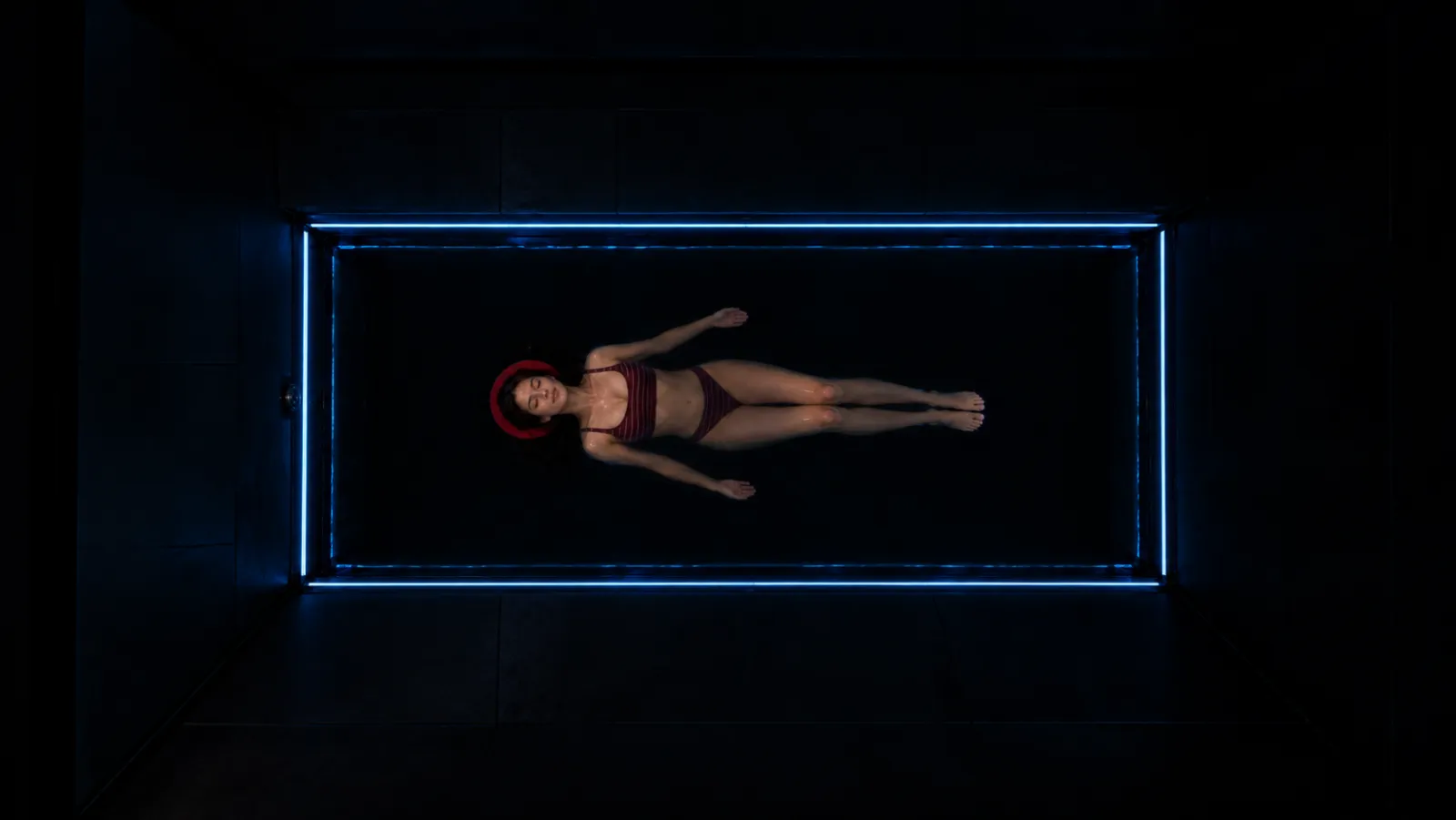
Let your arms float by your sides, rest both overhead, or try one up and one down. You can also rest your hands on your belly. If your neck or shoulders felt tense last time, try floating with your arms overhead. It opens your chest and lets your shoulders sink. The Halo pillow is there from the start. Use it or set it aside and let the water hold your head.
3. Bring one simple practice
Your mind will still wander sometimes. Give it somewhere simple to come back to. The body scan meditation guide shows you how to move your attention slowly from your toes to the top of your head. Or spend the first few minutes taking long, easy breaths out to signal your body to slow down. The breathwork guide has a few gentle patterns. If you find five you like, start with one. Let it go when the quiet takes over.

4. Give yourself 90 minutes
If your first float was 60 minutes, try 90 this time. Settling in takes a while, and the extra half hour gives you longer in the quiet once you’re there. In the 2024 trial, people who could choose their own float length stayed in for around 75 minutes on average. The other group was given one hour. Ninety minutes is the length of each float in the Intro Pack below.
5. Add a sauna or cold plunge
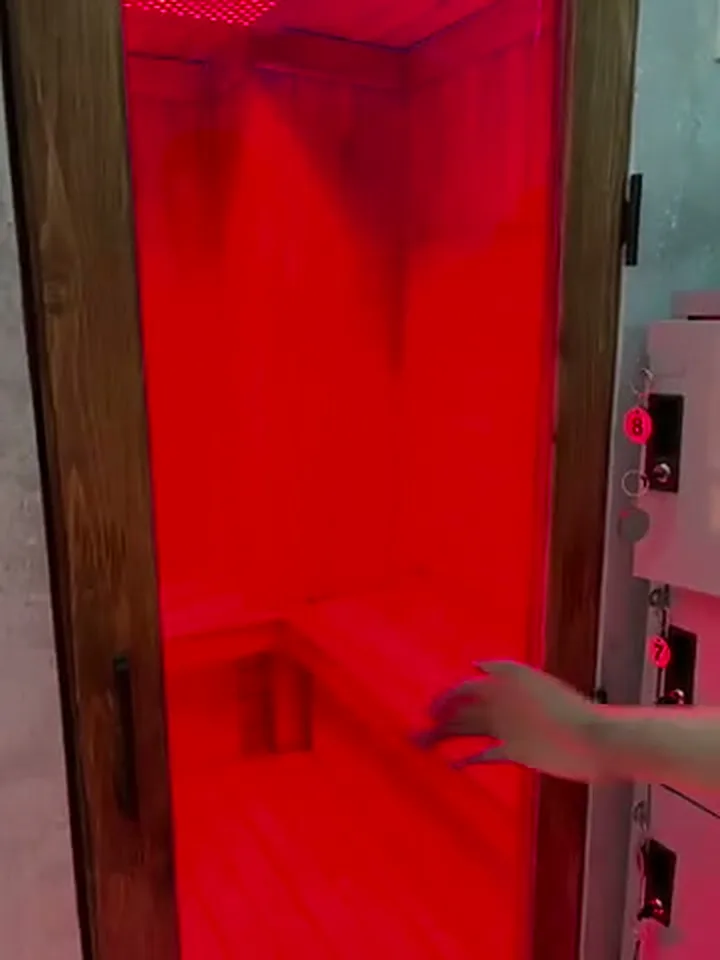
At Ōmni Space you can add the infrared sauna with red light (45–55 °C) or the cold plunge (7–12 °C) to your float for 200,000₫ each. Some guests like to loosen up in the warmth of the sauna before getting into the float pool. Others finish with a cold plunge and step out feeling alert. You can float and use the sauna without swimwear. Bring your own for the cold plunge.
6. Come back while it’s fresh
Many people book their second float within one to three weeks. The first session is still fresh, and the room and the routine feel familiar when you step back in. The guide to float frequency can help you find a rhythm. After your second session, take a few minutes to write down what felt different. These journaling prompts for after a float give you somewhere to start.
Try one float or come back for three
If you’re planning your first visit or already know you want to return, the Intro Pack gives you three floats of 90 minutes each for 3,000,000₫. That’s half the price of three single 90-minute floats (6,000,000₫). Sauna is included. You have a year from purchase to start. Use all three sessions within three months of your first float. The pack is for one person.
On the first visit, you get to know the room and find out how it feels to float. On the second, you get to settle in sooner. By the third, many people know where they like their arms, how dark they want the room and what helps them ease into deep rest.
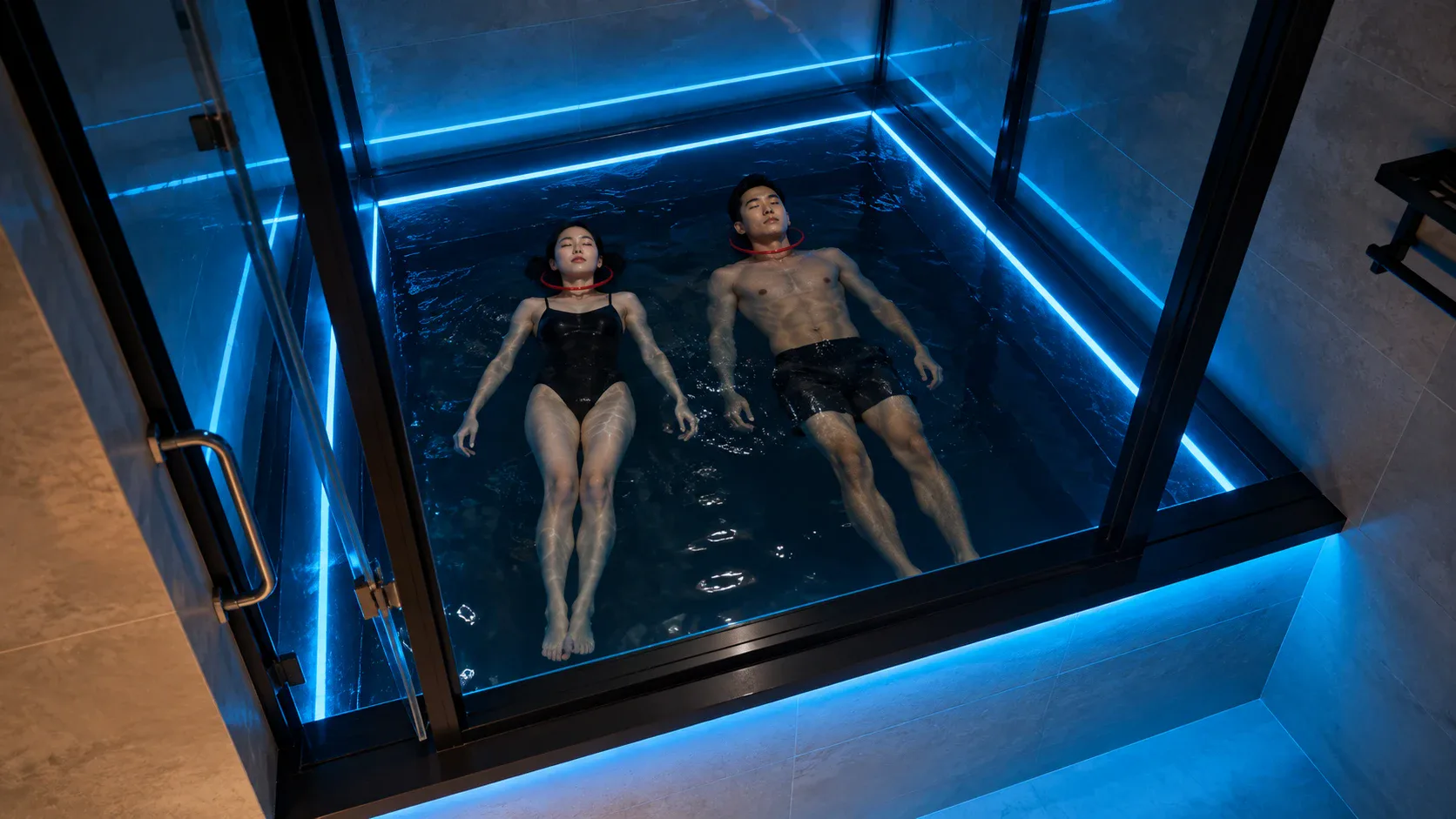
Want to bring someone you love? Turn any Intro session into a float for two in the couple room. You’ll share one large square pool and each have a separate shower. It costs 700,000₫ per session to bring a guest.
Find Ōmni Space at 16C Quốc Hương in Thảo Điền. It’s open every day from 9:00–21:00, with the last float starting at 20:00. If you have questions about your next session, the team can help on site. If you’re planning your very first visit, start with the beginner’s guide to float therapy in Vietnam.
Float PlanRunning on empty?Take the one-minute Float Plan quiz: tell us how you feel and what you need, and get a simple plan for your first session.Make my Float PlanVisiting Vietnam? See how a float fits your trip →
FAQ
Is the second float better than the first?
For many people, the second feels more restful. You know the room and the routine, so your mind has less to check and you can settle sooner. The first-time thrill may soften, and the rest often goes deeper.
How soon should I book my second float?
Many people return within one to three weeks, while the first session is still fresh. For a specific goal, the guide on how often to float can help you find a rhythm.
Should my second float be 60 or 90 minutes?
If you started with 60 minutes, try 90. The extra 30 minutes gives you more quiet time in the water once you’ve settled in.
Can I float with my partner next time?
Yes. The couple room has one large square pool and a separate shower for each person. With an Intro Pack session, adding a guest costs 700,000₫.
Do I need to buy a package for my second float?
You can book a single float any time. If you already know you want three, the Intro Pack (3 × 90 minutes, sauna included) costs half as much as three single 90-minute floats.
Written by the team at Ōmni Space in Thảo Điền. Research checked in November 2026. General information, not medical advice.
Sources
- Rankin CH et al. (2009). Habituation revisited: An updated and revised description of the behavioral characteristics of habituation. Neurobiology of Learning and Memory 92(2): 135–138. Evidence: Expert review (basic learning science, not float-specific).
- Garland MM et al. (2024). A randomized controlled safety and feasibility trial of floatation-REST in anxious and depressed individuals. PLoS One 19(6): e0286899. Six sessions; positive feelings eased slightly at later sessions; self-chosen float length averaged about 75 minutes. Evidence: Early evidence (feasibility trial, not designed to test efficacy).
- Feinstein JS et al. (2018). Examining the short-term anxiolytic and antidepressant effect of Floatation-REST. PLoS One 13(2): e0190292. Evidence: Early evidence (open-label, no control group).
- Kjellgren A, Westman J (2014). Beneficial effects of treatment with sensory isolation in flotation-tank as a preventive health-care intervention: a randomized controlled pilot trial. BMC Complementary and Alternative Medicine 14: 417. Evidence: Early evidence (pilot trial, self-reported outcomes).
- Jonsson K, Kjellgren A (2016). Promising effects of treatment with flotation-REST as an intervention for generalized anxiety disorder (GAD): a randomized controlled pilot trial. BMC Complementary and Alternative Medicine 16: 108. Evidence: Early evidence (pilot trial).
- Bood SÅ, Sundequist U, Kjellgren A, Nordström G, Norlander T (2007). Effects of flotation REST on stress related muscle pain: are 33 flotation sessions more effective than 12 sessions? Social Behavior and Personality 35(2): 143–156. Evidence: Early evidence (small randomized comparison, no untreated control).