
In short: Vietnamese Zen (Thiền) is a tradition of Buddhist meditation, mostly Mahāyāna, that has been present in Vietnam for nearly two thousand years: from Luy Lâu and the master Khương Tăng Hội in the 3rd century, through the three Lý-dynasty lineages, the Trúc Lâm school of the Trần kings and the Lâm Tế (Linji) and Tào Động (Caodong) lines, to modern Trúc Lâm, Plum Village, Theravāda and the Mendicant (Khất sĩ) tradition. It rarely withdraws from the world, often goes together with reciting the Buddha’s name, and blends quietly with Confucianism and Daoism.
Read in Vietnamese: Thiền Việt Nam: lịch sử gần hai nghìn năm và các dòng thiền chính
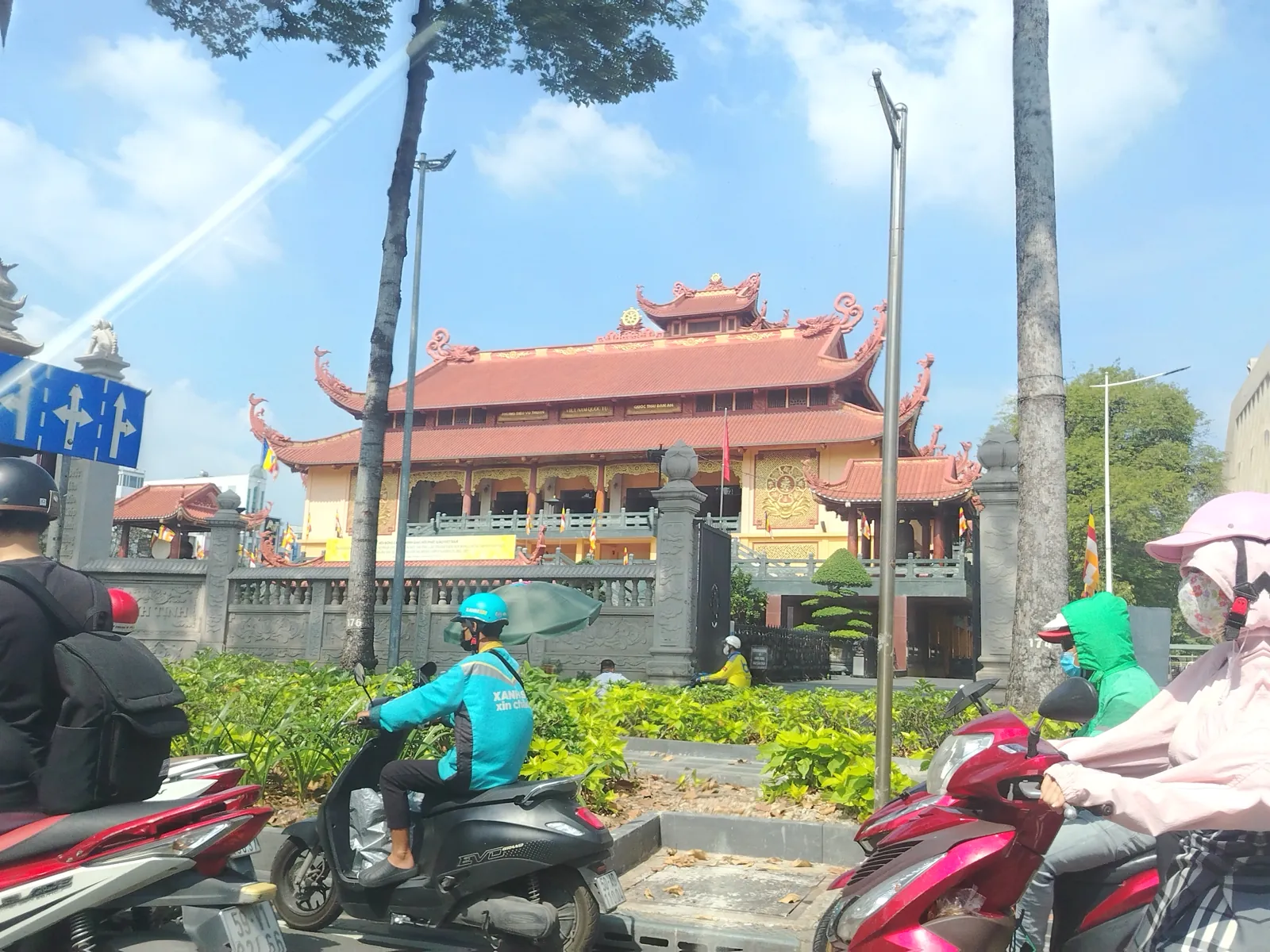
Walk past a Saigon pagoda at dusk and you may hear a bell, a slow chant, or nothing at all: a few people sitting very still. Many visitors know Japanese Zen and have heard of Thích Nhất Hạnh, but fewer know Vietnam’s own Zen story, of kings who became monks and monks who advised kings. This guide traces it from the beginning to today, then gives you three Vietnamese ways to practise at home.
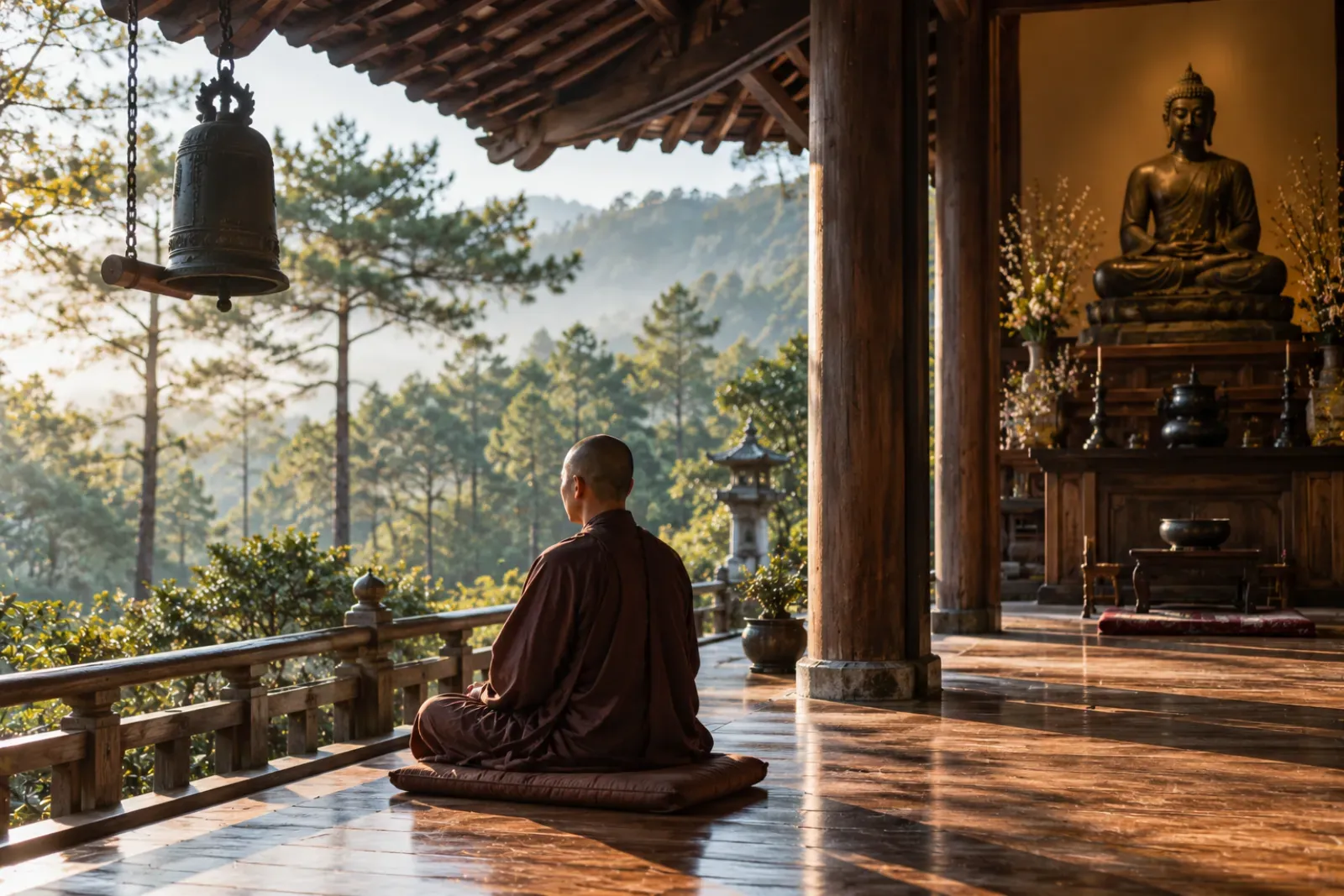
Where does Vietnamese Zen begin?
In Luy Lâu, in today’s Thuận Thành district of Bắc Ninh province, where Buddhism was present from around the late 2nd century.
From the 1st to the 3rd century, Luy Lâu was both the seat of Han rule in Giao Chỉ and a lively Buddhist centre with many Mahāyāna elements. In the late 2nd century, Mâu Tử (Mouzi) wrote the Lý hoặc luận (a treatise on settling doubts), considered the earliest Chinese-language work on Buddhism in Giao Châu. He describes following Buddhism while still reading Laozi and building on the Confucian Five Classics: an early trace of the idea that the “three teachings share one source” (tam giáo đồng nguyên).
In the 3rd century came Khương Tăng Hội (Kang Senghui, d. 280). Born to a Sogdian father and a mother from Giao Chỉ, orphaned young, he became a monk at Luy Lâu. He wrote a preface to the Ānāpāna scripture on mindfulness of breathing, teaching people to count the breath from one to ten until the mind becomes still and clear as a mirror. In 247 he went on to teach in Jianye (today’s Nanjing). Zen Master Thích Nhất Hạnh, writing as Nguyễn Lang in his History of Vietnamese Buddhism, regarded him as Vietnam’s first Zen master.
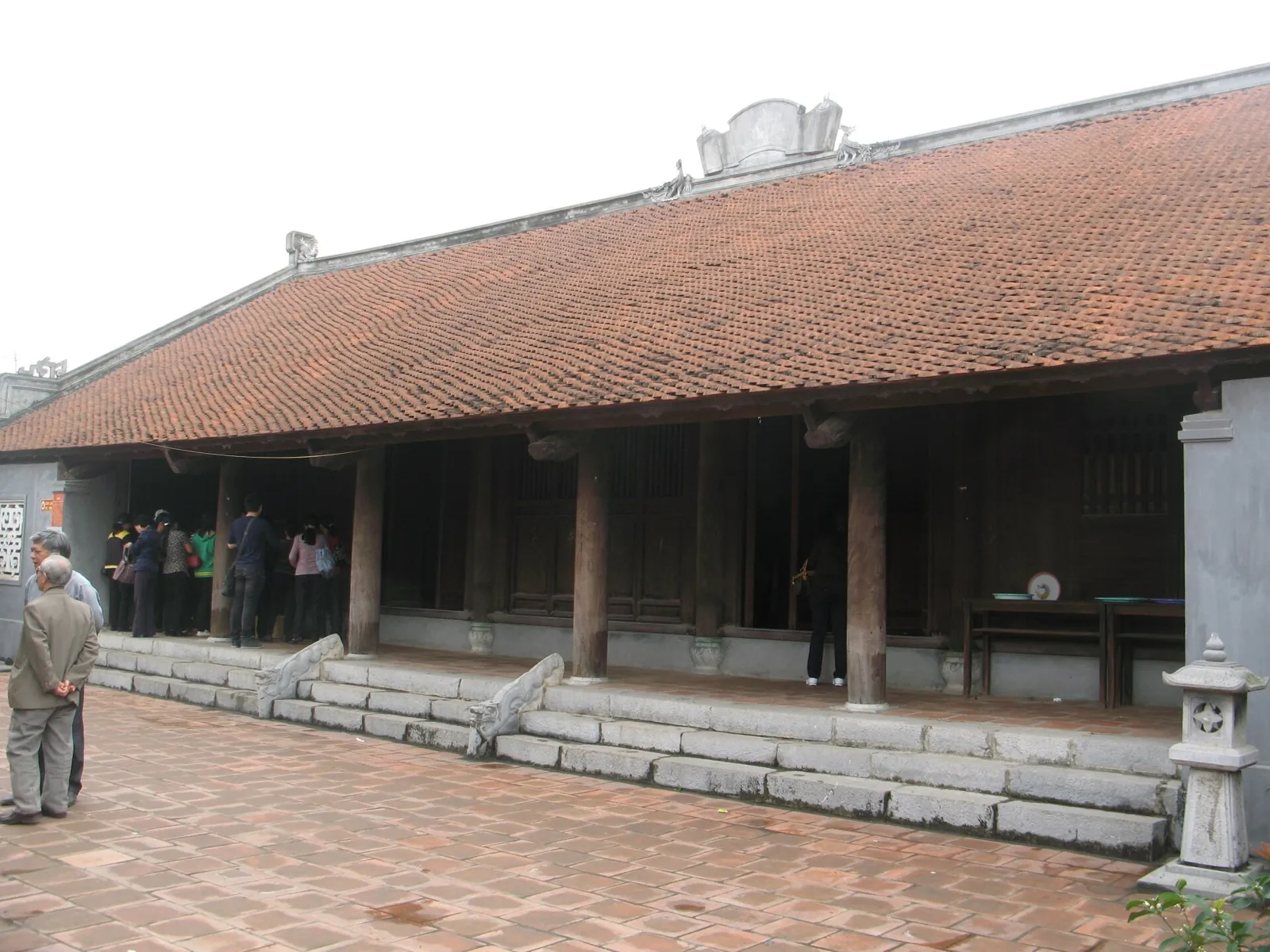
The three Zen lineages of the Lý era, according to the Thiền uyển tập anh
Tradition names three early lineages: Vinītaruci, Vô Ngôn Thông and Thảo Đường. Almost everything we know comes from one book, the Thiền uyển tập anh (Outstanding Figures in the Garden of Zen), compiled in classical Chinese during the Trần dynasty, around 1337. Its compiler is uncertain, the oldest surviving edition dates from 1715, and it has 68 entries on Zen masters.
Vinītaruci (Tỳ-ni-đa-lưu-chi) was a meditation master from South India. According to tradition, he arrived at Pháp Vân pagoda (Dâu Pagoda, Bắc Ninh) in 580 and passed the “mind seal” (direct transmission of insight) to Pháp Hiền.
Vô Ngôn Thông was a Chinese Zen master in the line of Baizhang Huaihai. He came to Kiến Sơ pagoda in Phù Đổng in 820 (d. 826); his line stresses looking directly into one’s own mind.
Thảo Đường was a Chinese Zen master taken prisoner during the campaign against Champa in 1069. King Lý Thánh Tông recognised his learning and made him national teacher. His literary line, with many royal and official lay followers, lasted about five generations.
Modern historians are cautious. Cuong Tu Nguyen, in Zen in Medieval Vietnam (1997), argues the book follows the model of Chinese “transmission of the lamp” records, so its neat lineages may have been reconstructed later and the stories of Vinītaruci and Vô Ngôn Thông may hold much legend. Hence “according to tradition”.
Zen masters of the Đinh, Lê and Lý eras: monks who helped guard the nation
From the 10th to the 12th century, as Đại Việt regained independence, many Zen masters practised, advised the court and wrote poetry.
Khuông Việt (Ngô Chân Lưu, 933–1011), of the Vô Ngôn Thông line, was made head of the Buddhist community by Emperor Đinh Tiên Hoàng in 969 and given the title “Khuông Việt great master” in 971. Vạn Hạnh (d. 1018), of the Vinītaruci line, helped bring Lý Công Uẩn to the throne. Từ Đạo Hạnh (d. around 1116–1117) practised at Thầy Pagoda (Sài Sơn); folk tradition says he left his old body and was reborn as King Lý Thần Tông.
Mãn Giác (1052–1096), of the Vô Ngôn Thông line, left the verse Cáo tật thị chúng (“Falling ill, a word to all”), whose closing lines read “Mạc vị xuân tàn hoa lạc tận / Đình tiền tạc dạ nhất chi mai”, roughly: “Do not say that when spring is over every flower has fallen; / last night, in the front yard, a sprig of plum blossom opened.”
Trúc Lâm in the Trần era: a Zen school founded by Vietnamese
The Trúc Lâm (Bamboo Grove) school of Yên Tử, from the late 13th century, is regarded as the first Zen school founded by Vietnamese, uniting the earlier lineages.
King Trần Thái Tông (1218–1277) laid its foundations, ruling while practising Zen and writing the Thiền tông chỉ nam and Khoá hư lục. Tuệ Trung Thượng Sĩ (Trần Tung, 1230–1291), a lay prince, led Thái Tông’s grandson into Zen; asked about its heart, he advised turning back to look into oneself.
King Trần Nhân Tông (1258–1308) gave up the throne and became a monk on Yên Tử mountain in 1299. Honoured as Trúc Lâm’s first patriarch, his rhapsody Cư trần lạc đạo (“Living in the world, delighting in the Way”) sums up its spirit: practise in the middle of everyday life. After him came Pháp Loa (1284–1330) and Huyền Quang (1254–1334); the three are known together as the Three Patriarchs of Trúc Lâm.
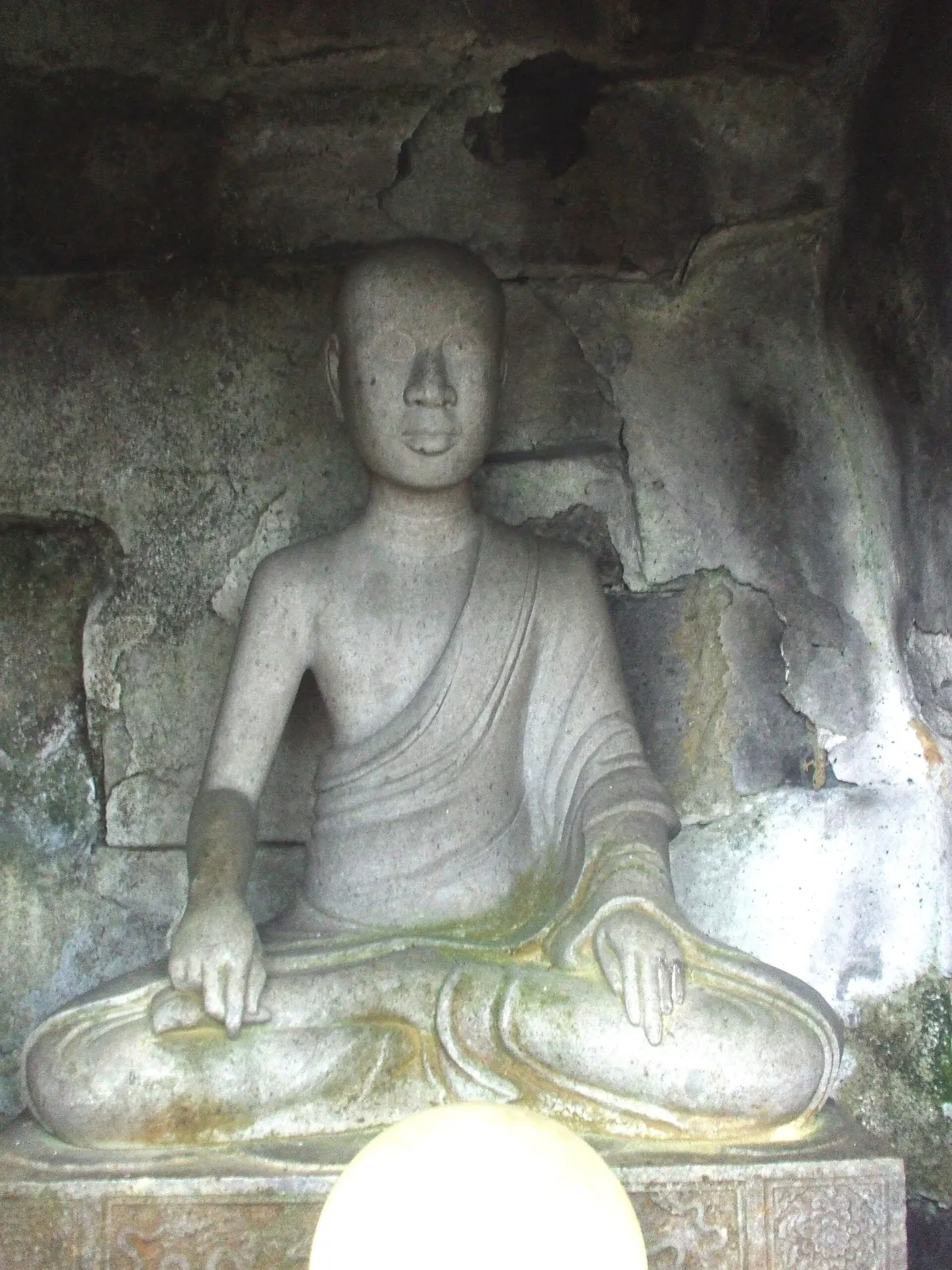
After the Ming occupation in the early 15th century, Trúc Lâm declined, flourishing again only in the late 20th century.
The Lê and Nguyễn eras: Lâm Tế, Tào Động and the Liễu Quán line
In the 17th–18th centuries, with the country divided into north (Đàng Ngoài) and south (Đàng Trong), the Chinese Linji (Lâm Tế) and Caodong (Tào Động) schools took root and became Vietnamese.
In the north, the Chinese master Chuyết Công (1590–1644) brought Lâm Tế around the 1630s (Phật Tích and Bút Tháp pagodas), while Thủy Nguyệt (1637–1704) of Thái Bình studied in China from 1664 and brought Tào Động home.
In the south, Nguyên Thiều (1648–1728), from Guangdong, arrived in Quy Ninh (Bình Định) in 1677, founding Thập Tháp Di Đà pagoda and later Quốc Ân pagoda in Huế. In 1695, Lord Nguyễn Phúc Chu invited the Tào Động master Thạch Liêm (Dashan) to Thuận Hóa.
From these roots grew a truly Vietnamese branch: Liễu Quán (1667–1742), from Phú Yên. Ordained by Thạch Liêm and confirmed by the master Tử Dung, he founded Thiền Tôn pagoda in Huế. The Lâm Tế Liễu Quán line, to which Thích Nhất Hạnh belonged, is still one of the largest in central and southern Vietnam.
The Buddhist revival of the 1920s and 1930s
In the early 20th century, a revival set out to restore Buddhist learning. In 1931 the Cochinchina Buddhist Studies Association was founded in Saigon, with the Venerable Khánh Hòa as president. In 1932 came the Annam Buddhist Studies Association in Huế, and in 1934 the Tonkin Buddhist Association at Quán Sứ pagoda in Hanoi. They opened schools, published journals in Vietnamese script and translated scriptures.
Vietnamese Zen today
Modern Trúc Lâm. The Most Venerable Thích Thanh Từ (born 1924) turned from Pure Land to Zen, founded Thường Chiếu Zen Monastery in Đồng Nai in 1974 and later Trúc Lâm monasteries in Đà Lạt, on Yên Tử and elsewhere, reviving the school. Drawing on Trần Nhân Tông, Huike and Huineng, his core teaching is to recognise wandering thoughts without following them.

Plum Village. Zen Master Thích Nhất Hạnh (1926–2022) was ordained at Từ Hiếu temple in Huế. With Sister Chân Không, he founded Plum Village in France in 1982, bringing mindfulness to the world through simple practices: conscious breathing, walking meditation and listening to the bell.
Theravāda and the Mendicant tradition. Vietnamese Theravāda includes the centuries-old Khmer communities of the south and an ethnic Vietnamese branch from the 1930s–40s (the Venerable Hộ Tông founded Bửu Quang pagoda in Thủ Đức after returning in 1940). The Mendicant (Khất sĩ) tradition, founded in the south in 1944 by Patriarch Minh Đăng Quang, keeps the practice of alms rounds.
What makes Vietnamese Zen distinctive
Zen and Pure Land together. In most Mahāyāna pagodas in Vietnam, sitting meditation and reciting the name of Amitābha Buddha live under one roof. Neither is seen as the wrong path, though some masters, such as Thích Thanh Từ, choose pure Zen.
Engaged with the world. Khuông Việt received envoys, Vạn Hạnh helped found the Lý dynasty, Trần Nhân Tông fought invaders before going up the mountain, and Thích Nhất Hạnh spoke of “engaged Buddhism”.
Three teachings, one source. From Mâu Tử, through the Trần kings, to Nguyễn Bỉnh Khiêm in the 16th century, many Vietnamese have seen Buddhism, Confucianism and Daoism as three paths springing from one deep root.
How to practise meditation the Vietnamese way
Three characteristic practices you can try at home. Anyone can learn the technique; keep the meaning true to the tradition.
1. Knowing thoughts without following them (Trúc Lâm)
This expresses the core of Thích Thanh Từ’s teaching: restless thoughts arise by themselves; simply recognise them and do not follow, and they settle on their own.
- Sit in full lotus, half lotus or on a chair, back naturally straight, eyes half closed and looking down.
- Let the breath be natural for a few minutes so the body settles.
- When a thought arises, simply notice: “a thought”. Do not analyse it, judge it or try to push it away.
- Do not follow the thought a single step further; gently return to the quiet awareness that noticed it. Each noticing is the practice.
Beginners can sit for 10–15 minutes a day. Common mistakes: trying to wipe out every thought, or drifting in a daydream without noticing. In Trúc Lâm this is the first step towards recognising the true mind; to go deeper, the monasteries recommend practising with a community.
2. Conscious breathing with short verses (Plum Village)
These short verses (gāthās) accompany the breath and come from the first steps of the Discourse on Mindfulness of Breathing.
- Sit comfortably and let the breath be natural; do not force it to be long or deep.
- Breathing in, say silently: “I know I am breathing in.” Breathing out: “I know I am breathing out.” Once that feels familiar, shorten it to “in”, “out”.
- Continue through the pairs of words in a much-loved Plum Village guided meditation: “In, out. Deep, slow. Calm, ease. Smile, release. Present moment, wonderful moment.” Stay with each pair for as many breaths as you like.
- When you hear a bell or your phone ring, stop, take three breaths and come back to your body.
Beginners can practise for 5–10 minutes, sitting or walking. A common mistake is trying to make the breath “right”. Let the breath be as it is; with mindfulness it slows and deepens by itself. For more, see our breathwork guide.
3. Reciting the Buddha’s name (Zen and Pure Land together)
For Pure Land practitioners, the phrase “Nam mô A Di Đà Phật” (Homage to Amitābha Buddha) expresses faith and the aspiration to be reborn in Amitābha’s Pure Land. It is not just a phrase repeated to relax.
- Sit upright, or hold a string of prayer beads.
- Recite slowly, pronouncing each word clearly, softly aloud or silently.
- Listen to your own voice reciting. When the mind runs off, gently bring it back to the phrase, like leading a child back onto the porch. You can match it to the breath: one phrase on the in-breath, one on the out-breath.
Beginners can recite for 10–15 minutes, or one round of 108 beads. A common mistake is reciting fast to reach the count while the mind is elsewhere. Non-Buddhists can learn to rest the mind on a repeated sound, while respecting that for Buddhists this is a sacred act.
From old pagoda roofs to a quiet moment today
At Ōmni Space in Thảo Điền you lie in about 25 cm of water with around 500 kg of dense, mineral-rich Epsom salt, at 33–34 °C, close to skin temperature, in a dark, quiet private float room. Held by the water, the body lets go more easily and the mind has more space to settle. Think of it as a lift to the levels of float meditation: not a shortcut to awakening, and no replacement for the path Vietnamese Zen masters have walked for nearly two thousand years. Start with our meditation hub, the wider history of meditation, or Mahāyāna vs Theravāda.
Float PlanRunning on empty?Take the one-minute Float Plan quiz: tell us how you feel and what you need, and get a simple plan for your first session.Make my Float PlanFrequently asked questions
How old is Zen in Vietnam?
Buddhism was present at Luy Lâu, in today’s Bắc Ninh, from around the late 2nd century. The meditation master Khương Tăng Hội (d. 280) taught mindfulness of breathing in the 3rd century. According to tradition, Vinītaruci’s arrival at Pháp Vân pagoda in 580 marks the start of the first Zen lineage.
What are the main schools of Vietnamese Zen?
Vinītaruci, Vô Ngôn Thông and Thảo Đường (Lý era); Trúc Lâm (Trần era); Lâm Tế, Tào Động and Lâm Tế Liễu Quán (Lê–Nguyễn eras); and today modern Trúc Lâm, Plum Village, Theravāda and the Mendicant tradition.
How is Vietnamese Zen different from Japanese Zen?
Both come from Chinese Chan and both have Linji (Lâm Tế, Rinzai) and Caodong (Tào Động, Sōtō) lines. Vietnamese Zen often goes together with reciting the Buddha’s name, stays close to village life and blends with Confucianism and Daoism. Japanese Zen has its own rituals and meditation-hall customs. These are differences of flavour, not of rank.
Can non-Buddhists practise Vietnamese-style meditation?
Yes. Noticing thoughts without following them, or breathing consciously with short verses, are techniques anyone can learn, and Plum Village welcomes people of all faiths. With recitation of the Buddha’s name, you can learn to rest the mind on a sound while respecting its sacred meaning for Buddhists.
Written by the team at Ōmni Space – Float Saigon in Thảo Điền. General information on history and culture; early dates follow tradition and are debated by historians. Checked on 5 November 2026.
Sources
- “Commemorating Zen Master Khương Tăng Hội”. Plum Village.
- Vũ Duy Mền (2017). Phật giáo ở Giao Châu trong thiên niên kỷ đầu Công nguyên [Buddhism in Giao Châu in the first millennium CE]. Tạp chí Khoa học Xã hội Việt Nam, no. 11.
- Nguyễn Tài Đông (2013). Tam giáo đồng nguyên và tính đa nguyên trong truyền thống văn hoá Việt Nam [The three teachings and pluralism in Vietnamese culture]. Tạp chí Khoa học Xã hội Việt Nam, no. 5.
- Nguyen CT (1997). Zen in Medieval Vietnam: A Study and Translation of the Thiền Uyển Tập Anh. University of Hawai’i Press.
- Tiểu Vũ, Đoàn Chi (2021). Thơ Thiền Việt Nam (Bài 5): Xuân qua, xuân tới [Vietnamese Zen poetry, part 5]. Báo Pháp Luật.
- “Calm and Ease, one of the most liked guided meditations on the app”. Plum Village App.
- “Thich Nhat Hanh”. Plum Village.
Leave a Reply