
In short: A basin of warm water before bed, often with ginger, mugwort or salt, is a familiar evening ritual in many Vietnamese homes, and foot baths are just as well loved in China and Japan. The research behind the warm-water part is surprisingly encouraging: a 2025 meta-analysis of 18 studies in nearly 1,000 older adults found that warm foot baths improved how well people felt they slept, and the body’s own physiology helps explain why warm feet can make it easier to drift off. The trials are small and unblinded, so we rate the evidence Promising. Whether the herbs add anything has not been shown. One important caution: people with diabetes can burn their feet without feeling it. Ōmni does not sell foot baths; we run a float centre, so we are not neutral, and we will be clear about that as we go.
Read in Vietnamese: Ngâm chân nước ấm trước khi ngủ (Float Vietnam)
Part of the Ōmni Recovery Library · Recovery by Water
Maybe your grandmother always swore by it. Maybe your Vietnamese partner appears on a cool evening with a basin of steaming ginger water and tells you to put your feet in. Or maybe you have been lying awake at night and want something simple and drug-free to try. A warm foot soak costs almost nothing, yet the science behind it is more interesting than you might expect from such an ordinary ritual. Here is why warm feet and sleep are connected, what the trials actually show, how people do it, and where the evidence stops.
Ōmni Evidence Scale: Promising, for a warm foot soak before bed and self-rated sleep quality, mostly in older adults (many small trials, consistent results, few blinded). No good evidence yet, that ginger, mugwort or other herbs add to the effect of warm water. See how we rate evidence on the Ōmni Evidence Scale.
How people do it
In Vietnam, ngâm chân is part of a wider East Asian tradition of keeping the feet warm, with roots in traditional medicine. A typical evening soak is wonderfully simple: a basin or wooden foot tub filled with warm water, deep enough to cover the ankles, for a quarter of an hour or so before bed. People commonly add slices of fresh ginger (gừng), a handful of mugwort (ngải cứu) or a spoon of coarse salt.

Japan has even taken foot bathing into public life. Many hot-spring towns have an ashiyu, an open-air foot bath where tired travellers sit side by side on a bench, trousers rolled up, with their feet resting in warm spring water. In China, warm herbal foot soaks are similarly familiar within traditional medicine.
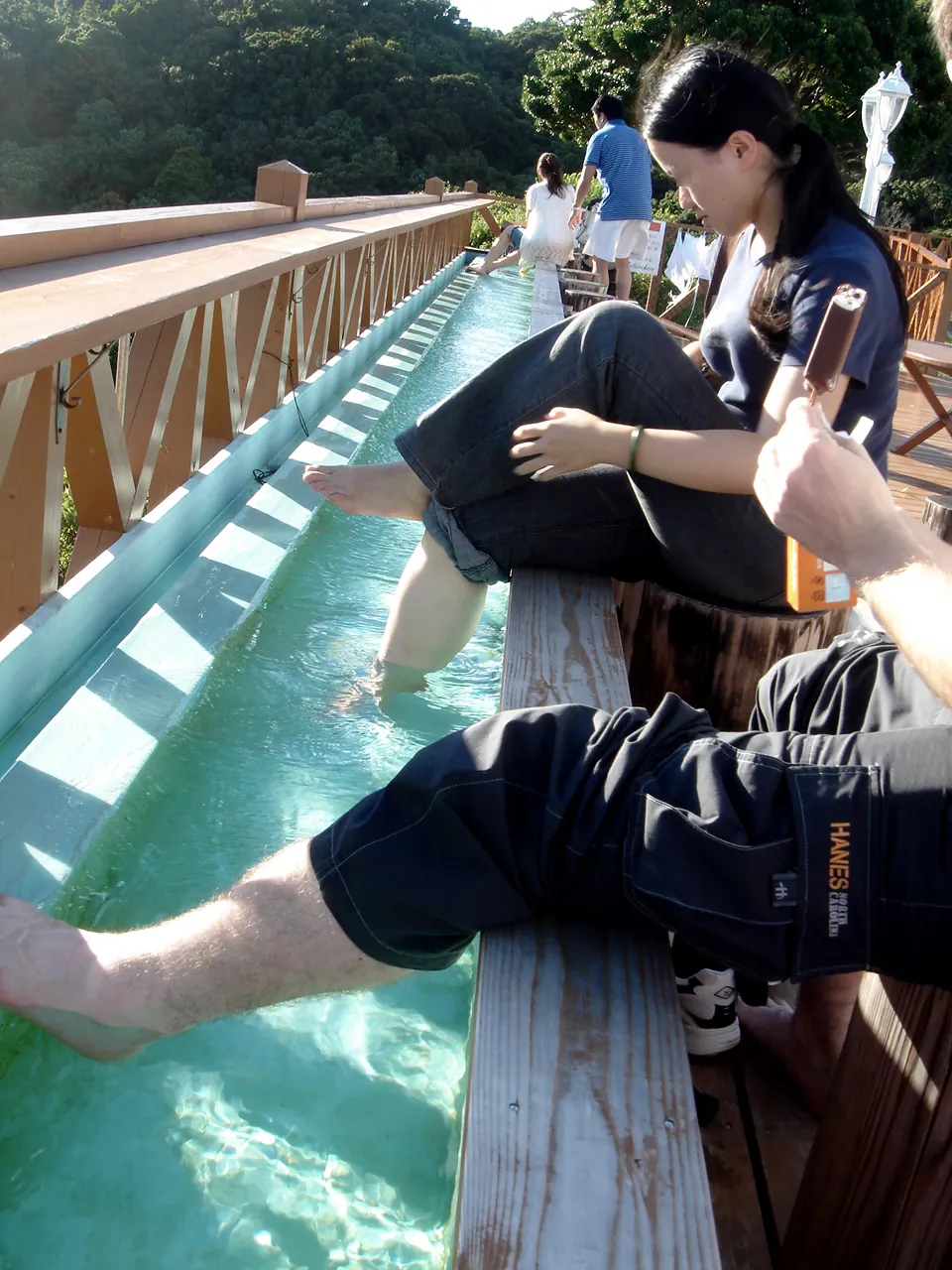
Why warm feet help you fall asleep
Here is the part that sounds a little backwards: to fall asleep, your body needs to cool down at its core, and one of the main ways it does that is by sending warm blood towards the skin of your hands and feet, where heat can escape. In a much-cited 1999 study in Nature, Swiss researchers led by Kurt Kräuchi found that the degree to which blood vessels in the hands and feet had opened was the best physiological predictor of how quickly people fell asleep. Warm feet, in other words, can be a sign that the body is preparing itself for sleep.
Warm water seems to nudge that process along. A 2019 meta-analysis of 17 studies found that a warm shower or bath at 40–42.5 °C, taken one to two hours before bed for as little as ten minutes, helped people fall asleep faster and rate their sleep better. The authors explain it through the same mechanism: more blood flowing to the palms and soles, more heat escaping, and a steeper drop in core temperature around bedtime. A foot soak is essentially a smaller, simpler version of the same idea.
What science says about foot baths and sleep
- The biggest review. A 2025 meta-analysis pooled 18 studies with 950 adults aged 60 and over. Warm foot baths improved self-rated sleep quality compared with no foot bath. The best results came with water at or below 40 °C, soaks of at least 10 minutes, and routines continued for at least a week.
- Older people in particular. A 2024 systematic review of 10 trials and semi-experimental studies in older adults reported positive effects on sleep in nine of them, most using water above 40 °C, and described the foot bath as an easy, cheap nursing intervention.
- As good as reflexology. In a randomised trial with 100 older adults, a warm foot bath one hour before bed every evening for six weeks improved sleep scores as much as twice-weekly foot reflexology did.
- After surgery. In another randomised trial with 130 patients after abdominal surgery, 20-minute foot baths at 40 °C for three nights reduced pain and improved sleep quality compared with usual care, whether or not lavender oil was added.
There are clear limits, though. Most studies measure sleep through questionnaires rather than sleep-lab recordings; participants know whether they had a foot bath, so expectation can influence the result; and most trials involved older adults, hospital patients or nursing-home residents rather than healthy younger people. The evidence for herbs is thinner still. In the one trial we found that compared plain warm water with an added ingredient, lavender, both groups improved; we found no trials showing that ginger or mugwort add anything beyond the warm water itself.
Ōmni Evidence Scale: Promising, for a warm foot soak and self-rated sleep, with a sound physiological explanation. No good evidence yet, that the herbs make a difference.
How to try it
Based on the trials, keep it simple: use water that feels pleasantly warm, around 40 °C, rather than hot; cover your feet to the ankles; soak for 10 to 20 minutes, about an hour before bed; and try the routine for at least a week before deciding whether it helps you. Dry your feet well afterwards. Add ginger or mugwort if you enjoy the smell and the ritual, which may itself be part of what helps you unwind, but do not expect the herbs to do the heavy lifting.
There is one clear risk worth taking seriously: people with diabetes, or anyone with reduced feeling in their feet, can burn themselves without noticing. The US National Institute of Diabetes and Digestive and Kidney Diseases advises people with diabetes to test the water with a thermometer or their elbow before putting their feet in, to keep the water warm rather than hot, and not to soak their feet for long, because prolonged soaking dries the skin.
What we think at Ōmni (and what we sell instead)
We do not offer foot baths, and you certainly do not need us for one: a basin, a kettle and a bit of ginger will do the job. We like this ritual because it is simple, gentle and supported by more science than many sleep trends. If what appeals to you is the larger idea behind it, warm water, a body that can let go and a mind with less to attend to, that is where floating comes in.
Ōmni Space in Thảo Điền comes from the team behind Float Vietnam, the country’s pioneer float centre since 2017. During a float, your whole body rests in about 25 cm of water holding around 500 kg of dense, mineral-rich Epsom salt, warmed to 33–34 °C, close to skin temperature, inside a private room that you can make dark and quiet. In a Swedish randomised pilot trial, 65 working adults who floated 12 times over seven weeks reported less stress and anxiety and better sleep than a waiting group. Read more in our guide to floating for better sleep. A single float costs 1,500,000 VND for 60 minutes or 2,000,000 VND for 90 minutes; the couple room adds 700,000 VND for the second person.
Ōmni Evidence Scale: Strong evidence, for float and stress. We rate it Strong because, on top of these trials, user experience is overwhelmingly positive: in a 2025 survey of regular floaters, 92% reported relaxation and 77% less stress, echoed by thousands of reviews, Reddit threads and forums, and by athletes and public figures who float.
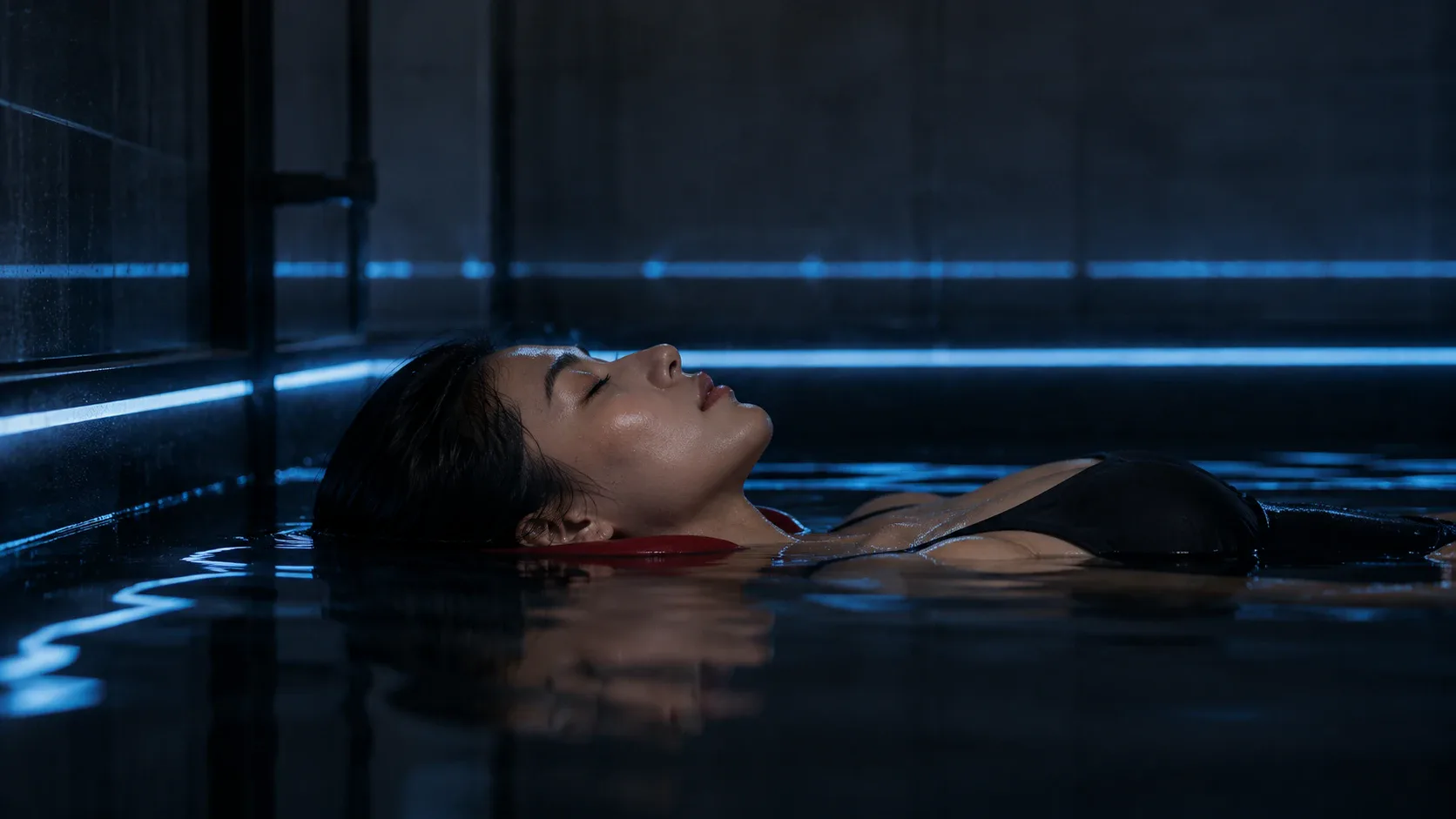

Ōmni Space – Float Saigon is at 16C Quốc Hương, Thảo Điền. We are open 9:00–21:00 daily; the last float starts at 20:00, and walk-ins are welcome until 18:00.
Float PlanRunning on empty?Take the one-minute Float Plan quiz: tell us how you feel and what you need, and get a simple plan for your first session.Make my Float PlanFAQ
Does a warm foot soak before bed help you sleep?
The evidence looks promising. A 2025 meta-analysis of 18 studies with 950 older adults found that warm foot baths improved self-rated sleep quality. Warming the feet also helps the body release heat from its core, part of the physiological shift that happens as we prepare for sleep.
How hot should the water be, and for how long?
The trials point to pleasantly warm water, around 40 °C, for 10 to 20 minutes, about an hour before bed, continued for at least a week. Think comfortably warm, never hot.
Do ginger or mugwort make a foot soak work better?
We found no trials showing that they do. In one study, warm water with or without lavender oil improved sleep similarly. Add herbs if you enjoy their smell and the ritual around them, but the warm water appears to be doing the main work.
Who should be careful with hot foot baths?
People with diabetes or reduced feeling in their feet can burn themselves without noticing. US health guidance advises testing the water with a thermometer or an elbow, keeping it warm rather than hot, and avoiding long soaks.
Does Ōmni Space offer foot baths?
No. We offer private float rooms in Thảo Điền, from 1,500,000 VND for 60 minutes, where your whole body rests in warm Epsom salt water. If you are curious about how it works, our team is happy to talk you through the experience on site.
Written by the team at Ōmni Space – Float Saigon in Thảo Điền, Vietnam’s pioneer float centre since 2017. We do not sell foot baths. General information, not medical advice; sources checked on 30 October 2026.
Sources
- Chang SY, Lee YC, Hung HY, Chen CT, Fang CJ, Chen YC (2025). A systematic review and meta-analysis of footbath effects and optimal procedures to improve sleep in older adults. Scandinavian Journal of Caring Sciences 39: e70118.
- Nasiri K, Shriniy M, Pashaki NJ, et al. (2024). The effect of foot bath on sleep quality in the elderly: a systematic review. BMC Geriatrics 24: 191.
- Kräuchi K, Cajochen C, Werth E, Wirz-Justice A (1999). Warm feet promote the rapid onset of sleep. Nature 401: 36–37.
- Haghayegh S, Khoshnevis S, Smolensky MH, Diller KR, Castriotta RJ (2019). Before-bedtime passive body heating by warm shower or bath to improve sleep: a systematic review and meta-analysis. Sleep Medicine Reviews 46: 124–135.
- Güven ŞD (2022). Improving sleep quality in older adults: foot reflexology or warm footbath? A single-blind, 6-week intervention, two group, randomized comparative study. Journal of Gerontological Nursing 48(3): 17–22.
- Uslu Y, Akbayrak H, Kuytak Ortahisar B, Barak TH (2024). The effect of lavender foot baths on postoperative pain and sleep quality in comparison with foot baths with warm water only: a prospective randomized controlled study. Explore 20: 385–391.
- National Institute of Diabetes and Digestive and Kidney Diseases. Diabetes and foot problems (checked 30 October 2026).
- Kjellgren A, Westman J (2014). Beneficial effects of treatment with sensory isolation in flotation-tank as a preventive health-care intervention: a randomized controlled pilot trial. BMC Complementary and Alternative Medicine 14: 417.
Leave a Reply