
In short: A soak in warm mineral mud is one of Nha Trang’s classic experiences, while hot springs such as Bình Châu, now part of Ho Chi Minh City, draw weekend visitors from Saigon. And the science is more interesting than you might expect. For knee osteoarthritis, a 2020 meta-analysis of 11 randomised trials found that mud therapy eased pain and stiffness and improved function in the short term, while reviews of mineral-water bathing point in a similar direction. The studies are often small and rarely blinded, so we rate it Promising for aching joints. As for the bigger promises you may see on posters, “detox”, glowing skin, younger cells, we found no good evidence. Ōmni has no mud baths or hot springs; we run a float centre, so we are not neutral, and we will say so as we go.
Read in Vietnamese: Tắm bùn khoáng có tác dụng gì? (Float Vietnam)
Part of the Ōmni Recovery Library · Recovery by Water
Maybe you are planning a trip to Nha Trang and wondering whether a mud bath is worth half a day. Or perhaps you have a parent with stiff knees who swears by the hot springs. Either way, it helps to know what mud and mineral water can genuinely do, and what they probably cannot. This article looks at where Vietnam’s best-known mud baths and springs are, what is actually in the mud, what the research says, and how to enjoy the experience safely.
Ōmni Evidence Scale: Promising, for mud therapy and mineral-water bathing in knee osteoarthritis (short-term relief, many trials but mixed quality). No good evidence yet, for “detox”, skin-renewal or anti-ageing claims. Strong evidence, for float and stress. See how we rate evidence on the Ōmni Evidence Scale.
A very old idea: healing mud and mineral water
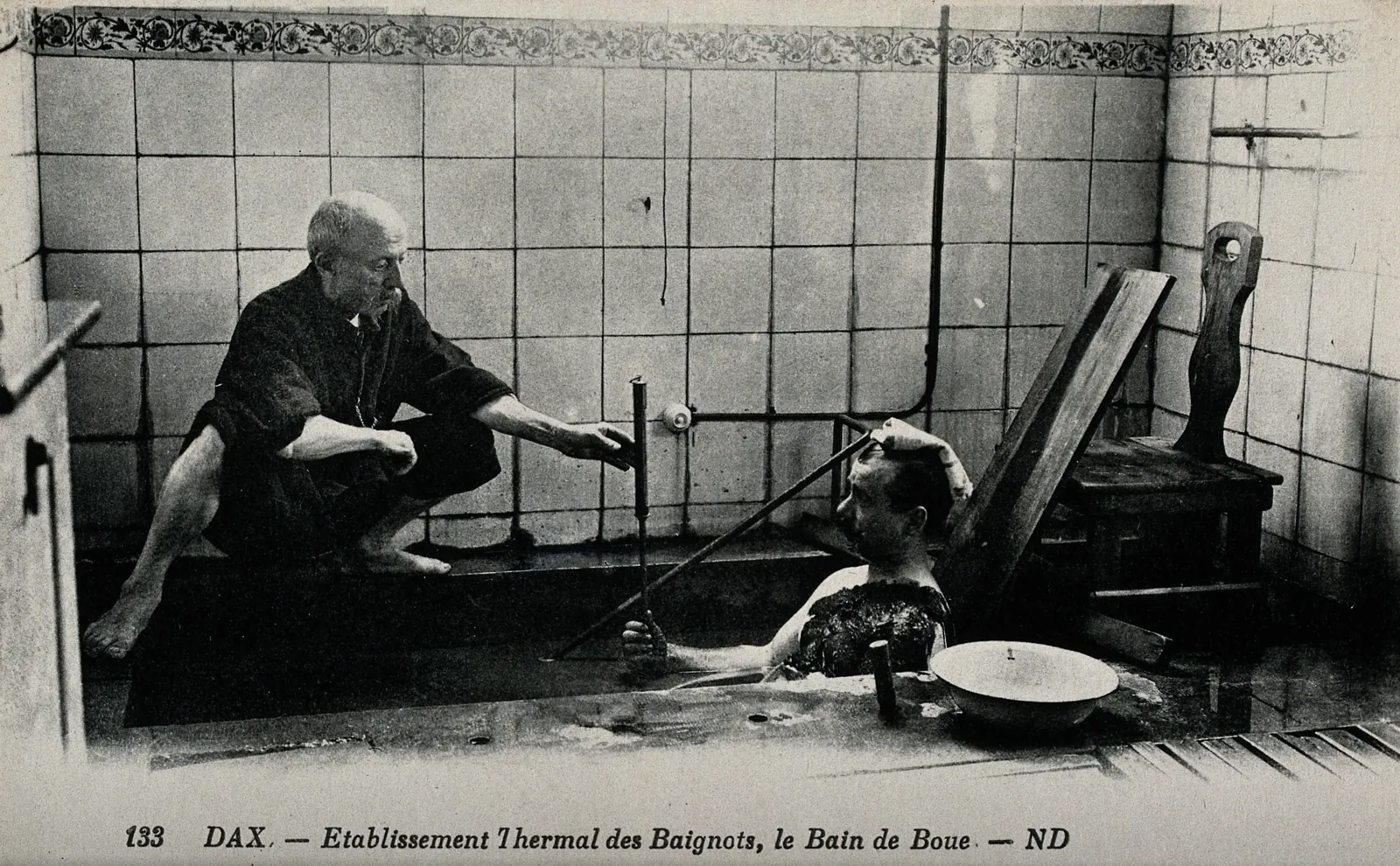
People have soaked in hot springs and covered themselves in warm mud for thousands of years, from Roman baths to Japanese onsen. In Europe, the practice developed into a branch of medicine called balneotherapy, from the Latin balneum, bath: bathing in natural mineral water, often alongside mud packs. The mud even has its own technical name, peloid: clay or silt that has matured for a long time in mineral water, sometimes with organic matter, before being heated and used as a pack or bath. In France, Italy, Hungary and elsewhere, entire spa towns grew around the practice.
Where to find mud baths and hot springs in Vietnam
Nha Trang: the mud bath capital
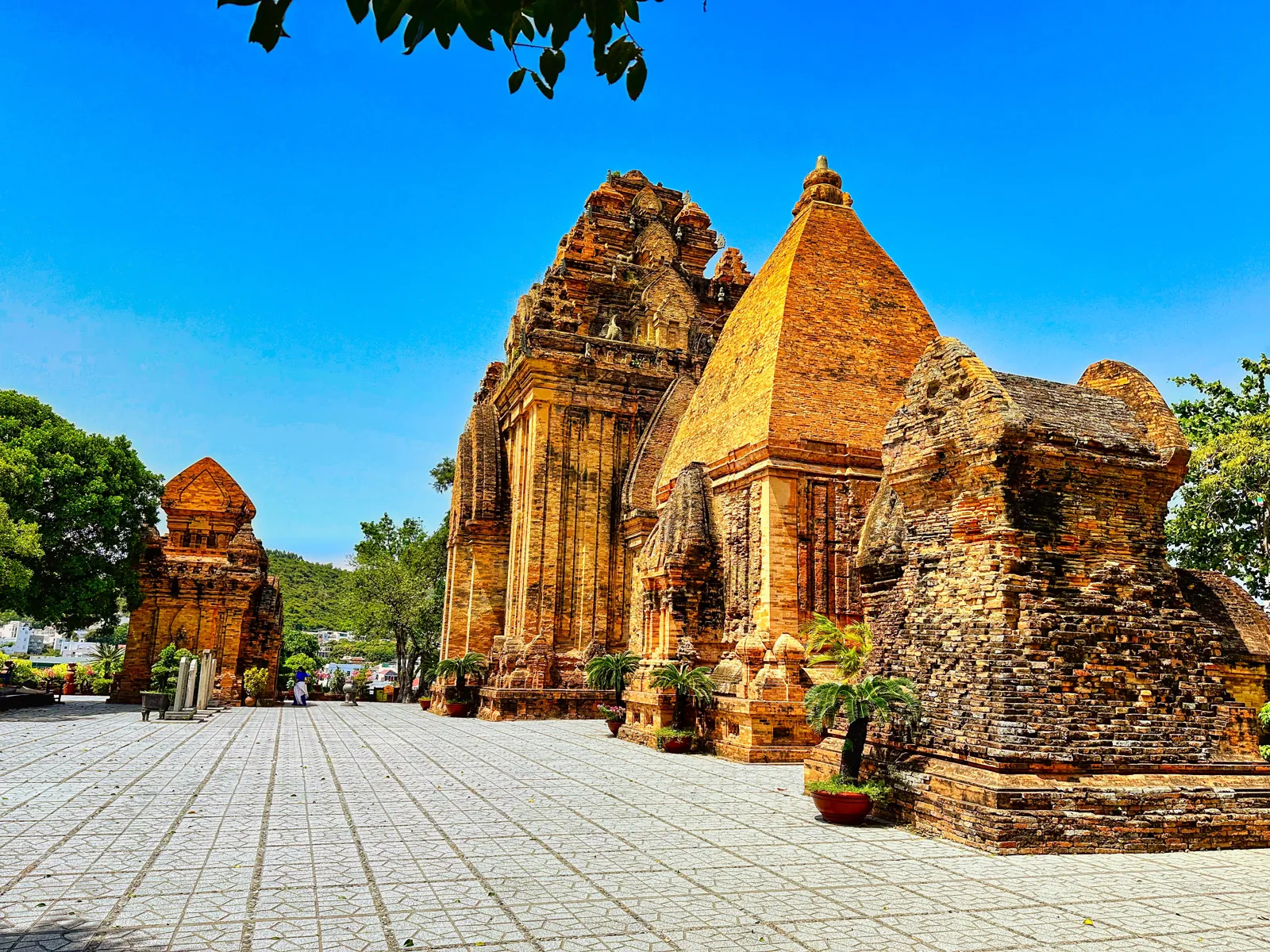
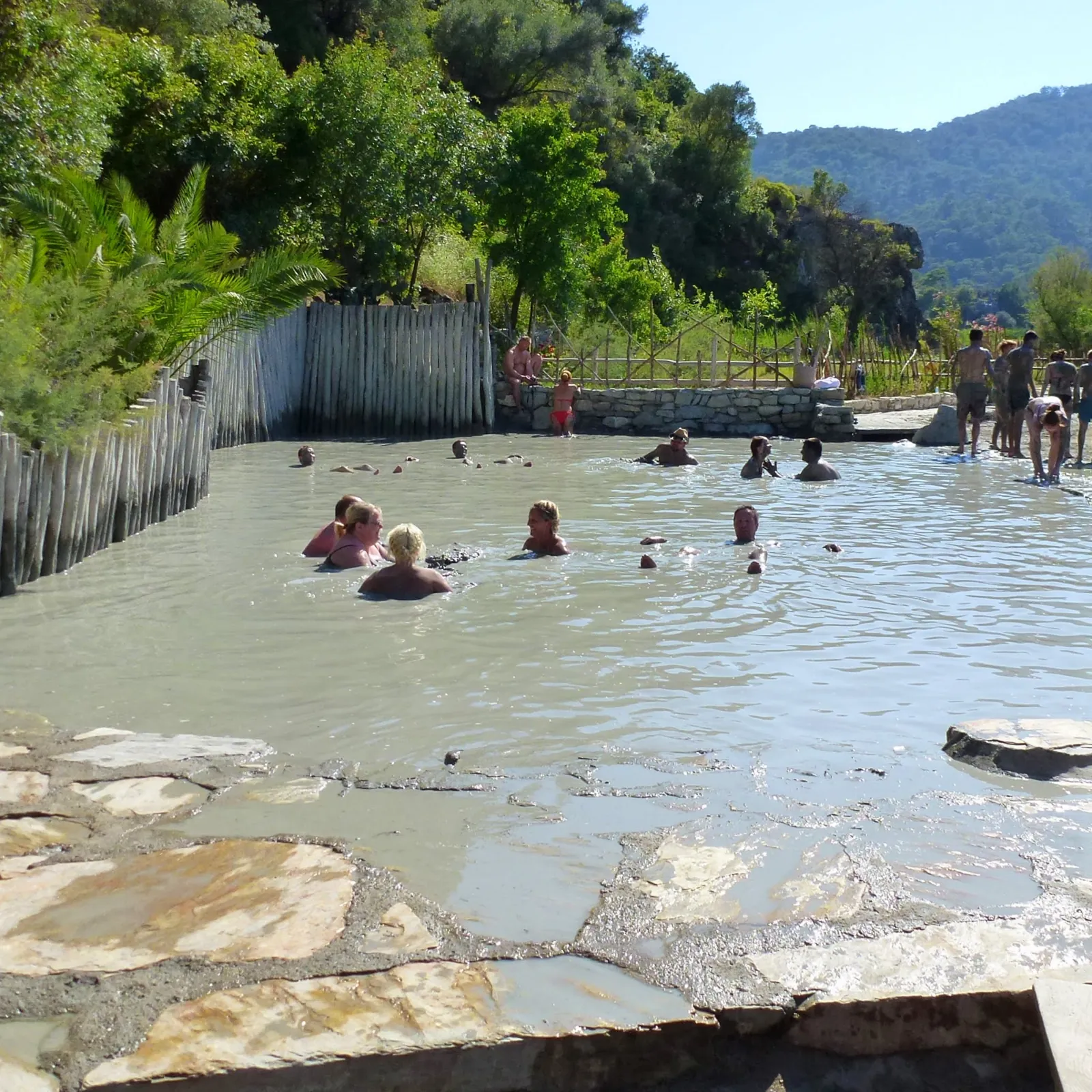
Nha Trang is the place most visitors think of first. Tháp Bà Hot Spring Center sits beside the Cái River, a few kilometres from the city centre, behind the Po Nagar Cham towers that give it its name: Tháp Bà, “the Lady’s Tower”. Vietnam Airlines’ travel guide describes it as the first mud bath centre established in Vietnam, opened in 1999. The usual ritual is simple: soak in warm mud, rinse off, then spend some time in the mineral-water pools.
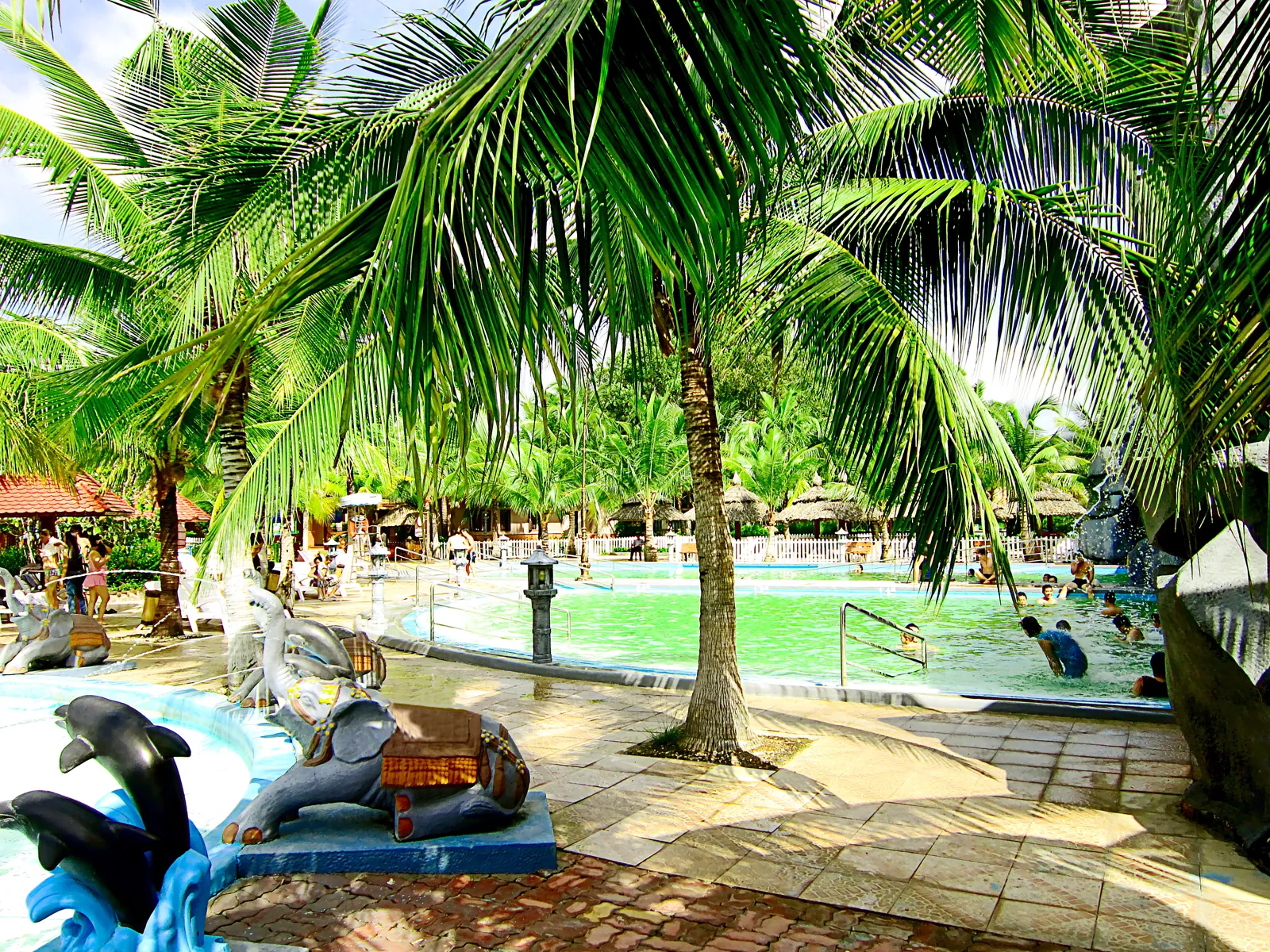
A little further out, I-Resort Nha Trang in Xuân Ngọc hamlet offers mineral mud soaks in “mud houses”, hot mineral pools and herbal mineral baths across more than two hectares of gardens. Newer places have followed, including 100 Egg Mud Bath, a theme park of egg-shaped tubs on Nguyễn Tất Thành boulevard, in Phước Đông. Travel guides often describe Nha Trang’s mud as “volcanic” and “healing”; we found no published analysis of its composition to support those descriptions.
Bình Châu: the hot spring nearest Saigon
For Saigon residents, the classic hot-spring getaway is Bình Châu, about 150 km from the city centre in a protected coastal forest. It used to belong to Bà Rịa–Vũng Tàu province; since the 2025 merger, Bình Châu is a commune of Ho Chi Minh City, so technically the city now has a hot spring of its own. The resort, Minera Hot Springs Bình Châu, opened in its current form in June 2020. Saigon’s Sài Gòn Giải Phóng newspaper reported more than 70 open-air vents, with water ranging from about 37 °C to more than 80 °C. One of the famous corners is where visitors boil eggs in spring water at around 82 °C; the main bathing pool is kept at 37–41 °C, and mud baths are available too.
Prices, opening hours and packages at all of these places change often, so check with them directly before you go.
What science says
Most of the research focuses on one condition: osteoarthritis of the knee, the gradual wearing of the joint that can make stairs, squats and everyday movement uncomfortable for many older adults.
- Mud for knee osteoarthritis. A 2020 meta-analysis from China pooled 11 randomised trials with 1,106 patients, six using mud packs and five using mud baths. Compared with other treatments, mud therapy reduced pain and stiffness and improved function in the short term. But only two trials were double-blinded, only two concealed who received which treatment, and the pattern of results suggested that small negative studies may have gone unpublished. Long-term effects were not assessed.
- Mineral-water bathing and quality of life. A 2018 review of 17 studies found that balneotherapy and spa therapy improved quality of life in knee osteoarthritis, and that compared with sham treatments, the benefit for pain persisted at longer follow-up, although it was modest.
- Dead Sea mud. A systematic review of Dead Sea treatments found mud and bathing helpful in several joint conditions, again in small studies, while lab tests found no minerals at levels of concern in the mud.
- Why it might work. Likely explanations include heat, which relaxes muscles and dulls pain signals; the pressure and buoyancy of water, which reduce the load on sore joints; and the simple act of resting for an hour. Whether the minerals themselves add much is still debated.
Notice what is missing: studies showing that a mud bath “draws out toxins”, renews skin cells or slows ageing. Your liver and kidneys handle waste; warm mud on your skin is not a filter.
Ōmni Evidence Scale: Promising, for mud therapy and mineral-water bathing in knee osteoarthritis: many trials point in the same direction, but they are small, often unblinded and short. No good evidence yet, for detox, skin and anti-ageing claims.
Good to know before you go
Hot water lowers blood pressure, so after a long soak in a hot pool, stand up slowly. Keep your soaks fairly short, drink water, and save the beer for afterwards: alcohol and heat together can increase the chance of fainting by the pool. At Bình Châu, keep children well away from the egg-boiling pits, which are hot enough to scald. Mud tubs are often shared or refilled between guests, so it is perfectly reasonable to ask how the mud is cleaned or changed, and to shower well afterwards.
What we think at Ōmni (and what we sell instead)
We do not have mud baths, hot springs or an onsen in Saigon, and we will not pretend otherwise. If a Nha Trang mud bath or a day at Bình Châu is on your list, go and enjoy it, especially with older relatives who appreciate a long warm soak. For more on Asia’s bathing cultures, read our guide to onsen, jjimjilbang and sauna, and for Saigon options, our sauna, ice bath and bathhouse guide.
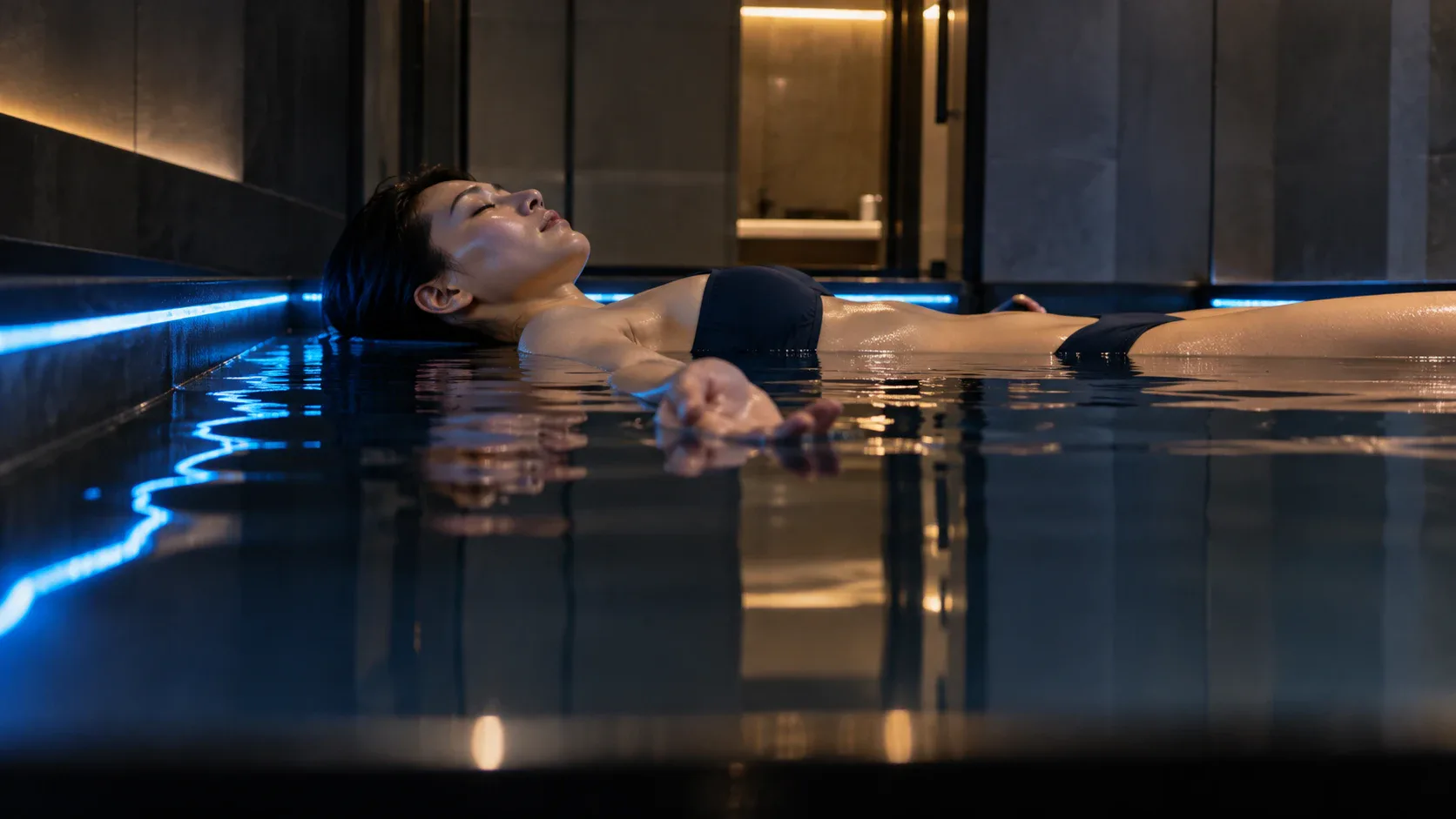
What we offer in Thảo Điền is a city version of warm water and rest. Ōmni Space comes from the team behind Float Vietnam, the country’s pioneer float centre since 2017. During float therapy, you lie in about 25 cm of water holding around 500 kg of dense, mineral-rich Epsom salt, warmed to 33–34 °C, close to skin temperature, so the water supports your whole weight, joints included. A single float costs 1,500,000 VND for 60 minutes or 2,000,000 VND for 90 minutes. We also have a private infrared sauna with red light at 45–55 °C and a private cold plunge at 7–12 °C: 450,000 VND each on their own, or 200,000 VND added to a float. For a group, the sauna and cold plunge room costs 900,000 VND for up to four people for 60 minutes. Swimwear is only needed for the cold plunge, so bring your own.
Ōmni Evidence Scale: Strong evidence, for float and stress. We rate it Strong because, alongside controlled trials, user experience is overwhelmingly positive: in a 2025 survey of regular floaters, 92% reported relaxation and 77% less stress, echoed by thousands of reviews, Reddit threads and forums, and by athletes and public figures who float.
Ōmni Space – Float Saigon is at 16C Quốc Hương, Thảo Điền. We are open 9:00–21:00 daily; the last float starts at 20:00, and walk-ins are welcome until 18:00.
Float PlanRunning on empty?Take the one-minute Float Plan quiz: tell us how you feel and what you need, and get a simple plan for your first session.Make my Float PlanFAQ
Are mud baths good for you?
For knee osteoarthritis, the evidence is promising: a 2020 meta-analysis of 11 trials found short-term relief of pain and stiffness and better function. The trials were small and rarely blinded. For detox, skin or anti-ageing claims, we found no good evidence.
Where can you take a mud bath in Vietnam?
Nha Trang is the best-known destination, with Tháp Bà Hot Spring Center, opened in 1999 beside the Po Nagar towers, I-Resort and newer places such as 100 Egg Mud Bath. Near Saigon, Minera Hot Springs Bình Châu also offers mud baths alongside its mineral pools.
Is there a hot spring in Ho Chi Minh City?
Since the 2025 merger, yes: Bình Châu, formerly in Bà Rịa–Vũng Tàu, is now a commune of Ho Chi Minh City, about 150 km from the city centre. Its springs range from about 37 °C to more than 80 °C at the source.
Do mud baths detox your body?
We found no good evidence for that. Your liver and kidneys clear waste from the body. The benefits that have been measured are mainly related to pain and stiffness in arthritic knees, probably thanks to heat, buoyancy and rest.
Does Ōmni Space have a mud bath or hot spring?
No. We offer float rooms, a private infrared sauna with red light and a private cold plunge in Thảo Điền. A float starts at 1,500,000 VND for 60 minutes; the sauna or cold plunge costs 450,000 VND on its own or 200,000 VND added to a float.
Written by the team at Ōmni Space – Float Saigon in Thảo Điền, Vietnam’s pioneer float centre since 2017. We do not sell mud baths or hot spring visits. General information, not medical advice; sources checked on 30 October 2026.
Sources
- Hou C, Liang L, Chu X, Qin W, Li Y, Zhao Y (2020). The short-term efficacy of mud therapy for knee osteoarthritis: a meta-analysis. Medicine 99(17): e19761.
- Antonelli M, Donelli D, Fioravanti A (2018). Effects of balneotherapy and spa therapy on quality of life of patients with knee osteoarthritis: a systematic review and meta-analysis. Rheumatology International 38(10): 1807–1824.
- Katz U, Shoenfeld Y, Zakin V, Sherer Y, Sukenik S (2012). Scientific evidence of the therapeutic effects of Dead Sea treatments: a systematic review. Seminars in Arthritis and Rheumatism 42(2): 186–200.
- Vietnam Airlines. Mud bath in Nha Trang: travel guide (checked 30 October 2026).
- I-Resort Nha Trang. Official website (checked 30 October 2026).
- Sài Gòn Giải Phóng (4 June 2020). Mở cửa khai thác khu thế giới khoáng nóng Minera Hot Springs Bình Châu từ 13-6-2020.
- Báo Lào Cai (2 November 2025). TP.HCM có nơi luộc trứng không cần đun nước (Bình Châu hot springs, now part of Ho Chi Minh City).
- van Dierendonck D, te Nijenhuis J (2005). Flotation restricted environmental stimulation therapy (REST) as a stress-management tool: a meta-analysis. Psychology & Health 20(3): 405–412.