
In short: A gong bath is a sound bath where you lie down for about 45 to 75 minutes while someone plays large gongs that swell and fade around you. Many people feel calmer afterwards, but no controlled trial has tested gongs on their own. In Ho Chi Minh City, dedicated gong baths are still few; Amanaki Thao Dien is one place that offers them.
This guide was written by the team at Ōmni Space in Thảo Điền. We opened Vietnam’s first float centre (Float Vietnam, Hanoi, 2017), and we ask of every wellness trend: what does it do for the nervous system, and how strong is the evidence? Our sound healing guide covers singing bowls, handpan and binaural beats. This page goes deep on the gong: the session, the sound, Vietnam’s own gong tradition and the research. This is general information, not medical advice.
What is a gong bath?
Nobody gets wet: “bath” means you are bathed in sound. You lie on a mat with a blanket, close your eyes, and a facilitator plays one or more large gongs, sometimes with bowls or chimes. Most sessions last about 45 to 75 minutes.
A typical session follows an arc:
- Settling. A short talk, a few slow breaths, then quiet.
- Building. Soft strokes, layered slowly into a deep, rolling wash of sound.
- The peak. At its loudest it can feel like a wave or a storm, felt in the chest as much as heard.
- Fading. The strokes thin out and the session ends in silence, with a few minutes to lie still.
People report drifting between waking and sleep, tingling, vivid images, sometimes tears. Some fall asleep; a few find it too intense. All of this is normal.
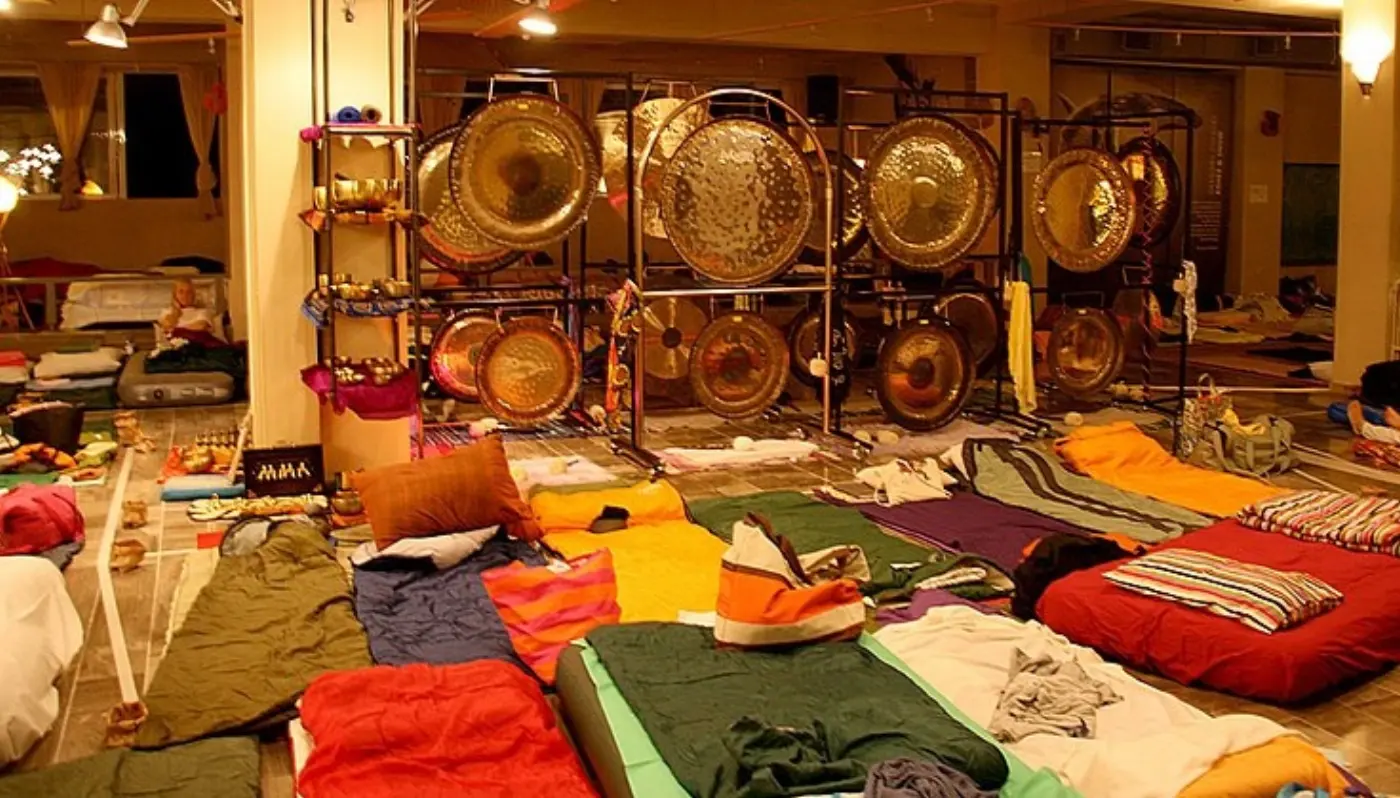
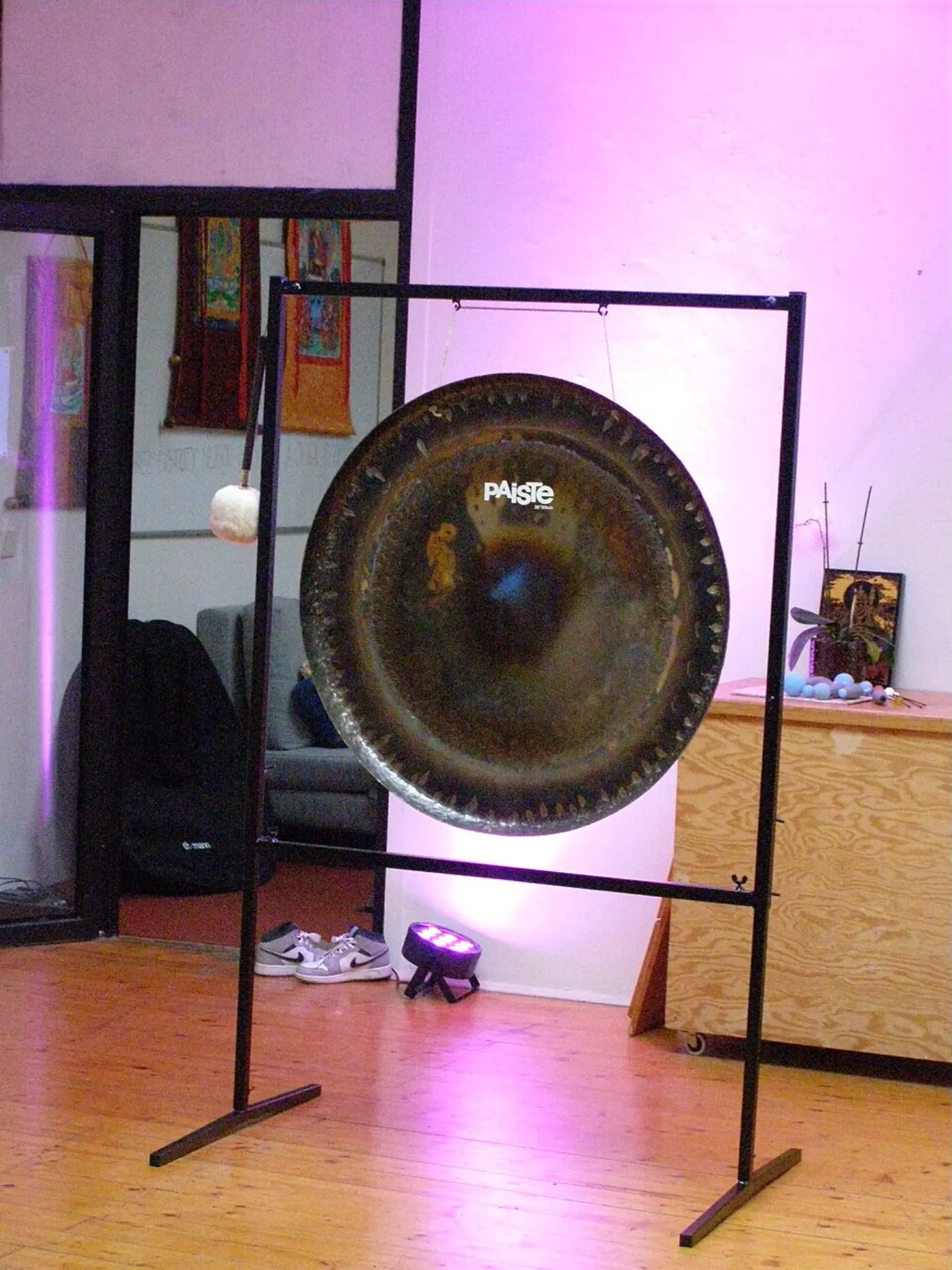
The instruments: planetary, symphonic, wind and chau gongs
You will hear four names:
- Symphonic gongs. Large orchestral gongs with a deep, dark roar. The maker Paiste calls its Symphonic Gong its oldest design and builds one 80 inches (about 2 metres) across, which it describes as the world’s largest playable gong.
- Planetary gongs. Gongs tuned to frequencies that Hans Cousto calculated from the orbits of the Earth, Moon, Sun and planets, shifted up by octaves into the range we can hear (Paiste’s “Earth” gong: 136.10 Hz). It is a tuning idea; no study shows it changes what a gong does to the body.
- Wind gongs. Flat bronze discs with little clear pitch, many overtones and a long, roaring sustain.
- Chau gongs. The classic Chinese gong: almost flat, with a turned-up rim. Large ones are called tam-tams.
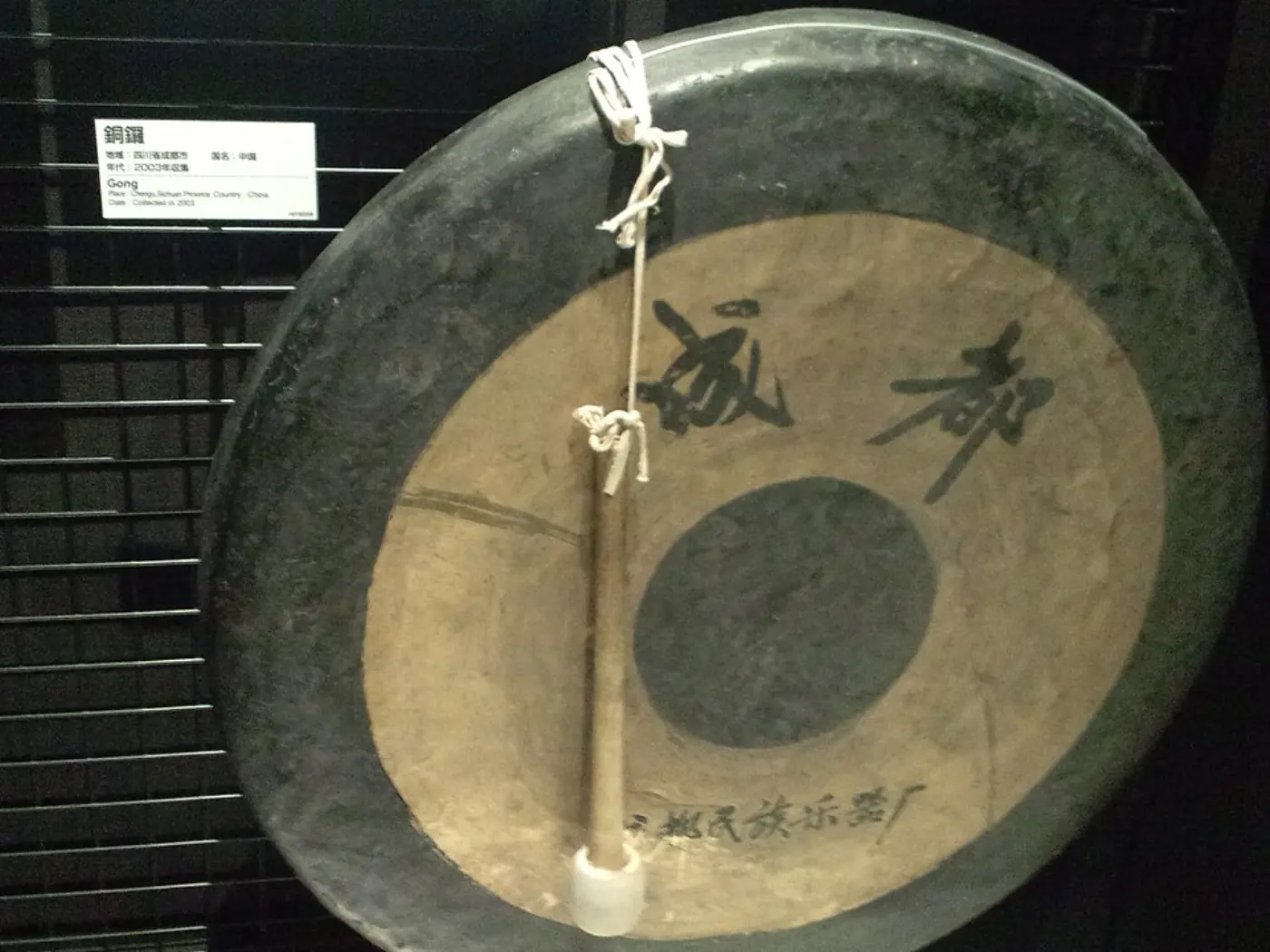
Why a gong sounds like an ocean
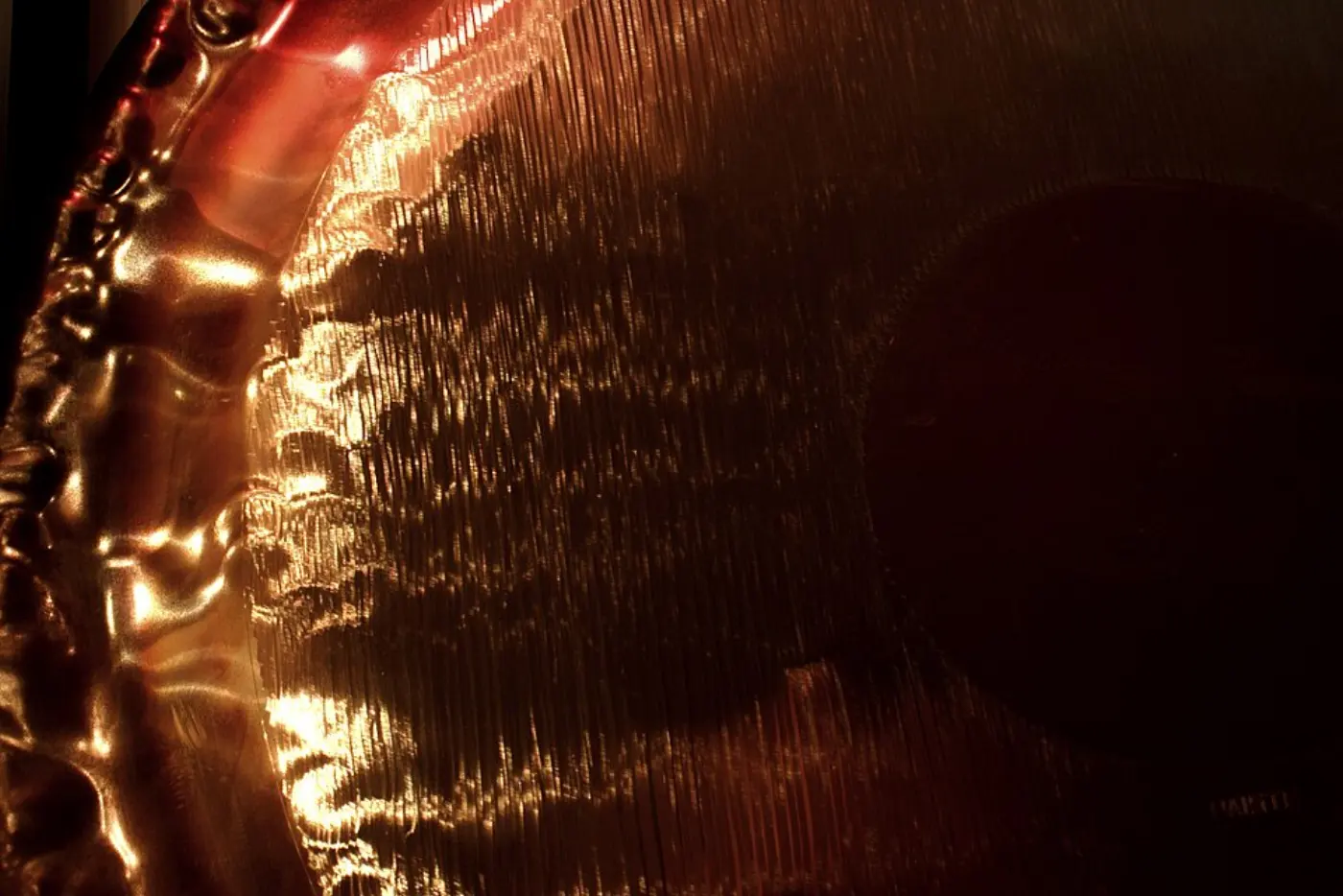
A guitar string’s overtones are whole-number multiples of one main note, so you hear one clear pitch. A gong is a thin metal plate that, when struck, bends in many patterns at once: rings, spokes, twisted shapes. Their frequencies are not tidy multiples of each other. Physicists call this inharmonic, which is why a gong sounds less like a note and more like a cloud of notes.
Two more effects add to the “ocean”:
- Beating. Two tones very close in frequency drift in and out of step, which you hear as a slow pulse in loudness. A gong has many such pairs, so the sound seems to breathe and shimmer.
- Bloom. Gongs are nonlinear instruments: when struck hard, the metal moves about as far as its own thickness, and energy flows from low vibrations into higher ones. So the sound can swell after the strike, from a hum into a bright roar, and the pitch can glide as it fades. Acoustics researchers Chaigne, Touzé and Thomas describe this energy exchange, and even chaotic vibration, in gongs and cymbals.
That unpredictability keeps the brain listening. Beautiful physics, not proof of healing.
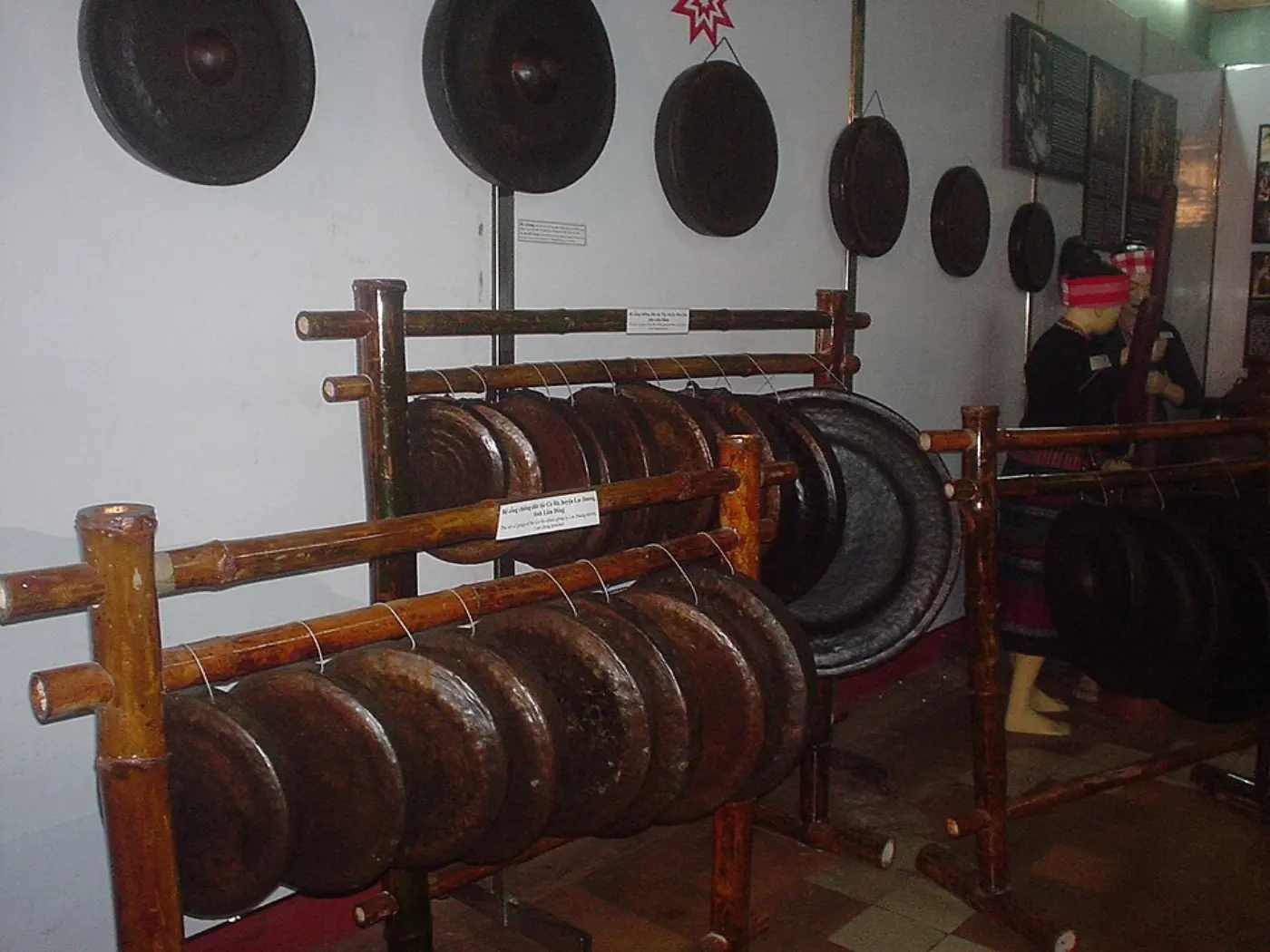
Vietnam’s gongs: a living tradition, not a wellness trend
The Space of Gong Culture in the Central Highlands (Không gian văn hoá Cồng chiêng Tây Nguyên) was proclaimed a UNESCO Masterpiece of the Oral and Intangible Heritage of Humanity in 2005, and inscribed on UNESCO’s Representative List of the Intangible Cultural Heritage of Humanity in 2008.
UNESCO describes a tradition of seventeen Austroasiatic and Austronesian communities. Gongs accompany all the rituals of community life, from the sacrifice of bullocks to the blessing of rice and mourning rites. Gongs are seen as a language between people and the spirit world, and a deity is believed to live in each gong. Every family owns at least one. Village ensembles of three to twelve gongs, 25 to 80 cm across, are played by men or women, each village in its own style.
So please do not confuse the two. Cồng chiêng is a ritual and community tradition with its own meanings and keepers. It is not a relaxation therapy, and it is not where the gong bath comes from: the modern gong bath grew up in Western yoga and new-age circles in the late twentieth century. To hear cồng chiêng as it is meant to be heard, go to the Central Highlands: Vietnam’s national tourism site lists the Central Highlands Gong Culture International Festival in Gia Lai through October 2026.
What the science says
We searched PubMed, Europe PMC and Google Scholar in October 2026. Most sound bath research is about singing bowls, not gongs.
| Study | What was tested | What it found | The catch |
|---|---|---|---|
| Goldsby et al., 2017 | 62 adults, one 60-minute session; mostly singing bowls (about 95% of the time), plus gongs | Less tension, anger, fatigue and low mood afterwards | No control group, convenience sample |
| Stanhope & Weinstein, 2020 (systematic review) | All studies of singing bowls on health | Only four peer-reviewed studies; results leaned positive | Too few studies, risk of bias; could not recommend it yet |
| Rio-Alamos et al., 2023 (randomised trial) | 50 anxious adults: singing bowls vs progressive muscle relaxation vs a waiting list | Both lowered anxiety vs waiting | Singing bowls only, one session |
| Pesek & Bratina, 2016 | Survey of 129 people who attended gong baths in Slovenia | All described the effect as healing, relaxing or both | Self-report, no comparison |
| Ponce-Valencia et al., 2026 | 93 adults in Spain, a 45-minute session with a 32-inch planetary gong | Better emotional regulation, anxiety and pain scores right after | No control group; 58% skipped the second session |
| Ravikumar & Sathyanarayanan, 2026 (randomised trial) | 100 adults in India: four weeks of daily in-person sessions with bowls, gongs, bells and recorded audio, vs online music sessions | Lower anxiety, depression, cortisol and blood pressure | Gongs one ingredient of many; groups also differed in setting; company-funded |
People usually feel calmer after an hour of lying still with absorbing sound. But no study has compared a gong bath with the same hour of quiet rest, so we cannot say how much comes from the gong and how much from rest, a group setting and expecting to relax.
Ōmni Evidence Scale: No good evidence yet. Uncontrolled studies suggest people feel calmer straight after a session (at most early evidence for short-term relaxation), but no controlled trial has tested gongs alone, and claims like “detox” have no evidence.
Ōmni Evidence Scale: Early evidence (singing bowls). Small studies and one randomised trial report less anxiety, but reviews still call for better trials.
How we rate: Ōmni Evidence Scale.
Safety: loudness, sensitivity and the myths
A gong bath is gentle for most people, but a big gong is a powerful instrument.
- Loudness. We found no published measurement of sound levels at gong baths; it depends on the gong, the player, the room and your distance. For reference, the US agency NIOSH treats 85 dBA and above as hazardous for adults, roughly where you must raise your voice to be heard by someone nearby. The WHO says 80 dB is safe for up to 40 hours a week, and asks venues to keep the average at or below 100 dB, offer hearing protection and provide quiet zones. Earplugs are fine. So is moving back.
- Tinnitus and sound sensitivity. With tinnitus (ringing in the ears), hyperacusis (everyday sounds feel painfully loud) or hearing aids, tell the facilitator, lie far back and leave if it hurts. Ringing or muffled hearing afterwards means it was too loud.
- Anxiety and trauma. Sudden, loud sound can be distressing, especially with PTSD or panic attacks. You can sit up or step out at any time.
- Pregnancy. Some health websites say gong baths may not suit pregnancy, but we found no study either way. NIOSH notes that a baby’s ears develop by about week 20 and advises pregnant people to avoid areas louder than 115 dBA and low-frequency noise felt as a rumble, which large gongs produce. Ask for a gentle session and lie far back, or skip it, and check with your doctor.
- Epilepsy and pacemakers. The most common reflex trigger for seizures is flashing light, not sound; only a very rare form, musicogenic epilepsy (about 1 in 10 million people), is triggered by music. The idea that gong sound disturbs pacemakers is, as far as we can find, a myth: heart charities warn about magnets and electromagnetic fields, not sound. If unsure, ask your doctor.
Ask for a bolster under your knees if lying flat hurts your back, and sit up slowly. A gong bath is relaxation, not treatment, and never a replacement for medical care.
How to choose a good gong bath
We found no official licence or training standard for gong facilitators. Anyone can call themselves a gong master, so ask:
- How loud does it get? A good facilitator discusses volume and lets you choose where to lie.
- How many people, and how big is the room? Smaller groups in bigger rooms are usually more comfortable.
- How long, and is it gongs only? Many “gong baths” are mixed sound baths.
- Where did the facilitator train, and for how long? Judge the answer for yourself.
- Do they ask about your health? A short check on hearing, pregnancy and anxiety is a good sign.
- What are they promising? Rest is an honest promise; curing disease or “detoxing cells” is not.
Gong bath vs singing bowls vs float therapy
| Gong bath | Singing bowl sound bath | Float therapy | |
|---|---|---|---|
| What you do | Lie on a mat while large gongs are played | Lie or sit while metal or crystal bowls are struck or circled | Lie in warm, salt-heavy water in a quiet, dark pool or room |
| Sound | Deep, loud at its peak, unpredictable | Softer, longer, steady tones | Almost none |
| Typical length | 45–75 minutes | 30–60 minutes | 60–90 minutes |
| Ōmni Evidence Scale | No good evidence yet | Early evidence | Promising (stress and anxiety) |
A sound bath adds sound; a float takes almost everything away: light, sound, even the feeling of gravity. Float therapy is a young but very active research field: randomised controlled trials have shown clear effects on anxiety, stress, muscle tension and sleep, and new clinical studies are still under way. See what is float therapy? or float vs massage vs sauna.
Where to try it in Saigon
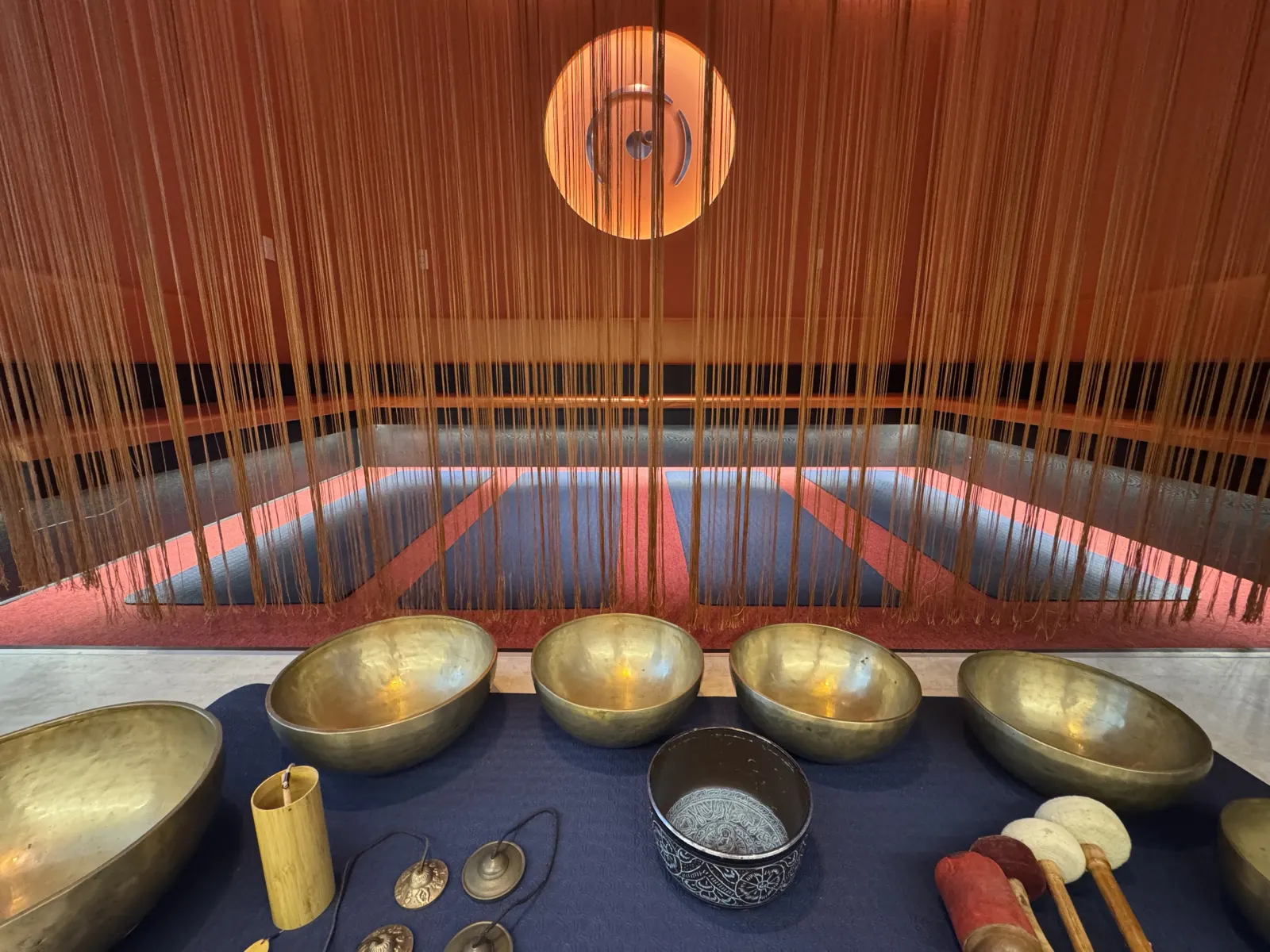
Dedicated gong baths are still few in Ho Chi Minh City. One place that offers them is Amanaki Thao Dien. We have not tried every venue, so check schedules directly.
- Amanaki Thao Dien (10 Nguyễn Đăng Giai, Thảo Điền). The hotel’s well-being centre offers gong baths. Contact them via amanaki.vn for the current schedule and price.
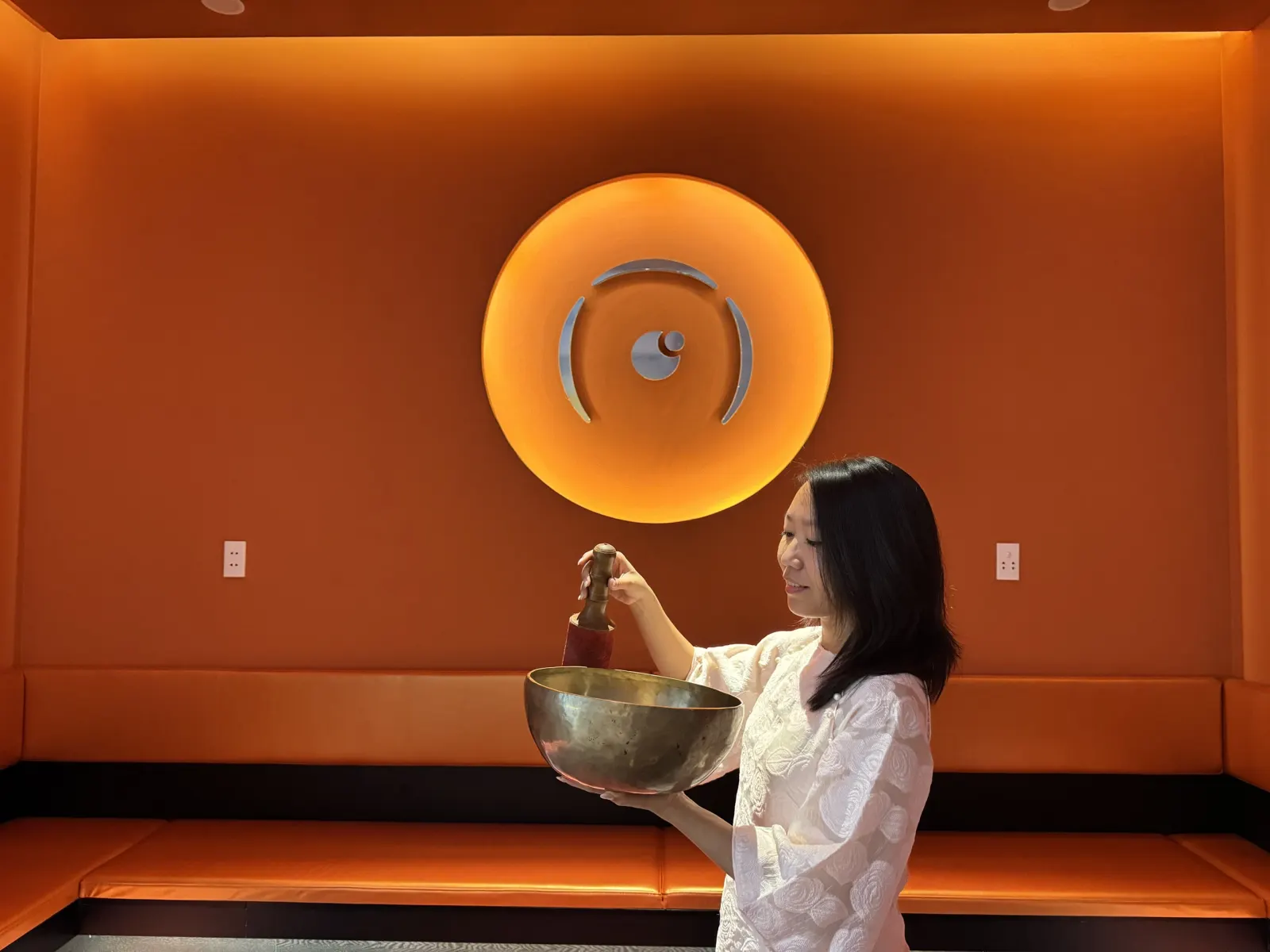
- Ōmni Space (16C Quốc Hương, Thảo Điền). We run singing-bowl sound baths in our orange lounge, not gong baths. Ask us about upcoming sessions, or try a float to explore silence instead.
- More sound baths. Bowl studios and concerts are listed in our sound healing guide.
Confused by “floating sound baths”? Float Vietnam explains how a floating sound bath differs from float therapy.
FAQ
What is a gong bath?
A sound bath in which large gongs are the main instrument. You lie with your eyes closed for about 45 to 75 minutes while the sound builds and fades. You do not get wet.
Do gong baths have scientific evidence?
Not yet. A 2026 planetary gong study and a 2016 survey found people felt calmer afterwards, but neither had a control group, and trials that included gongs mixed them with other instruments. We rate gong baths “No good evidence yet”.
Is a gong bath too loud for my ears?
It can be, depending on the gong, the player and your distance. Lie further back, use earplugs if you like, and leave if it hurts. Ringing in your ears afterwards means it was too loud.
Is a gong bath the same as Vietnamese cồng chiêng?
No. Central Highlands cồng chiêng is a living ritual and community tradition recognised by UNESCO (proclaimed 2005, inscribed 2008). The gong bath is a modern Western relaxation practice. They share an instrument, not a meaning.
Can I do a gong bath if I am pregnant?
There is no research on it. NIOSH advises pregnant people to avoid places louder than 115 dBA and low-frequency rumble. Choose a gentle session and lie far back, or skip it, and ask your doctor.
Where can I find a gong bath in Saigon?
Dedicated gong baths are still few in Ho Chi Minh City; Amanaki Thao Dien (10 Nguyễn Đăng Giai, Thảo Điền) offers them. Ōmni Space in Thảo Điền runs singing-bowl sound baths, not gong baths, and offers float as a silent alternative.
Sources
- Goldsby TL, Goldsby ME, McWalters M, Mills PJ. Effects of singing bowl sound meditation on mood, tension, and well-being: an observational study. Journal of Evidence-Based Complementary & Alternative Medicine, 2017.
- Stanhope J, Weinstein P. The human health effects of singing bowls: a systematic review. Complementary Therapies in Medicine, 2020.
- Rio-Alamos C et al. Acute relaxation response induced by Tibetan singing bowl sounds: a randomized controlled trial. European Journal of Investigation in Health, Psychology and Education, 2023.
- Lin FW, Yang YH, Wang JY. Effects of Tibetan singing bowl intervention on psychological and physiological health in adults: a systematic review. Healthcare, 2025.
- Pesek A, Bratina T. Gong and its therapeutic meaning. Muzikološki zbornik (Musicological Annual), 2016.
- Ponce-Valencia AF et al. Changes in emotional regulation, well-being, and pain perception following music therapy in people with sensory processing sensitivity: a non-controlled exploratory study. Healthcare, 2026.
- Ravikumar H, Sathyanarayanan S. Effects of a sound-based meditative intervention on anxiety, depression, salivary cortisol levels, and blood pressure: a randomized controlled trial. Cureus, 2026.
- Chaigne A, Touzé C, Thomas O. Nonlinear vibrations and chaos in gongs and cymbals. Acoustical Science and Technology, 2005.
- UNESCO. Space of gong culture (Viet Nam). Representative List of the Intangible Cultural Heritage of Humanity.
- Vietnam National Authority of Tourism. Central Highlands Gong Culture International Festival 2026.
- Paiste. Gongs (Symphonic Gong series).
- Paiste Gongs. Planet Gongs, tuned according to calculations by Hans Cousto.
- Wikipedia. Gong (chau gong, wind gong, tam-tam).
- Sobo EJ. Sound baths, trauma talk, and the wellness paradox in the USA. Medical Anthropology, 2024.
- CDC / NIOSH. About noise and reproductive health.
- World Health Organization. Deafness and hearing loss: safe listening.
- World Health Organization. WHO releases new standard to tackle rising threat of hearing loss, 2022.
- Bratu IF et al. Musicogenic seizures in temporal lobe epilepsy: case reports based on ictal source localization analysis. Frontiers in Neurology, 2023.
- British Heart Foundation. Can a mobile phone interfere with my pacemaker or ICD?
- Amanaki Thao Dien, official website (accessed October 2026).
Leave a Reply