
In short: Neither a float pod nor an open float room is proven to work better. No study has compared them head to head. Pods feel like a cocoon; open rooms feel roomier and are easier for people who dislike tight spaces. What matters more is the water: density, temperature, filtration, disinfection, air, darkness and quiet. Our view, after building three generations of tanks: when an open room is truly soundproof and lightproof, it is the better choice for most people, because it feels far less stuffy and gives you a whole room of air.
This guide was written by the team at Ōmni Space in Thảo Điền, Ho Chi Minh City. We opened Vietnam’s first float centre (Float Vietnam, Hanoi, 2017), and have since run closed tanks, an enclosed cabin and, now, open pools. If you are a traveller or expat choosing a float centre in Saigon, this page explains the difference, what the research says, and what to ask before you book. New to floating? Start with what float therapy is. This is general information, not medical advice.
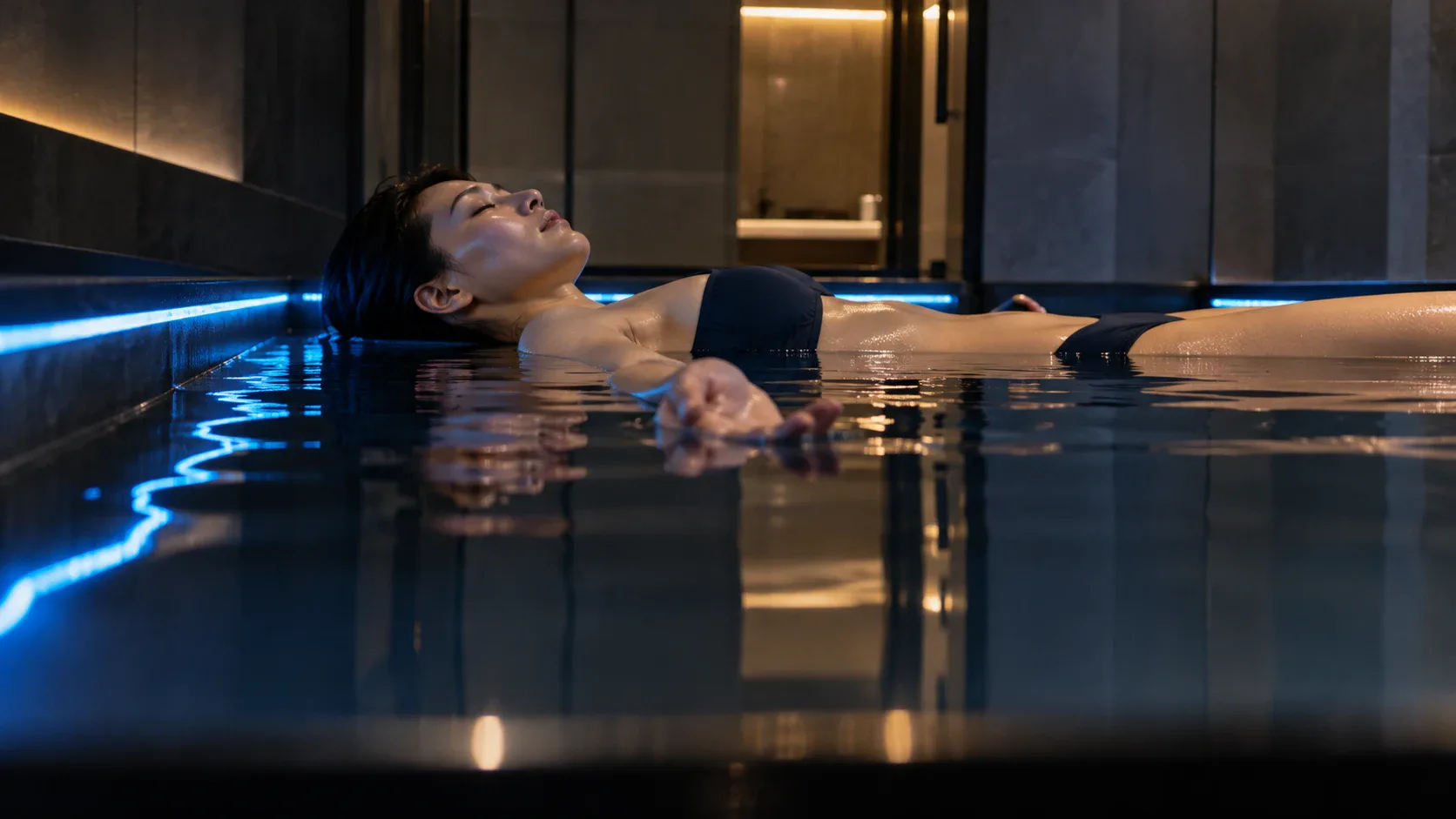
Pod, cabin, open room: what the words mean
The industry standard used in the US and Canada, the North American Float Tank Standard (version 3, updated May 2025, published by the Floatation Tank Association), treats all of these as the same thing. It defines a float tank, “a.k.a. Float Room/Pod/Spa/Chamber”, as a tub of Epsom salt (magnesium sulfate) solution with a specific gravity of 1.23 to 1.30, kept at about 33.3–35.6 °C (92–96 °F), in a space with reduced light and sound. Specific gravity is how dense the water is compared with plain water; at 1.23 or more, you float without effort.
So the shape is a design choice, not a different therapy. You will meet three broad types:
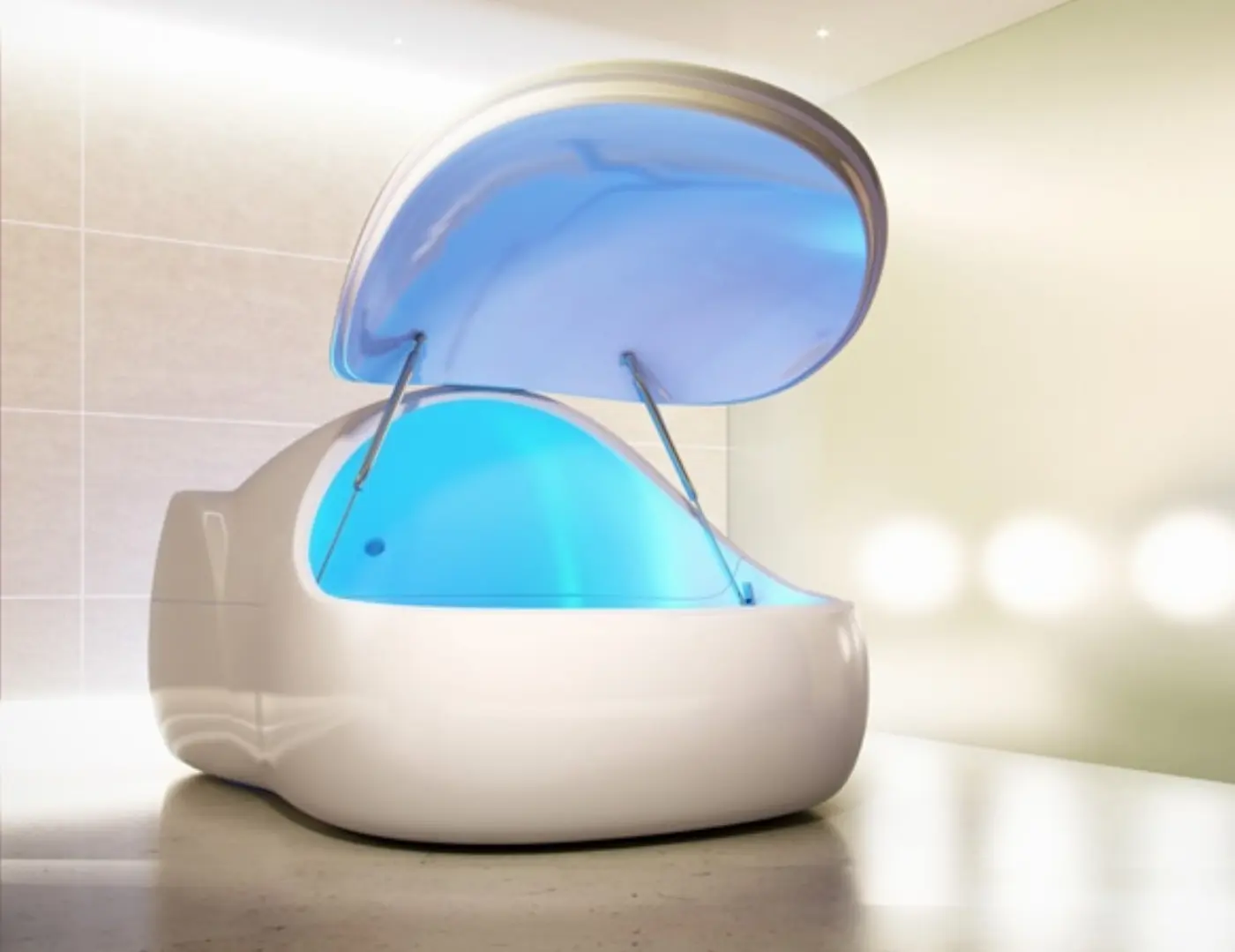
- Float pod: a moulded shell, often egg- or capsule-shaped, with a lid you lift up and lower over you. The shell blocks most light and sound; headroom is low.
- Enclosed tank or cabin: a box-like tank you step into through a door, usually tall enough to sit or kneel.
- Open float room or open pool: a shallow pool in a room that is itself built to be dark and quiet. There is no lid, and you can stand up and walk out at any moment.
A short history: from upright tanks to Samadhi tanks to open rooms
Floating did not begin as a spa treatment. In the 1950s, Drs Jay Shurley and John C. Lilly at the US National Institute of Mental Health studied how the brain responds when outside sensory input is taken away. Rather than falling asleep, participants stayed fully aware. Early designs used various masks to shut out the senses.
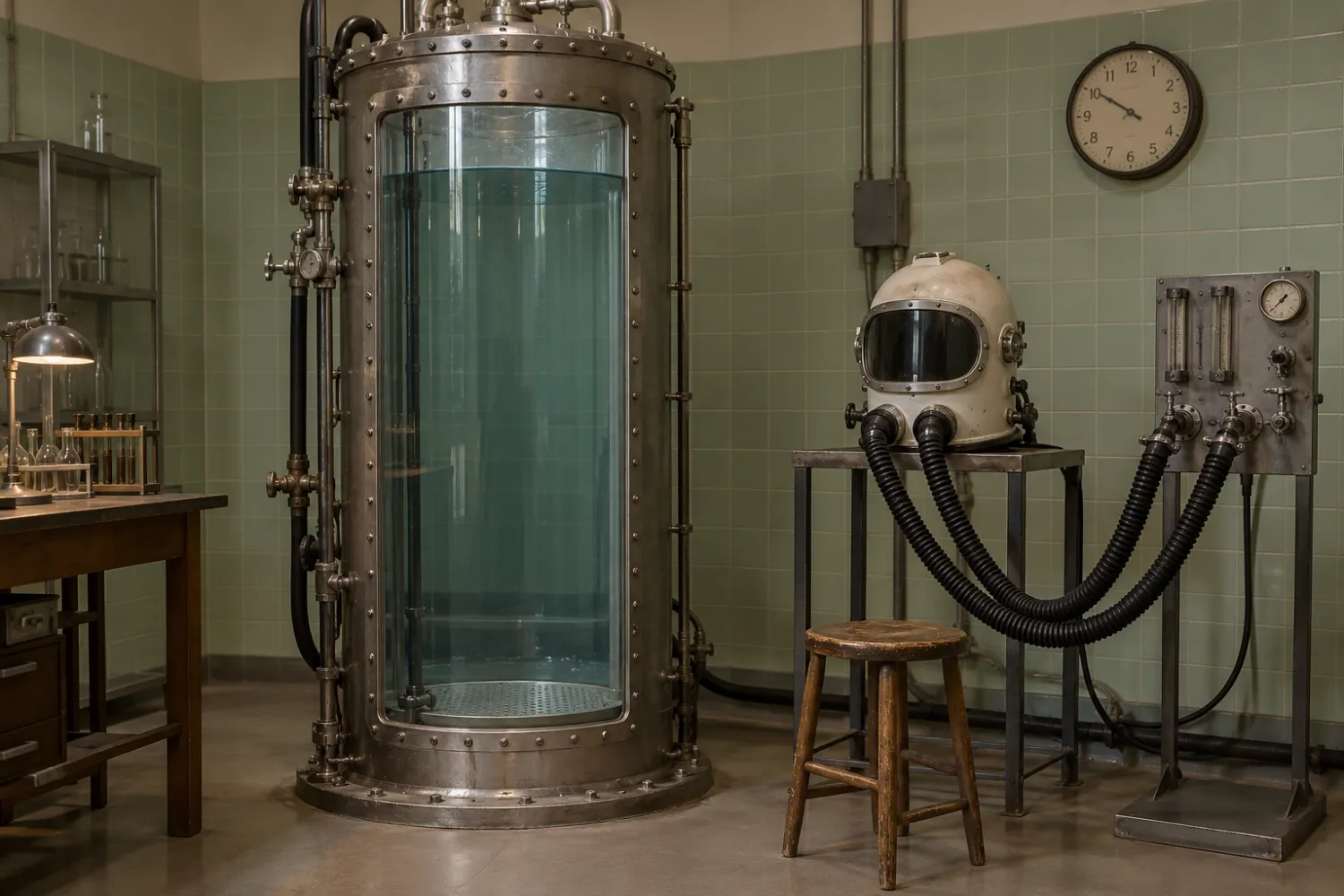
The first fully immersive tank was built in 1957, in Dr Shurley’s laboratory at the Oklahoma City Veterans Administration hospital, and it was upright: the participant was immersed vertically in water, wearing an opaque helmet connected to breathing tubes. Because of that helmet, very few people took part, mostly NASA astronauts in training (Feinstein et al., 2018).
In the 1970s, Glenn Perry, working with John Lilly, invented a horizontal tank that did away with the helmet. You lie on your back in shallow water saturated with Epsom salt, with your face above the surface. Glenn and Lee Perry’s Samadhi Tank Co. says it has been making float tanks since 1972. The classic Samadhi tank is a closed, horizontal box with a lid or door: the ancestor of today’s pods and cabins.
Later came moulded pods, such as the i-sopod pictured above, and more recently open rooms and pools, partly to reduce feelings of claustrophobia. As the research section below shows, the LIBR team built an open pool for exactly this reason.
Float pod vs float room: pros and cons
Each design trades one comfort for another. Centres vary, so the checklist below matters more than the label.
| Feature | Classic Samadhi-style tank | Float pod / enclosed tank | Open float room |
|---|---|---|---|
| Feeling | Closed and box-like; very private | Snug, cocoon-like; some people love it | Spacious; no sense of a lid above you |
| Getting in and out | Open a lid or door and step over a rim | Step over a rim, lower the lid or close a door | Walk in, sit down, lie back; stand up any time |
| Darkness and quiet | The box does much of the work | The shell does much of the work | Depends on how well the room is built: doors, walls, light leaks |
| Air above the water | Small volume of air; ventilation matters | Small volume; good ventilation design is key | A whole room of air; still needs ventilation for the humid air |
| Tall or larger bodies | Low ceiling; can feel tight | Can feel tight, especially at the head end | Usually more room to stretch out |
| Couples | Usually one person per tank | Almost always one person per pod | Some rooms have a pool sized for two |
What the research says
The honest headline: we found no study that compares pods with open rooms directly. Researchers have used different designs, and their results tell us about floating in general, not about which shape is better.
- Open pool, anxious participants (Feinstein et al., 2018). At the Laureate Institute for Brain Research (LIBR) in the US, 50 people with anxiety and stress-related disorders floated once in an open, round pool about 2.4 m (8 ft) across, in a soundproof, lightproof room. The team says it removed the usual enclosure “to reduce feelings of claustrophobia”. Anxiety dropped sharply afterwards, though there was no control group.
- Participants could choose (Garland et al., 2024). In a randomised safety trial with 75 adults with anxiety and depression, the same group let floaters choose between an open and an enclosed circular pool. Most completed their six sessions and no serious adverse events were recorded.
- Pods, with the lid sometimes open (Loose et al., 2021). A German trial of 99 people with chronic pain used a commercial float pod. Thirteen participants asked to float with the lid open; all but one opened it less than 5 cm. Notably, the float group did not do better than the placebo group on the main pain outcome.
- Enclosed tanks (Karlstad University, Sweden). This Swedish group, behind many early float studies, used an enclosed tank entered through a door: in a 2014 pilot trial with 65 people it measured 2.6 × 1.65 × 1.33 m.
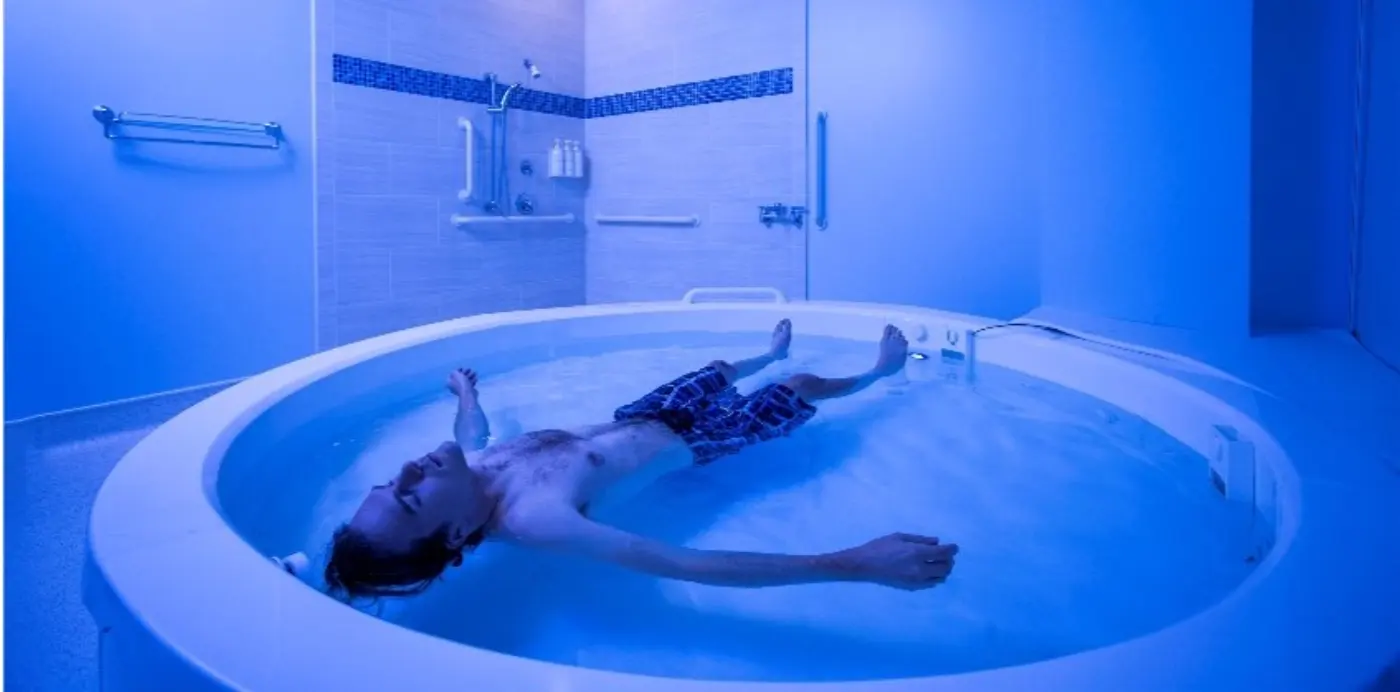
Put together: researchers working with anxious people chose open pools on purpose, some pod users kept the lid ajar, and floating was well tolerated in every design. A hint, not proof. Read more about how we grade studies on our Ōmni Evidence Scale page.
Ōmni Evidence Scale: Early evidence (“open rooms are easier for people who fear tight spaces”). Researchers chose open pools for this reason and some pod users kept the lid open, but no trial has measured it directly.
Ōmni Evidence Scale: No good evidence yet (“pods give better results than open rooms”, or the reverse). No study has compared the two designs head to head.
Which one suits you?
- You dislike tight spaces or lifts: an open room is usually the gentler start. Nothing closes over you.
- You are tall or broad-shouldered: check the tank’s inside length and headroom. An open pool often gives more space to stretch.
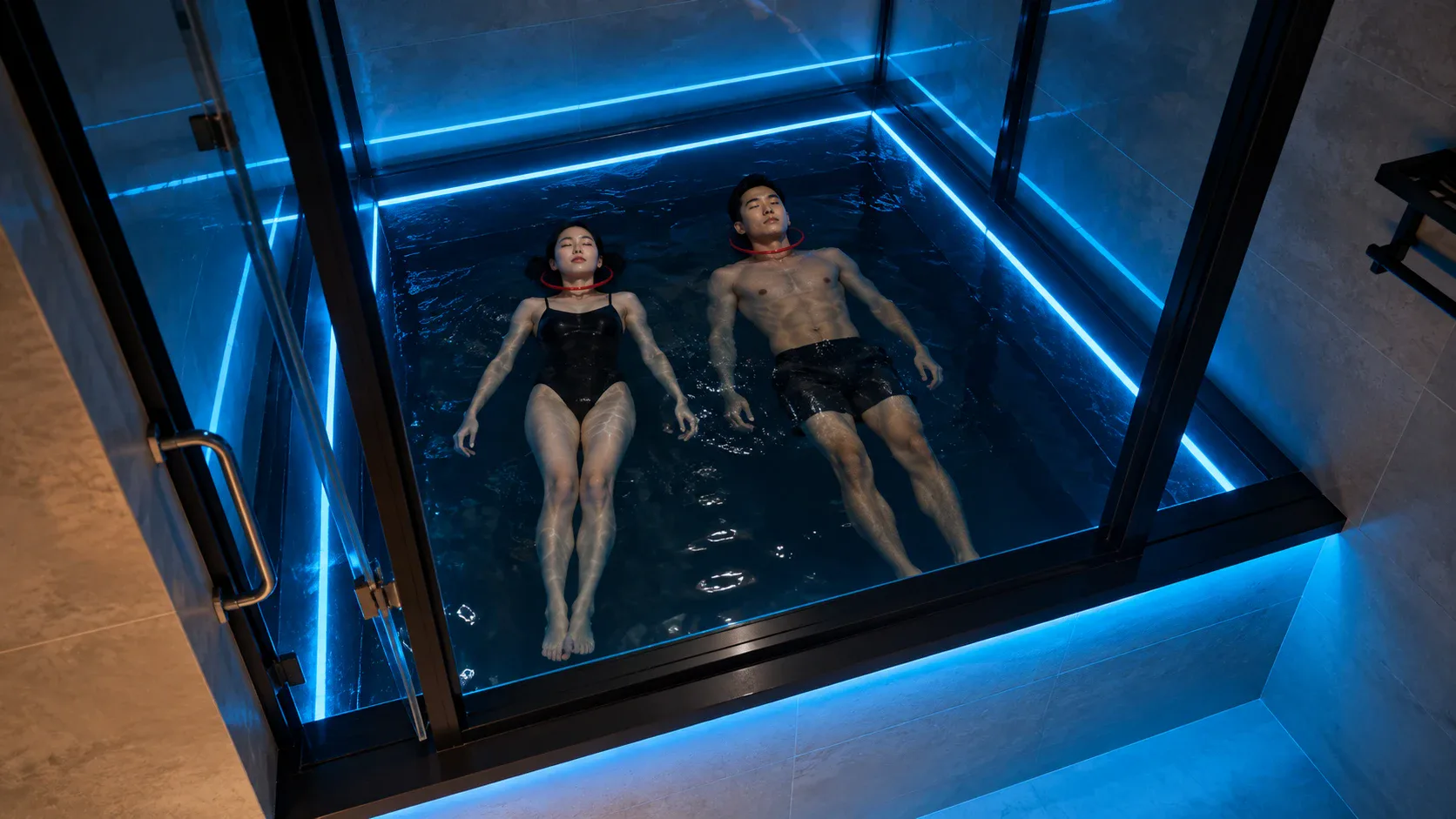
- You are coming as a couple: look for a room with a pool sized for two, or book two rooms side by side. Read about floating together.
- It is your first float: either type works if the centre explains it well. Ask whether you can keep a small light on and leave any time. Our first-float guide covers the rest.
- You love the feeling of a cocoon: a well-run pod can feel deeply private and enclosed. That is a fine reason to choose one.
Checklist: what to ask any float centre in Saigon
Whatever the shape, these questions tell you more than the word “pod” or “room”. A good centre will answer them happily.
- Water density: do you keep specific gravity between 1.23 and 1.30, and how often do you measure it?
- Temperature: is the water kept at roughly skin temperature, about 33.3–35.6 °C?
- Filtration: how many times is the full water volume filtered between guests? The North American standard asks for at least three “turnovers” (full passes through the filter) for tanks without a holding tank, and encourages four.
- Disinfection: what do you use? The same standard requires UV light, ozone, or both as the main sanitising system.
- Air: is there ventilation in the tank or room, so the air stays fresh and not stuffy?
- Darkness and quiet: can I make it fully dark, and can I control the light myself?
- Comfort: is there a neck pillow, earplugs and a private shower?
- Health screening: do you ask about health conditions before my float?
Why our team moved from closed tanks to open pools
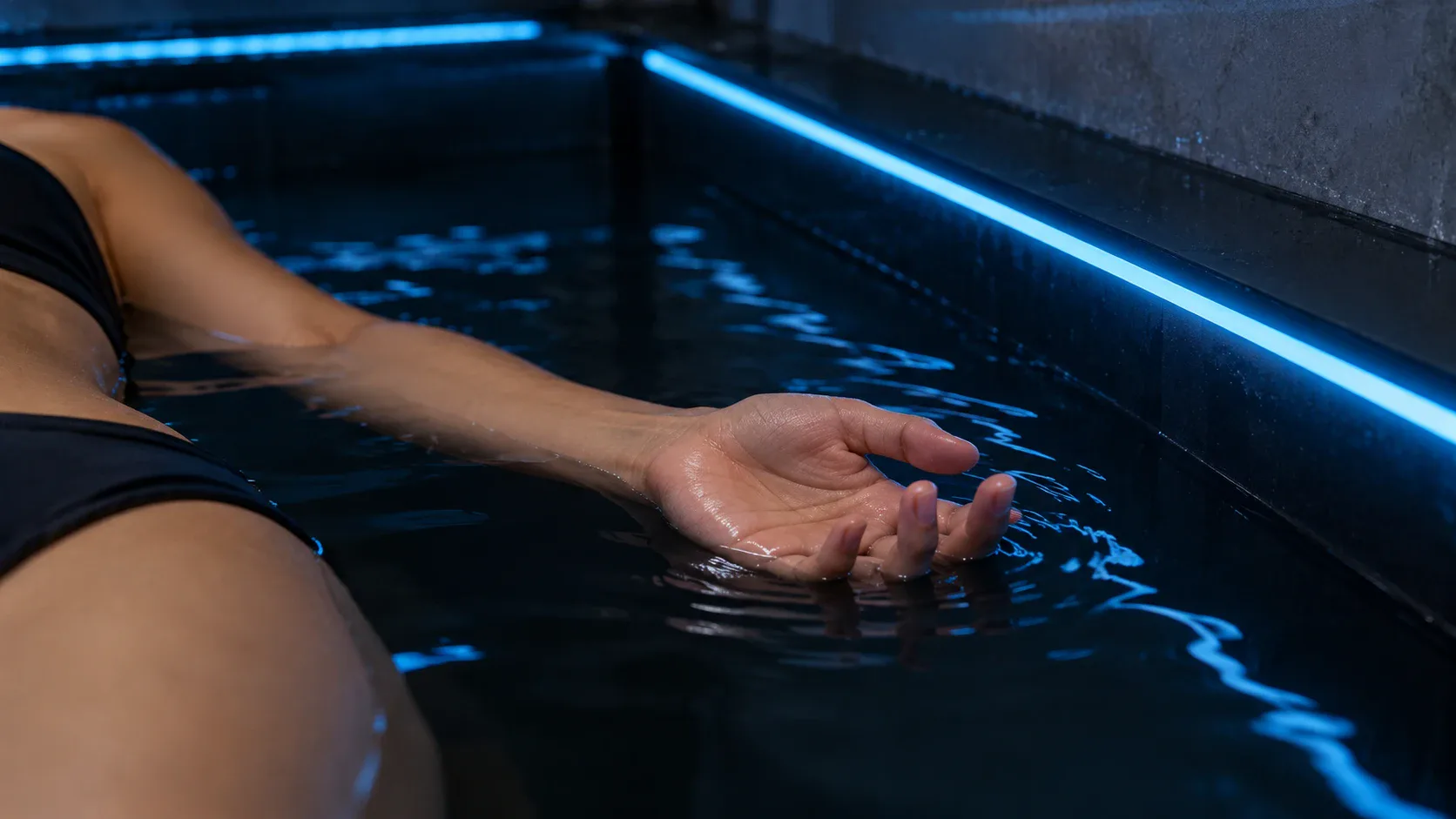
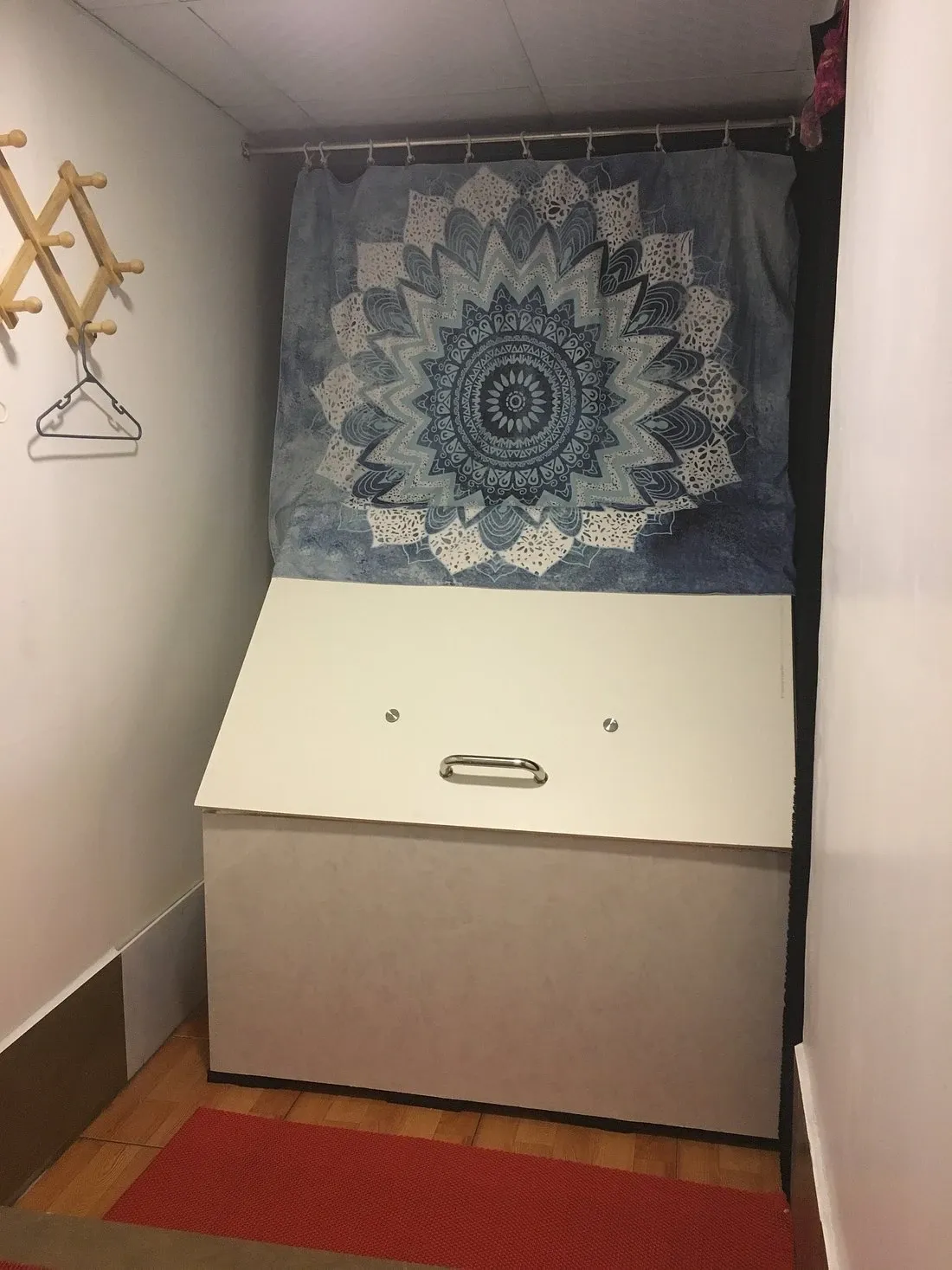
Our own path mirrors this debate. Float Vietnam in Hanoi (2017) used self-built Samadhi-style closed tanks. Float Saigon (2019) used a self-built enclosed cabin. When we opened Ōmni Space in Thảo Điền in 2025, we chose open pools behind soundproof, light-blocking glass doors, mainly to make floating easier for people who feel uneasy in closed spaces.
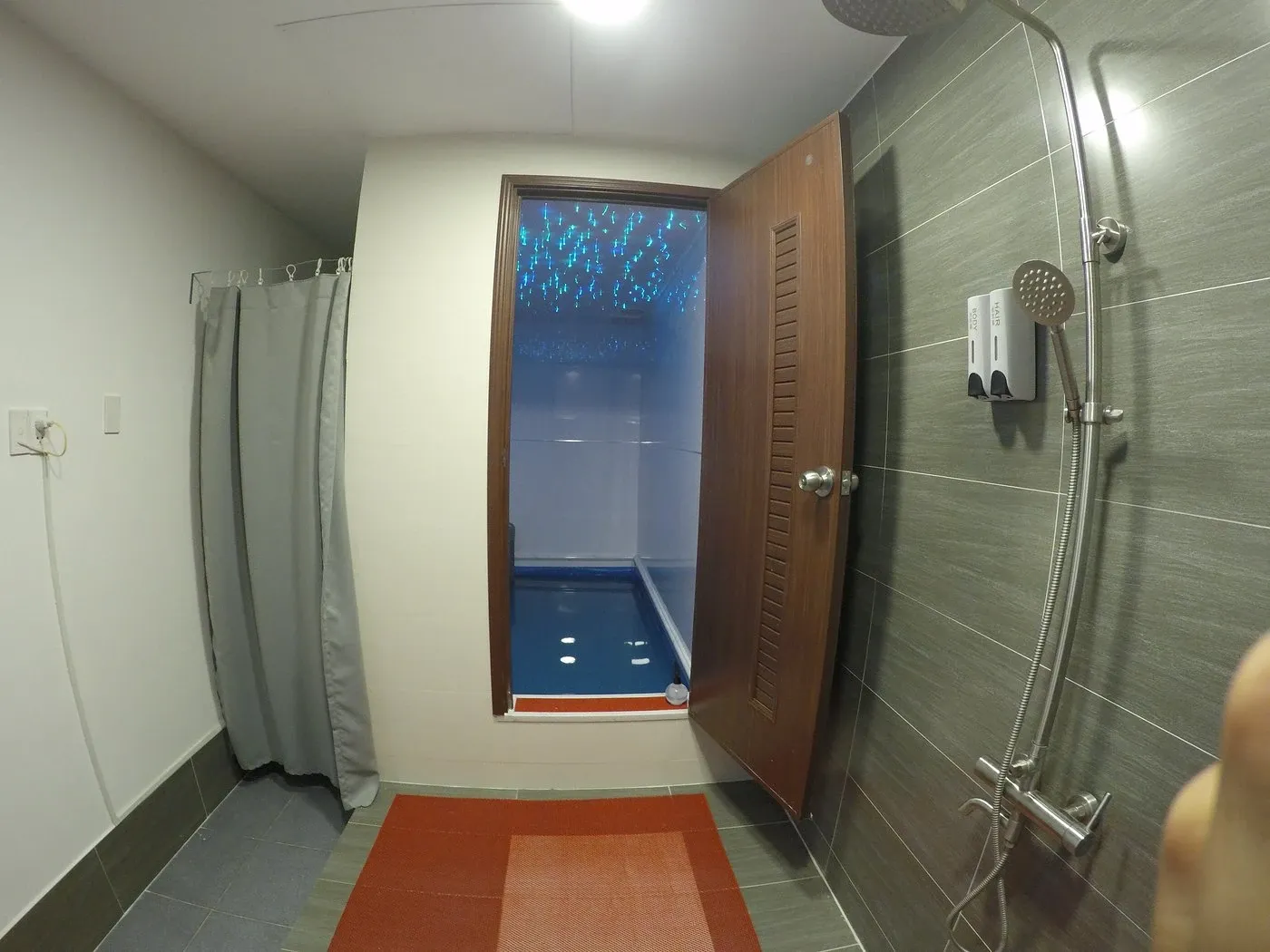
For transparency, here are our answers to the checklist. Each pool is 1.2 × 2.4 m with about 25 cm of water (around 720 litres) and 500 kg of Epsom salt; single rooms have a rectangular pool and the couple room a square pool for two. A 16.8 m³/h pump runs for 15 minutes after every float, more than five full turnovers, and also for 10 minutes every two hours around the clock. We disinfect with UV, hydrogen peroxide and ozone, plus a spa enzyme. Rooms are ventilated, guests control the lights themselves, there is a Halo neck pillow, and every guest fills in a health questionnaire.
Safety
Floating is gentle, but not for everyone at every moment. In any tank, skip your float if you have an open wound, an unhealed tattoo or piercing, or a contagious skin condition; if you have had alcohol or recreational drugs in the last 12 hours; or if you are menstruating. If you have epilepsy or a history of seizures, fainting, heart disease, kidney disease or uncontrolled diabetes, ask your doctor first. If you are pregnant, ask your doctor and tell the centre when you book; at Ōmni we do not float guests from 36 weeks of pregnancy. Fill in the health questionnaire fully and honestly. You can always end a float early.
Where to try it in Saigon
Ho Chi Minh City has more than one float centre and designs differ, so ask each which tank type it uses and run through the checklist. If you would like to try an open pool, Ōmni Space is at 16C Quốc Hương, Thảo Điền, open daily 9:00–21:00 (last session starts at 20:00). A single float starts from 1,500,000 VND for 60 minutes, and a couple float from 2,200,000 VND for 60 minutes; see all services and prices or how to get here. Visiting? Our visitor guide and the Saigon Wellness Map help you plan the rest. Vietnamese readers can also find a deeper analysis of this topic on our sister site, Float Vietnam (in Vietnamese).
FAQ
Is a float pod better than a float room?
No study has shown that. Choose by comfort, then judge the centre by its water quality, air, darkness and quiet. That is not a research finding, but it is our clear view after running closed tanks, a cabin and open pools: if the room is properly soundproofed and blacked out, an open room is the better choice for most people. You lose nothing in darkness or quiet, and you gain air and space, so it feels much less stuffy.
Can I float if I am claustrophobic?
Many do, especially in an open room where nothing closes over them. Keep a soft light on at first; you can stand up and leave any time.
Is an open float room as dark and quiet as a pod?
It can be. In a pod the shell blocks light and sound; in an open room the doors, walls and seals must do it. Ask whether it can be made fully dark.
Can couples float together?
Only if the centre has a pool sized for two; pods are almost always single. Otherwise, book two rooms at the same time.
How do I know the water is clean?
Ask how many times the water is filtered between guests (at least three full turnovers is the North American minimum), what disinfection they use (UV, ozone or both), and how often they check salt density.
What was the first float tank like?
It was upright. The first fully immersive tank, built in 1957 at the Oklahoma City Veterans Administration hospital, held the participant vertically in water, wearing an opaque helmet connected to breathing tubes. Lying on your back in Epsom salt water came in the 1970s.
Sources
- Floatation Tank Association. North American Float Tank Standard, Version 3, updated May 2025.
- Feinstein JS, Khalsa SS, Yeh HW et al. Examining the short-term anxiolytic and antidepressant effect of Floatation-REST. PLoS One, 2018.
- Garland MM, Wilson R, Thompson WK et al. A randomized controlled safety and feasibility trial of floatation-REST in anxious and depressed individuals. PLoS One, 2024.
- Loose LF, Manuel J, Karst M, Schmidt LK, Beissner F. Flotation Restricted Environmental Stimulation Therapy for Chronic Pain: A Randomized Clinical Trial. JAMA Network Open, 2021.
- Kjellgren A, Westman J. Beneficial effects of treatment with sensory isolation in flotation-tank as a preventive health-care intervention: a randomized controlled pilot trial. BMC Complementary and Alternative Medicine, 2014.
- Samadhi Tank Co. About (Glenn Perry). Accessed October 2026.
Leave a Reply