
In short: Red-light therapy, or photobiomodulation, means shining red and near-infrared light (roughly 600 to 1,000 nanometres) onto skin and muscle. Its story began with a Hungarian laser experiment on mice in the late 1960s, long before LED face masks, panels and red-light beds became mainstream. The best-supported explanation is that cells absorb this light in their mitochondria, triggering a small burst of energy and signalling. In people, trials suggest modest improvements in skin texture and fine lines, and some help with muscle fatigue and soreness, when a measured dose is directed at one area. Whole-body panels have far less evidence behind them. Dose matters, and more is not always better. Ōmni has red-light panels in our infrared sauna, so we have a stake in this topic — and we want to be clear about what the evidence does and does not let us claim.
Part of the Ōmni Recovery Library · Recovery by Light
Maybe you have seen a friend’s glowing LED mask on Instagram, or noticed a gym offering a red-light bed beside the protein shakes. Or perhaps you have sat under that warm red glow in a sauna and wondered: is this actually doing anything, or does it simply look good? Here we will trace where red-light therapy came from, look at what the light may do inside a cell, see what human trials say about skin and muscles, and give you a better way to judge the next red-light claim that lands on your feed.
Ōmni Evidence Scale: Promising, for skin texture, fine lines and muscle fatigue when a measured dose of red or near-infrared light is aimed at one area (several small trials with fairly consistent results, often funded by device makers). Early evidence, for whole-body red-light panels and beds. See how we rate evidence on the Ōmni Evidence Scale.
What is red-light therapy?
Red-light therapy uses deep red light (around 620 to 700 nm), which you can see, and near-infrared light (around 700 to 1,000 nm), which you cannot. The light comes from low-power lasers or, more commonly today, LEDs. It is not hot enough to burn, and it contains no ultraviolet, so it does not tan the skin. Researchers usually call it photobiomodulation (PBM): light used to gently influence biological processes, rather than destroy tissue the way a surgical laser does.
It is easy to confuse this with an infrared sauna, which uses infrared mainly as heat to make you sweat. Red-light therapy is about the light itself, delivered at a fairly precise dose — not simply the warmth you feel.
From shaved mice to space potatoes
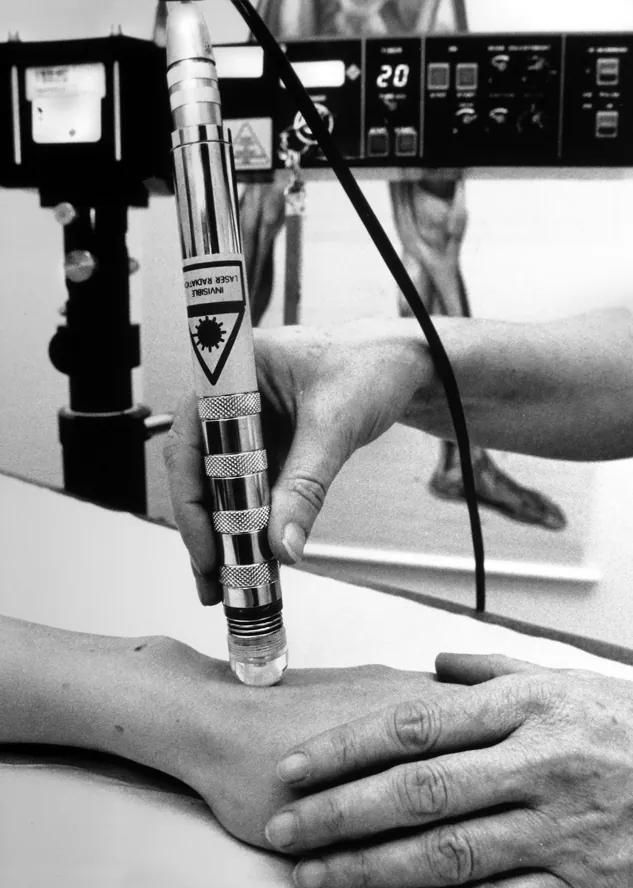
The story usually starts in Budapest. In the late 1960s, surgeon Endre Mester aimed a low-power ruby laser at the shaved backs of mice to see what the light might do. Something unexpected happened: hair on the treated areas grew back faster. He published the result in 1968 and then went on to test lasers on slow-healing wounds. Over the following decades, “low-level laser therapy” found its way into physiotherapy clinics, often for joint and tendon pain.
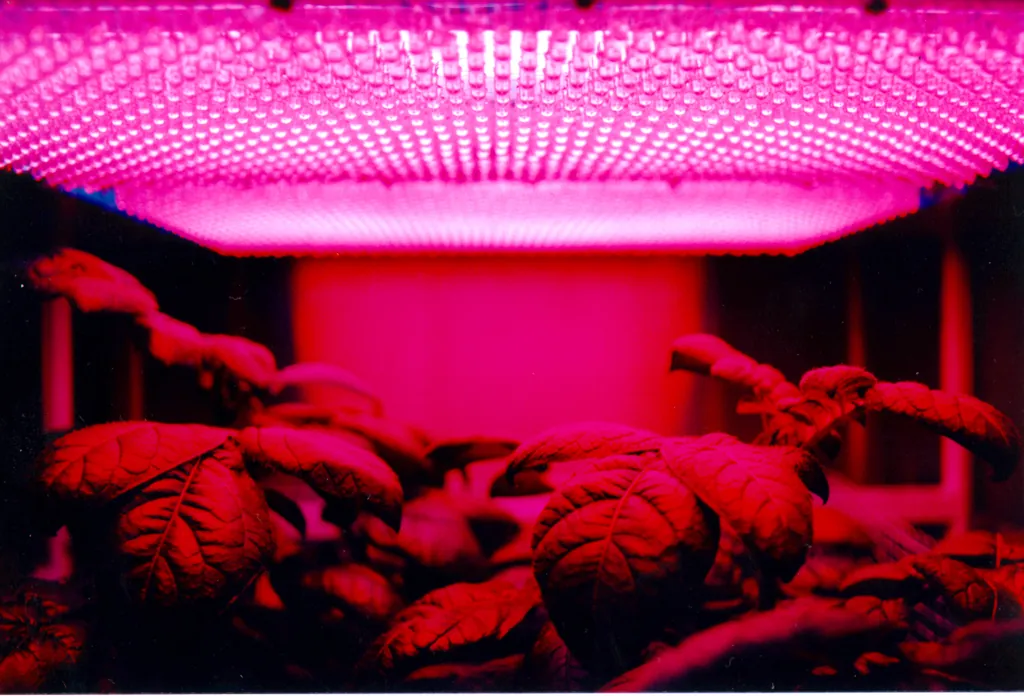
The LED chapter has an even stranger origin. In the 1990s, NASA funded bright red LED arrays to grow plants — potatoes included — in space. Researchers at the Medical College of Wisconsin, working through a NASA small-business programme, then tested similar LEDs on cells, wounds in rats and people. Their 2001 report described faster cell growth in the lab and encouraging early results in sailors with training injuries and children with mouth sores during cancer treatment. These were early, mostly uncontrolled data. “NASA technology” later became a powerful marketing line, but NASA never showed that a home panel improves your health.
What does red light do inside a cell?
The leading explanation centres on the mitochondria, the small power plants inside your cells. An enzyme there called cytochrome c oxidase absorbs red and near-infrared light. In laboratory studies, this is followed by a rise in ATP (the cell’s energy currency), a brief, small burst of reactive oxygen species, a release of nitric oxide and shifts in calcium. Together, those signals can switch on genes linked to cell survival, repair and lower inflammation. A 2017 review by Michael Hamblin of Harvard, one of the field’s best-known researchers, describes reduced inflammation as one of PBM’s most reproducible effects in animal models.
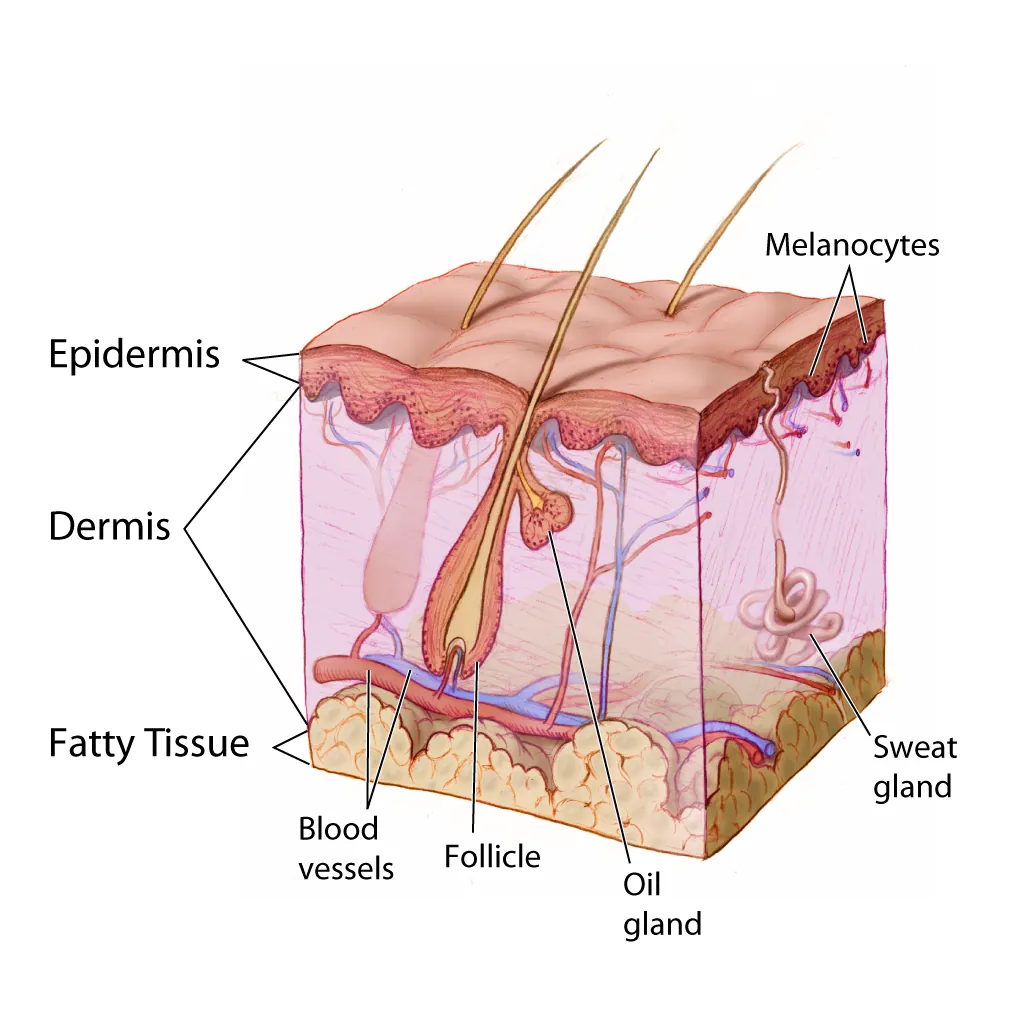
Two details are especially important. First, depth: skin absorbs and scatters light quickly, so red light works mostly in the skin, while near-infrared reaches a little deeper, towards muscle. Second, the dose curve is biphasic. A little light may stimulate; a lot can inhibit. That is why “more minutes, closer to the panel” is not automatically better — and one reason studies using different doses can produce different results.
So the mechanism is plausible and has been studied extensively in cells and animals. But whether a particular device creates a visible, meaningful result in a real person is a different question — and one that only human trials can answer.
What the human studies show
Skin: fine lines, texture and collagen
One of the studies you will see quoted most often is a 2014 German trial in Photomedicine and Laser Surgery. About 130 volunteers completed 30 sessions, twice a week, under red light (611 to 650 nm) or a broader red-to-infrared spectrum. Doctors who did not know who had been treated rated wrinkles from photographs: around 7 in 10 treated people improved, compared with very few in the untreated group. Ultrasound also showed denser collagen. Then comes the fine print: the device maker paid for the study, the control group was not randomised (it came mainly from the sponsor’s staff), and there was no sham light.
A 2026 systematic review of at-home LED devices for the face found eight studies involving 365 people. Across them, red and near-infrared LEDs were linked with measurable improvements in wrinkles, texture and elasticity, while side effects were rare, mild and brief. The authors also pointed to varied protocols and limited data on darker skin. In everyday language: the results mostly lean in the same direction, but the studies are generally small, short and often industry-supported. Think “gentle, gradual improvement”, not a facelift.
Muscles: fatigue, performance and soreness
Sport is where PBM has accumulated the most trials. A 2018 meta-analysis pooled randomised trials in healthy people and found some benefit for time to exhaustion, repetitions and strength when light (655 to 950 nm) was applied directly to the working muscles, usually before exercise. The authors rated the quality of evidence as very low to moderate because the trials were small and their methods varied widely. A 2025 meta-analysis on delayed-onset muscle soreness found moderate reductions in soreness three and four days after hard exercise, although only four of its fourteen studies could be pooled.
Then comes the plot twist for full-body devices. A 2025 systematic review looked specifically at whole-body PBM — the beds and walls of panels you stand or lie in. It found five studies involving 105 active people, and none showed a benefit for exercise performance or markers of fatigue. Two did report better sleep. So most of the positive muscle evidence comes from targeted probes and clusters positioned over a specific muscle, and we cannot assume the same effects carry over when the whole body is simply bathed in red light.
Where the evidence is strongest: inside hospitals
The firmest result sits quite far from the wellness market. For people having stem cell transplants or radiotherapy to the head and neck, the international MASCC/ISOO guidelines recommend specific PBM protocols to help prevent oral mucositis, the painful mouth sores these treatments can cause, using exact settings. In other words, PBM can work — under precise doses, for specific conditions.
Risks and what to watch
Red-light therapy is generally low risk for skin. The main thing to respect is your eyes: bright LED panels are uncomfortable to stare into, and many devices come with goggles for a reason. A much clearer warning comes from eye clinics in China, where children use repeated low-level red-light lasers aimed into the eye to slow short-sightedness: JAMA Ophthalmology reported a 12-year-old girl with damage to the centre of both retinas after five months of use, which only partly recovered after stopping. That is a laser directed into the eye — very different from a panel shining on your skin — but it is a useful reminder that light energy and eyes deserve respect.
The other risk is simpler: your wallet. Home devices vary enormously in power, and most have never been tested in a published trial.
How to read a red-light claim
- Which wavelength? Trials use specific red (roughly 610–660 nm) and near-infrared (up to about 950 nm) wavelengths. “Full spectrum” or no number at all should make you pause.
- Which dose? Serious devices state irradiance (mW/cm²) or energy (J/cm²). Without it, there is no meaningful way to compare the device with a study.
- Which body part? Skin and individual muscles have the best data. Mood, weight loss, hormones and “detox” claims sit on much thinner ground.
- Who paid? Many trials are funded by device makers; independent replication carries more weight.
What we think at Ōmni
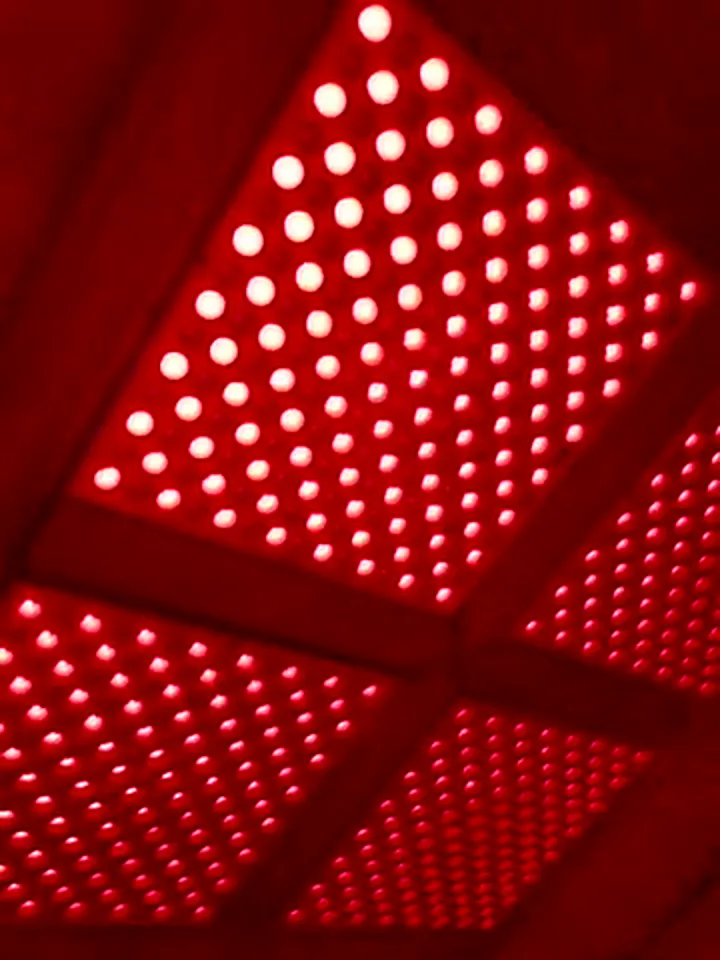
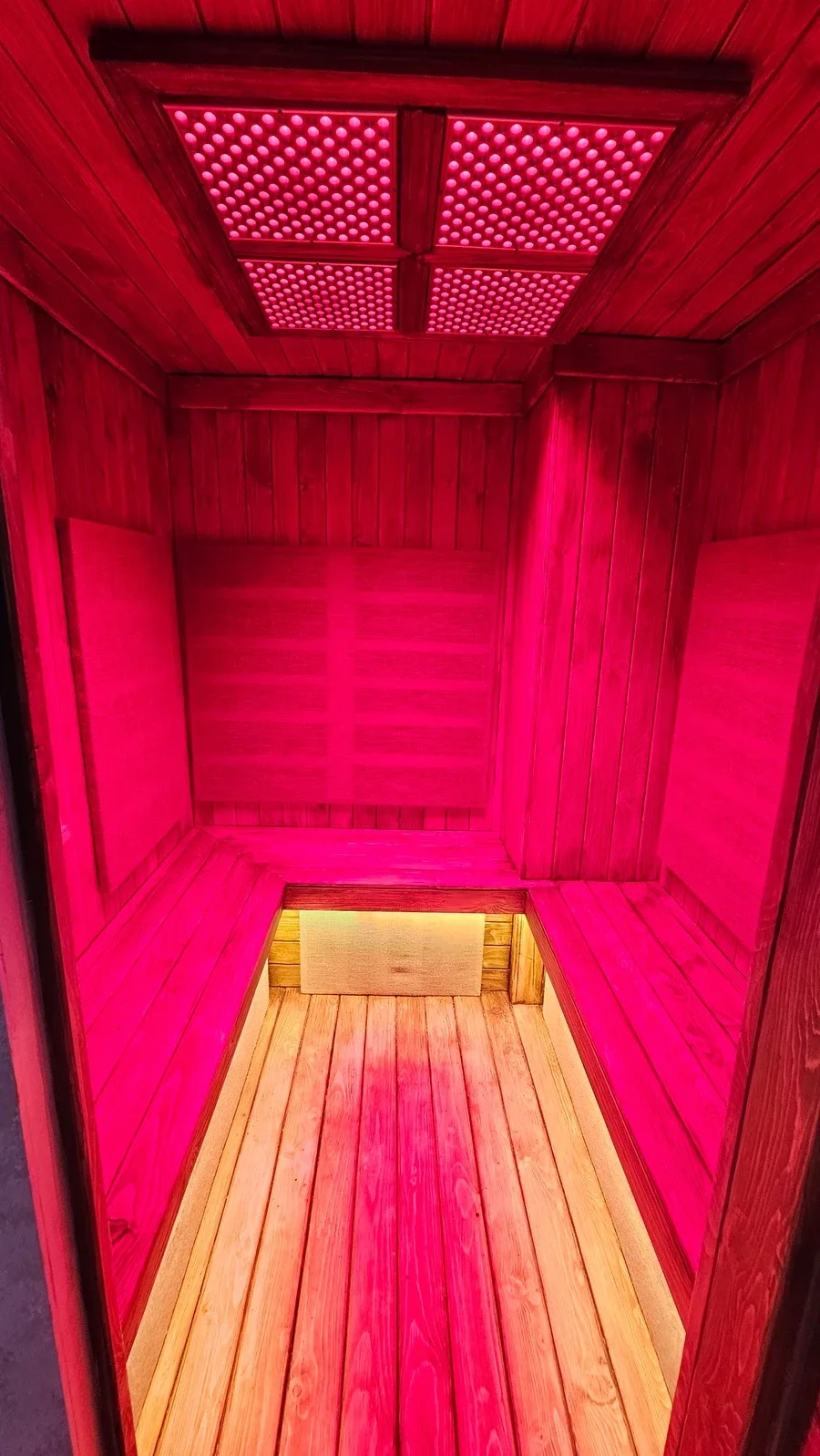
Ōmni sells this, so you deserve to know exactly where we stand. Our private infrared and red-light sauna in Thảo Điền has red-light panels in the ceiling, alongside infrared heat at 45–55 °C. The red glow is gentle and many guests find the whole experience calming, but the warmth is the main event. We do not promise that one sauna session gives you the clinical dose used in skin or sports trials, because we have not measured our panels against those protocols. If you are looking for targeted red-light treatment for skin, a dermatology clinic using a measured protocol is the right place to start.
For the evidence on sauna heat itself, read our infrared and Finnish sauna guide. Many guests pair the sauna with a float: lying in warm water with about 500 kg of dense, mineral-rich Epsom salt, in darkness and silence. Float has been explored across hundreds of scientific studies; in a Swedish randomised pilot trial, 65 working adults who floated 12 times over seven weeks reported less stress and anxiety and better sleep than a waiting group.
Ōmni Evidence Scale: Strong evidence, for float and stress. We rate it Strong because, on top of these trials, user experience is overwhelmingly positive: in a 2025 survey of regular floaters, 92% reported relaxation and 77% less stress, echoed by thousands of reviews, Reddit threads and forums, and by athletes and public figures who float.
Ōmni Space is at 16C Quốc Hương, Thảo Điền, from the team behind Float Vietnam, the country’s pioneer float centre since 2017. The infrared and red-light sauna costs 450,000 VND on its own, or 200,000 VND added to a float. You can also book the whole sauna and cold plunge room for up to 4 people for 60 minutes at 900,000 VND. A single float costs 1,500,000 VND for 60 minutes or 2,000,000 VND for 90 minutes; the couple room adds 700,000 VND for the second person. No swimwear is needed for the sauna or the float room; for the cold plunge, bring your own. Open 9:00–21:00 daily; last float 20:00; walk-ins until 18:00.
Float PlanRunning on empty?Take the one-minute Float Plan quiz: tell us how you feel and what you need, and get a simple plan for your first session.Make my Float PlanFAQ
Does red-light therapy actually work?
For some things, modestly. Small trials show improvements in fine lines, skin texture and muscle fatigue when a measured dose is directed at one area, and hospitals use specific protocols to help prevent mouth sores during some cancer treatments. Claims around mood, weight loss or whole-body recovery have much less support.
What is the difference between red light and an infrared sauna?
An infrared sauna uses infrared mainly to heat your body. Red-light therapy relies on the light itself, delivered at specific wavelengths and doses. Our sauna at Ōmni combines both.
Is red-light therapy safe for the eyes?
Do not stare into bright panels, and use the goggles that come with a device. A red-light laser directed into the eye caused retinal damage in at least one reported case in a child.
Are whole-body red-light beds worth it for recovery?
The evidence is still thin. A 2025 review found five small studies of whole-body red light, and none showed better exercise performance or lower fatigue markers, although two reported better sleep. Most of the positive muscle data come from devices aimed directly at a specific muscle.
Does Ōmni Space offer red-light therapy?
Yes, as part of our private infrared and red-light sauna at 45–55 °C, 450,000 VND on its own or 200,000 VND added to a float. We present it as a relaxing heat session with red light, not as a clinical red-light treatment delivered at a measured dose.
Written by the team at Ōmni Space – Float Saigon in Thảo Điền, Vietnam’s pioneer float centre since 2017. We sell an infrared and red-light sauna, so we have an interest in this topic. General information, not medical advice; sources checked on 30 October 2026.
Sources
- Mester E, Szende B, Gärtner P (1968). The effect of laser beams on the growth of hair in mice. Radiobiologia, Radiotherapia (Berlin) 9(5): 621–626.
- Whelan HT, Smits RL, Buchman EV, et al. (2001). Effect of NASA light-emitting diode irradiation on wound healing. Journal of Clinical Laser Medicine & Surgery 19(6): 305–314.
- Hamblin MR (2017). Mechanisms and applications of the anti-inflammatory effects of photobiomodulation. AIMS Biophysics 4(3): 337–361.
- Wunsch A, Matuschka K (2014). A controlled trial to determine the efficacy of red and near-infrared light treatment in patient satisfaction, reduction of fine lines, wrinkles, skin roughness, and intradermal collagen density increase. Photomedicine and Laser Surgery 32(2): 93–100.
- Das RK, Thayer WP, Kubiak CA, et al. (2026). Efficacy and safety of at-home light-emitting diode photobiomodulation for facial rejuvenation: a systematic review. Aesthetic Plastic Surgery.
- Vanin AA, Verhagen E, Barboza SD, Costa LOP, Leal-Junior ECP (2018). Photobiomodulation therapy for the improvement of muscular performance and reduction of muscular fatigue associated with exercise in healthy people: a systematic review and meta-analysis. Lasers in Medical Science 33(1): 181–214.
- Tsou YA, Chang NJ, Chang WD (2025). Effects of photomodulation therapy for delayed onset muscle soreness: a systematic review and meta-analysis. Journal of Functional Morphology and Kinesiology 10(3): 277.
- Álvarez-Martínez M, Borden G (2025). A systematic review on whole-body photobiomodulation for exercise performance and recovery. Lasers in Medical Science 40(1): 55.
- Zadik Y, Arany PR, Fregnani ER, et al. (2019). Systematic review of photobiomodulation for the management of oral mucositis in cancer patients and clinical practice guidelines. Supportive Care in Cancer 27(10): 3969–3983.
- Liu H, Yang Y, Guo J, Peng J, Zhao P (2023). Retinal damage after repeated low-level red-light laser exposure. JAMA Ophthalmology 141(7): 693–695.
- Kjellgren A, Westman J (2014). Beneficial effects of treatment with sensory isolation in flotation-tank as a preventive health-care intervention: a randomized controlled pilot trial. BMC Complementary and Alternative Medicine 14: 417.