
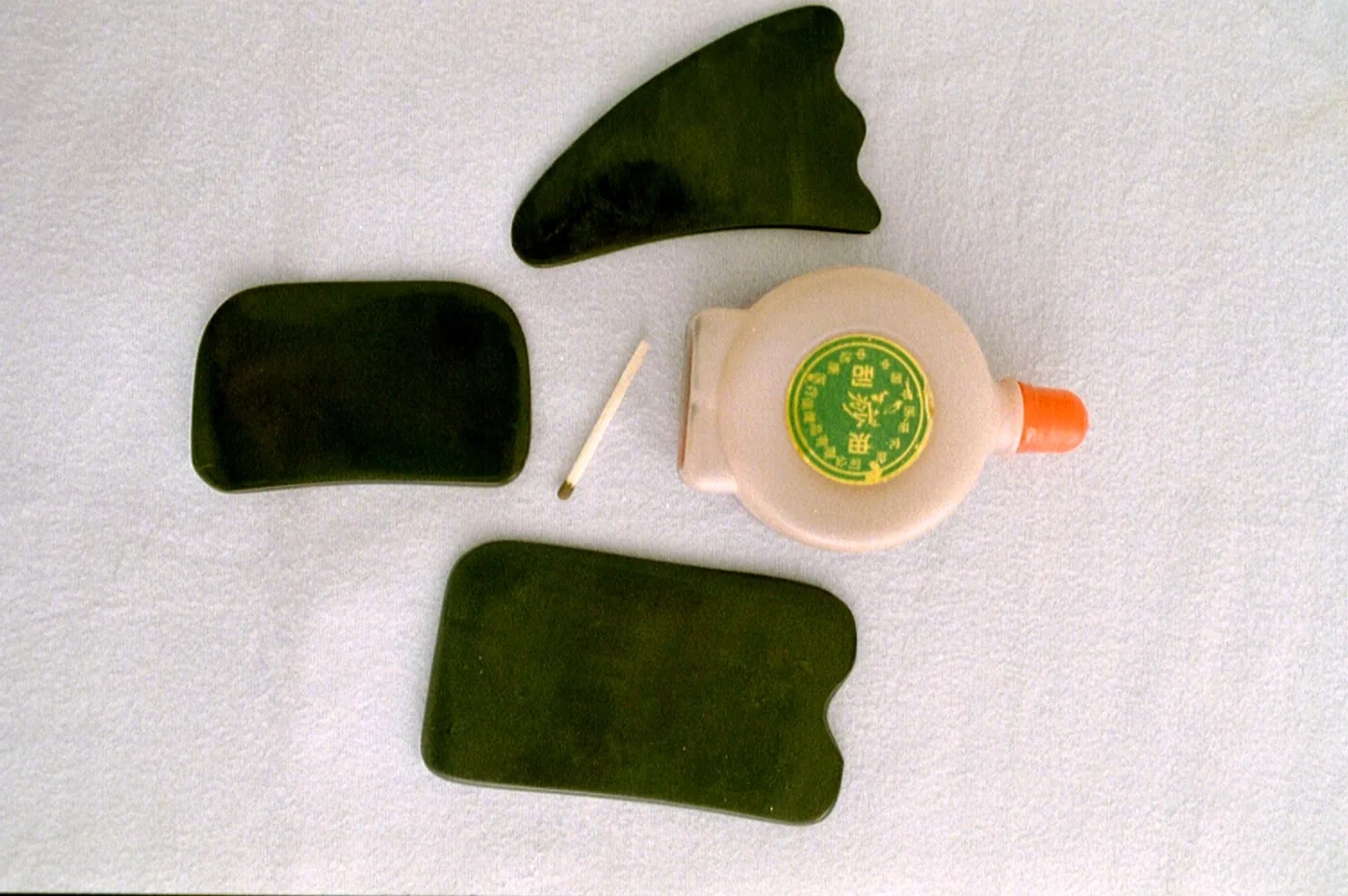
In short: Touch may be our oldest recovery tool. Long before anyone called it therapy, we were already rubbing a sore shoulder or reaching for someone when they hurt. Around that simple instinct, cultures built whole systems: coining in Vietnam, cupping in China and the Arab world, massage almost everywhere. This shelf brings together our articles on hands-on recovery, each with a clear, honest evidence label.
Ōmni Recovery Library · Recovery by Touch
Spend a week walking around Saigon and you will probably spot them: red stripes from cạo gió, purple circles from cupping, and a massage shop seemingly around every other corner. Some of these traditions have small trials behind them; others have centuries of grandmothers and not much else. Yet people keep returning to them, perhaps because there is something deeply human about being cared for through touch. The articles below look at what each practice actually does to the skin and muscles, what the studies say, and when a bruise is simply a bruise.
How we rate evidence: every article on this shelf begins with one label from the Ōmni Evidence Scale (Strong evidence, Promising, Early evidence, No good evidence yet), so you can tell at a glance whether you are reading about clinical trials or long-standing tradition. See how the Ōmni Evidence Scale works.
Already in the library
- Coining (cạo gió): the red stripes you see in Saigon: where those familiar red stripes come from, why people use coining, and what science actually knows about it.
- Float Therapy vs Massage vs Sauna in Saigon: Which One Do You Need?: three very different ways to unwind, compared honestly, and how to choose the one that fits what you need.
- Float Therapy vs Chiropractic in Ho Chi Minh City (Saigon): An Honest Comparison and How to Combine Them: one uses hands-on adjustment, the other gives you an hour of weightless rest; here is how the two approaches differ and where they can fit together.
Read in Vietnamese: Cạo gió có tác dụng không? Khoa học nói gì về cách giải cảm của ông bà · Giác hơi có tác dụng gì? Những vòng tròn tím trên lưng Michael Phelps và điều khoa học biết (Float Vietnam)
New in the library
New articles on this shelf are on their way.
What Ōmni offers
Ōmni does not offer massage, cupping or coining. What we offer is almost the opposite of touch: with float therapy, the only thing supporting you is warm, dense, mineral-rich Epsom salt water, leaving your muscles free to soften without anyone pressing, pulling or working on them. A float costs 1,500,000 VND for 60 minutes or 2,000,000 VND for 90 minutes. Ōmni Space is at 16C Quốc Hương, Thảo Điền, open 9:00–21:00 every day (last float 20:00).
Float PlanRunning on empty?Take the one-minute Float Plan quiz: tell us how you feel and what you need, and get a simple plan for your first session.Make my Float PlanPart of the Ōmni Recovery Library, written by the Ōmni Space team in Thảo Điền, Saigon. General information about practices people use to recover, not medical advice.