
In short: Long laptop days. Late calls across time zones. A body that stays switched on even after the laptop closes. Remote work can make rest feel like another thing to schedule. Small movement breaks, dimmer evening screens, and a quiet riverside walk help break the cycle. A float at Ōmni Space, a float therapy (Thiền Nổi) room in Thảo Điền, gives you a deeper pause without another task to complete. Here is a simple reset plan for one workday and one week.
It is 11 p.m. Your team in the US is still on the call. When the laptop finally shuts, your shoulders are still up by your ears. By morning, your neck feels like a stiff hinge. Sound familiar? Remote work in Thảo Điền often happens at café tables and on sofas, with evenings turned into office hours for someone on the other side of the world. The work gets done. Rest gets pushed back. Here is how to make room for both, without missing out on Saigon while you are here.

Why long calls leave you stiff and late nights keep you wired
Remote work rarely involves heavy lifting. Instead, it means hours in one position, leaning into a screen and tensing through difficult meetings. The World Health Organization advises adults to spend less time sitting and replace some of it with movement of any kind, alongside at least 150 minutes of moderate-intensity activity each week.
How often you get up matters, too. In a study of adults, those who interrupted their sitting more frequently had smaller waist measurements and better blood fat and blood sugar markers, even after accounting for total sitting time. It was a cross-sectional study, showing an association rather than cause and effect. Still, the takeaway is practical: give your body chances to move throughout the day.
Late calls bring another problem: bright screens when your body is getting ready for sleep. Light from a phone, tablet or laptop in the evening can interfere with that signal. In a small lab study, reading on a light-emitting tablet for four hours before bed delayed the evening rise of melatonin, the hormone that helps you feel sleepy. People also took longer to feel alert the next morning than those reading a printed book. The authors called for more research. The habit worth trying tonight is simple: dim the screen and give your eyes a break.
Small breaks that fit a real remote workday
No new productivity system required. Just a few pauses between the calls already on your calendar.
- Stand between calls. Walk to the kettle or over to the window. Even a short change of position gives your neck and hips a break.
- Move your eyes and shoulders. Look into the distance for a moment. Roll your shoulders back. It takes less time than scrolling through another message.
- Eat lunch away from the desk. Typing between bites keeps you in work mode. Give your meal a proper break, even a short one.
- Keep late calls in one block. When a call across the world runs late, leave the next morning open for a slower start instead of another rush.
- Dim the screen after the last call. Lower the brightness, turn on warm lamps, and put your phone away an hour before bed when possible.
These are everyday habits, not a treatment plan. They are easiest to keep when they fit your actual schedule. Start with one, then build from there.

Take your break outside: Thảo Điền walks and coffee
Thảo Điền has quiet corners that feel far from a city-centre office. At the end of Làng Báo Chí, a public riverside path offers a calm walk, easy motorbike parking, and sunsets worth staying for. Head there after a long call. Let your legs move and your eyes look beyond the screen.
For a slower afternoon, head to Xuân Thủy and its well-loved cafés. Huế Coffee is a local favourite, with Marou and Phê La close by. Find a corner table. Put the laptop away for an hour. Listen to the street without a meeting in your ears. For more weekend ideas, see the things to do in Thảo Điền guide.
Make space for a float in your week
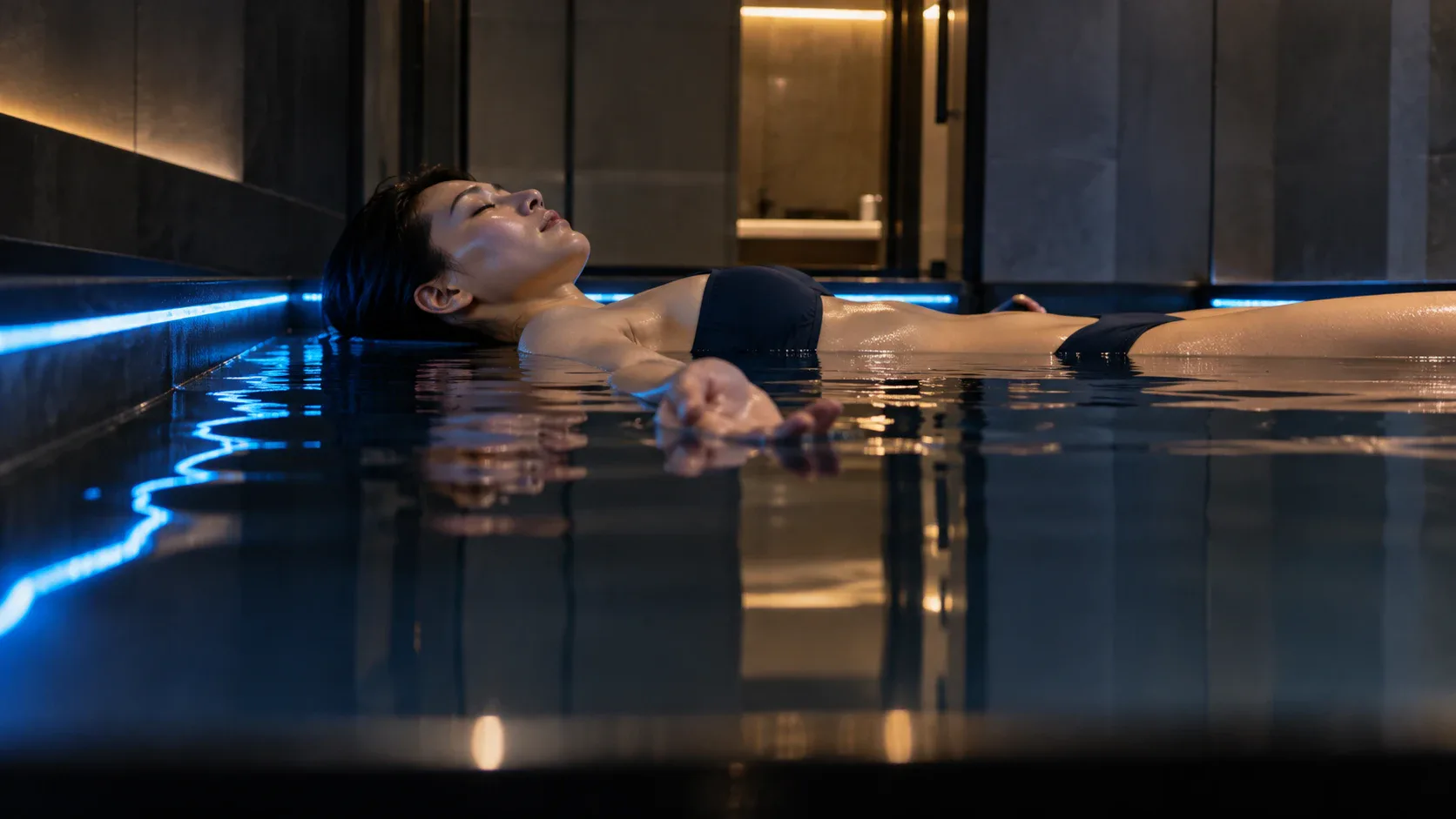
A float asks nothing of you. At Ōmni Space, you lie back in a private room, supported by water about 25 cm deep with around 500 kg of dense, mineral-rich Epsom salt. The water is warmed to 33–34 °C, close to skin temperature. The room is soundproof and blocks out light, though you control the lights yourself. A Halo neck pillow is available, and earplugs are provided. No swimming skills needed. No swimsuit required in your private room.
There is research behind the experience, too. Float therapy is a young but active field, with hundreds of scientific studies exploring its effects. Two trials stand out for people who work remotely:
- Working adults, seven weeks. In a randomised pilot trial from Sweden, 65 working adults floated 12 times in seven weeks. Compared with a wait-list group, they reported less stress, anxiety and depression, along with better optimism and sleep quality. The authors called for more studies to confirm the findings.
- One session, anxiety. In a 2018 study, 50 people with anxiety and stress-related conditions felt less anxious after a single one-hour float. Without a control group, this is a promising early finding, not proof on its own.
Ōmni Evidence Scale: Strong, for float therapy and stress or anxiety. Randomised trials and open studies point in the same direction, though they are small and short. Floating offers a reset in the moment. Daily movement and rest still matter.
Think of floating as a deep pause, not another way to optimise your day. After stressful weeks of back-to-back calls, one hour in a quiet, dark room can feel like the first moment that belongs entirely to you. Many guests leave feeling lighter. The Ōmni Space team can walk you through the experience before you begin.
Ōmni Space is open 9:00–21:00 every day. The last float session starts at 20:00. If your call ends before then, an evening float is still an option. Reserve a session on the booking site. The team can also talk through health questions on site.
Your simple reset plan: today and this week
| When | What to do | Why it helps |
|---|---|---|
| Morning | Stretch for a few minutes, then work somewhere other than the bed | A clear start gives the workday a boundary |
| Between calls | Stand, walk or look out of the window | Small pauses interrupt long stretches of sitting |
| Lunch | Eat away from the screen and step outside if you can | Give your attention a real break |
| Evening | Dim screens after the last call and reach for a printed page | Less evening light supports a calmer night |
| Midweek | Book a float after a heavy stretch of calls | A deeper pause in the working week |
| Weekend | Walk by the river, then linger over coffee | A welcome change from the screen |
When city life adds to the pressure, the guide to expat stress in Saigon explores the bigger picture. If scrolling follows you to bed, digital detox explains what time away from the phone can and cannot do. And when work takes you across time zones, jet lag in Vietnam offers a practical plan for travel days.
Float PlanBody tight from sitting or training?Take the one-minute Float Plan quiz: tell us how you feel and what you need, and get a simple plan for your first session.Make my Float PlanVisiting Vietnam for work? See how a float fits your trip →
FAQ
Can floating help after long remote workdays?
Float therapy can help you feel calmer and less stressed. In a 2018 study, anxiety fell after one hour of floating. A seven-week pilot trial with working adults also reported less stress and better sleep quality. Pair a deep float pause with small movement breaks throughout your week.
When should remote workers book a float?
Midweek is a good moment to pause, especially after a heavy run of calls. An afternoon works, too. The last session starts at 20:00, so there is room for an evening float after a late-morning or early-evening call.
Do you need to know how to swim to float?
No. The water is about 25 cm deep and contains around 500 kg of Epsom salt. It supports your body so you float without effort. Swimwear is not needed in the private room.
Can visitors book a float while in Vietnam?
Yes. Ōmni Space staff speak English. Sessions are listed on the booking site, and international cards are accepted at the front desk. Online card payment from abroad is not yet available, so send a message to arrange your booking.
Written by the team at Ōmni Space in Thảo Điền. General information, not medical advice.
Sources
- World Health Organization. Physical activity: fact sheet. Sitting less and moving more, and at least 150 minutes of moderate activity a week for adults. Evidence: Fairly reliable (guidance).
- Healy GN et al. (2008). Breaks in sedentary time: beneficial associations with metabolic risk. Diabetes Care 31(4): 661–666. Evidence: Early evidence (cross-sectional).
- Chang AM, Aeschbach D, Duffy JF, Czeisler CA (2015). Evening use of light-emitting eReaders negatively affects sleep, circadian timing, and next-morning alertness. PNAS 112: 1232–1237. Evidence: Early evidence (small study).
- Kjellgren A, Westman J (2014). Beneficial effects of treatment with sensory isolation in flotation-tank as a preventive health-care intervention: a randomized controlled pilot trial. BMC Complementary and Alternative Medicine 14: 417. Evidence: Early evidence (pilot trial).
- Feinstein JS et al. (2018). Examining the short-term anxiolytic and antidepressant effect of Floatation-REST. PLoS One 13(2): e0190292. Evidence: Early evidence (open-label, no control group).