
In short: Asia is home to some of the world’s oldest heat cultures: Japan’s onsen and neighbourhood sento, Korea’s kiln-like hanjeungmak and modern jjimjilbang, Vietnam’s xông lá herbal steam and Thailand’s herbal steam rooms. Finland and Russia developed their own traditions, the sauna and the banya. Large Japanese and Finnish studies link regular hot bathing with fewer heart problems and strokes, but because these are observational studies, they show an association rather than proof. For places to try them and current prices in Saigon, see our sauna, ice bath and bathhouse guide.
Part of the Ōmni Recovery Library · Recovery by Temperature
Ōmni Evidence Scale: Promising, for regular hot bathing and sauna and heart health (large observational studies in Japan and Finland). No good evidence yet, for herbal steams specifically. How we rate evidence.
Maybe you grew up with a Tokyo sento around the corner. Maybe you once spent a winter night asleep on the heated floor of a Seoul jjimjilbang. Or perhaps your Vietnamese grandmother draped a blanket over your head and a pot of steaming leaves whenever you caught a cold. And now you are in Saigon, where it is already 33 °C outside, wondering why anyone in a hot country would deliberately seek out even more heat. The answer takes us through some remarkably old rituals. Here is where Asia’s heat cultures come from, what the research can and cannot tell us, and where you can find them in Ho Chi Minh City.
Why sit in a hot room on purpose?
Across very different cultures, people somehow arrived at the same idea: get hot on purpose. The details vary—hot water in Japan, heated stone and clay in Korea, herb-scented steam in Vietnam and Thailand, dry hot air in Finland, wet steam in Russia—but the rhythm is strikingly familiar. You get hot, you cool down, and then you rest. Most people come out feeling loose and calm, and many say they sleep well that night.
Japan: onsen, sento and the long soak
In Japan, the word onsen is more than a casual name for a hot bath: it has a legal meaning. Under the 1948 Hot Springs Act, water qualifies as an onsen if it emerges from the ground at 25 °C or warmer, or contains enough of certain dissolved minerals. Whole towns grew up around these springs, along with a slow ritual that begins with washing first and soaking afterwards.
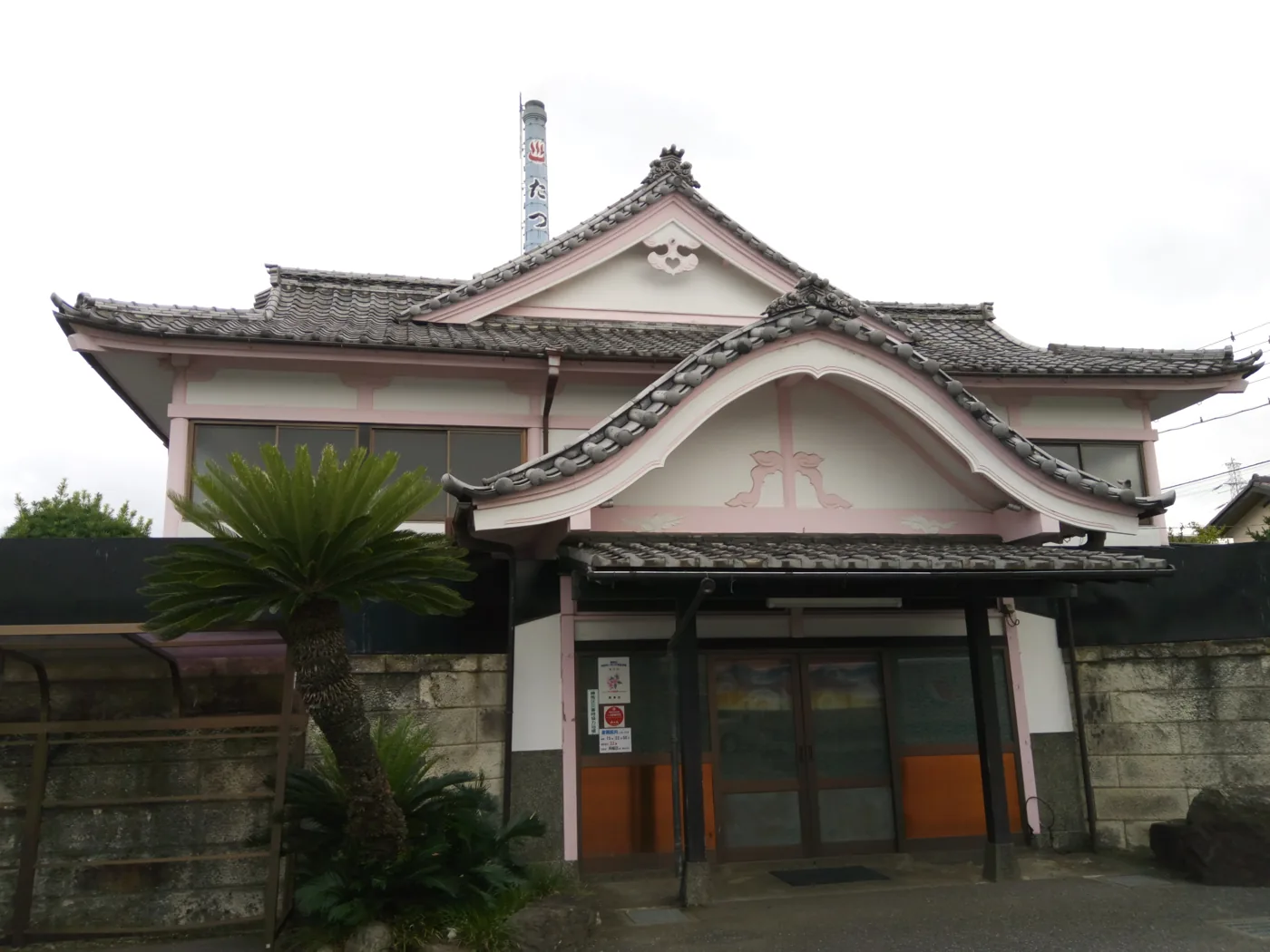
In the cities, the everyday cousin is the sento, the neighbourhood public bath with its tall chimney and, in older examples, a temple-like roof. For generations, it was where people without baths at home came to wash, soak and catch up with neighbours. Today most people bathe at home in a deep tub, the ofuro, yet an evening soak up to the shoulders remains an ordinary part of the day for many families. Japan has also gone through a major sauna boom in recent years, complete with its own word, totonou, for that calm, floaty feeling after a round of sauna, cold water and rest.
Korea: from hanjeungmak to jjimjilbang
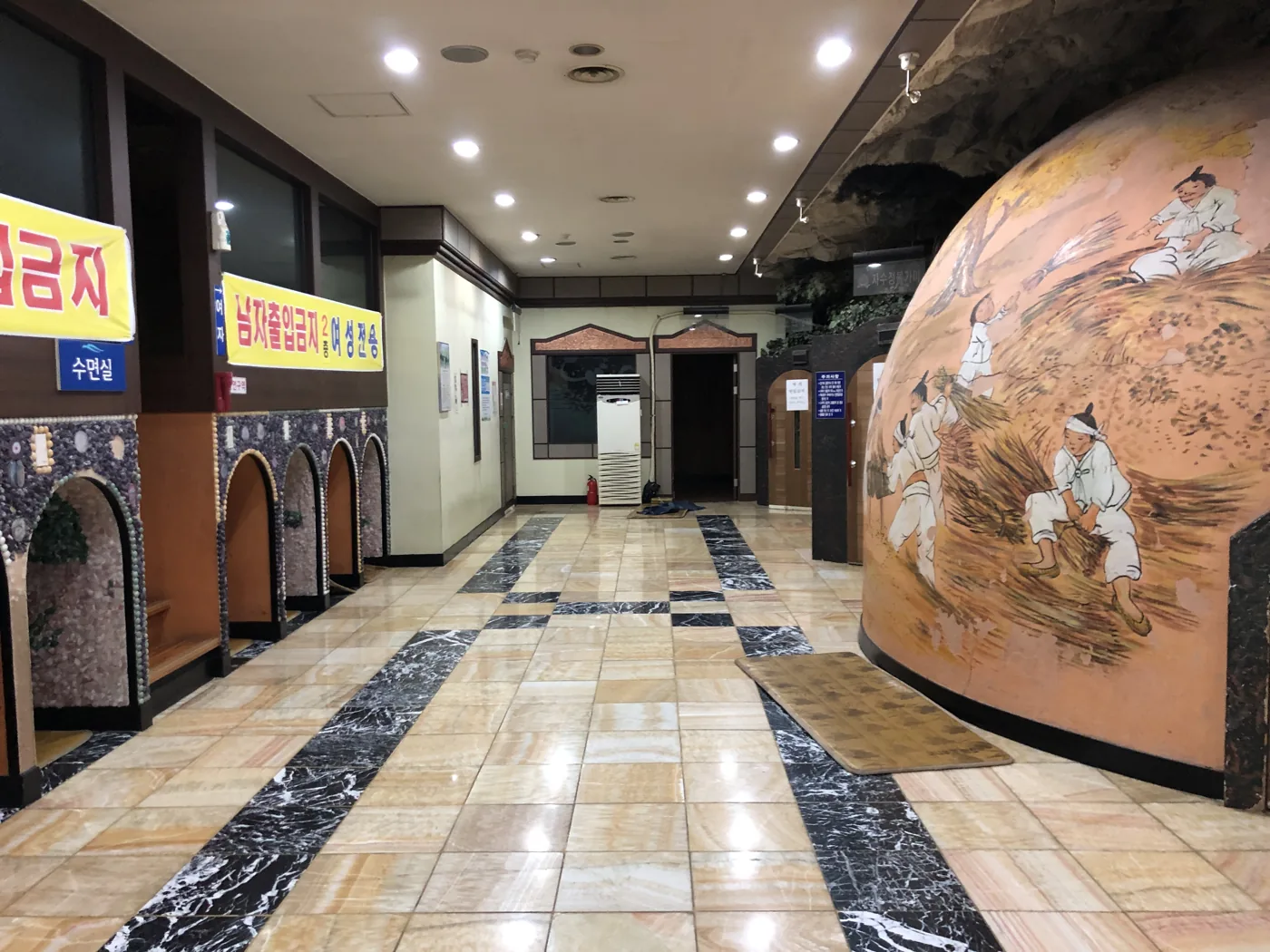
The hanjeungmak is a domed room built from stone and clay, heated by fire until the walls themselves radiate heat—a little like sitting inside a pottery kiln. Korean records mention state-run sweat rooms called hanjeungso as early as the 15th century, under King Sejong, when they were used as a kind of medicine.
The modern jjimjilbang spread across South Korea from the 1990s and turned that old kiln tradition into something closer to a whole day out. You wash and soak in single-sex bath halls, change into the house clothes, then wander through a shared floor of heat rooms, cool rooms, snack bars and heated floors where families and students nap side by side. The old kiln room usually survives inside as the bulgama, the hottest room in the house.
Vietnam: xông lá, the herbal steam at home
Vietnam’s heat tradition is more likely to begin in the kitchen than in a bathhouse. For xông lá, a family boils a pot of fragrant leaves—perhaps lemongrass, pomelo leaves, perilla or basil—then the person with a cold sits beneath a blanket over the pot, breathing in the steam until they are dripping with sweat. We wrote a full piece on xông lá and how it compares with sauna. We rate it No good evidence yet: we found no clinical trials of xông lá itself.
Thailand: herbal steam rooms
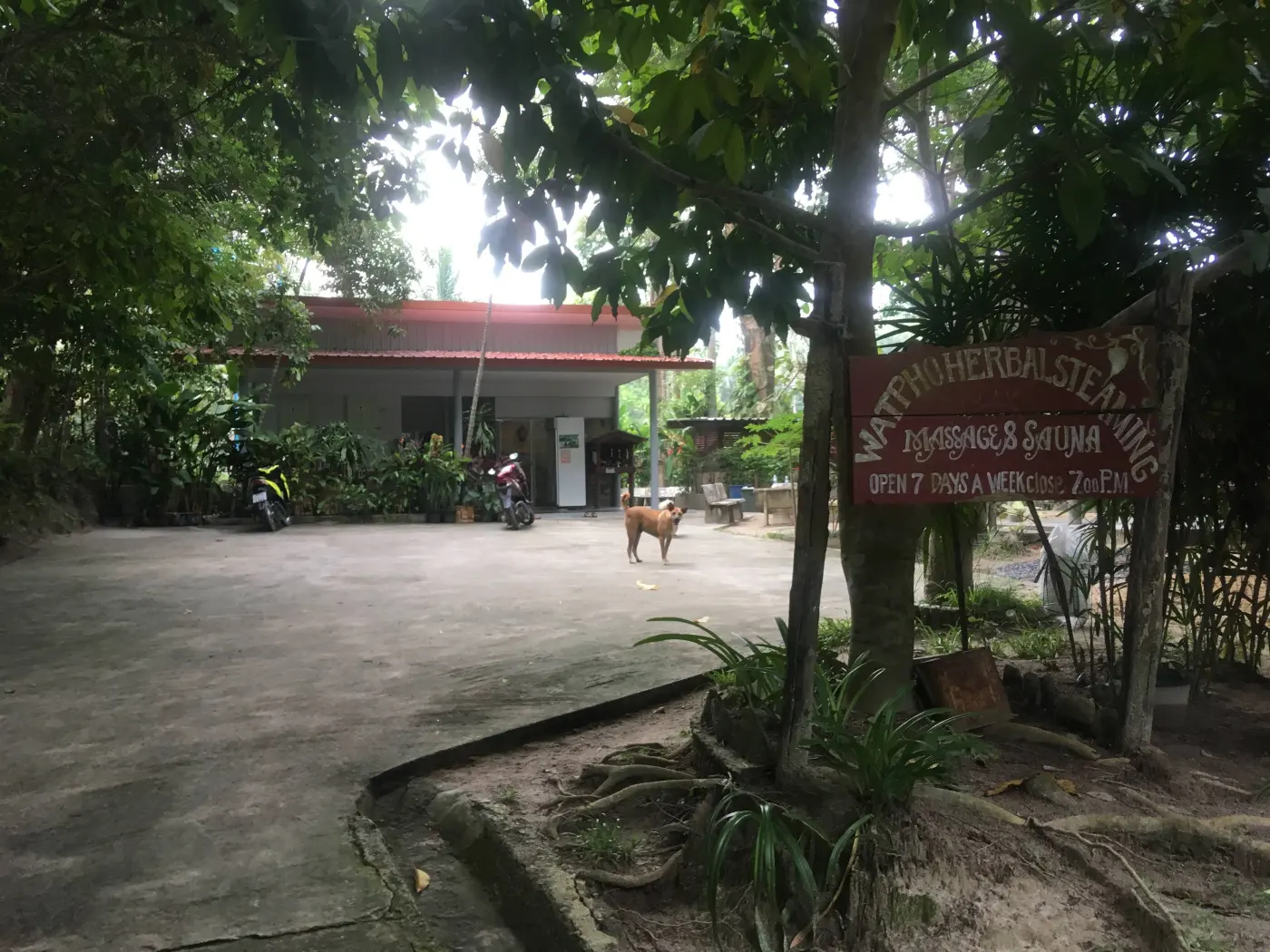
Thailand took something like the herbal pot and built a room around it. In a Thai herbal steam, steam from a boiling mixture of herbs—often lemongrass, kaffir lime, turmeric and the ginger-like plai—fills a small wooden or cloth-walled room. You will find the practice at temples and spas, and it also forms part of Thai traditional medicine, including yu fai, the traditional heat care for mothers after childbirth. One study from Siriraj Hospital in Bangkok gave 130 healthy volunteers two 15-minute herbal steam sessions in cloth tents: their pulse and body temperature rose, while their blood pressure dropped slightly. That tells us what the heat did to the body, not that it produced a health benefit.
For contrast: Finland’s sauna and Russia’s banya
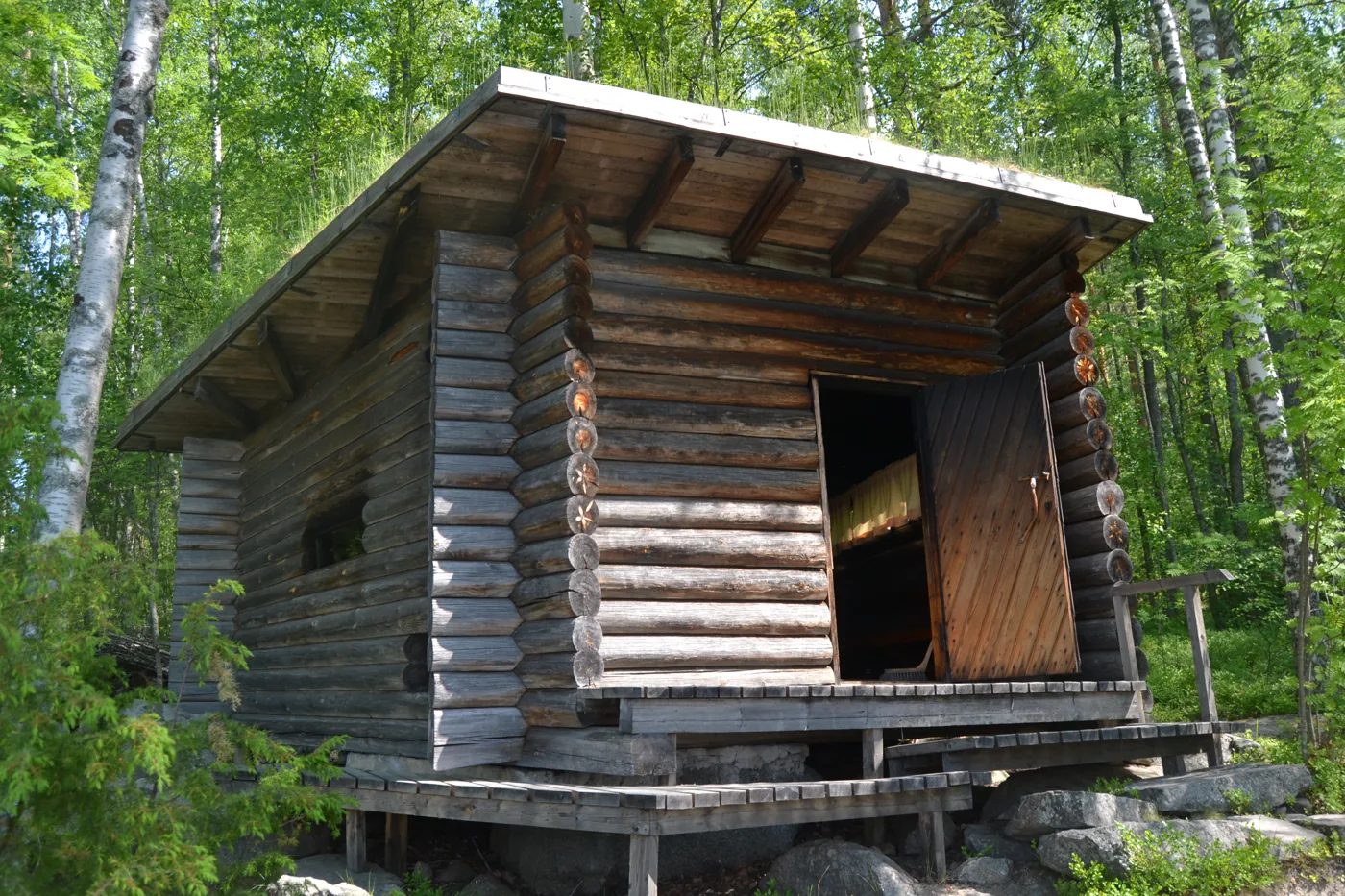
In 2020, UNESCO added Finland’s sauna culture to its list of the Intangible Cultural Heritage of Humanity, noting about 3.3 million saunas in a country of 5.5 million people. A Finnish sauna is a dry, very hot wooden room where water is thrown onto hot stones for a sudden burst of steam, followed by cooling off in a lake, in the snow or under a shower. Its oldest form, the smoke sauna, has no chimney at all: the fire heats the stones, the smoke is released, and you bathe in the heat left behind.
Russia’s banya is wetter, more social and famous for the venik, a bundle of leafy birch or oak branches that bathers use to whisk one another in the steam. Put them side by side and the Nordic and Asian traditions start to look like distant cousins.
What the research says (and what it does not)
Japanese tub bathing. Japanese researchers followed 30,076 adults aged 40 to 59 for about 20 years. People who took a hot tub bath almost every day had a 28% lower risk of cardiovascular disease than those who bathed twice a week or less, after adjusting for the usual risk factors. Their risk of stroke was also lower. There was no link, in either direction, with sudden cardiac death. The important caveat is that this was an observational study: it tells us that daily bathers had fewer heart problems, not that bathing caused the difference. People who have time for a long soak every evening may differ in other ways too.
Finnish sauna. In Finland, a study of 2,315 middle-aged men in Kuopio, followed for about 20 years, found that men who used a sauna four to seven times a week had fewer fatal heart events than men who went once a week. A later analysis of the same cohort, now including 1,628 men and women, linked frequent sauna use with a lower risk of stroke. Here too, these are observational studies, and mostly studies of Finnish men using traditional hot saunas.
Putting it together. A 2018 systematic review brought together 40 clinical studies of regular dry sauna bathing involving 3,855 participants. Only 13 were randomised trials, and most were small, but the overall direction was positive and side effects were rare. The plausible mechanism is fairly well understood: heat raises your heart rate and widens your blood vessels, somewhat like gentle exercise, before the body settles again as you cool and rest. What has not been shown is that any particular herbal steam offers something beyond the effects of plain heat.
Ōmni Evidence Scale: Promising, for regular hot bathing and sauna and heart health. Two large, long-running bodies of research, in Japan and Finland, point in the same direction, but they are observational and cannot prove cause and effect.
Ōmni Evidence Scale: No good evidence yet, for xông lá and herbal steams as a treatment. They can still feel pleasant and warming; there simply are no clinical trials showing a specific health effect.
The risks, plainly
Heat is safe for most healthy people, but it deserves some respect. Japan, the country of the daily soak, also records thousands of bath deaths a year: in 2018, 5,398 people drowned in home bathtubs, and more than 90% of them were aged 65 or over, mostly in winter, when the contrast between a cold bathroom and a hot tub can suddenly strain the heart and blood pressure. Alcohol and heat do not mix, in any sauna, anywhere. Steam rising from a pot of boiling water can scald, which is why xông lá is never something to leave a child alone with. And in Saigon, where you may already have spent the day sweating, drink water before you begin and step out when you have had enough.
What Ōmni thinks
What we love about these traditions is how similar they become once you strip away the details: heat, cool, rest. And in every one of them, rest is part of the ritual rather than an afterthought. If you miss the bathing culture you grew up with, Saigon has a little of almost everything—but not quite everything: there is no natural hot spring in the city, and no Russian banya or Turkish hammam that we could find. Our Saigon sauna, ice bath and bathhouse guide lists the Korean jjimjilbang, onsen-style private suites and Finnish-style sauna clubs, along with prices and the date we checked.
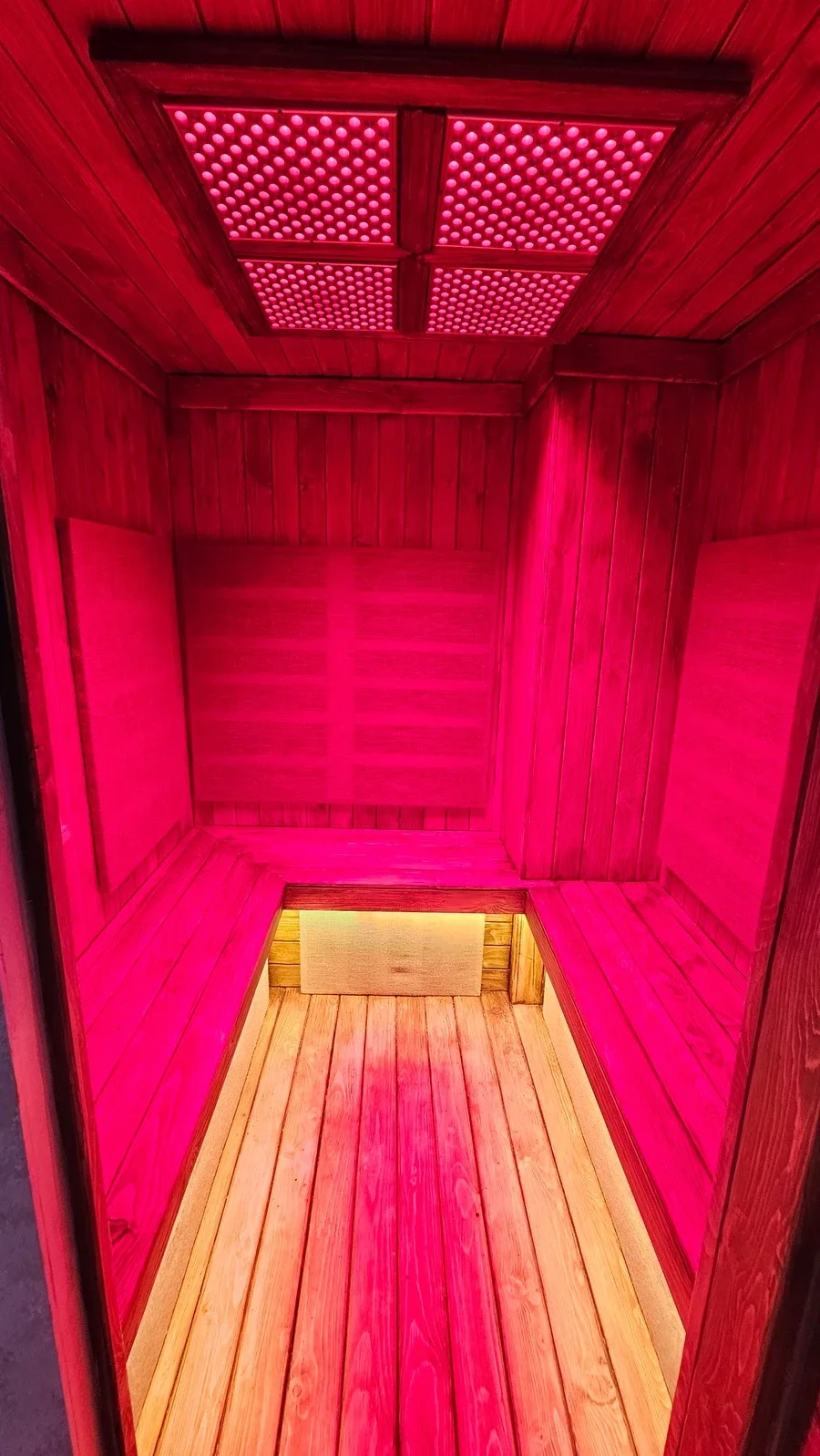
Ōmni offers our own version of this rhythm, although we are not an onsen, a Finnish sauna or a jjimjilbang. We are a small, quiet float centre in Thảo Điền, from the team behind Float Vietnam, Vietnam’s pioneer float centre since 2017. We have a private infrared and red-light sauna, a private cold plunge that is yours for 30 minutes, and float rooms that take the role of the long rest at the end. During a float, you lie back in about 25 cm of water holding around 500 kg of dense, mineral-rich Epsom salt, warmed to 33–34 °C, close to skin temperature, inside a private room that you can make completely dark and quiet. A single float costs 1,500,000 VND for 60 minutes or 2,000,000 VND for 90 minutes, and the couple room adds 700,000 VND for the second person. The sauna or the cold plunge costs 450,000 VND on its own, or 200,000 VND added to a float. You do not need swimwear in the sauna or the float room; for the cold plunge, bring your own swimsuit.
Sauna & Float (November): when you book a 90-min float, add the infrared & red-light sauna for free (20 min before you float). No swimwear needed for the sauna; the cold plunge is sold separately (450,000 VND on its own, 200,000 VND with a float; bring your own swimwear).
Why use a float for the resting part? Because float has a solid research record around stress. It has been explored in hundreds of scientific studies; in a Swedish randomised pilot trial, 65 working adults who floated 12 times over seven weeks reported less stress and anxiety and better sleep than a waiting group.
Ōmni Evidence Scale: Strong evidence, for float and stress. We rate it Strong because, alongside these trials, user experience is overwhelmingly positive: in a 2025 survey of regular floaters, 92% reported relaxation and 77% less stress, echoed by thousands of reviews, Reddit threads and forums, and by athletes and public figures who float.
Ōmni Space – Float Saigon is at 16C Quốc Hương, Thảo Điền, open 9:00–21:00 daily; the last float starts at 20:00, and walk-ins are welcome until 18:00.
Float PlanRunning on empty?Take the one-minute Float Plan quiz: tell us how you feel and what you need, and get a simple plan for your first session.Make my Float PlanFAQ
What is the difference between an onsen and a sento?
An onsen uses natural hot spring water; under Japanese law, that means water emerging from the ground at 25 °C or warmer, or containing enough of certain minerals. A sento is a neighbourhood public bath that usually uses heated tap or well water.
What is a jjimjilbang?
A Korean bathhouse with single-sex bathing halls and a shared floor of heat rooms, rest areas and snack bars, where everyone wears the house clothes. Its hottest room, the bulgama, descends from the old kiln-style hanjeungmak.
Is hot bathing actually good for your heart?
Large studies in Japan and Finland link regular hot baths and saunas with fewer heart problems and strokes. Because they are observational, they show an association rather than proof; we rate the evidence Promising.
Is there an onsen or a jjimjilbang in Saigon?
There is no natural hot spring in the city, but you can find onsen-style private suites and Korean-style jjimjilbang. Our Saigon sauna, ice bath and bathhouse guide lists them with prices.
Does Ōmni Space have an onsen or a Finnish sauna?
No. Ōmni has a private infrared and red-light sauna, a private cold plunge and float rooms, all within a quiet space in Thảo Điền.
Written by the team at Ōmni Space – Float Saigon in Thảo Điền, which sells sauna, cold plunge and float sessions. General information, not medical advice; sources checked on 30 October 2026.
Sources
- Ukai T, Iso H, Yamagishi K, et al. (2020). Habitual tub bathing and risks of incident coronary heart disease and stroke. Heart 106(10): 732–737. doi:10.1136/heartjnl-2019-315752.
- Laukkanen T, Khan H, Zaccardi F, Laukkanen JA (2015). Association between sauna bathing and fatal cardiovascular and all-cause mortality events. JAMA Internal Medicine 175(4): 542–548. doi:10.1001/jamainternmed.2014.8187.
- Kunutsor SK, Khan H, Zaccardi F, et al. (2018). Sauna bathing reduces the risk of stroke in Finnish men and women: a prospective cohort study. Neurology 90(22): e1937–e1944. doi:10.1212/WNL.0000000000005606.
- Hussain J, Cohen M (2018). Clinical effects of regular dry sauna bathing: a systematic review. Evidence-Based Complementary and Alternative Medicine 2018: 1857413. doi:10.1155/2018/1857413.
- Paraput T, Thippayacharoentam T, Nopmaneejumruslers C, et al. (2015). The effect of herbal steam bath in cloth tents on vital signs and body weight in healthy volunteers. Journal of Thai Traditional and Alternative Medicine 13(2).
- UNESCO (2020). Sauna culture in Finland. Representative List of the Intangible Cultural Heritage of Humanity.
- 温泉法 (Hot Springs Act), Act No. 125 of 1948, Article 2 and appended table (25 °C or a listed mineral content). e-Gov Japan.
- Bangpakok 9 International Hospital. Yoo Fai: postpartum traditional heat therapy (herbal steam in Thai traditional care).
- nippon.com (9 January 2020). 家庭の浴槽での溺死者数 (bathtub drowning deaths in Japan, from Ministry of Health, Labour and Welfare vital statistics).
- Korean Wikipedia. 한증막 (hanjeungmak): history and its place in the modern jjimjilbang.
- Kjellgren A, Westman J (2014). Beneficial effects of treatment with sensory isolation in flotation-tank as a preventive health-care intervention: a randomized controlled pilot trial. BMC Complementary and Alternative Medicine 14: 417. doi:10.1186/1472-6882-14-417.
- Hilpert K, Chis Ster I (2025). Experiences and perceptions of regular floatation-REST users: results from an online survey. Journal of Clinical Images and Medical Case Reports 6(5): 3600.
Leave a Reply