
In short: Those red stripes you sometimes notice across backs and necks around Saigon are cạo gió, or “scraping the wind”: a Vietnamese home remedy where someone rubs oiled skin with the edge of a coin until red lines appear. It belongs to the same family as Chinese gua sha, Cambodian koah khyal and Indonesian kerokan. The marks come from tiny leaks in small blood vessels under the skin (petechiae), not burns or signs of violence, and they fade within days. In the 1970s and 1980s, Western clinics sometimes mistook them for child abuse. Science has a little to say: a few small trials of gua sha-style scraping found short-term relief for neck and low back pain, but nobody has shown that it helps colds, fever or “bad wind”. Ōmni does not offer coining; we explain it because, in Vietnam, you are likely to see it sooner or later.
Read in Vietnamese: bài tiếng Việt trên Float Vietnam
Part of the Ōmni Recovery Library · Recovery by Touch
Maybe you first noticed them on your Grab driver’s neck, across a colleague’s shoulders at the beach, or on the back of a man fixing motorbikes in your alley: neat parallel stripes of red and purple, spreading from the spine almost like the ribs of a leaf. If you did not grow up around them, your first thought might have been an accident, or something worse. Usually, the explanation is far more ordinary: a family remedy for feeling unwell. Here is what cạo gió is, where it comes from, what those marks really are, what the research says, and why doctors once got it so wrong.
Ōmni Evidence Scale: Early evidence, for short-term relief of neck and low back pain from gua sha-style scraping (a few small trials, mostly from one research group, without blinding). No good evidence yet, for colds, fever, headaches or “letting the wind out”. See how we rate evidence on the Ōmni Evidence Scale.
What is cạo gió?
Cạo means to scrape and gió means wind. In Vietnamese folk medicine, many everyday complaints, from a cold or headache to tiredness and aches after a long day, are traditionally blamed on “bad wind” entering the body. People say someone has trúng gió, or “caught the wind”. Cạo gió is the familiar home remedy meant to give that wind a way out.
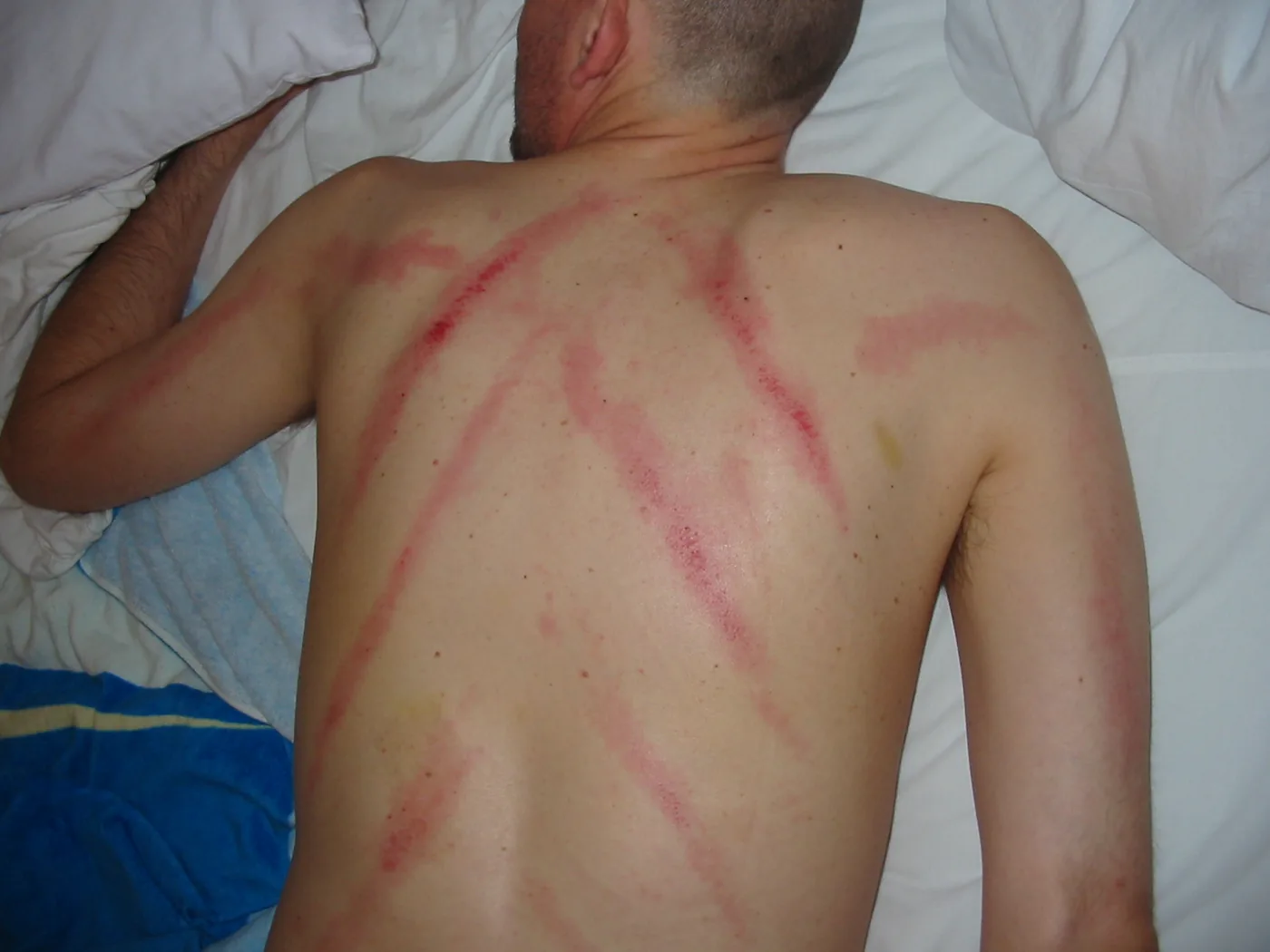
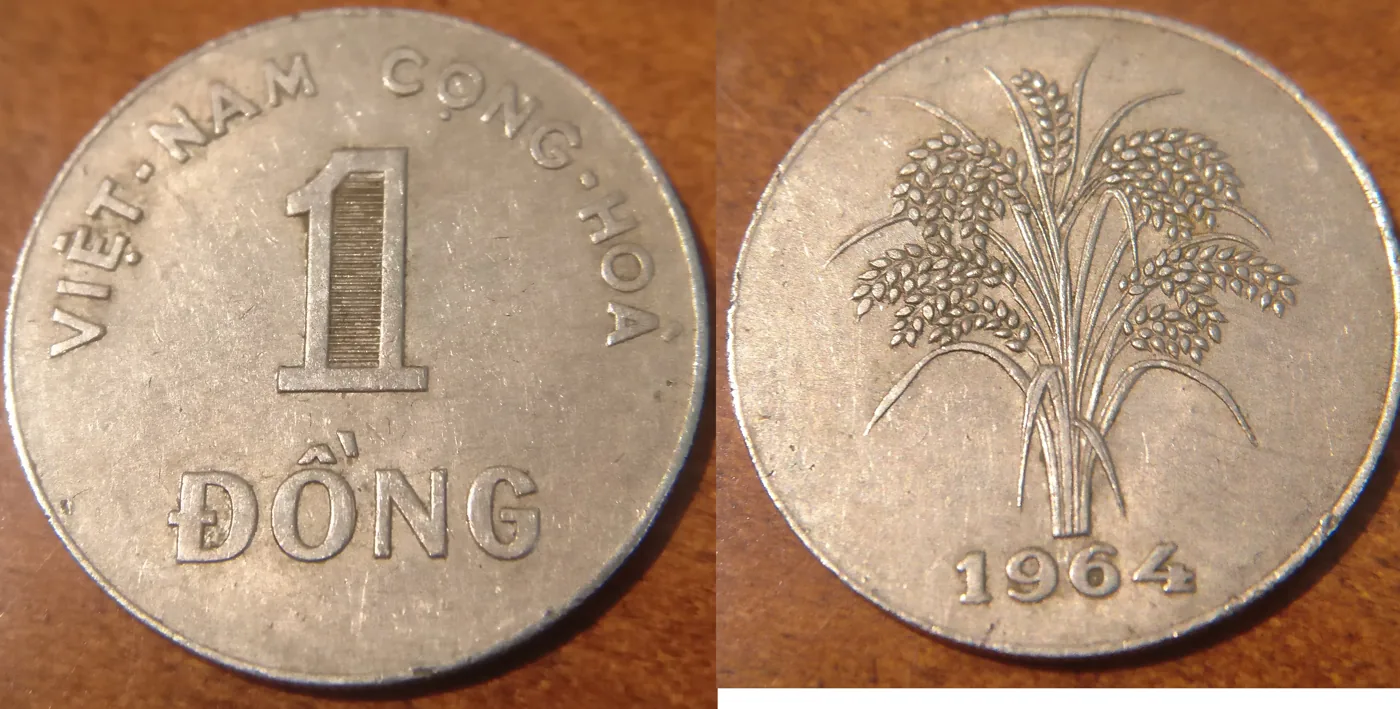
The method is wonderfully simple. A relative, often an older one, rubs a little medicated oil or balm over the back, neck, shoulders or chest. Many Vietnamese households keep a small bottle of dầu gió, literally “wind oil”, within easy reach for exactly this sort of moment. Then the edge of a coin is pressed against the skin and stroked firmly in one direction, in lines beside the spine and along the ribs, until red or purple streaks appear. Traditionally, the redder the marks, the more “wind” people say has come out. A session takes only a few minutes and costs almost nothing, which helps explain why the practice has stayed so familiar.
One practice, many names
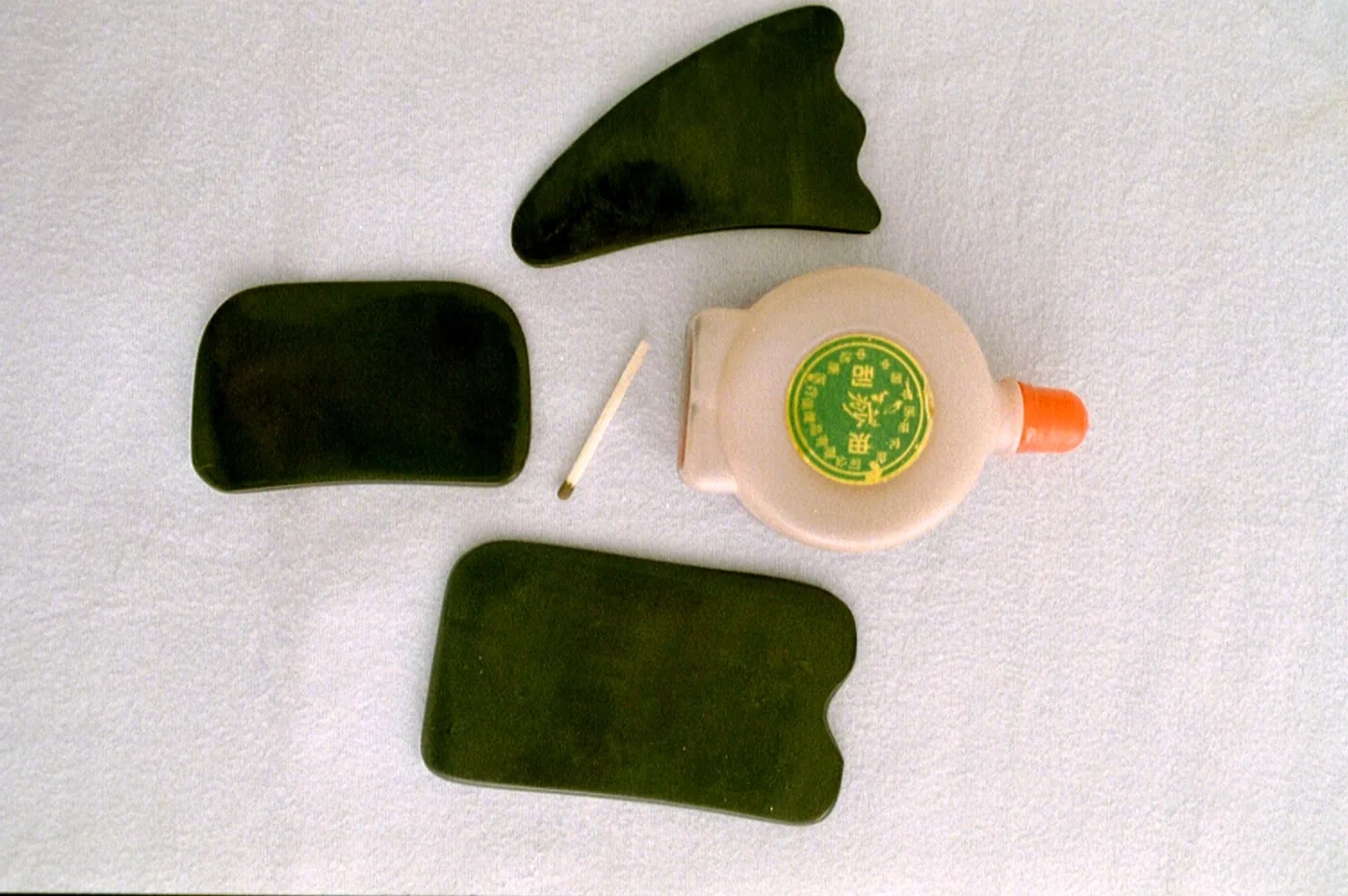
Vietnam is far from alone. In China the practice is gua sha, usually done with a smooth tool made from horn, jade or porcelain, and this is the version researchers have studied most often. In Cambodia it is koah khyal, “rubbing the wind”, commonly done with Tiger Balm. In Indonesia it is kerokan. The details vary, but the basic idea is remarkably similar: oil, a smooth edge, firm strokes, and marks that are part of the treatment rather than an accidental side effect. The fashionable jade “gua sha” stones now sold for facial routines are a much gentler cousin and are not meant to leave marks at all.
What the red marks actually are
The stripes can look dramatic, but the reaction itself is quite predictable. Firm stroking over oiled skin causes tiny capillaries just beneath the surface to leak a little blood. Doctors call the pinpoint dots petechiae and larger patches ecchymosis; gua sha practitioners call the result sha. It is not a burn, and the skin is not meant to be an open wound. In clinical studies of gua sha, the marks faded within two to five days, while a dermatology case report notes that heavier coining marks usually clear on their own within one to two weeks.
When doctors mistook a remedy for abuse
After 1975, many Vietnamese families resettled in the United States, and these unfamiliar stripes began appearing in American clinics. In 1976, a group of doctors including US Army physicians wrote to the journal Pediatrics under the title “Pseudobattering in Vietnamese children”, warning colleagues that marks resembling a beating could actually come from a caring parent using a familiar home remedy. The message did not always land. In 1980, a survey of 50 Vietnamese people living in the US found marked distrust of American doctors, much of it linked to real or perceived criticism of cao gió; the authors argued that accepting it as a valid cultural practice could help patients feel comfortable returning for care. Forensic papers kept repeating the same lesson for decades, covering coining, cupping and moxibustion in 1997 and Indonesian kerokan in 2020.
There is another misreading worth knowing about. For roughly twenty years, medical articles listed burns as a risk of coining, citing a 2000 case of a woman badly burned during a treatment. In 2023, a team led by gua sha researcher Arya Nielsen went back to the original case and noticed something important: her back had been painted with alcohol and set alight, while the round, unburned patches matched cups rather than coins. It was a fire-cupping accident. Coining itself uses no fire and no heated oil. Both stories point to the same useful lesson: when you see unfamiliar marks, ask before you assume.
What the science says
Almost all of the research looks at gua sha rather than coining as it is practised at home, and much of it comes from one integrative medicine group in Essen, Germany. The findings are interesting, but the limits matter just as much. Here is what the studies show, and what they do not.
- Blood flow under the skin goes up. In a 2007 pilot study, 11 healthy hospital staff had gua sha on their backs while researchers measured surface blood flow with a laser Doppler scanner. Microcirculation at the treated spot rose about fourfold for the first 7.5 minutes and remained higher throughout the 25-minute measurement.
- Neck pain eased for a week. In a 2011 randomised trial, 48 people with chronic neck pain received either one gua sha session or a heat pad. A week later, pain had fallen clearly more in the gua sha group.
- Back pain too. A 2012 pilot with 40 people with chronic neck or low back pain, and a 2019 trial with 50 people with chronic low back pain, both found less pain after gua sha than in a waiting-list group, with no serious side effects reported.
- A possible mechanism. In a 2009 study in mice, scraping switched on heme oxygenase-1, an enzyme involved in protecting cells from oxidative stress. It is an interesting possible explanation, not proof of the same effect in people.
Now for the limits. These trials are small, participants knew which treatment they received, the comparison was often “nothing yet” rather than a convincing sham treatment, and follow-up lasted only days to weeks. None tested cạo gió for the reasons Vietnamese families most often reach for a coin: colds, fever, headaches or simply feeling “off”. For “letting the wind out”, there are no clinical studies at all. The fairest summary is that firm scraping may take the edge off muscle pain for a while, perhaps through some of the same routes as a strong massage, while the broader claims remain tradition rather than something that has been clinically tested.
Ōmni Evidence Scale: Early evidence, for short-term neck and low back pain relief from gua sha. No good evidence yet, for colds, fever and other “wind” illnesses.
The risks, briefly
Coining is generally regarded as low-risk, and the marks themselves are an expected part of the practice rather than an injury. A few details are still worth knowing. People who bruise easily, including those on blood thinners or with bleeding disorders, can mark much more heavily, and medical case reports list these as reasons to avoid the practice. Scraping can occasionally break the skin, so tools should be cleaned between people. The oil matters too: JAMA reported a case of camphor poisoning after coin rubbing with a camphor-containing product. And the front of the neck is a delicate area: a 2014 case report described a young man whose epiglottis became swollen after scraping there for a sore throat; he recovered quickly in hospital.
Ōmni and coining: what we offer instead
To be clear, Ōmni Space does not offer cạo gió or gua sha, and we are not recommending it. We explain it because it is woven into everyday life in the city you are living in, and understanding what you are seeing is kinder than simply staring. If a Vietnamese friend ever offers to scrape the wind out of you after a long day, at least you now know exactly what you are saying yes or no to.
What we do offer, from the team behind Float Vietnam, the country’s pioneer float centre since 2017, is a very different kind of recovery for tired necks and backs. In a float, you lie in about 25 cm of water holding around 500 kg of dense, mineral-rich Epsom salt, warmed close to skin temperature, so the water supports your body and your spine and muscles can settle without having to hold you up. In a 2021 randomised trial of 99 people with chronic pain, pain dropped right after every float session; the effect had not lasted to weeks 12–24, which is why people who use float for pain often choose to come regularly. A float costs 1,500,000 VND for 60 minutes or 2,000,000 VND for 90 minutes. We also have a private infrared and red-light sauna and a cold plunge, each 450,000 VND on its own or 200,000 VND added to a float. Curious about other Vietnamese home remedies? Read our guide to xông lá, the herbal steam.

Ōmni Space – Float Saigon is at 16C Quốc Hương, Thảo Điền. We are open 9:00–21:00 daily; the last float starts at 20:00, and walk-ins are welcome until 18:00.
Float PlanRunning on empty?Take the one-minute Float Plan quiz: tell us how you feel and what you need, and get a simple plan for your first session.Make my Float PlanFAQ
Why do Vietnamese people have red stripes on their backs?
Most likely from cạo gió, or coining: a home remedy where oiled skin is rubbed with the edge of a coin to “let the wind out” during a cold, headache or tiredness. The stripes are expected skin marks that usually fade within days.
Are coining marks bruises?
In a way, yes. They are petechiae and small bruises caused by tiny capillaries leaking beneath the skin. They are an expected part of the practice and usually fade within days to two weeks.
Is coining the same as gua sha?
They belong to the same family. Gua sha is the Chinese version, usually done with a smooth tool made from horn, jade or porcelain; cạo gió commonly uses a coin. Facial gua sha is a much gentler beauty routine and is not intended to leave marks.
Does coining work?
For short-term neck and low back pain, a few small trials of gua sha found relief lasting about a week. For colds, fever or “bad wind”, there are no clinical studies, so we rate that as No good evidence yet.
Does Ōmni Space offer coining or gua sha?
No. We offer private float rooms, an infrared and red-light sauna and a cold plunge in Thảo Điền. Our team is happy to talk through the options with you on site.
Written by the team at Ōmni Space – Float Saigon in Thảo Điền, Vietnam’s pioneer float centre since 2017. We do not offer coining. General information, not medical advice; sources checked on 30 October 2026.
Sources
- DermNet (2015). Coining. Xie S, ed. Oakley A.
- Cambodge Mag (31 July 2024). Tradition & health: about the koah kshal technique.
- Darsha AK, Cohen PR (2020). New onset of linear purpura on the back: coining therapy-associated ecchymoses. Cureus 12(6): e8833.
- Lauche R, Wübbeling K, Lüdtke R, et al. (2012). Randomized controlled pilot study: pain intensity and pressure pain thresholds in patients with neck and low back pain before and after traditional East Asian “gua sha” therapy. American Journal of Chinese Medicine 40(5): 905–917.
- Yeatman GW, Shaw C, Barlow MJ, Barlett G (1976). Pseudobattering in Vietnamese children. Pediatrics 58(4): 616–618.
- Yeatman GW, Dang VV (1980). Cao gío (coin rubbing): Vietnamese attitudes toward health care. JAMA 244(24): 2748–2749.
- Look KM, Look RM (1997). Skin scraping, cupping, and moxibustion that may mimic physical abuse. Journal of Forensic Sciences 42(1): 103–105.
- Samberkar PN, Samberkar S, Byard RW (2020). Potential forensic implications of kerokan therapy: a traditional Indonesian therapy associated with neck bruising. Medicine, Science and the Law 60(4): 315–318.
- Nielsen A, Handel M, Stone JAM, Lee MS (2023). Misreport of burns as a result of “coining”, gua sha; inherent harms from publication and ongoing citation of false facts. Integrative Medicine Research 12(2): 100953.
- Nielsen A, Knoblauch NT, Dobos GJ, Michalsen A, Kaptchuk TJ (2007). The effect of gua sha treatment on the microcirculation of surface tissue: a pilot study in healthy subjects. Explore 3(5): 456–466.
- Braun M, Schwickert M, Nielsen A, et al. (2011). Effectiveness of traditional Chinese “gua sha” therapy in patients with chronic neck pain: a randomized controlled trial. Pain Medicine 12(3): 362–369.
- Saha FJ, Brummer G, Lauche R, et al. (2019). Gua sha therapy for chronic low back pain: a randomized controlled trial. Complementary Therapies in Clinical Practice 34: 64–69.
- Kwong KK, Kloetzer L, Wong KK, et al. (2009). Bioluminescence imaging of heme oxygenase-1 upregulation in the gua sha procedure. Journal of Visualized Experiments (30): 1385.
- Nielsen A, Kligler B, Koll BS (2012). Safety protocols for gua sha (press-stroking) and baguan (cupping). Complementary Therapies in Medicine 20(5): 340–344.
- Rampini SK, Schneemann M, Rentsch K, Bächli EB (2002). Camphor intoxication after cao gío (coin rubbing). JAMA 288(1): 45.
- Tsai KK, Wang CH (2014). Acute epiglottitis following traditional Chinese gua sha therapy. CMAJ 186(8): E298.
- Loose LF, Manuel J, Karst M, Schmidt LK, Beissner F (2021). Flotation restricted environmental stimulation therapy for chronic pain: a randomized clinical trial. JAMA Network Open 4(5): e219627.
Leave a Reply