



How to Fix Revenge Bed Time
Revenge bedtime reduce sleep quality, but it is the only way for you to get back your free time. How do we fix it once and for all.
3/11/20264 min read
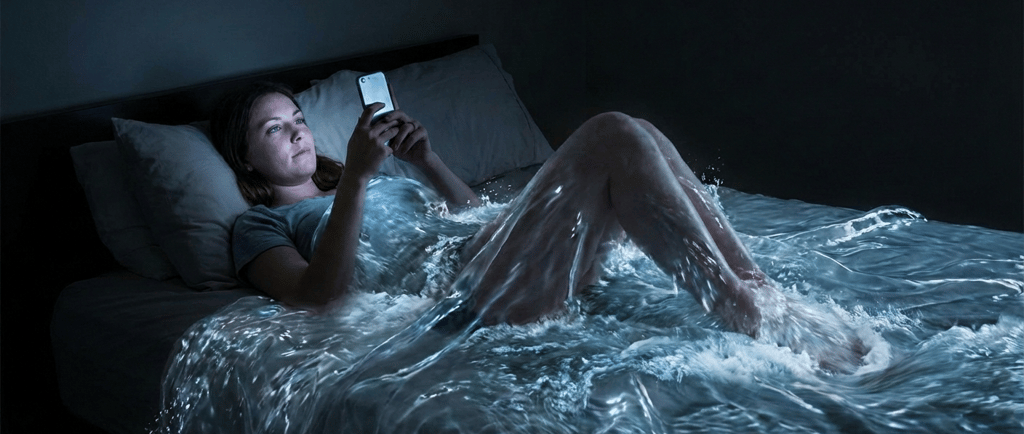
Does this sound familiar? After a long, frantic day of deadlines, meetings, chores, and endless responsibilities, you finally hit the sheets. But instead of turning off the lights, you reach for your phone. You scroll through Facebook, lose yourself in TikTok, catch up on news, or binge episode after episode on Netflix.
This is your "me time"—a small act of "revenge" for a day sacrificed to everyone else. This phenomenon has a name: "Revenge Bedtime Procrastination."
But how do you feel the next morning when the alarm blares? Exhausted, sluggish, your head feeling like lead as you struggle to crawl out of bed. The cycle repeats day after day. Why does an act you consider a "self-reward" leave you feeling more depleted? The truth is: When you are "scrolling," your brain isn't actually resting. It’s being tricked into working harder than you realize.
The "Revenge" is Real, but You are the Victim
Psychologically, Revenge Bedtime Procrastination is completely understandable. It stems from a very legitimate need: the desire for control and autonomy. All day long, your time is dominated by work, family, and social obligations. The late-night hours, when the world is quiet and everyone else is asleep, are when you reclaim that control. You want to enjoy a freedom that no one can interrupt.
However, therein lies a painful paradox: You are taking "revenge" on your own opportunity to recover and regenerate. You are stealing the most precious resource needed to prepare for a new day: deep, high-quality sleep. Instead of avenging a day gone by, you are essentially shooting your "tomorrow self" in the foot.
The Scrolling Trap: Your Brain is Being Stimulated, Not Rested
Let’s look deeper into what happens to your brain and nervous system when you lie in bed with a glowing screen:
1. Blue Light: The Sleep Thief
Screens emit significant amounts of blue light. This short-wavelength, high-energy light has a powerful impact on your circadian rhythm. It severely suppresses the production of melatonin—the hormone that signals your body it’s time to sleep. Essentially, you are shining a flashlight directly at your pineal gland and commanding it to "STAY AWAKE!" Your brain is fooled into thinking it’s still daytime, throwing your biological clock into total chaos.
2. Dopamine & The Infinite Loop
Every time you swipe for a new post, every time a short video starts, every time you see a "like" or comment, your brain is "rewarded" with a hit of dopamine. This is the hormone of excitement and pleasure. Sounds good? Not quite. You are pushing your brain into a state of "stressful arousal." It remains in "anticipation mode," processing new information, images, and emotions. This state is functionally identical to high-stress work, not rest.
In contrast, true rest (lights off, silence) allows the brain to shift from Beta waves (alert/active) to Alpha waves (light relaxation) and Theta waves (deep relaxation/creativity)—the states where actual repair happens.
3. The "Fragmented Attention" Effect
When scrolling, you aren't fully relaxed, nor are you fully focused. You exist in a "half-way" state of fragmented attention—your mind is stretched between trying to relax your body and constantly processing screen stimuli. This state is incredibly draining on mental energy. It’s like trying to run a marathon while attempting to nap; neither is successful, and you end up utterly exhausted.
The Double Blow: Physical Decay and Mental Fog
The consequences of this habit hit your health from two sides:
On Sleep: You might still get 7–8 hours, but it’s shallow, low-quality sleep. You struggle to reach Deep Sleep and REM stages—the two most critical phases for cellular repair, memory consolidation, emotional processing, and "flushing out" neuro-waste from the brain. You wake up feeling like you haven't slept at all.
On the Next Day: Fatigue accumulates. You struggle to focus, your memory falters, and you become irritable and impatient. This adds more pressure to your day, which makes you crave "revenge" even more that night. A toxic cycle is formed.
In short, you think you’re gifting yourself 1–2 hours of freedom, but you’re actually taking out a high-interest loan—paying for it with the energy, clarity, and long-term health of your entire next day.
The Alternative: Give Your Brain a Real Vacation
How do you break the trap? The answer lies in clearly separating "stimulation space" from "rest space."
Create a "Digital Sunset": Set a fixed time (at least 60 minutes) before bed to turn off all electronic screens.
Switch to Low-Stimulation Activities:
Read a physical paper book (not a backlit tablet).
Listen to instrumental music, calm podcasts, or nature sounds.
Journal or write down small things you’re grateful for.
Do gentle stretching or deep breathing (4-7-8 technique).
Meditate for 5–10 minutes to quiet the mind.
Optimize Your Environment: Ensure your bedroom is completely dark, quiet, and cool.
For many—especially founders, creatives, and high-level professionals—self-triggering that "off switch" is incredibly difficult. The mind keeps racing with work, anxieties, and plans. That’s when you need a more radical "reset."
Float Therapy: The "Power Off" Switch for Your Nervous System
This is exactly why Float Therapy is such a powerful tool to break the "Revenge Bedtime" cycle.
An Environment with No Choice But Rest: In a float pod, you enter a space designed to eliminate all external stimuli: no light, no sound, no gravity, no temperature fluctuations. Your brain, after a few minutes of "searching" for something to process, is forced to realize: "Oh, there’s nothing to do. I guess I’ll rest."
Forced Relaxation: In zero-gravity and sensory isolation, the Sympathetic Nervous System (fight or flight) "shuts off," and the Parasympathetic Nervous System (rest and digest) is fully activated. The brain quickly shifts into the Theta wave state—a deep, creative relaxation usually found only in light sleep or very deep meditation.
After 60–90 minutes of floating, you emerge with a body relieved of spinal pressure and a mind that has been "decluttered." The internal noise subsides. You feel a sense of true peace, rather than the "wired" fatigue of a dopamine binge. That night, you will fall into a natural, high-quality sleep without the urge to reach for your phone.
From "Revenge" to "Kindness"
Revenge Bedtime Procrastination is a false solution. It gives you the feeling of freedom but imprisons you in a cycle of exhaustion. The kindest thing you can do for yourself is not staying up late to scroll, but gifting your nervous system the luxury of undisturbed rest.
Deep relaxation and good sleep are not luxuries; they are the foundations of health, creativity, and a fulfilling life. Sometimes, the most effective way to move forward is to know how to stop and completely power down.
Are you ready to flip that switch?
Float Saigon - Omni Space Giving your mind the stillness it deserves.
#RevengeBedtimeProcrastination #SleepHygiene #MentalHealth #FloatTherapy #DigitalDetox #StressRelief #SleepQuality #Wellness #SelfCare #Neuroscience #FloatSaigon #OmniSpace
Experience true silence through engineered stillness.
Contact Us:
Since 2017
Pioneers of Float Therapy in Việt Nam
+84-326896369
info@omnispacevn.com
