



Float Therapy: Why Epsom Salt is the Secret to Weightlessness
Why Epsom Salt is the secret for well being
3/10/20263 min read
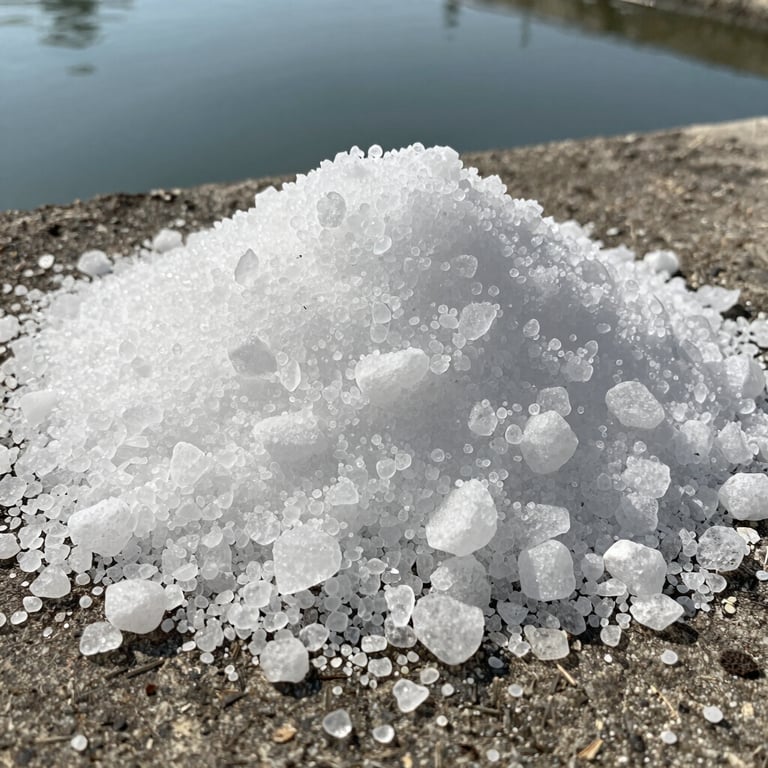
Have you ever wondered how people stay afloat in a sensory deprivation tank without even trying? It’s not magic—it’s a massive amount of Epsom salt.
Some people might ask: "Can I just do this in my bathtub at home?", understanding the science of the salt is key to unlocking the full benefits of float therapy.
What is Epsom Salt? (Hint: It’s Not Actually Salt)
While it looks like the sea salt in your kitchen, Epsom salt is a naturally occurring mineral compound known as Magnesium Sulfate (MgSO4).
First discovered in the 1600s in the English town of Epsom, this "bitter saline" was quickly prized for its healing properties. Unlike table salt (Sodium Chloride), which can be drying and abrasive, Epsom salt feels silky to the touch and acts as a powerful muscle relaxant.
Epsom Salt vs. Sea Salt: Which is Better for Floating?
If you’ve ever tried to float in the ocean, you know you still have to "tread" slightly to stay up. In a float tank, the goal is zero-effort buoyancy.
Sea Salt / Table Salt: Highly irritating to the skin and eyes. If used at the concentrations needed for floating, it would be incredibly harsh and could cause stinging or "salt itch."
Epsom Salt: Known for being "skin-friendly." It softens the skin, helps with inflammation, and creates a "thick," oily water texture that feels like a protective cocoon.
Why 1,000 Pounds? The Science of Buoyancy
To achieve the "anti-gravity" effect, float tanks aren't just "salty"—they are saturated.
A typical float pod contains roughly 800 to 1,500 pounds (360–680kg) of medical-grade Epsom salt dissolved in just 10–12 inches of water. This creates a solution with a Specific Gravity of approximately 1.25 to 1.30.
The Result: Your body becomes lighter than the water. You float on the surface like a cork, allowing every muscle and joint to decompress completely. This is the only environment on Earth where your body can experience near-total relief from the constant pull of gravity.
The Magnesium Connection: Mind and Body
The "float glow" isn't just a myth. When you soak in a tank, your body is immersed in a high-concentration magnesium solution. Magnesium is essential for over 300 biochemical reactions in the body, including:
Lowering Cortisol: Magnesium helps regulate the nervous system, signaling the brain to move out of "fight or flight" mode.
Muscle Recovery: It helps flush lactic acid and reduces inflammation, which is why athletes use floating for rapid recovery.
Sleep Quality: Magnesium helps the brain produce GABA, a neurotransmitter that encourages relaxation and deep sleep.
Can I Float at Home in My Bathtub?
This is the #1 question for wellness enthusiasts. The short answer? You can soak, but you can’t "float."
The Challenges of a Home "Float"
The Salt Volume: To get the same buoyancy as a commercial tank (which holds 200 gallons), you would need about 400–600 pounds of Epsom salt for a standard bathtub. Not only is this expensive, but your plumbing likely isn't designed to handle that much mineral concentration.
Temperature Control: Float tanks are kept at exactly 93.5°F (34.2°C)—skin temperature. In a bathtub, the water cools down quickly, breaking the sensory deprivation "infinity" effect where you can't tell where your skin ends and the water begins.
Sensory Input: True float therapy (REST) requires total darkness and silence. Bathtubs are usually too short to let you fully stretch out without touching the sides, which alerts your brain to your position in space.
The Verdict: While a home bath with 2–4 cups of Epsom salt is fantastic for muscle soreness, it won't provide the neurological "reset" of a true sensory deprivation tank.
Safety and Hygiene: Is it Clean?
Many people worry about sharing water with others. However, the high salt concentration in a float tank is naturally antimicrobial. Most bacteria simply cannot survive in a 30-40% salt solution.
Furthermore, professional float centers use:
High-End Filtration: The water is typically filtered 3–5 times between every single client.
UV and Ozone: These advanced sanitation systems kill any remaining microorganisms.
Hydrogen Peroxide: A safe, non-toxic disinfectant often used to keep the water pristine.
Ready to Experience the Weightlessness?
Floating is a practice. The more you do it, the better your brain becomes at entering the Theta state—that "half-awake, half-dreaming" zone where true healing happens.
Experience true silence through engineered stillness.
Contact Us:
Since 2017
Pioneers of Float Therapy in Việt Nam
+84-326896369
info@omnispacevn.com
